To enjoy shirayaki eel, reheat it according to the product label, taste a bite plain, then add a little wasabi soy sauce or salt. Preparation depends on whether it is frozen or chilled and whether it can be heated in its pouch, so there is no reheating time that applies to every product. This guide covers checks before serving commercially prepared shirayaki at home and combinations of seasonings.
Three checks before eating
Before getting out your reheating equipment, check the product’s condition and packaging label. Whether heating is required, how to thaw it and which heating methods the pouch supports will narrow down your options.
1. Is it cooked, or does it require cooking?
First read the cooking and storage instructions on the package. Do not assume that the name “shirayaki” means no further heating is needed. Check the seller’s heating requirements, use-by information and instructions after opening. These steps are for serving a product that has already been grilled; they are not instructions for cleaning and cooking raw eel.
If you cannot find the instructions, look up the seller’s guidance using the exact product name. Do not simply apply heating times for a similar product or another manufacturer.
2. Heat from frozen or thaw first?
Some frozen products can go straight into a hot-water bath; others must be thawed before reheating. For example, Unagi no Gotoh instructs customers to heat its vacuum-packed products in the pouch from frozen. This applies to that company’s products, not to every shirayaki product.
If thawing is required, follow that product’s method. Japan’s Ministry of Health, Labour and Welfare advises households to thaw frozen food in a refrigerator or microwave rather than at room temperature. Read the instructions in advance so that you are not rushed just before eating.
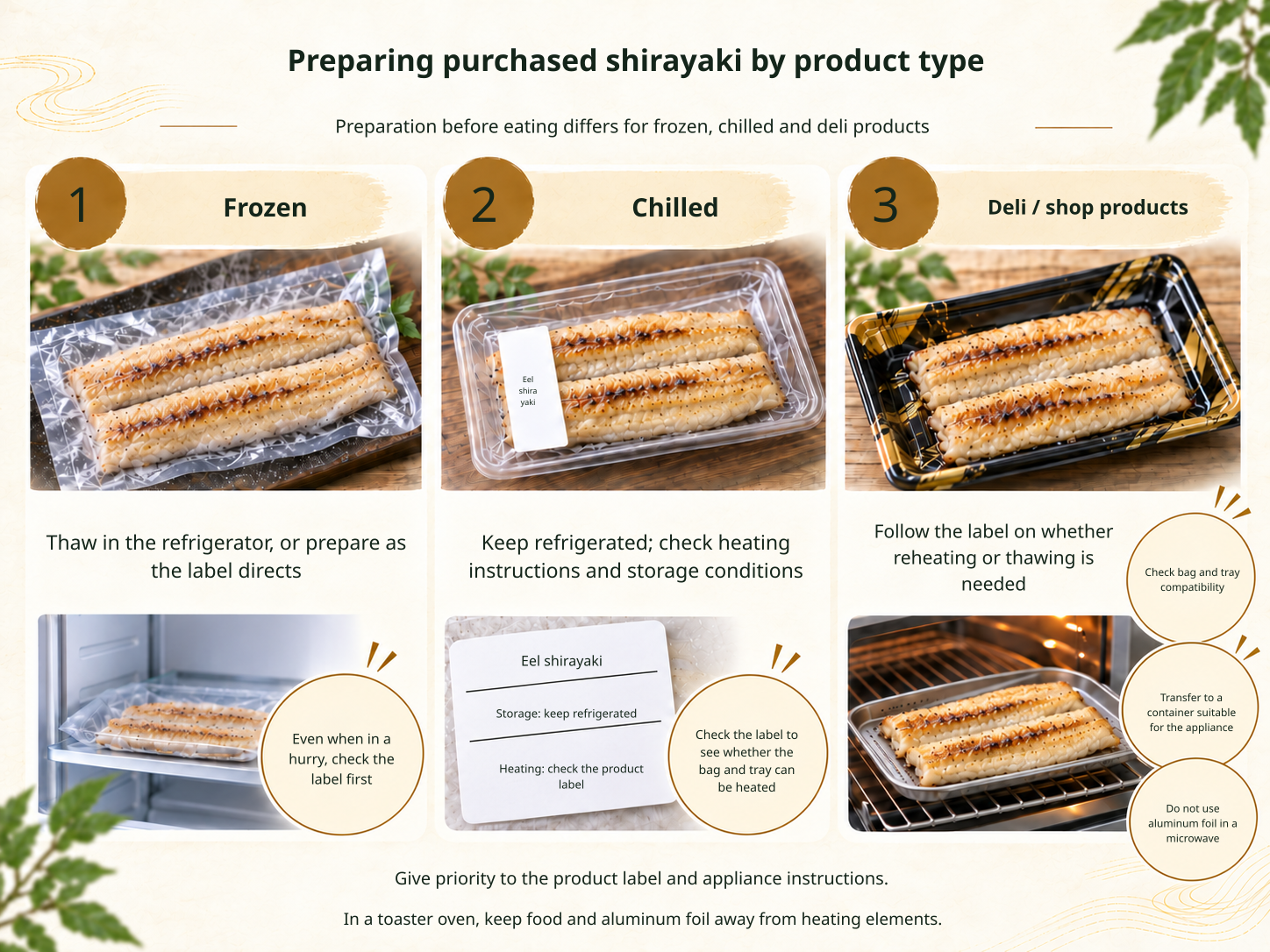
3. Is the pouch suitable for the heating method?
Vacuum packaging does not automatically mean a pouch is suitable for both a hot-water bath and a microwave. Check each indication and any instructions to open or slit it. The outer bag, sauce sachet and condiments may not be suitable for heating together; heat only the items specified.
Microwave food in its pouch only if the manufacturer explicitly allows this. Unagi no Gotoh also warns that microwaving its sealed vacuum packs can cause them to burst.
Choose from the reheating methods the product allows
Do not choose solely for convenience or a browned finish: first check which appliances the product instructions permit. The following are checks for each method. Follow your product and appliance instructions for specific power settings and times.
Hot-water bath: heat a suitable pouch as directed
If the product can be heated in its pouch in hot water, follow instructions such as water quantity and heating time. Do not simply leave the pouch unattended in the pan; check that the specified conditions are maintained. Use utensils to remove it and beware of hot steam and liquid when opening.
Some sellers suggest browning the surface after the water bath, but this is an optional finish. Two-stage heating is not always necessary. Complete the heating the product requires first, then choose an approved finishing method only if you want extra roasted aroma.
Microwave: check suitability and power
For microwave-suitable products, follow the specified power, container and covering instructions. If the manufacturer says to remove the pouch, transfer the eel to a heatproof plate. Read the power setting as carefully as the time.
After heating, check thick areas as well as the edges. A hot surface does not mean the centre is equally hot. Follow the manufacturer’s instructions and, where needed, check the centre with a clean food thermometer to confirm adequate heating. Appearance or steam alone is not a guarantee of safety.
Do not use aluminium foil in a microwave.
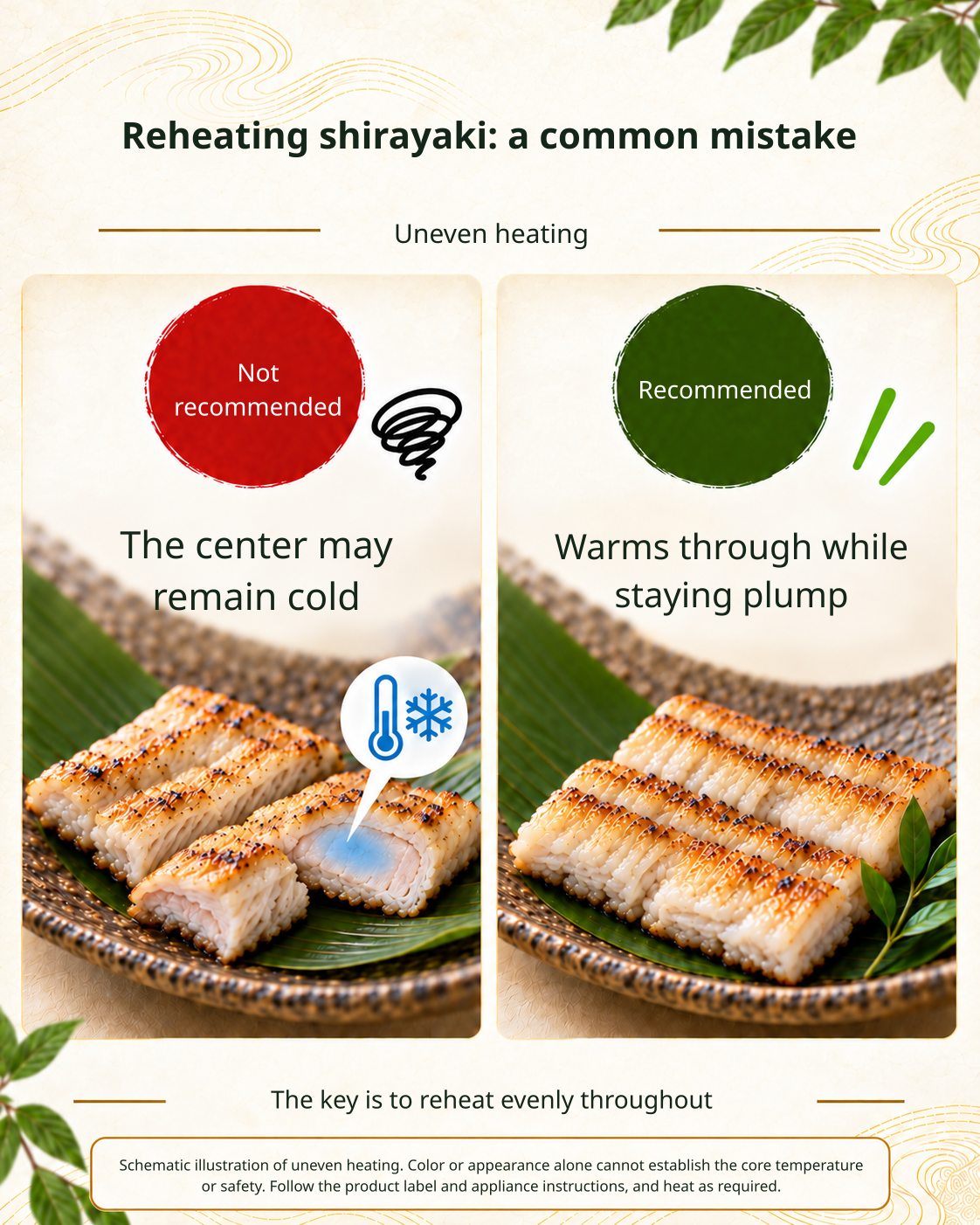
Frying pan: warm the centre before scorching the outside
If the seller recommends reheating in a frying pan, check the heat setting, whether to use a lid and how to add moisture. The official Tosa Ryori Tsukasa/Neboke online shop describes removing its shirayaki from the pouch and grilling it over low heat while turning. Complete any specified preparation before using a pan.
Do not assume high heat will finish it faster; watch the flesh as it warms. If turning is required, handle it gently to avoid breaking it up. Follow the specified cooking method before deciding whether to add sake or oil.
Grill or toaster oven: watch the surface colour
These can provide a browned finish, but check the product guidance and appliance manual to see whether they are suitable. Unagi no Gotoh suggests opening its vacuum-packed product after the hot-water bath and lightly browning the surface in a toaster oven.
Browning alone does not mean a cold centre has warmed through. Distinguish reheating from finishing the surface and avoid overcooking. Use aluminium foil or other materials only as permitted by the appliance instructions.
For toaster ovens, follow the appliance manual. Keep aluminium foil away from heating elements.
Try small changes in seasoning
Instead of preparing many condiments, start by comparing a plain bite with one lightly seasoned. Leaving the whole portion unseasoned at first lets you adjust as you eat.
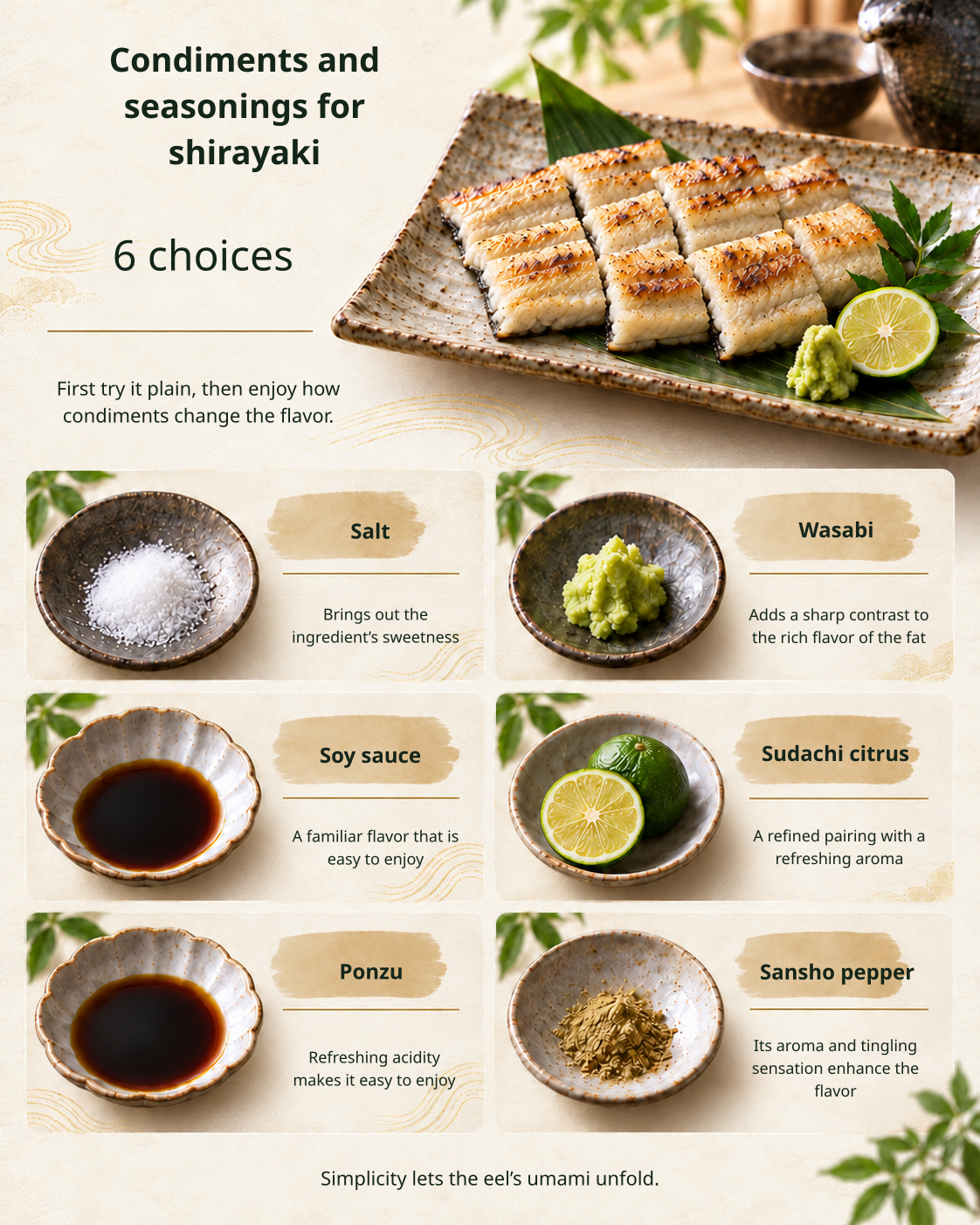
Taste the first bite plain, then try wasabi soy sauce
After reheating, taste one piece plain before seasoning the entire portion. Add a little wasabi and soy sauce to the next piece to compare the change. Specialist shops also recommend this combination in their official guidance.
Put soy sauce in a separate dish and dip just an edge of a piece to control the amount. If you dislike wasabi, choose another condiment. Finding a flavour you enjoy matters more than following a supposed connoisseur’s way.
Try salt, ginger and citrus in separate small dishes
Other options include a little salt, ginger soy sauce for aroma or a squeeze of lemon. Unagi no Gotoh also lists ginger soy sauce, lemon and salt as ways to enjoy shirayaki.
Adding everything at once makes the differences harder to appreciate. Two or three condiments in small dishes, sampled a bite at a time, are enough. Choose citrus for acidity or wasabi or ginger for a pungent aroma, according to your taste.
With rice, set aside a plain portion before adding sauce
One option is shirayaki over warm rice with shredded nori and preferred condiments. Add seasoning little by little to the part you are eating to adjust the balance between rice and eel.
If using kabayaki sauce, first set aside a little plain shirayaki so you can enjoy both flavours. Simply pouring on sauce is different from the process of grilling kabayaki with sauce. For home variations, consult the product’s or seller’s cooking instructions.
Storage and leftovers
Prepare only what you will eat and do not leave reheated food at room temperature for long. For storing and reheating leftovers, consult both the product label and the Ministry of Health, Labour and Welfare’s household hygiene guidance. It recommends dividing leftovers into shallow containers to cool quickly and reheating thoroughly.
The ministry’s general heating guideline is a core temperature of 75°C for at least 1 minute. This is not an appliance-specific reheating time for shirayaki, nor does it mean reheating removes every hazard. Do not assume that food with storage or use-by problems becomes fit to eat simply by heating it.
Frequently asked questions
- Can I eat it cold?
- Check whether the product requires heating. Do not rely only on the word “cooked”; if further heating is required, follow the label.
- How many minutes should I reheat shirayaki?
- It depends on size, thickness, whether it is frozen or chilled and appliance power. Check the product’s specified time and its condition after heating instead of using one universal time.
- Do I need wasabi to enjoy it?
- Wasabi is optional. Try small amounts of salt, ginger soy sauce or citrus and choose what suits you.
Related articles