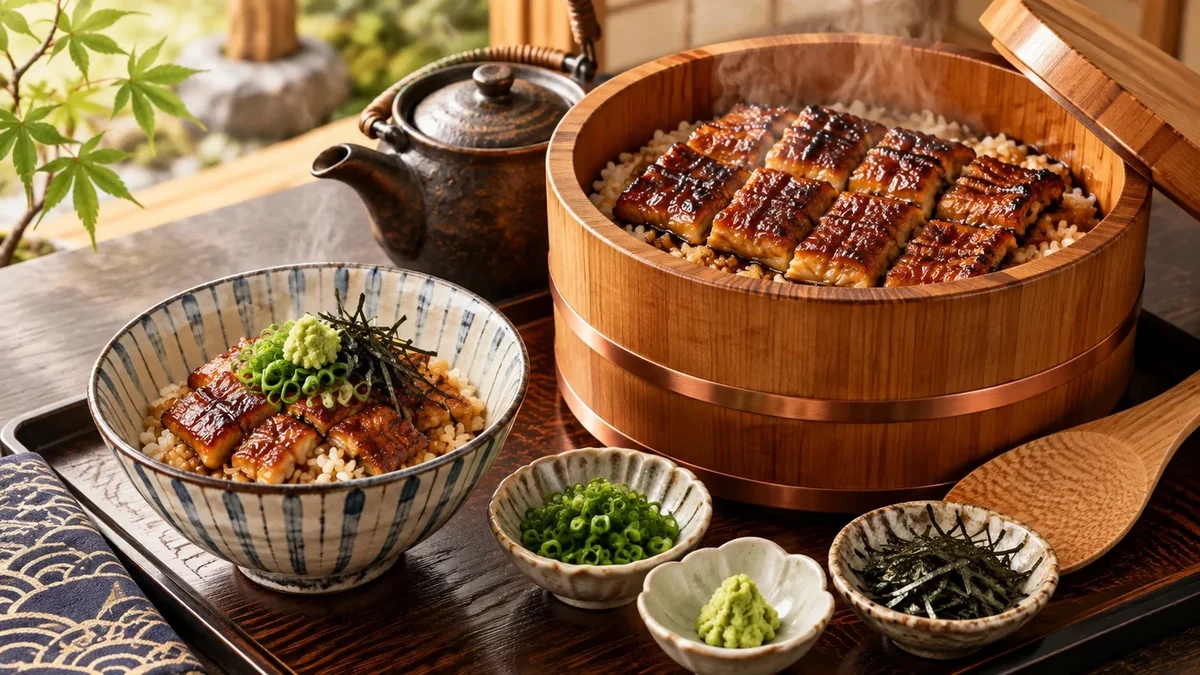
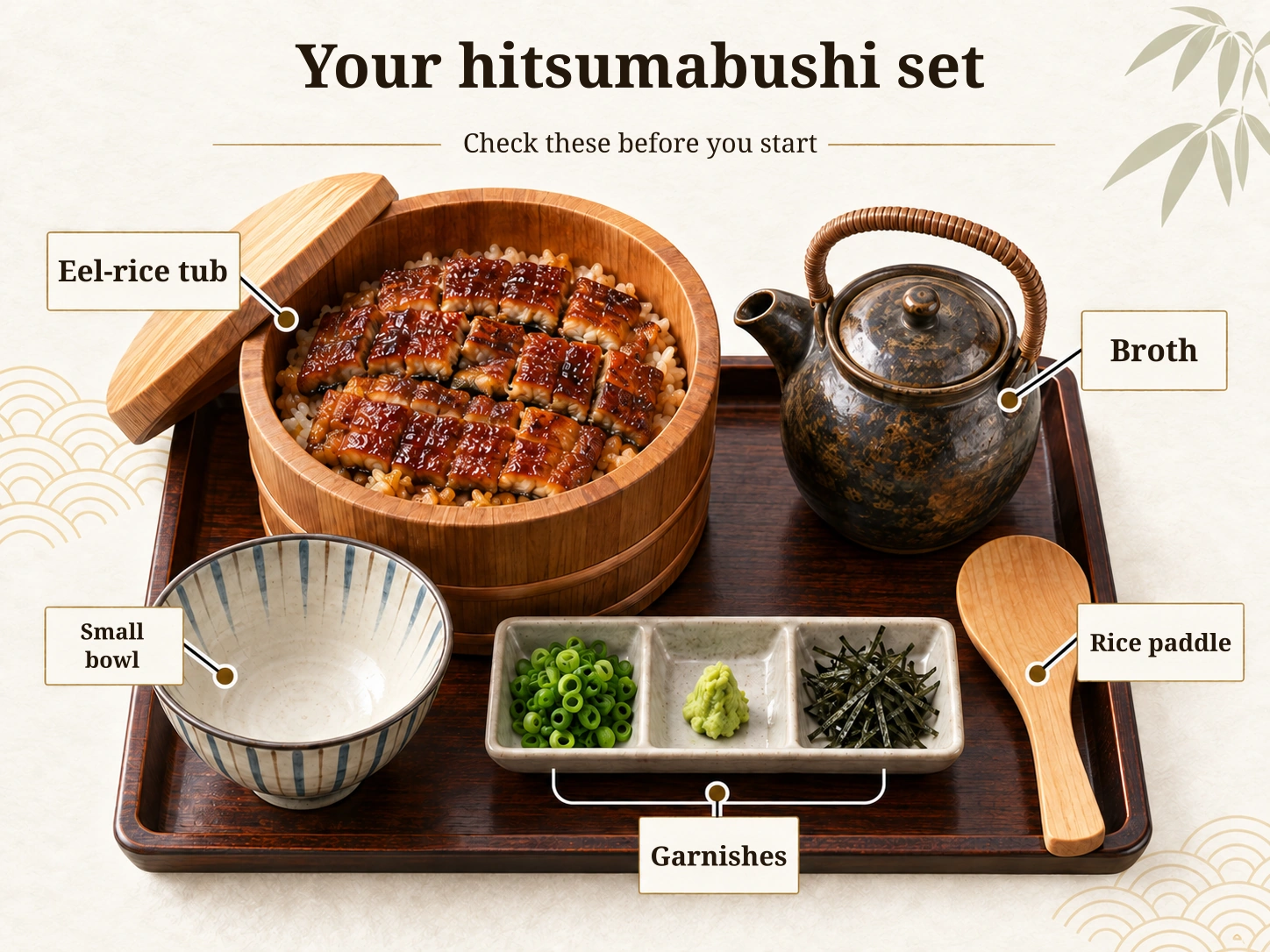
Divide the eel rice into four portions. Serve each in a small bowl: plain, with garnishes, with broth or tea, then your favorite again. That is three styles across four portions—not four full bowls of rice.
One eel-rice dish, several ways to enjoy it
Hitsumabushi is grilled, glazed eel cut into small pieces and served over rice, with garnishes and a liquid for an ochazuke-style finish. It is associated with Nagoya, but the vessels, accompaniments and serving instructions differ between restaurants.
The familiar four-portion sequence is an easy introduction, not an etiquette test. Try the base flavor, change it a little, then choose what you enjoy. When a restaurant supplies its own instructions, use those for the meal in front of you.
Before you start: identify the small bowl and the pouring liquid
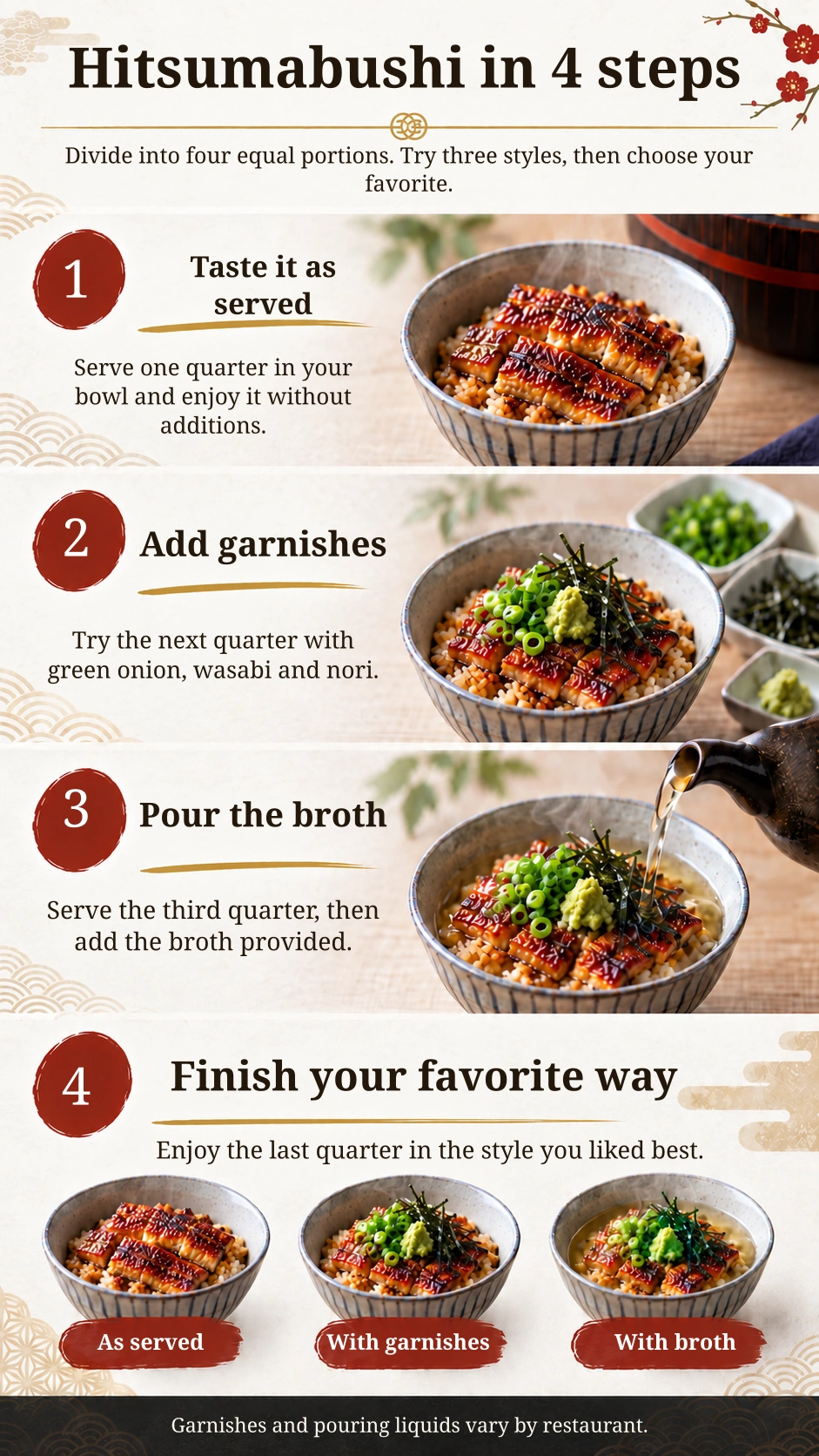
The large tub, often called an ohitsu, holds the eel rice. The small ceramic bowl is for eating a portion at a time; the broad rice paddle, or shamoji, helps you transfer rice and eel together. Small dishes hold the garnishes. The pictured set is an example, not a promise that every restaurant uses identical tableware.
You may receive both a pouring vessel and a separate soup bowl. Check which liquid is intended for the rice rather than deciding from the shape of the vessel. A simple question—“Is this the broth to pour over the rice?”—is more useful than guessing from its color or name.
Divide the eel and rice together, not just the topping
Use the paddle to mark an imaginary cross through the contents of the tub, creating four roughly equal portions. You are dividing the food, not the wooden container. No measurement is necessary: this is a way to save enough for each tasting.
Transfer the first quarter to the small bowl, taking both eel and rice. Avoid lifting all the eel off the top for the first serving. Leave the remaining rice in the tub without additional garnishes or broth, so you can choose a different style later.
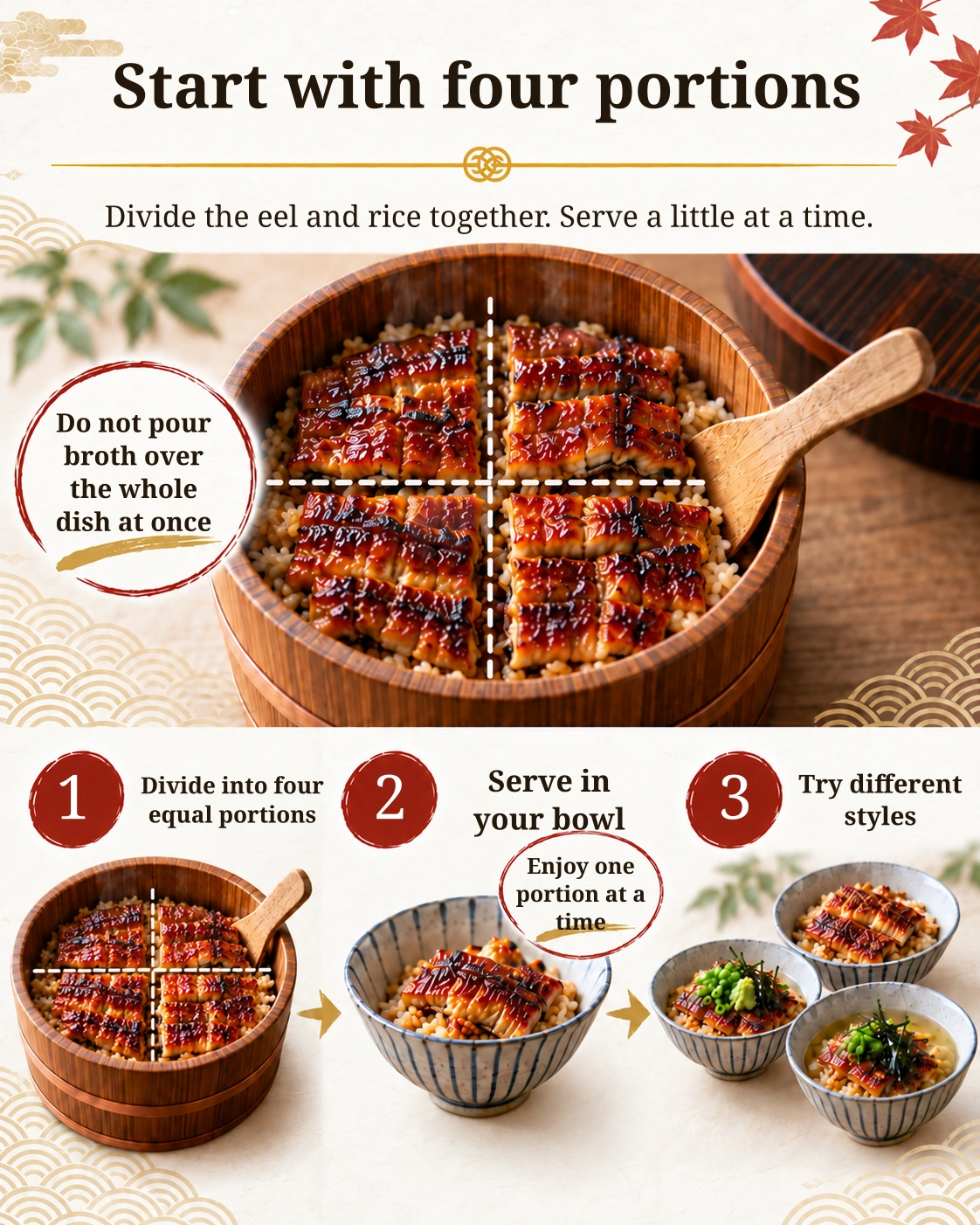
First portion: taste the dish as it arrives
Eat the first portion without adding garnishes or liquid. “Plain” does not mean unsauced eel or unseasoned rice. It means enjoying the prepared dish as the restaurant serves it, before making your own additions.
Notice the grilled eel, its glaze and how they taste with the rice. Starting here gives you a point of comparison for the more aromatic second portion and the softer, broth-soaked third.
Second portion: add a little garnish
Serve the next quarter in your bowl and add some of the supplied spring onion, wasabi and shredded nori. Keep a little back for later instead of using every garnish at once.
Begin with a small amount of wasabi and adjust to taste. You can leave it out, use only onion or nori, or try the garnishes a little at a time. Mixing everything thoroughly is not a requirement; adding a touch to each bite is another way to compare flavors.
Third portion: make ochazuke in the small bowl
Serve the next quarter, add the garnishes you enjoy, and pour over the broth or tea provided for this purpose. Finish this portion in the small bowl rather than pouring liquid over the entire tub, which would leave you fewer choices for the last portion.
Add the liquid gradually, judging it against the amount of rice in the bowl and the texture you prefer. There is no universal milliliter rule in this guide. If the liquid is hot, let a spoonful or mouthful cool enough to enjoy comfortably.
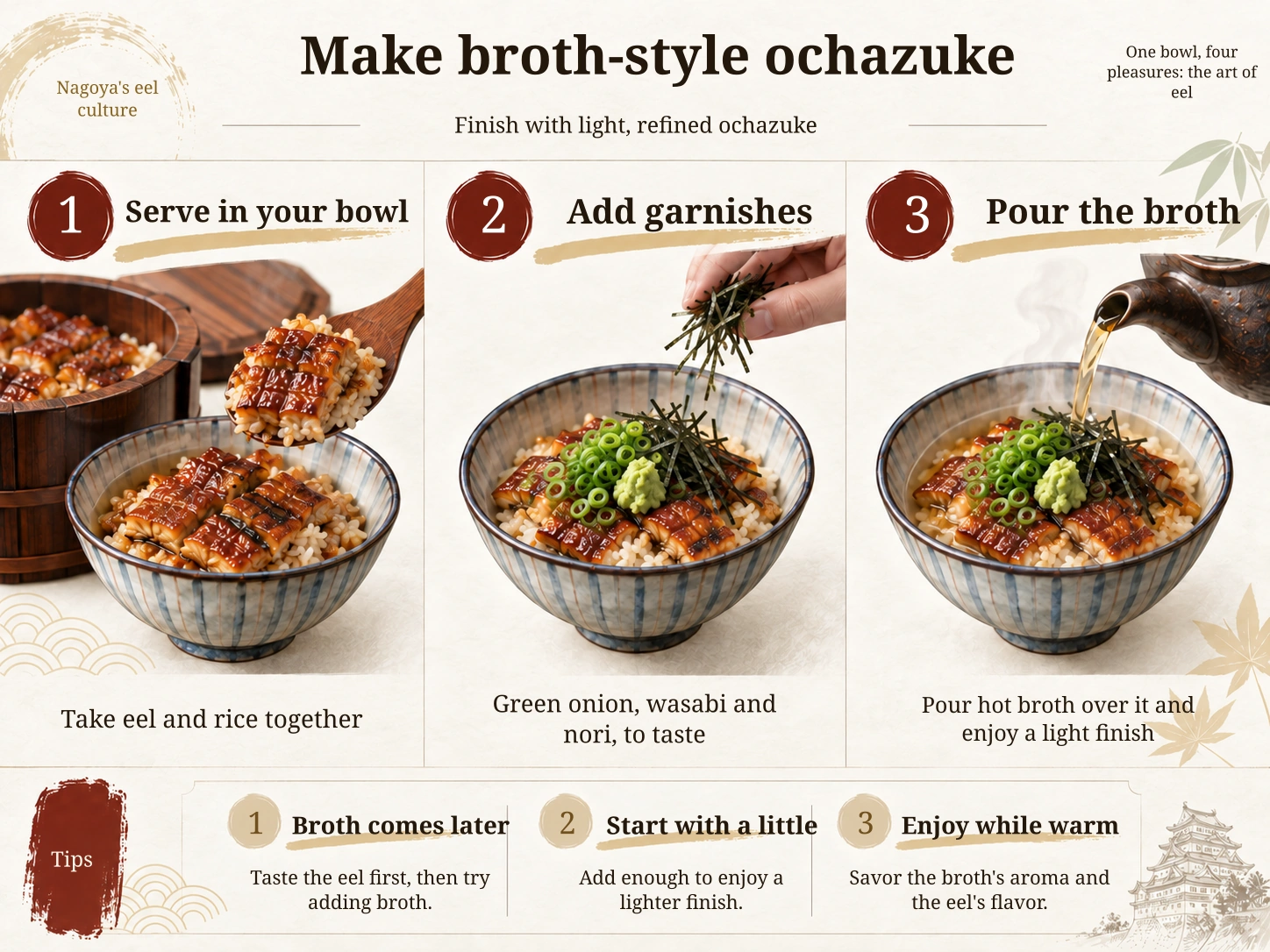
Last portion: repeat the style you liked best
The remaining quarter is your choice: plain, with garnishes or as ochazuke. You are not expected to invent a fourth flavor, and the meal does not have to end with broth.
Go back to the glazed eel and rice if that was your favorite, keep the fresh garnishes, or finish with the rice in broth. The purpose of the sequence is to discover a preference, not to follow a rigid rule.
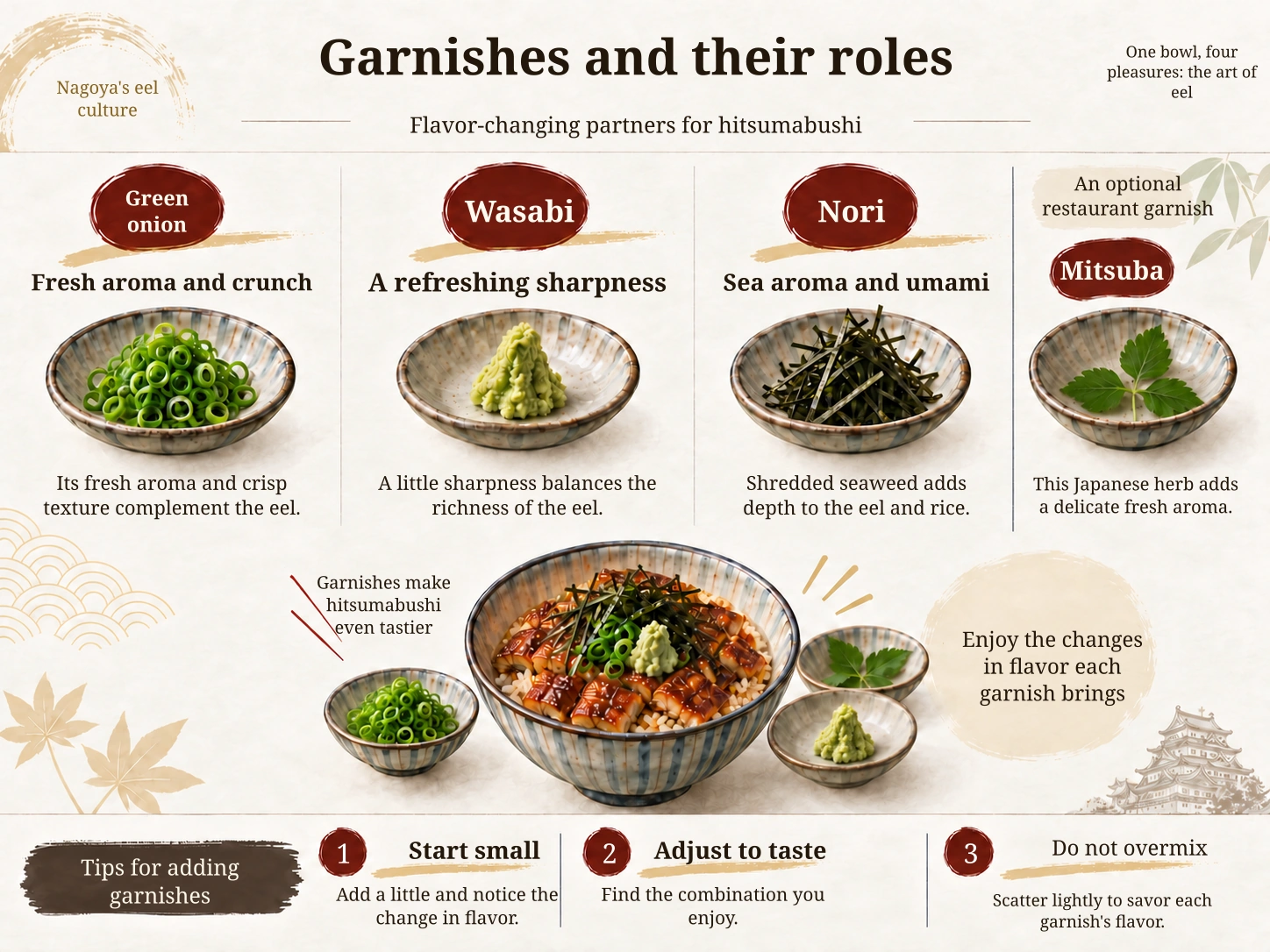
A practical way to choose your garnishes
Spring onion brings a fresh aroma and a little texture. Wasabi adds a sharp, clean heat; shredded nori adds a seaweed aroma. Start with one addition, then combine them if you like the result.
The illustration shows examples of familiar accompaniments, not a compulsory ingredient list. Restaurants may offer a different selection or amount. You do not need to copy the picture or use every garnish to enjoy the meal.
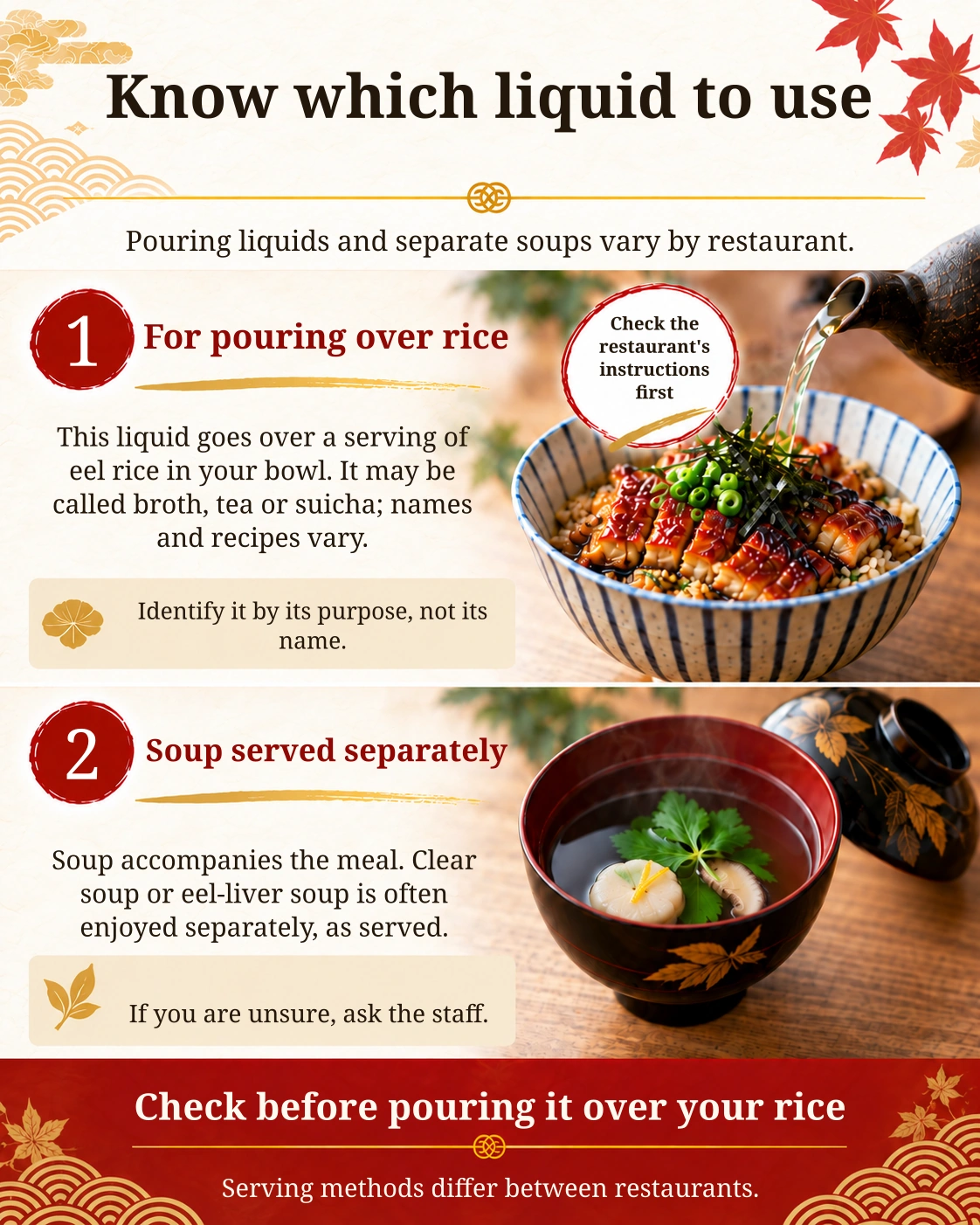
Ochazuke does not always mean green tea
The word ochazuke can suggest tea, but some restaurants use dashi. Shirakawa, for example, explains that its “suicha” is based on a lightly seasoned broth rather than ordinary Japanese tea.
Atsuta Hōraiken lists soup and dashi separately with its hitsumabushi. In a set like that, one liquid is for the rice and the other is a soup to enjoy alongside. Do not assume the soup is always liver soup, or that every pot contains the same kind of broth.
The important question is practical: which liquid does this restaurant want you to pour into your rice bowl? Ask before pouring if the purpose is unclear. The names and tableware alone are not a reliable substitute for that explanation.
Enjoy the sequence at home without special tableware
For a home version, prepare cooked unagi kabayaki, rice, garnishes you like and a suitable broth or tea for ochazuke. A larger serving bowl can stand in for an ohitsu, with a smaller bowl for each portion. This is a serving suggestion, not a tested recreation of a particular restaurant’s recipe.
Follow the eel product’s own thawing and reheating instructions. Cut the warmed eel into manageable pieces, arrange it over rice and divide the dish into four. Keep the garnishes and pouring liquid separate so everyone can adjust their own bowl.
Adapt the amount and accompaniments to your meal
If the rice portion concerns you, ask when ordering whether a smaller amount is available. The four-way division is a tasting plan, not an obligation to finish a fixed quantity. Skip a garnish you dislike rather than treating it as a test.
If you plan to share, first ask whether the restaurant allows it and can supply bowls. Divide the food between diners before adding liquid or garnishes. That preserves each person’s choice instead of changing the entire tub for everyone.
Frequently asked questions
- Do I have to divide it into exactly four equal parts?
- Four roughly equal portions make comparison easy, but precise measurement is unnecessary. Follow the restaurant’s guidance and adjust to what you can comfortably eat.
- Can I start with broth?
- Unless the restaurant gives different instructions, you can choose your preference. For a first visit, tasting a little without additions makes the later change easier to appreciate.
- Can I leave out the wasabi?
- Yes. Use onion or nori instead, or enjoy a portion without garnishes. They are there to let you adjust the flavor.
- Should I mix the whole tub before eating?
- For the sequence in this guide, divide the food first and transfer eel and rice together. There is no need to add all the garnishes or liquid to the entire tub.
- Do I need a fresh bowl for each portion?
- This guide assumes you use the small serving bowl supplied with the set in sequence. The four illustrations show stages, not a requirement to order four separate bowls.
- How much broth should I pour?
- Add a little at a time, according to the amount of rice and your preferred texture. Use any specific amount suggested by the restaurant.
- Is the separate soup the liquid for the rice?
- Not necessarily. A separate pouring broth may also be supplied. Ask the staff before pouring if you are unsure.
- Can I try this without an ohitsu at home?
- Yes. Use a larger serving dish for the eel rice and a small bowl for each portion, keeping the garnishes and broth separate.
Related articles