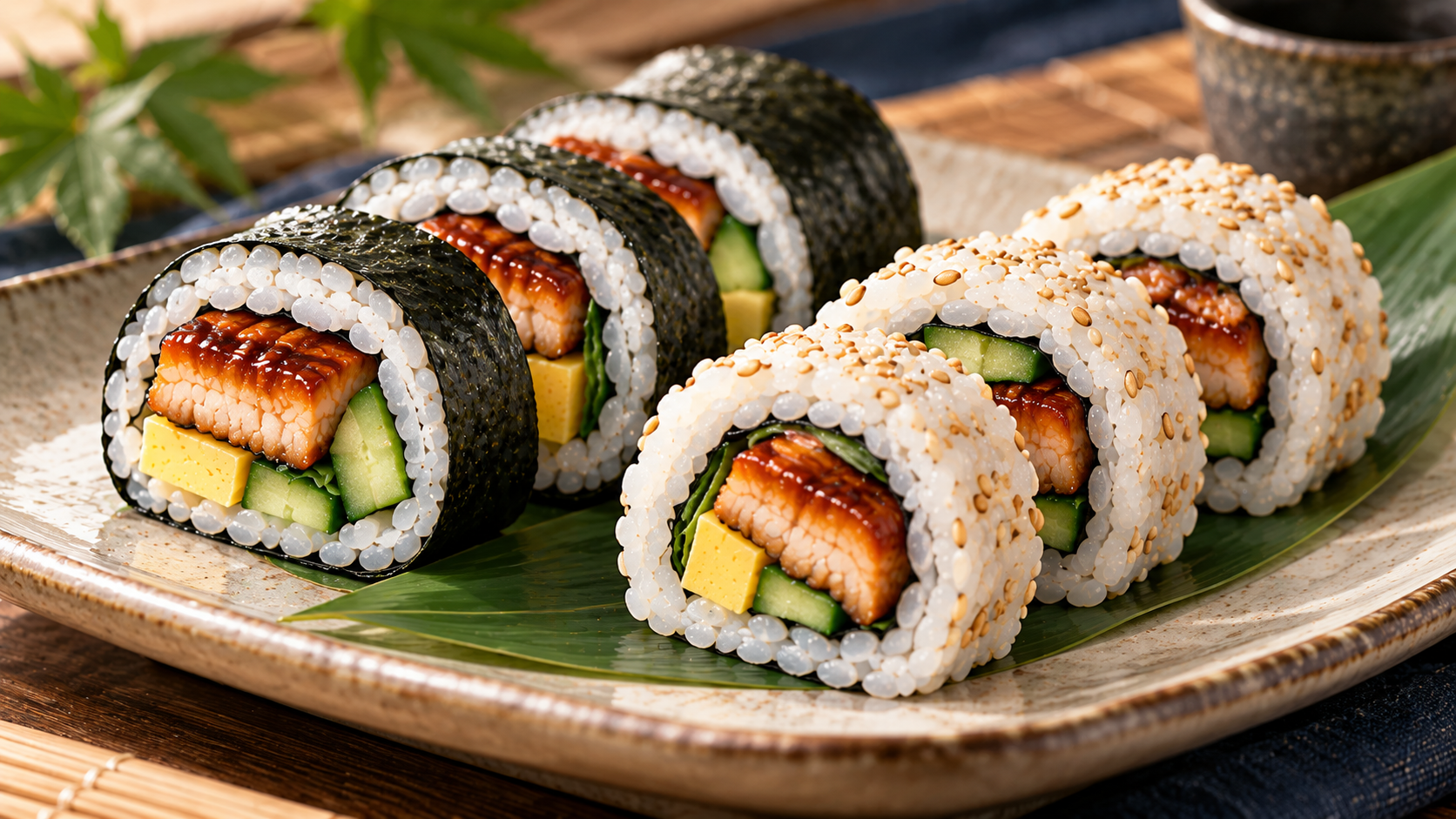
Eel pressed sushi combines cooked kabayaki eel with seasoned sushi rice, shapes the layers in a rectangular mold and cuts the block into portions. A sushi log (bozushi) instead brings the ingredients into an elongated shape using food-safe wrap. The essentials are even rice thickness, aligned eel, gentle pressure and careful slicing. Unlike scattered chirashi sushi, both involve a distinct shaping stage.
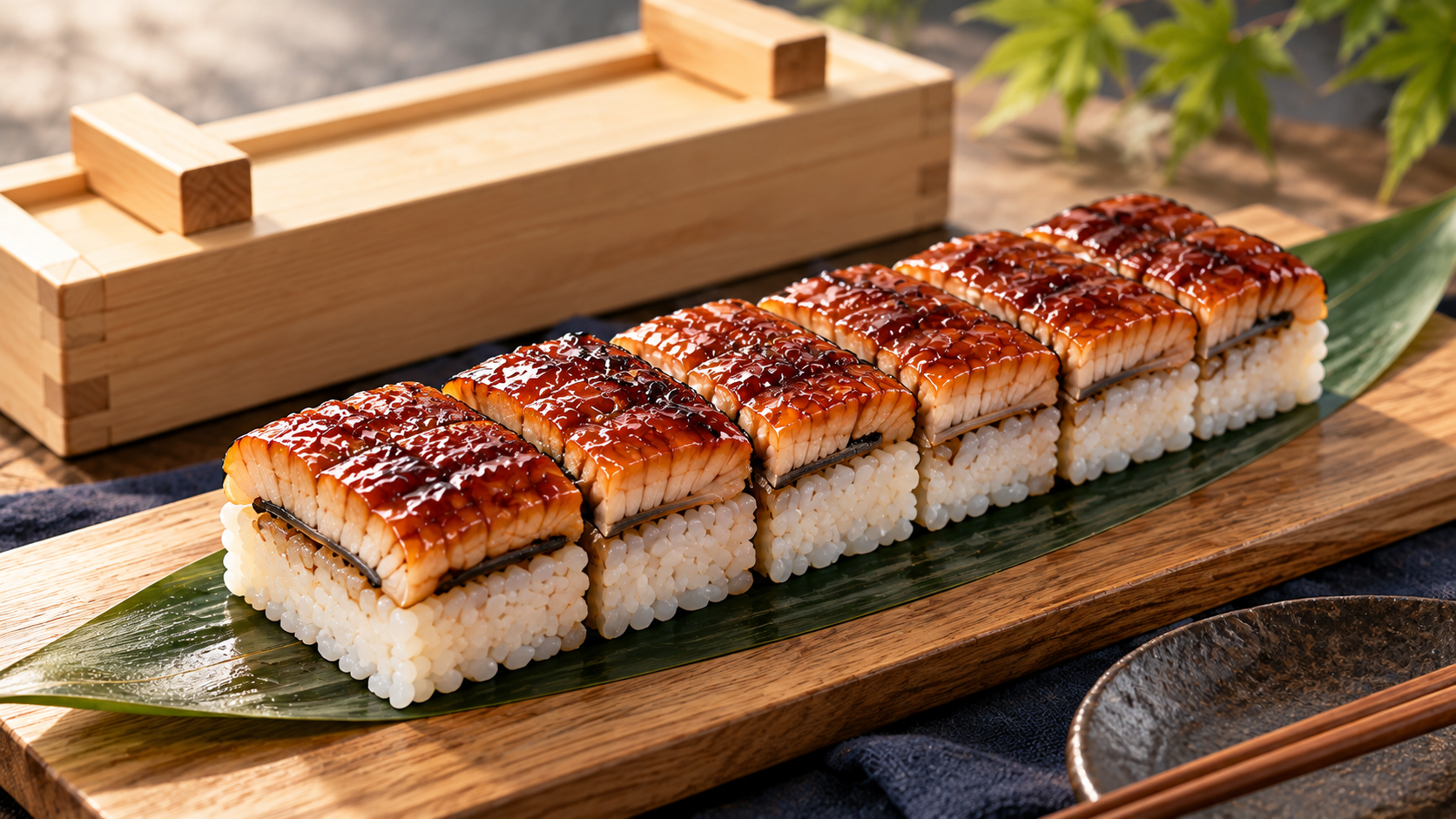
An AI-created editorial illustration of sliced pressed eel sushi and a wooden mold, not a photograph of an actual kitchen or product.
Shape and ingredients
Pressed block versus sushi log
A box mold produces straight sides and a consistent rectangular profile; wrapping makes a longer, softer, rounded log. Both can present the eel uppermost when served, but the order of filling the mold can differ from the orientation on the plate. A sushi log is not necessarily a seaweed maki roll.
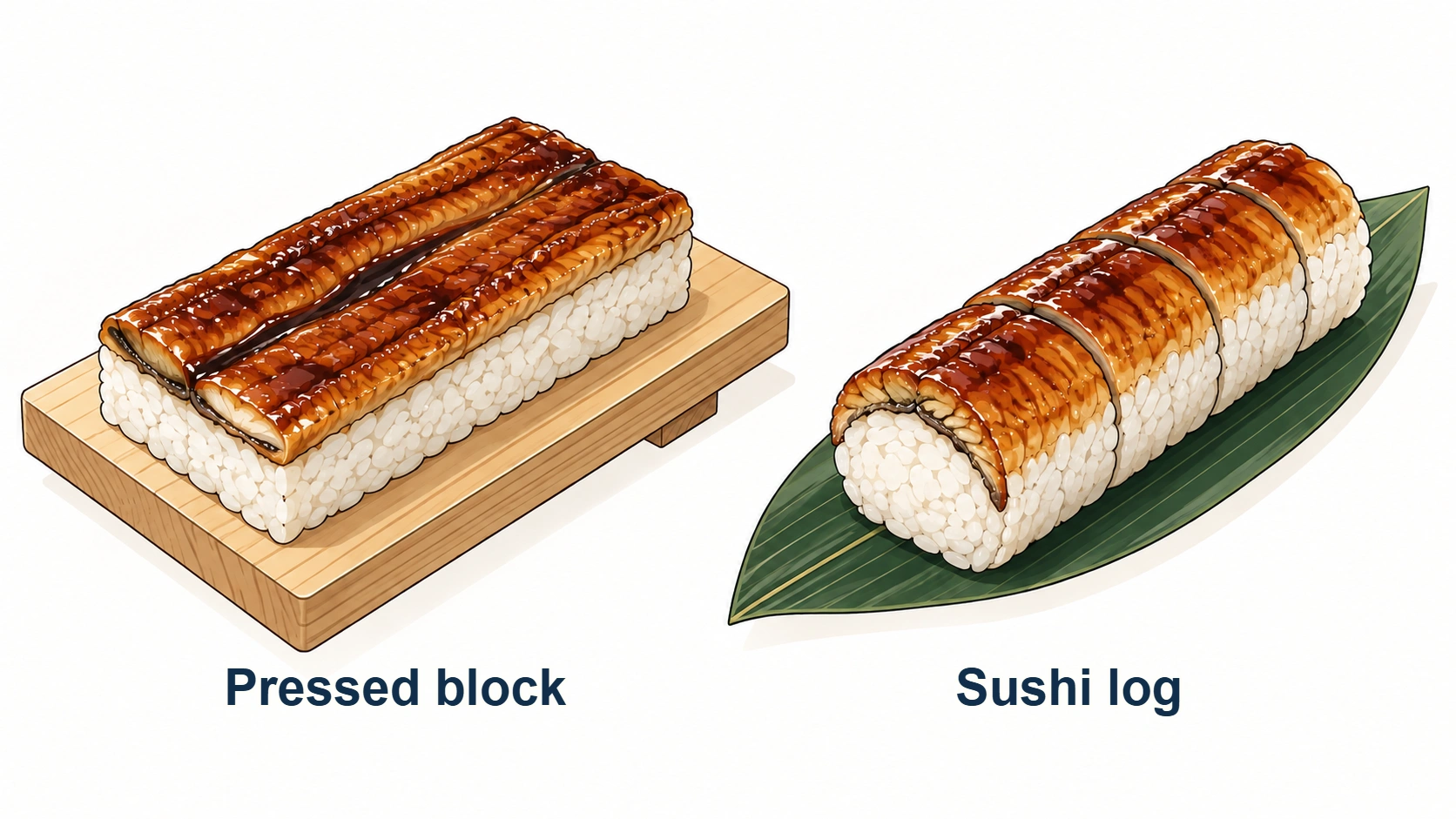
The distinction between a rectangular molded block and an elongated wrapped form.
Reading the layers
A cut face should show cooked eel kabayaki and a cohesive layer of seasoned rice; shiso leaves may sit between rice layers. This cross-section describes the finished arrangement, not a mandatory sequence for loading a mold.
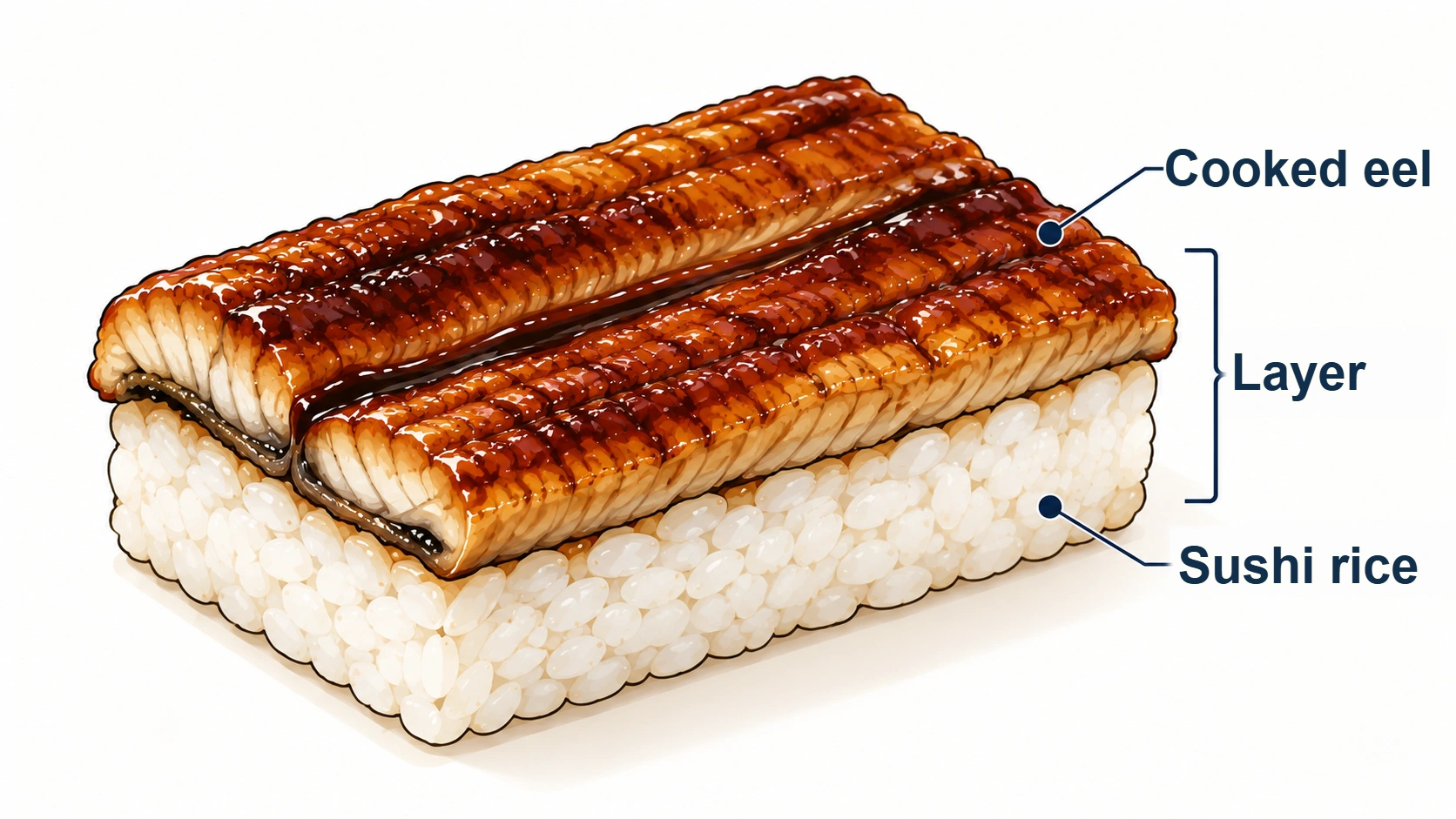
The finished layers are schematic; the filling order depends on the mold and how the sushi is unmolded.
Reference quantities for rice and fillings
The Pal System Saitama eel pressed-sushi recipe, published 1 June 2026, specifies the following for four servings. Its original mold is a repurposed milk carton; these quantities have not been independently tested here in a wooden mold or as a sushi log.
According to Kikkoman's measuring guide, 1 go is 180 mL of rice by volume and 1 Japanese tablespoon is 15 mL. Thus 1½ go means 270 mL of uncooked rice by volume and 3 tablespoons of prepared sushi vinegar mean 45 mL by volume; these are not gram conversions. As a separate recipe for a 2-go batch, Kikkoman's sushi-rice instructions use 2 go rice, 2 go water, 5 cm kombu, 4 tablespoons rice vinegar, 2 tablespoons sugar and 1 teaspoon salt. Do not simply add that seasoning to the 1½-go table above. The same instructions rinse and drain rice for 30 minutes–1 hour, then fold vinegar into cooked rice and fan it until the initial heat has dissipated.
How to use a pressing mold
Prepare a thoroughly cleaned sushi mold, food-contact wrap and a clean board. Thaw and heat the purchased cooked eel according to its package. In the cited Pal System method, eel goes into the lined mold first, rice is placed over it, and the block is inverted when removed. Some diagrams below show eel on top to explain the finished layers: do not mistake the drawings for the source recipe's filling sequence.
1. Line the mold
Cover the inside and corners of the clean mold with a generously sized sheet of food-safe wrap. If using a leaf in contact with the food, use only an appropriately clean, edible leaf. The liner helps release the block without rice sticking to the wood.
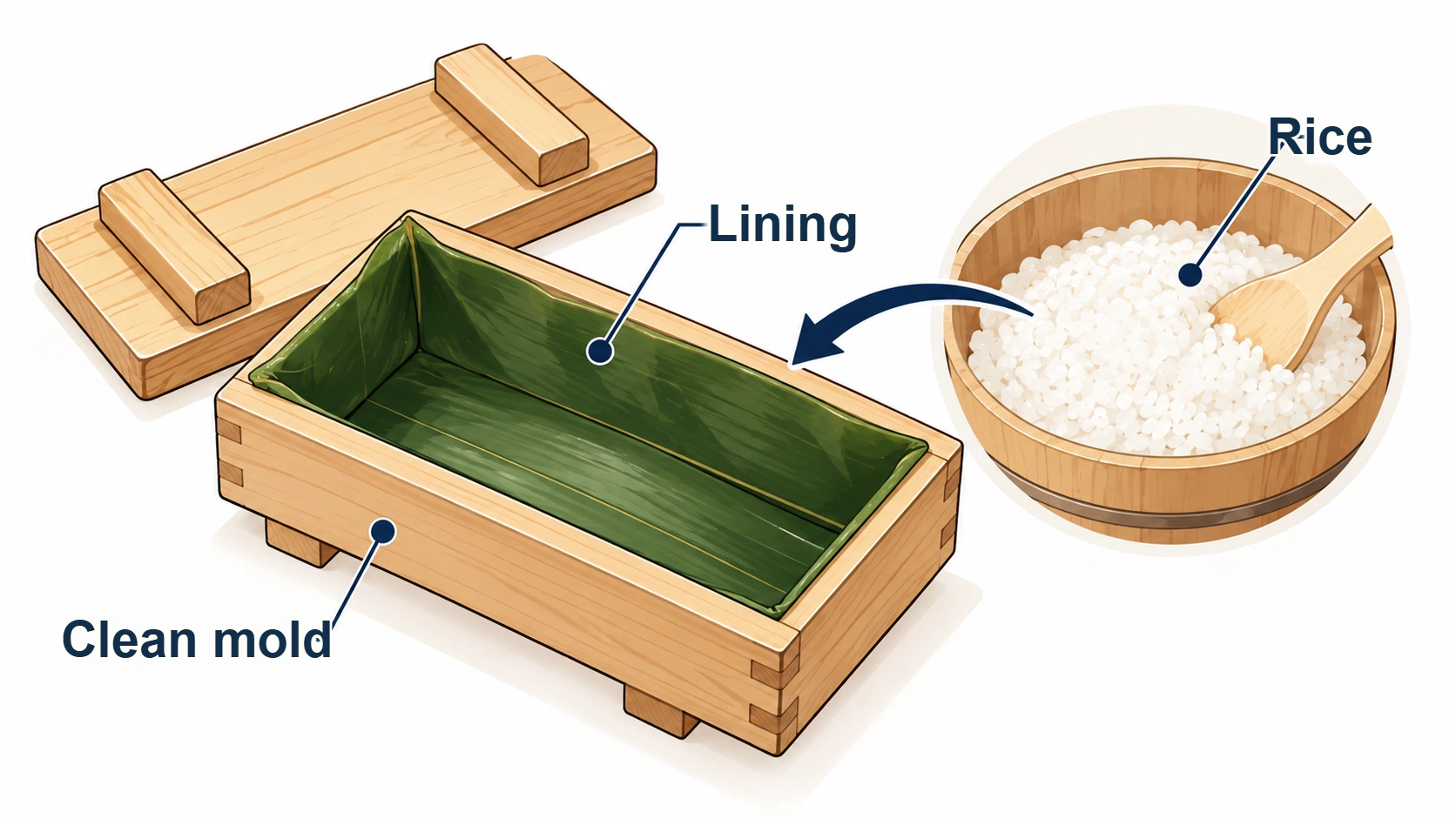
Preparation of the mold; the depicted green liner is not evidence of its food-contact suitability.
2. Spread rice evenly and align the eel
Aim for an even layer and place the eel so that gaps and overlaps are controlled. To follow the cited milk-carton recipe, position the eel skin-side up first, then add half the rice, shiso and the remaining rice before inverting. A drawing showing eel above rice represents the finished cross-section, not a replacement recipe.
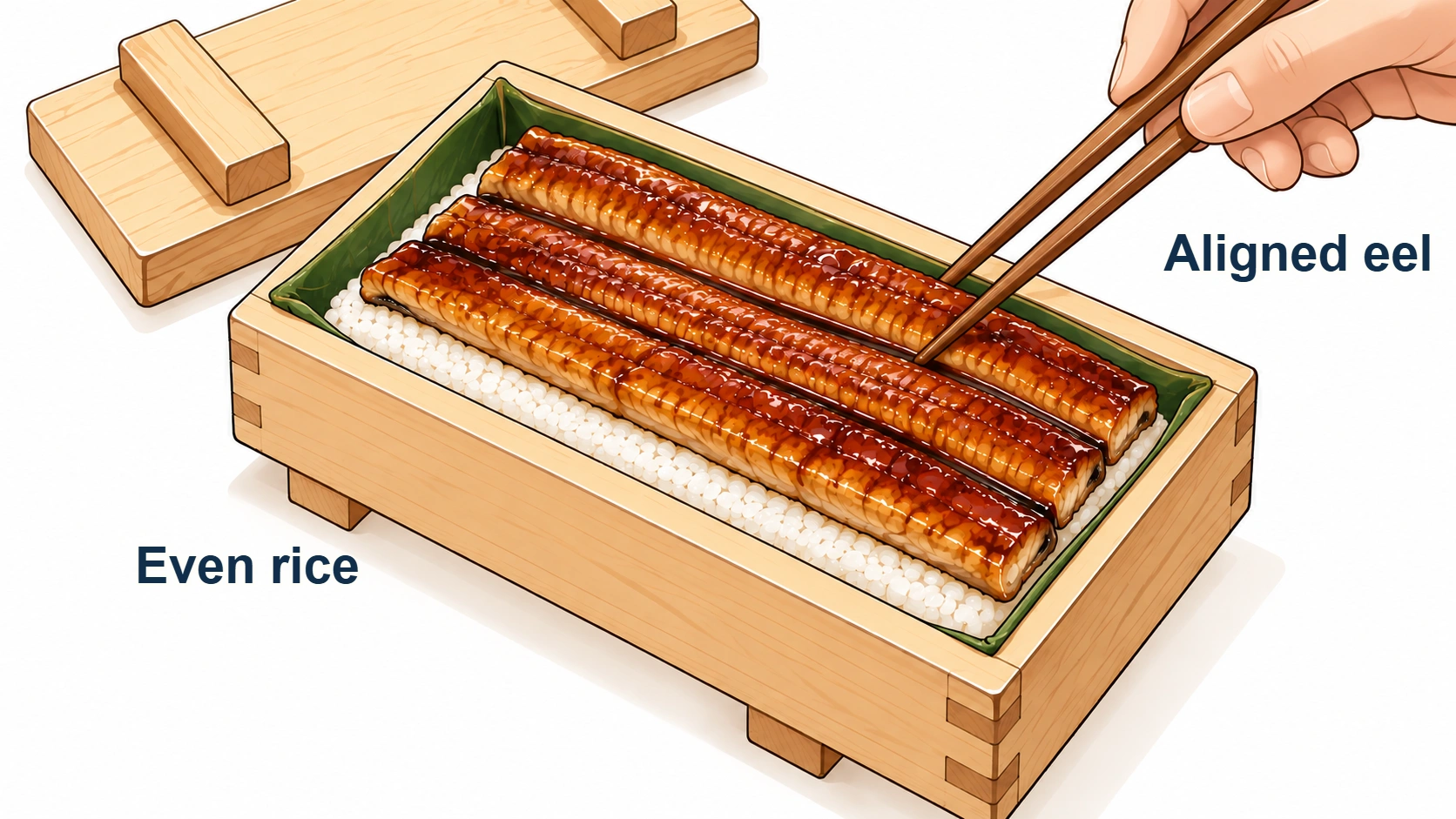
An alignment schematic; consult the cited recipe for the actual inverted filling order.
3. Press gently with a flat lid
Close the wrap and apply a flat press plate or lid so pressure is distributed across the surface. Press only enough to keep the block together when cut; excessively forceful pressing crushes the grains. No numerical pressure or universal pressing duration has been tested for this article. The Pal System recipe likewise calls for a light press while shaping.
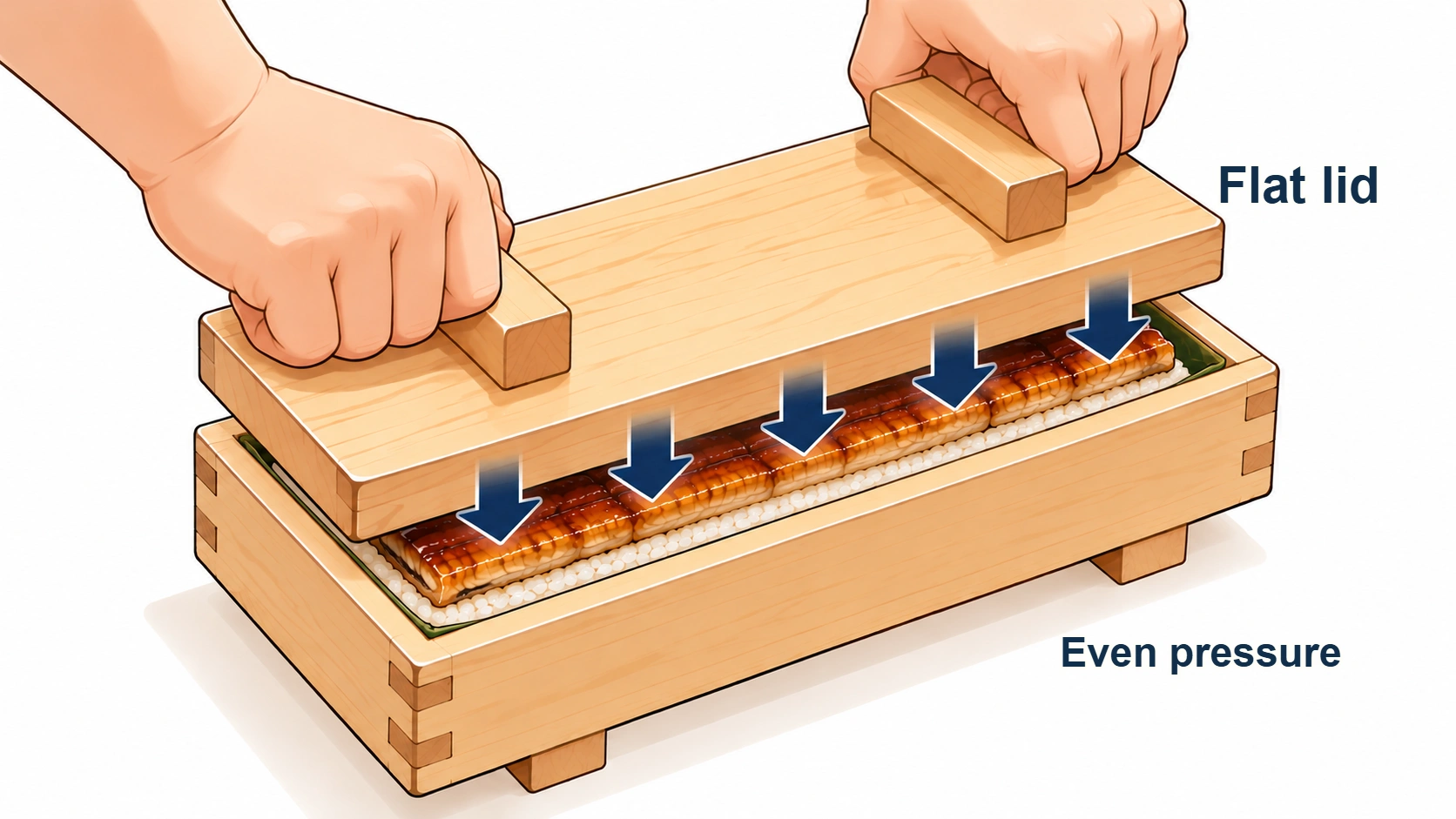
A schematic of gentle, even pressure, not recorded experimental pressure measurements.
Forming a sushi log and slicing
4. Shape a log with wrap
Lay out clean food-safe wrap, arrange eel and rice lengthwise, then fold and shape the bundle into an elongated form. A rolling mat, if used, can stay outside the food-contact wrap. NHK Educational's salmon sushi-log recipe (4 October 2011) demonstrates shaping with wrap, but its fish and ingredient proportions differ from eel sushi. It cannot establish the heating or storage conditions of eel.
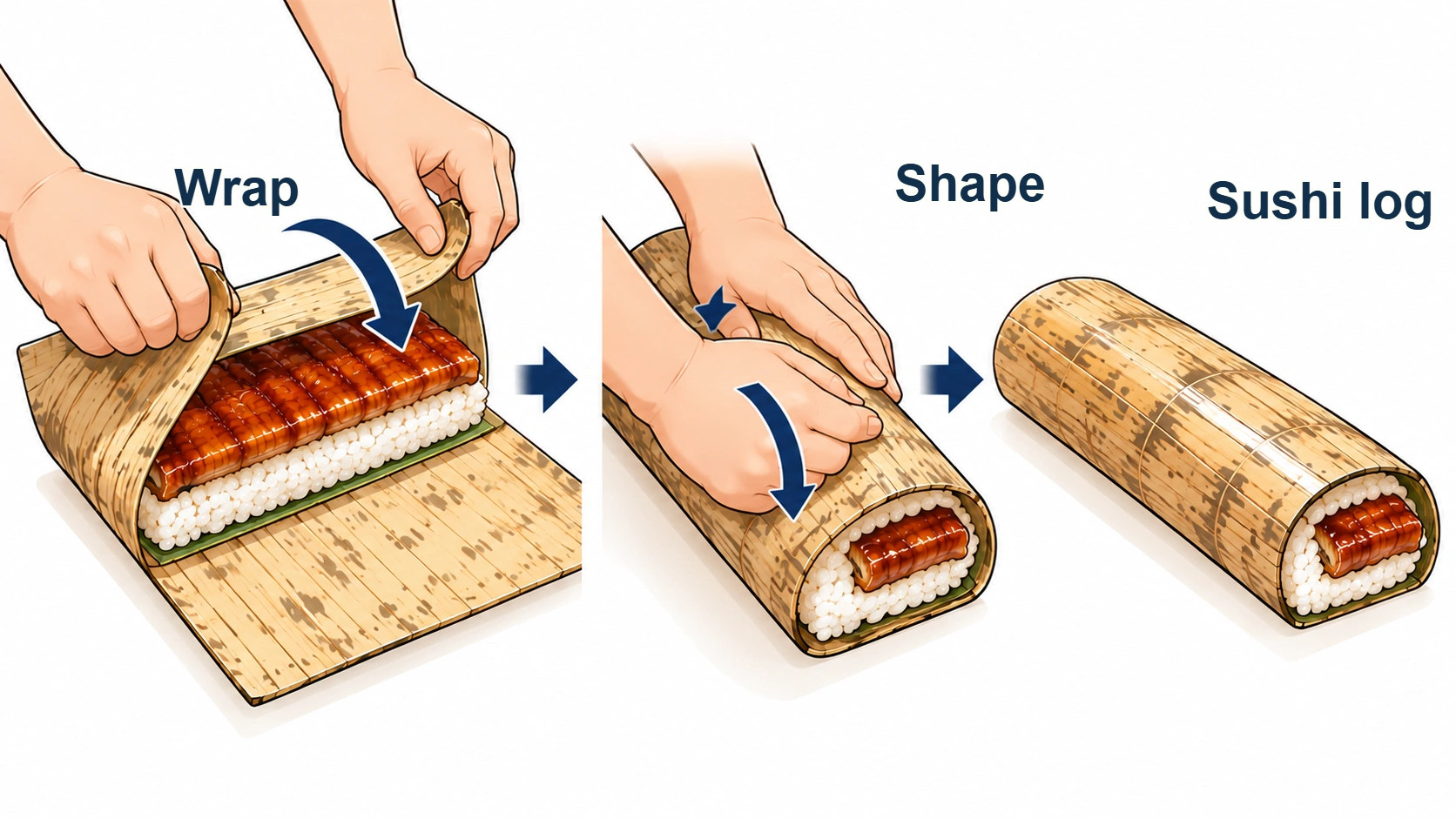
A conceptual sequence for shaping a log; remove the wrap before eating.
5. Release onto a board
Open the mold and support the pressed sushi with its liner while transferring it to a clean cutting board. Check for an even thickness and displaced eel before cutting. Supporting the block with the wrap helps prevent breakage.
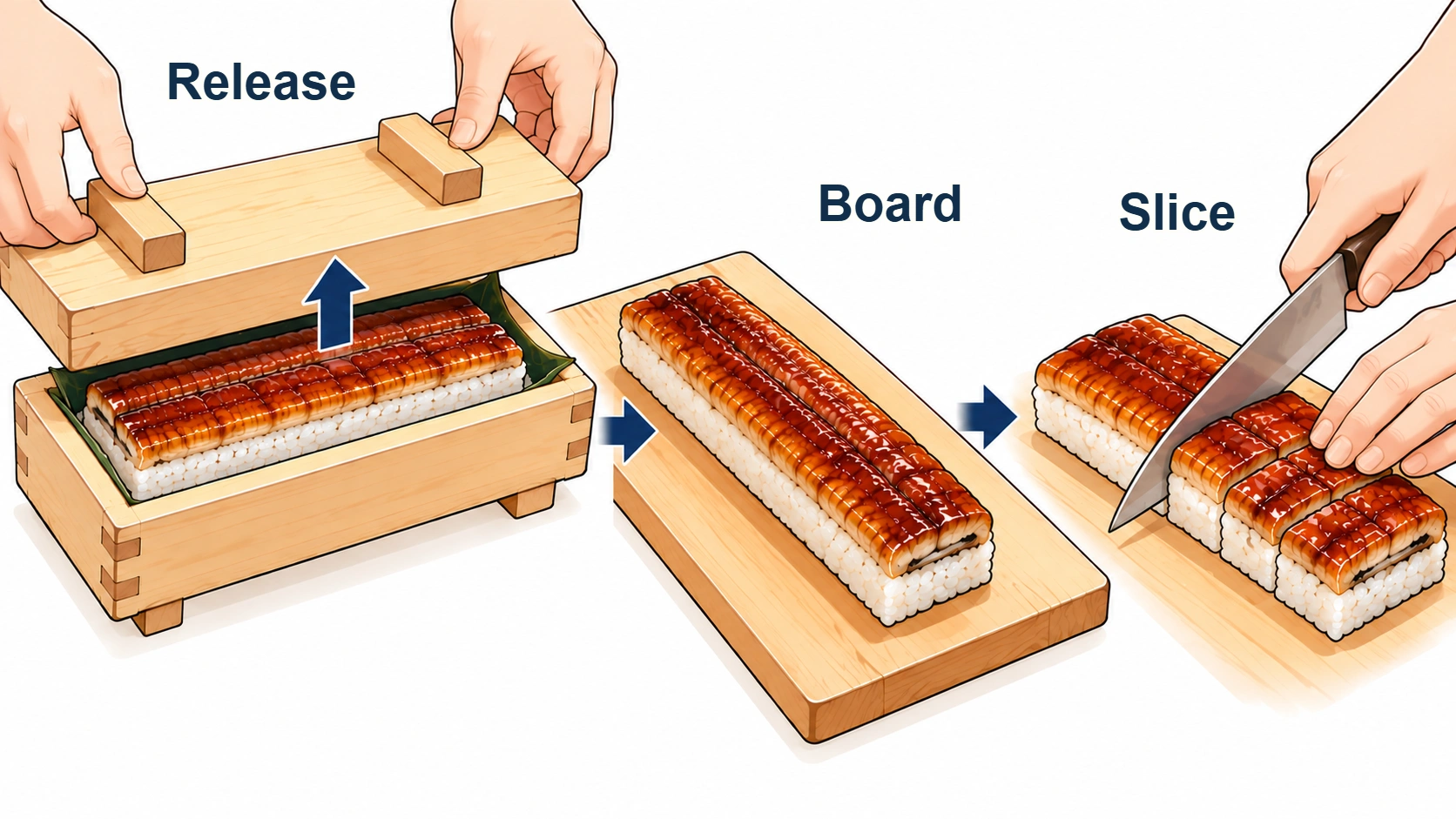
Illustrated sequence: release, transfer, then slice.
6. Keep the cut edges neat
Use a clean, sharp knife rather than crushing the rice with the blade. The Pal System recipe recommends cutting while the wrap remains on and wiping the knife with a clean damp cloth between cuts. If the edges break, reassess the blade, cutting motion and degree of compression. Remove the wrap and plate only the portions to be served.
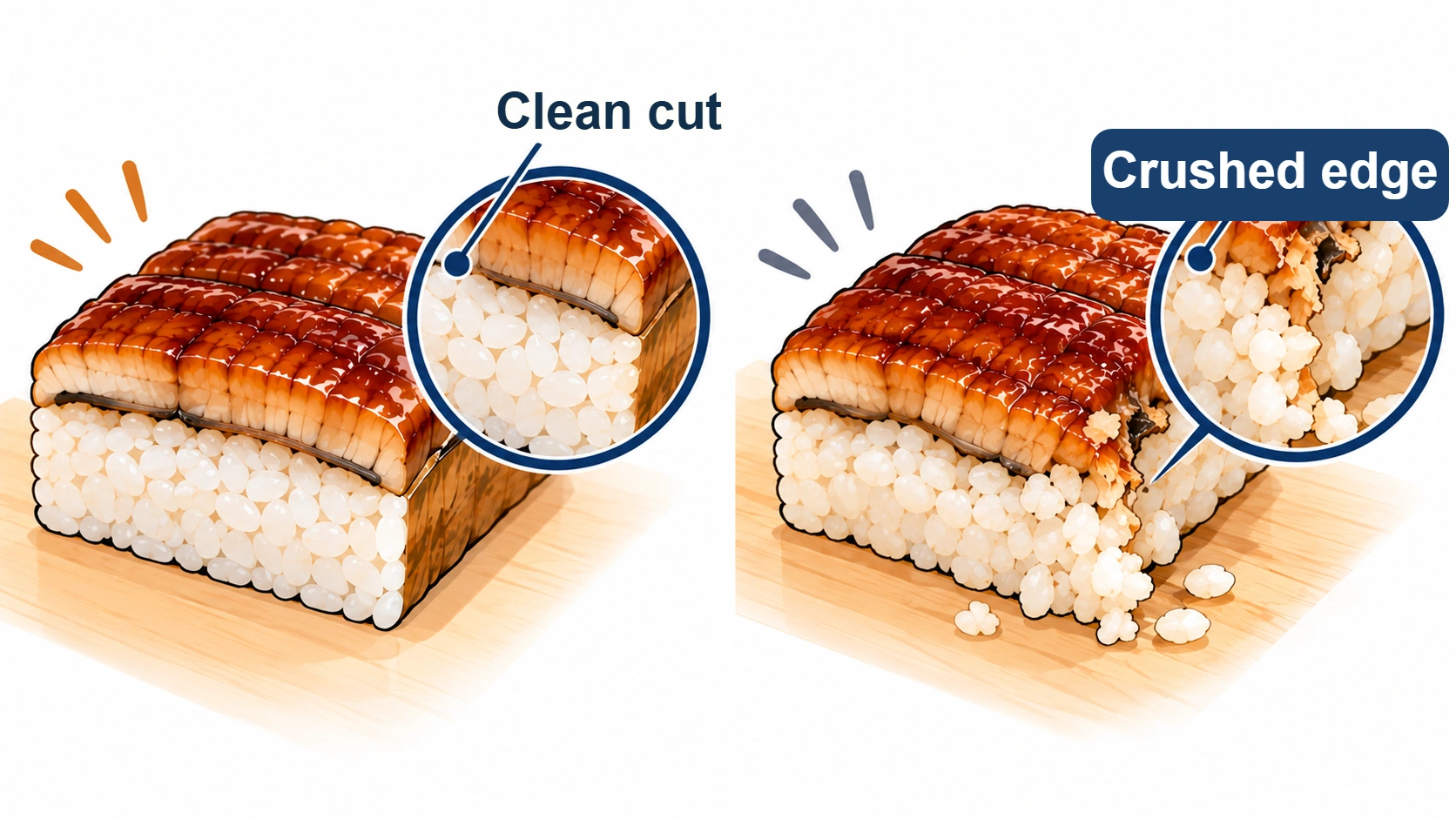
Left: intact clean edge. Right: compressed and broken rice.
Before eating
7. Separate served and unserved portions
Place only the pieces being served on clean dishes. Transfer the rest into clean, shallow containers without contacting used utensils or hands. Vinegar seasoning and compression do not make room-temperature storage safe. Japan's Ministry of Health, Labour and Welfare (MHLW), in its six household food-poisoning prevention points, warns against prolonged room-temperature holding and advises prompt cooling of leftovers in shallow portions.
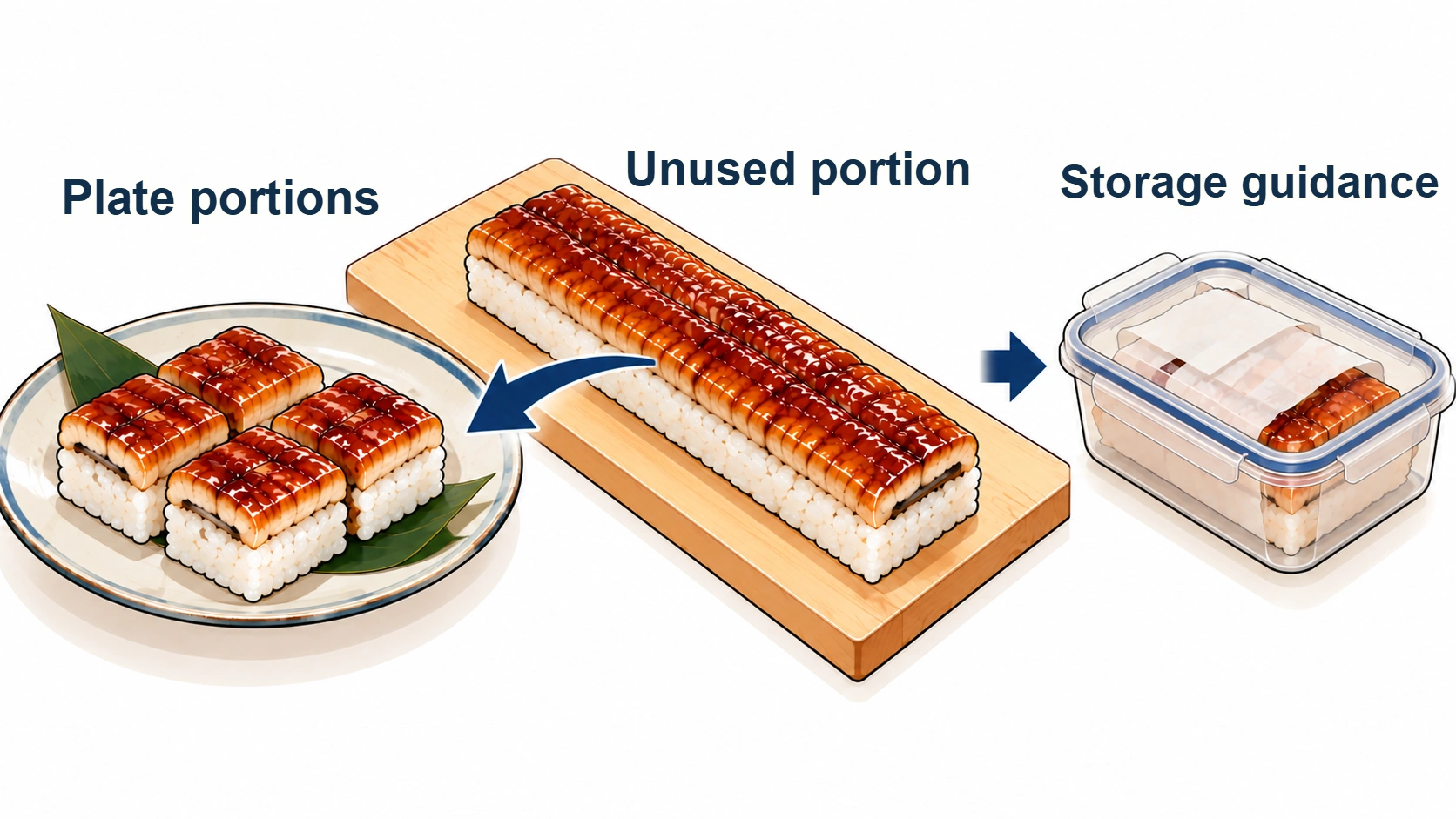
Conceptual separation of servings and leftovers; the container illustration does not certify a storage life.
For foods requiring refrigeration, the MHLW gives 10°C or below as a domestic refrigerator guideline. Follow the eel product's own use-by date, heating directions and storage instructions, and avoid leaving finished sushi at room temperature. There is no single universally safe number of hours or days for this homemade combination. Discard food held too long or suspected to be unsafe. This is an editorial synthesis of public recipes, not an independently tested cooking or shelf-life protocol.
Sources
Pal System Saitama, eel pressed sushi in a milk carton (1 June 2026) — four-serving ingredients, layering, light pressing and cutting.
Kikkoman, how to prepare sushi rice — an independent two-go seasoning formula and rice preparation.
Kikkoman, how to measure — Japanese rice-measure and tablespoon volumes.
NHK Educational, salmon sushi log (4 October 2011) — a different-fish example of wrapping and shaping.
MHLW, six points for preventing food poisoning at home — preparation, refrigeration and leftovers.
Related articles