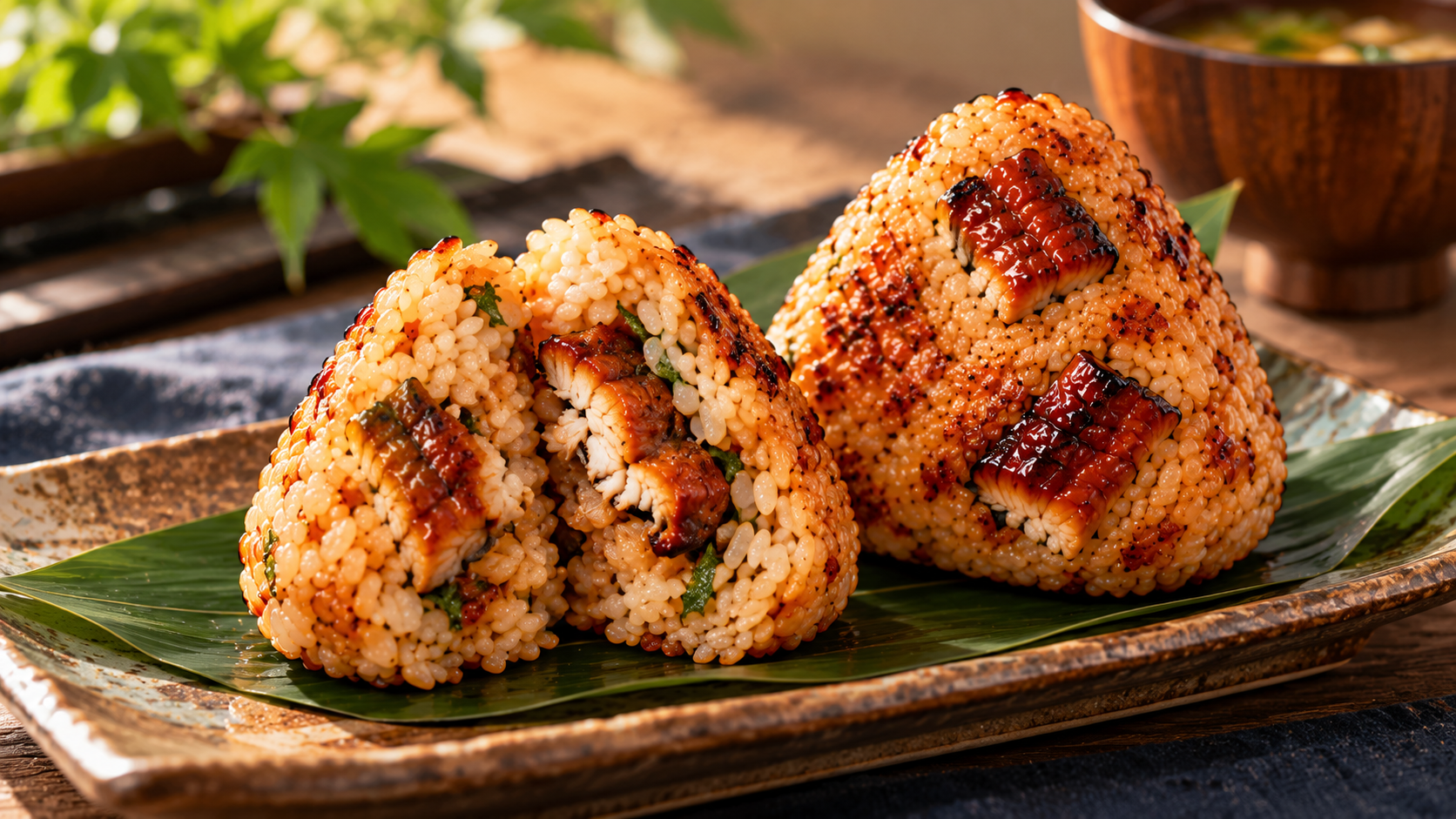
Unagi ochazuke is a bowl of warm rice topped with small pieces of kabayaki (glazed grilled eel), finished with hot tea or dashi. Rather than flooding the bowl immediately, pour a little at a time and consider how strongly the eel is already seasoned. This guide explains assembling one bowl from the start, not the successive ways of eating hitsumabushi.
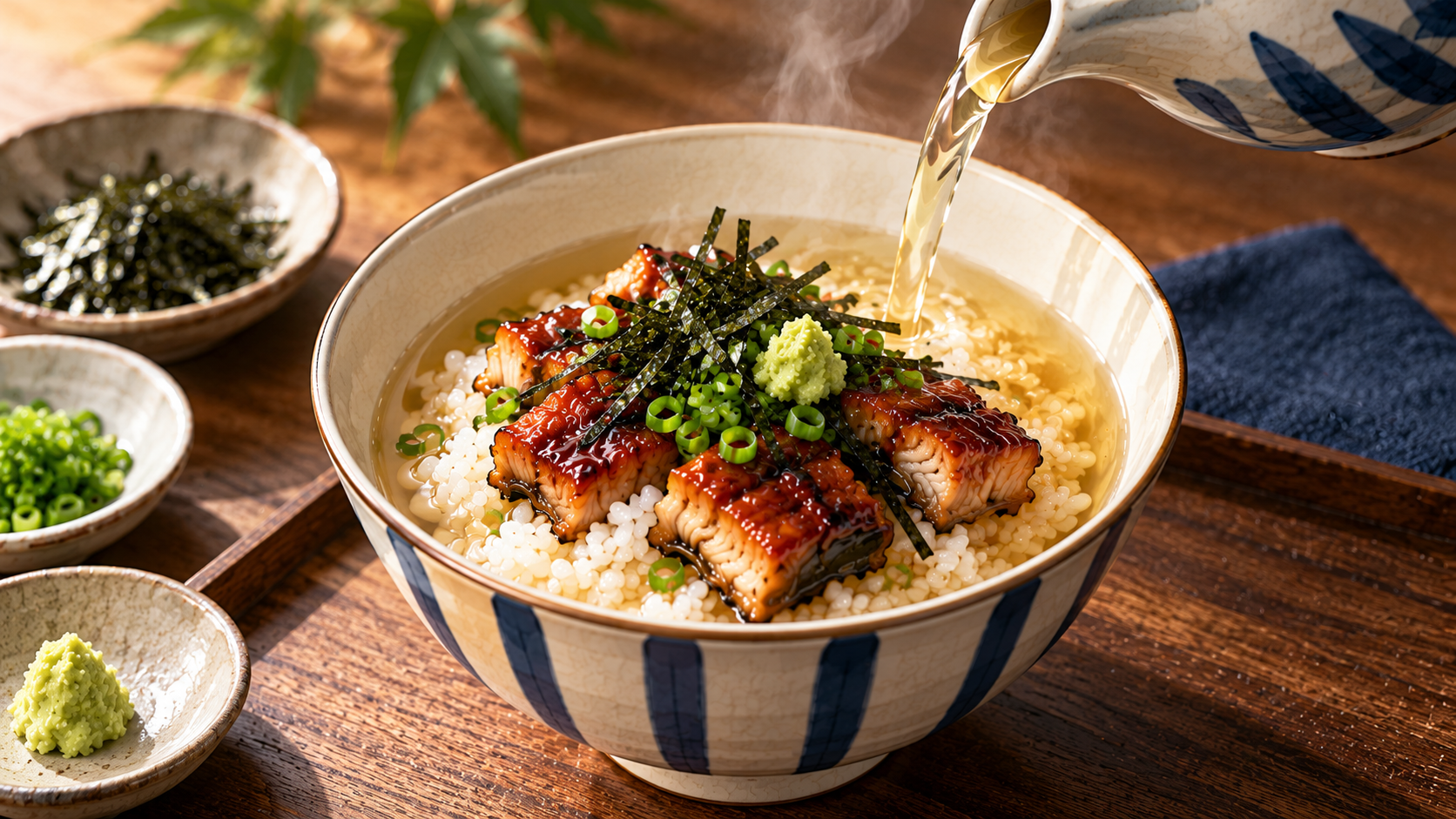
Illustrative serving of unagi ochazuke. AI-generated editorial artwork, not a photograph of a cooking test.
The structure of one bowl: rice, eel and pouring liquid
1. Think of rice, eel and liquid as separate elements
The three essentials are warm cooked rice, fully cooked eel kabayaki and a liquid for pouring. The eel should stand out without covering every grain. For a usable starting point, Kikkoman's official recipe provides two bowls of rice and one eel fillet for two servings.
Suggested ingredients for one serving (editorial adaptation)
The dashi option's 25 mL + 175 mL is a simple halving of the official two-serving formula: 50 mL shirodashi + 350 mL water. For any other concentrate, follow its own dilution directions. Tea and dashi are alternatives, not ingredients that must be combined. The source dish is hitsumabushi; using its quantities for one ready-made ochazuke bowl is an editorial adaptation. The concentrate specified by the source is Kikkoman “旨みひろがる 香り白だし” (Umami Hirogaru Kaori Shirodashi). Kikkoman official “Easy hitsumabushi at home”: two-serving quantities of eel, rice, shirodashi and water
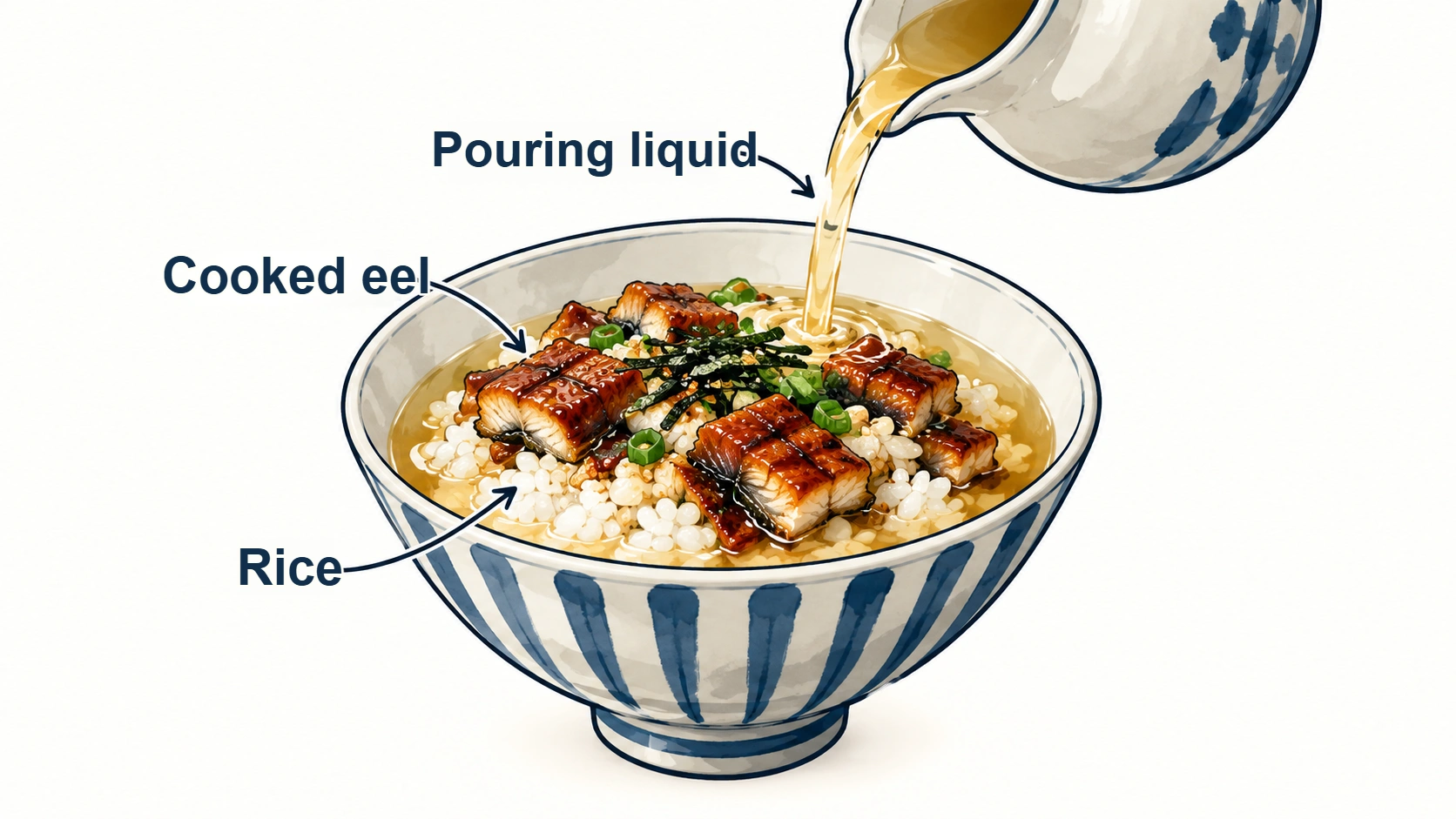
Schematic showing the separate roles of rice, cooked eel and pouring liquid.
2. Choose either tea or dashi
Warm green tea adds a tea aroma, whereas dashi adds a savory broth character. Prepare one or the other separately and pour only the chosen liquid into a bowl. The dashi quantities here are calculated from a Kikkoman recipe using a particular shirodashi concentrate; they are not a universal dilution ratio for every brand.
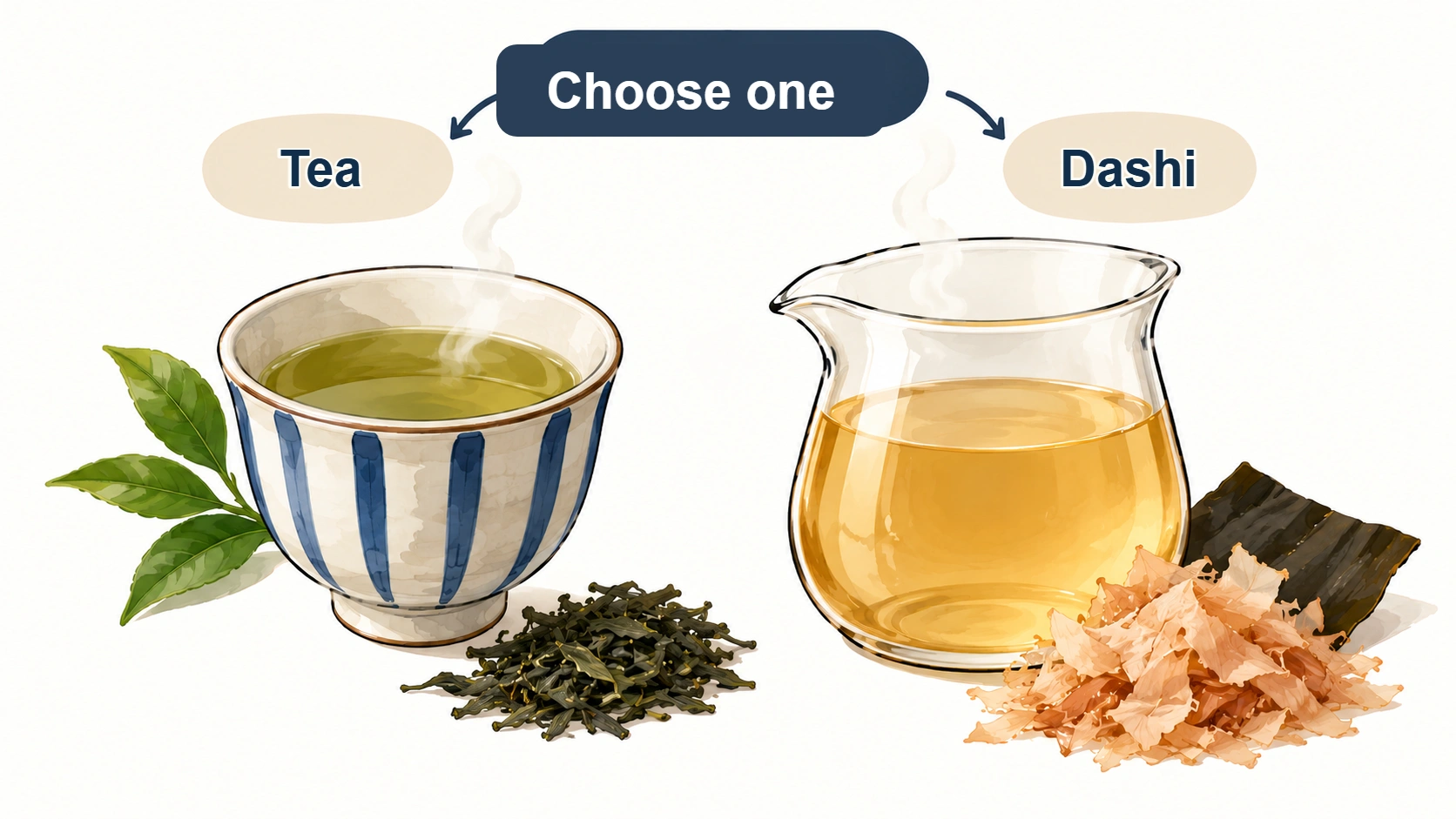
Tea or dashi are alternative bases; there is no requirement to combine them.
Preparation before assembling
3. Cut the eel small enough to share a spoonful with rice
Cut fully cooked eel into bite-size pieces approximately 1 cm square or 1 cm wide. Kikkoman's separate eel mixed-rice recipe specifies 1 cm cubes. Cutting before adding hot liquid makes the eel easier to pick up together with rice using chopsticks or a spoon.
Kikkoman official “Eel mixed rice”: 1 cm cuts and suggested garnishes
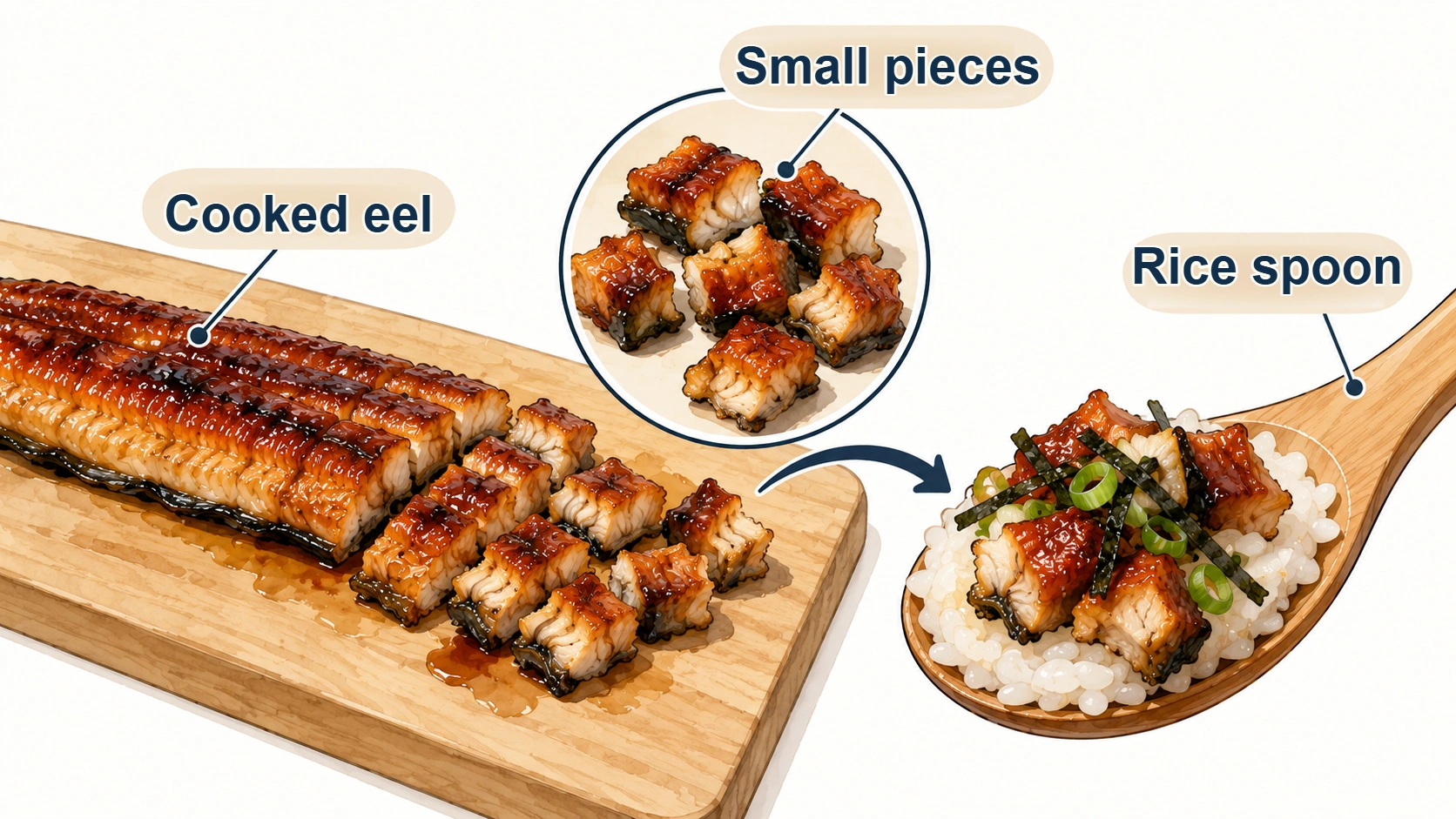
Small pieces of eel sized to be eaten with rice in the same spoonful.
4. Prepare the warm ingredients before assembling
Warm the rice and the cooked eel; keep the pouring liquid until last. Follow the purchased eel's reheating instructions, remove any skewer and be mindful of remaining bones when eating. Pouring tea over cold eel is not a substitute for properly reheating it.
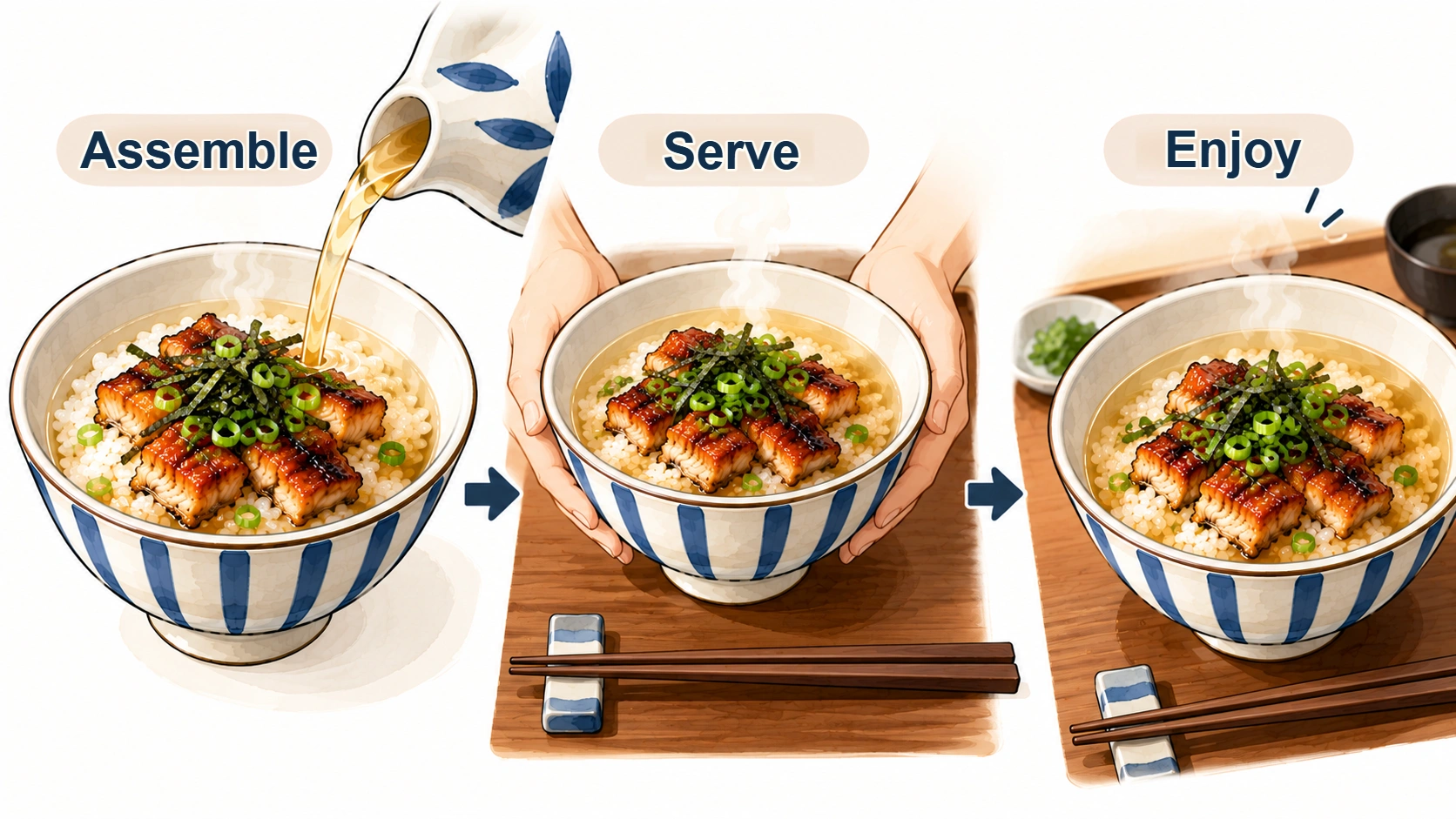
Assemble the bowl in four steps.
Spoon warm cooked rice into one bowl.
Reheat fully cooked kabayaki according to its product instructions, removing any skewer.
Cut the eel into manageable pieces about 1 cm across and distribute them over the rice.
Gradually pour warm green tea or correctly diluted warm dashi around the rice; finish with garnishes.
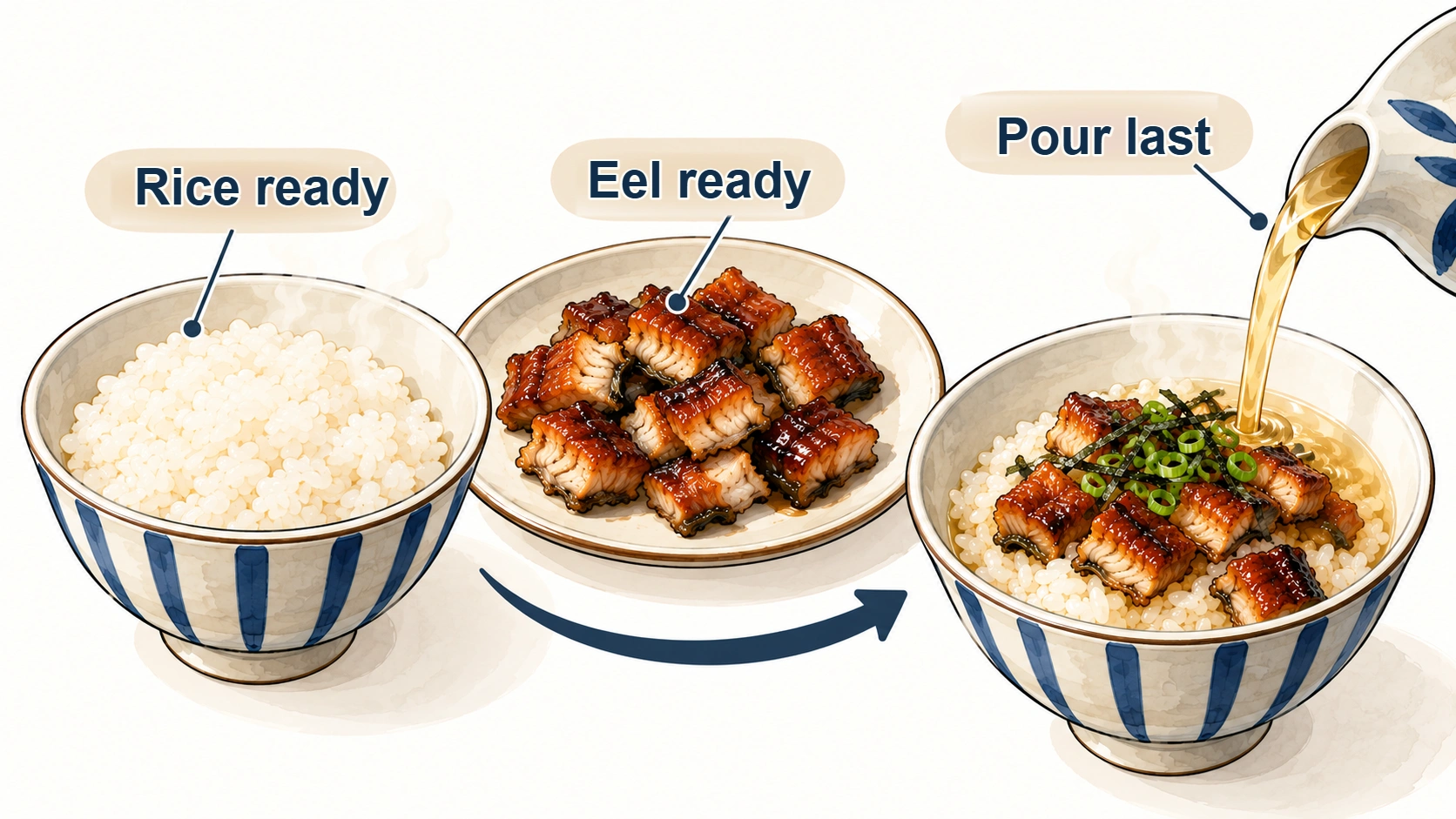
Rice and eel are prepared first, with the liquid added last.
Pouring and garnishes
5. Pour around the rice while leaving it visible
Keep rice and eel visible, and add tea or dashi gradually around the inside edge of the bowl. The 200 mL prepared for the dashi option is an amount to make, not an obligation to use it all. Stop according to flavor and liquid level, then add more if needed.
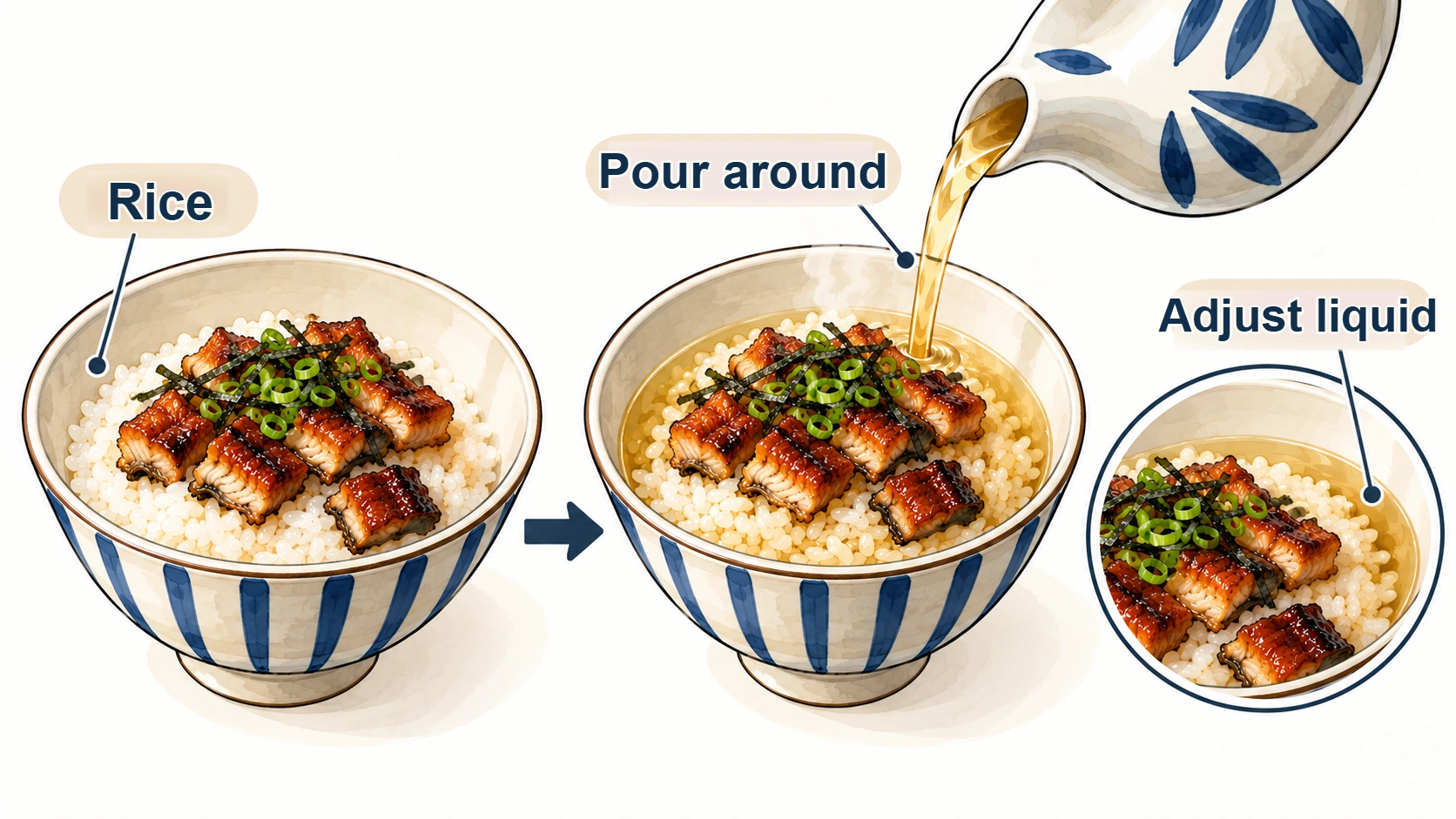
Example of pouring around the rice without hiding its surface.
6. Adjust nori, sesame and wasabi at the end
Add shredded nori, chopped green onion, white sesame and wasabi in small amounts. Starting with less wasabi lets diners change the flavor as they eat. These garnishes also appear in Kikkoman's eel-and-rice recipes, but there is no fixed garnish quantity here.
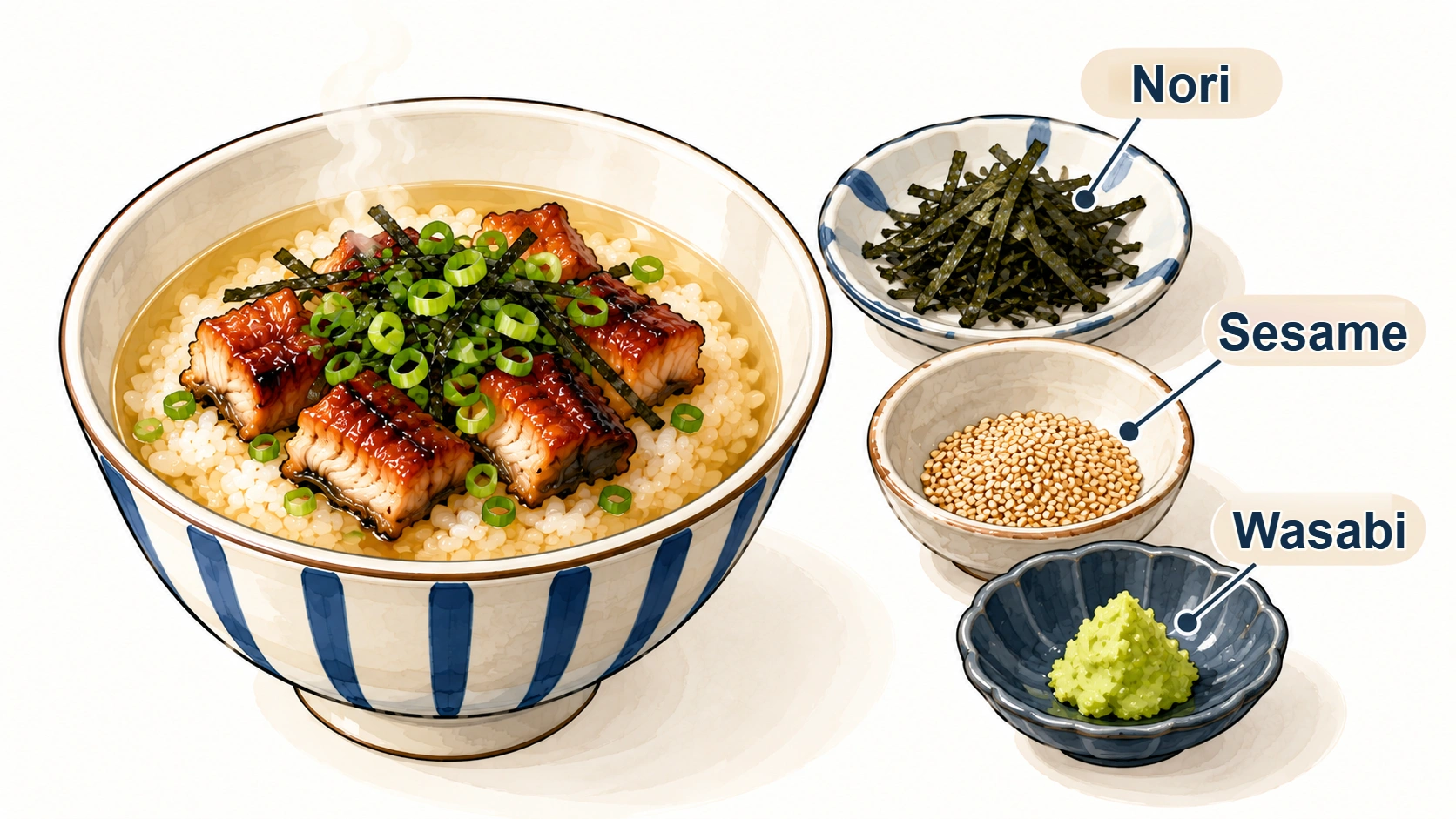
Example of serving nori, sesame and wasabi separately.
Finishing the bowl as a meal
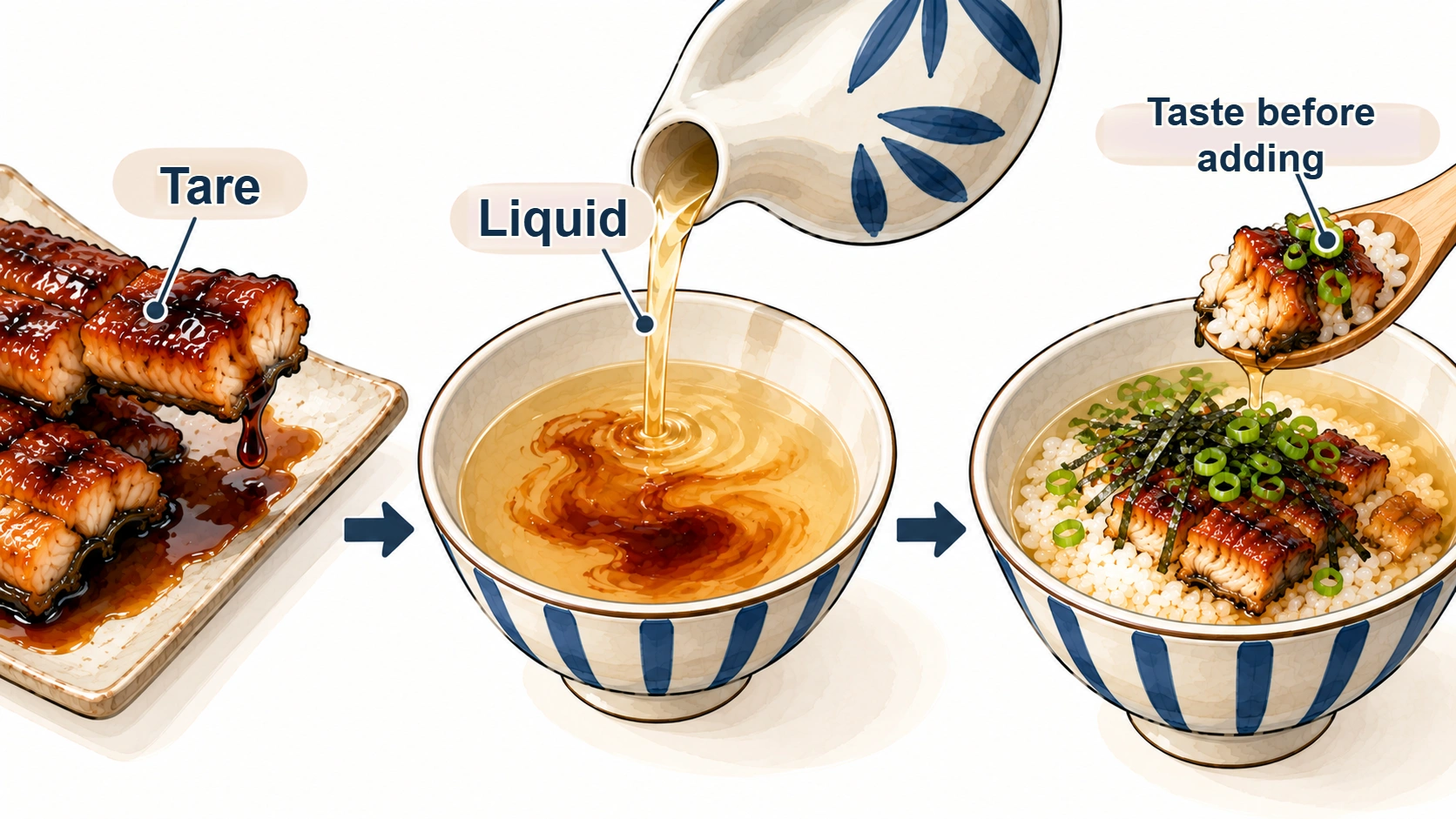
7. The eel glaze changes the liquid's seasoning
Kabayaki generally comes coated with a sweet-savory glaze called tare. Some glaze flavors the tea or stock once it touches the liquid, so taste a spoonful before adding extra soy sauce or the whole packet of accompanying sauce. Japan's Ministry of Agriculture, Forestry and Fisheries describes kabayaki as eel grilled with applied sauce.
MAFF “Eel kabayaki” (Tokyo): preparation by grilling with sauce
Conceptual diagram showing how eel glaze can season the pouring liquid.
8. Take the finished bowl straight to the table
Serve the assembled portion while warm. This is a home assembly suggestion, not a guarantee about storage life or reheating safety. Follow product-packaging instructions for storing and heating prepared eel, and take care with serving temperature for the person eating it.
From assembling a single portion to serving it at the table.
Sources and how the quantities were derived
The quantities come from Kikkoman's two-serving “Easy hitsumabushi at home” recipe. Here they are simply halved and adapted editorially into one bowl of ochazuke. This is neither a verbatim reproduction of the original recipe nor a recipe tested or tasted by UNAGI JAPAN. The original gives no numerical quantity for the green-tea variation, so none is fixed here.
The ministry's material provides background on eel kabayaki and on general kombu-and-bonito stock preparation. It does not endorse the quantities of this ochazuke. All diagrams are AI-generated explanatory illustrations, not measurements of actual portions or results of experiments.
Primary sources consulted
Related articles