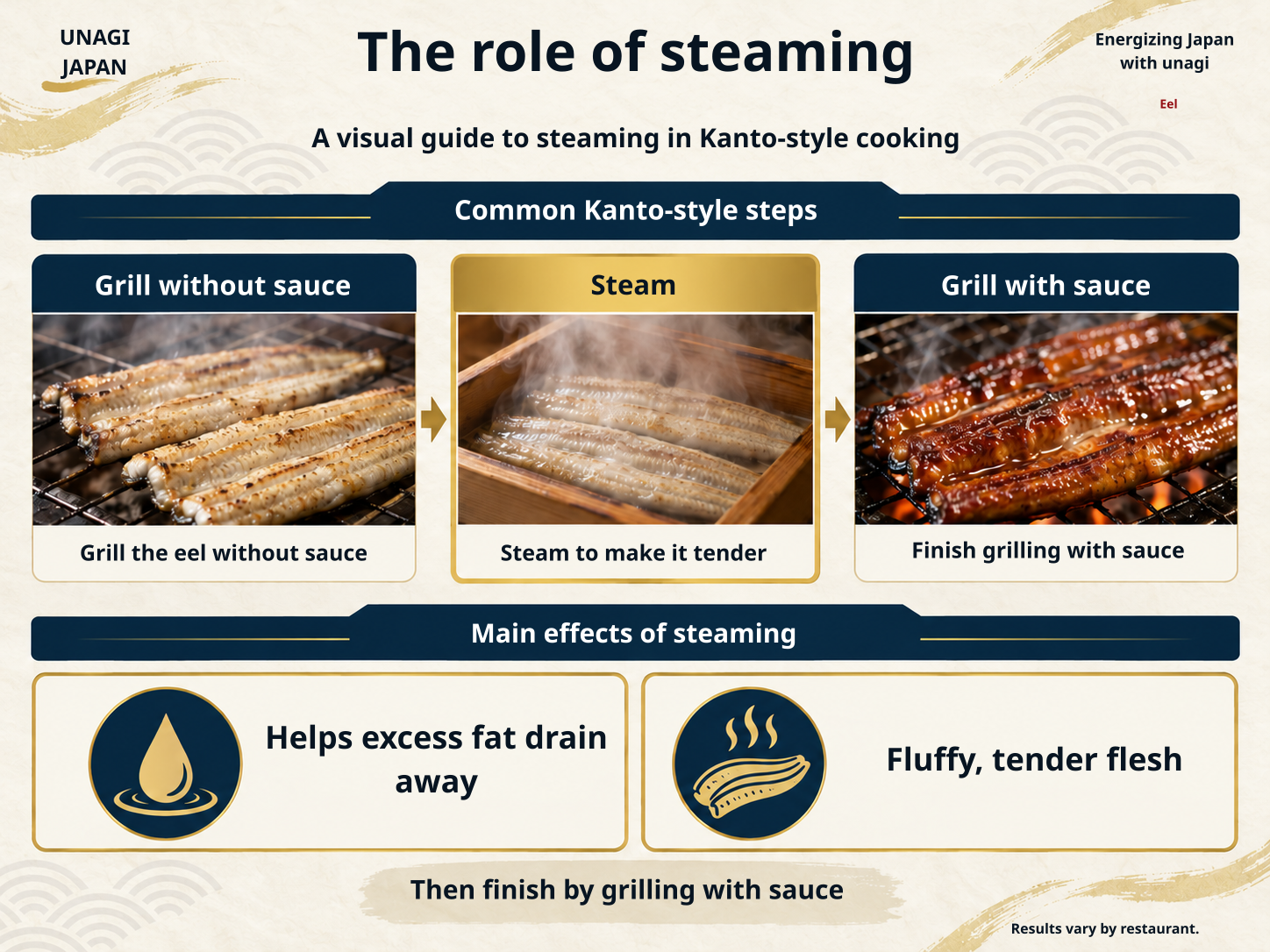
The main traditional difference is steaming. Kanto-style eel is usually opened along the back, grilled without sauce, steamed, then glazed and grilled. Kansai-style is usually belly-opened and grilled without that steaming stage. Restaurants vary, and Kansai eel can still be tender inside.
Compare the cooking stages separately
A typical Kanto sequence is plain grilling, steaming, then grilling with sauce. A typical Kansai sequence moves from plain grilling to glazed grilling without steaming. Hamamatsu City's food guide describes this distinction.
The cut, heat treatment and texture are related, but they are not an inseparable rule. A restaurant's location alone cannot establish its method, and unsteamed does not mean tough.
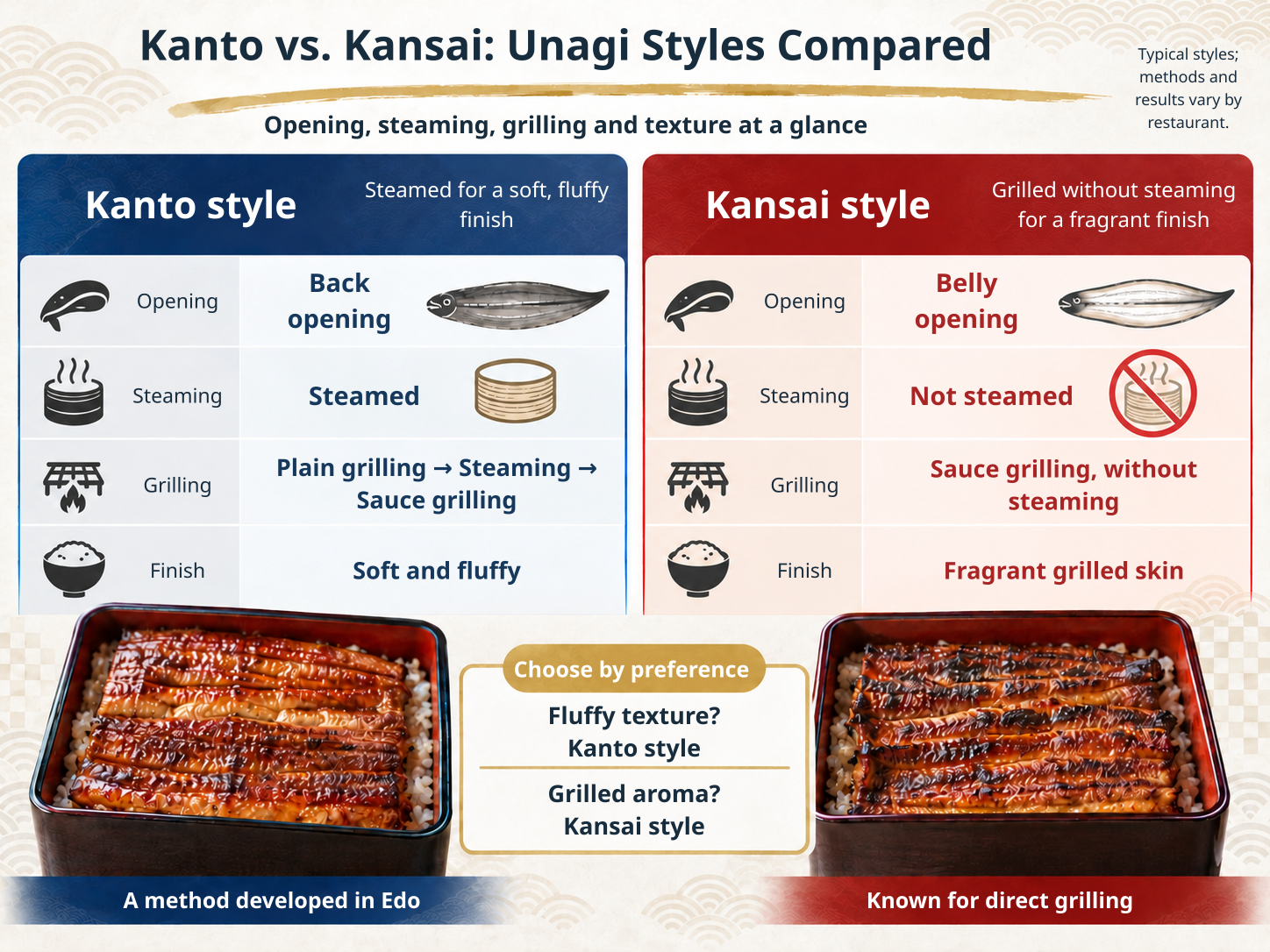
Back-opening and belly-opening describe the cut
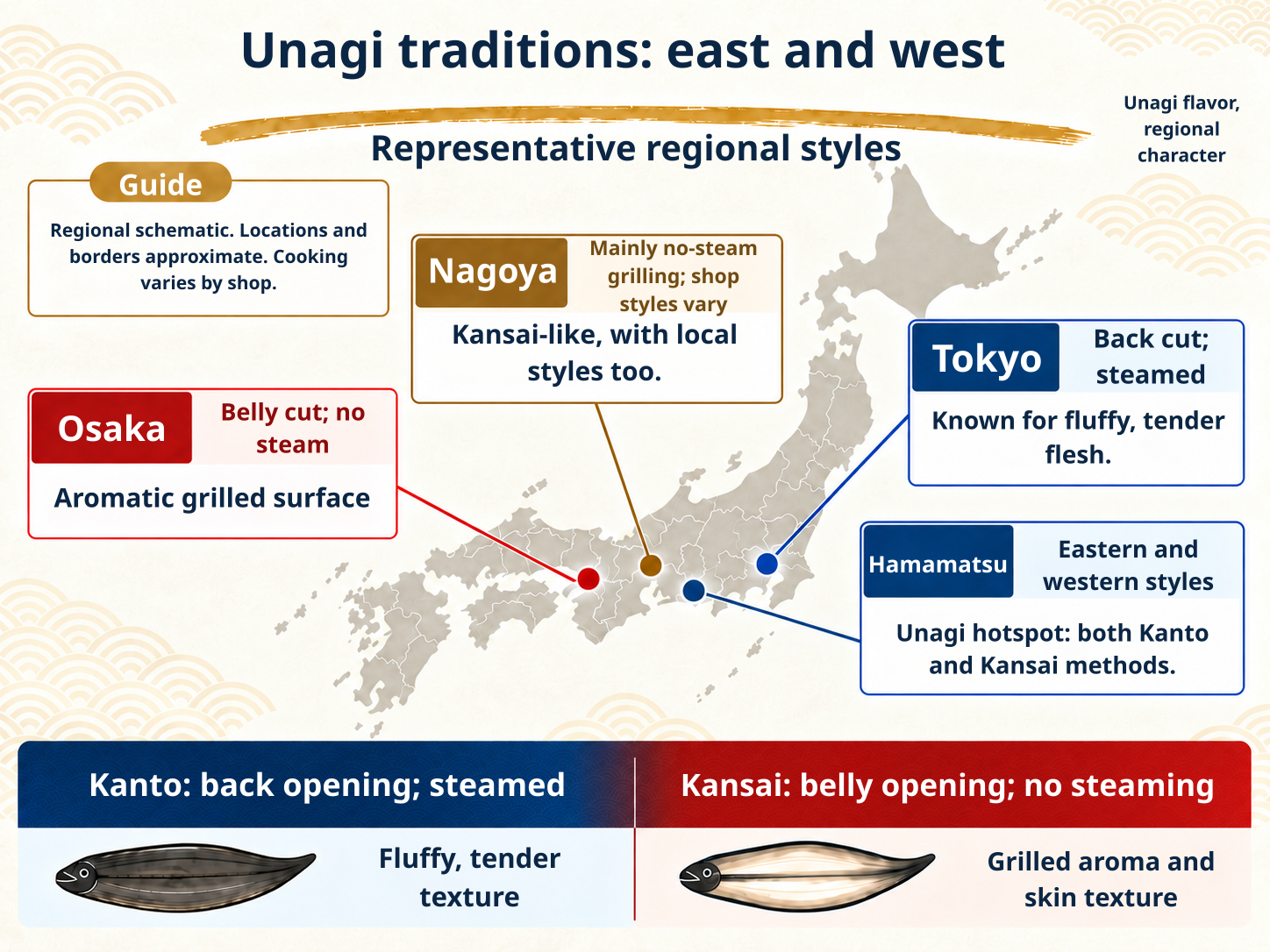
Back-opening means cutting along the back; belly-opening means cutting along the belly. Traditional accounts also discuss leaving the head on and using bamboo or metal skewers. A headless serving does not prove a cooking method. The diagram explains the cut, not a filleting procedure.
Stories about samurai avoiding associations with ritual suicide, or merchants valuing frank discussion, are competing explanations. Practical cooking explanations also exist. These origin stories should not be presented as one settled historical cause.
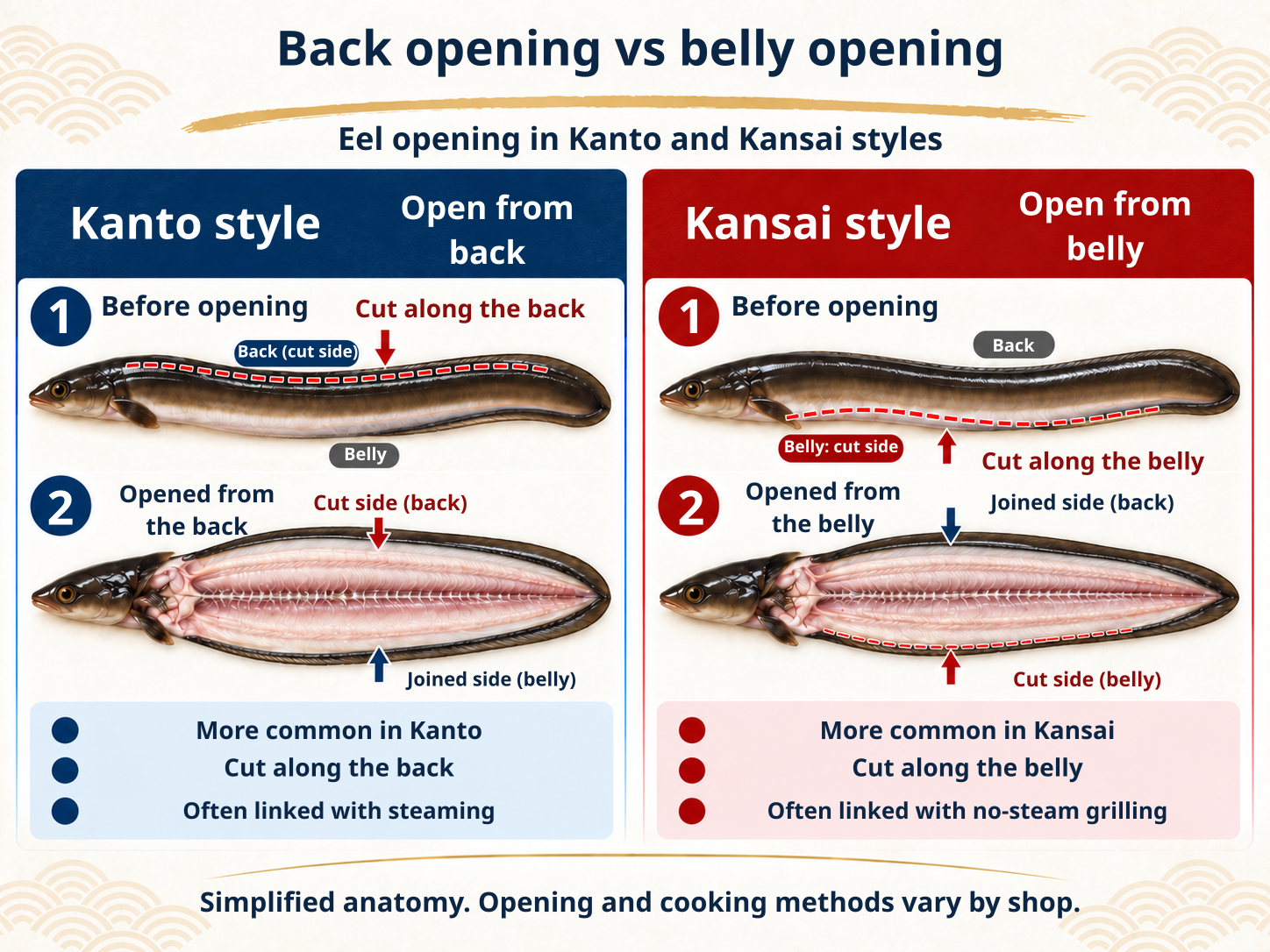
Direct grilling and charcoal describe different things
Shirayaki means grilling without sauce, and can be a stage in making kabayaki. Kanto-style commonly follows plain grilling with steaming and glazed grilling; Kansai-style commonly omits the steaming stage.
Jiyaki generally describes grilling without steaming. Charcoal grilling describes the heat source. A restaurant can steam eel and still finish it over charcoal, so the word charcoal does not establish a Kansai method.
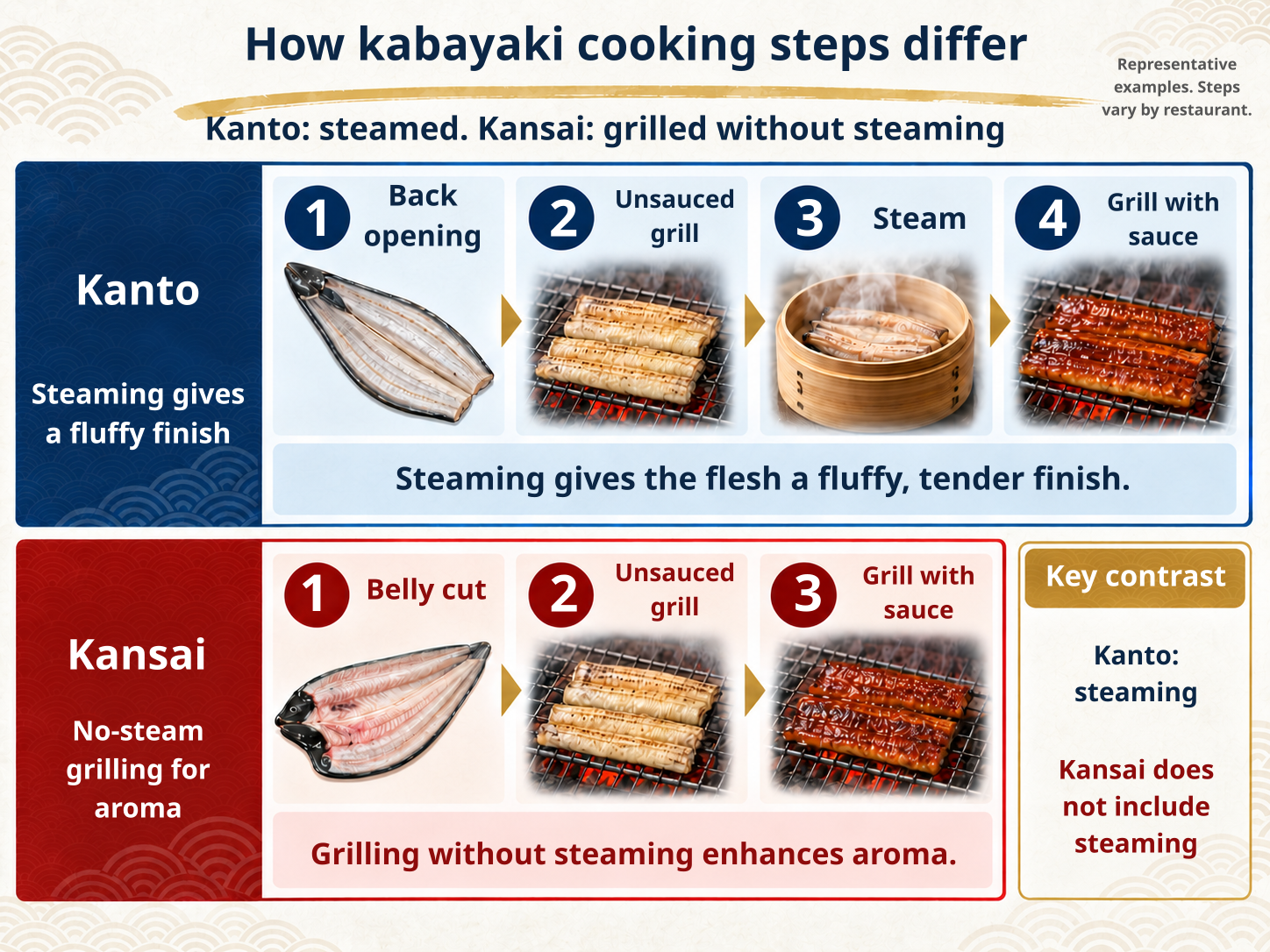
Kansai eel can be tender inside
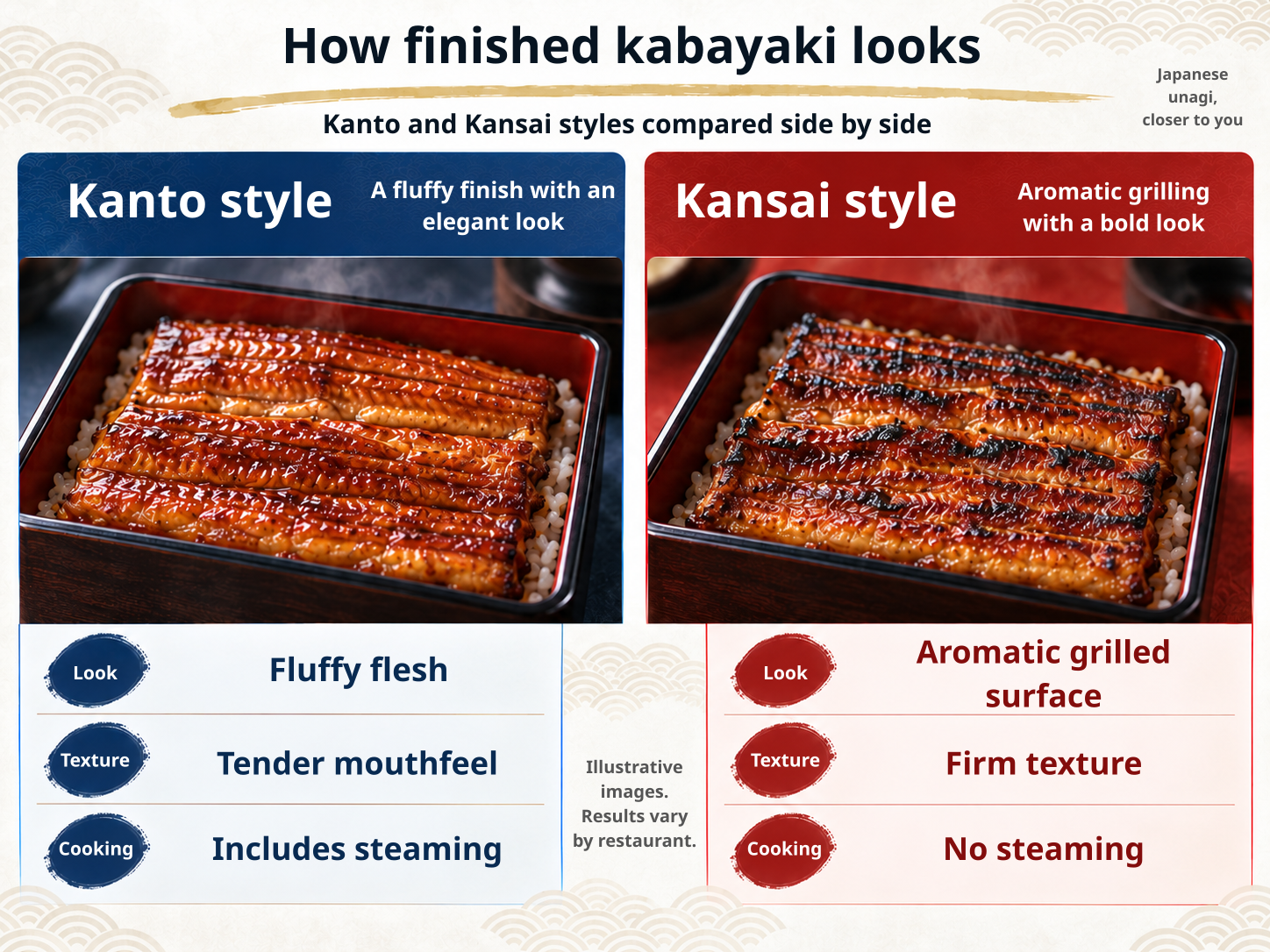
Kanto-style is associated with a soft mouthfeel. Kansai-style emphasizes the browned surface and skin texture, rather than a hard interior. Osaka restaurant Uoi describes its own direct-grilled eel as crisp outside and soft inside.
Fish size, flesh, heat control and the cook's technique also affect texture. Sauce sweetness and intensity vary by restaurant. The regional distinction is neither a quality ranking nor a reliable sweet-versus-salty classification.
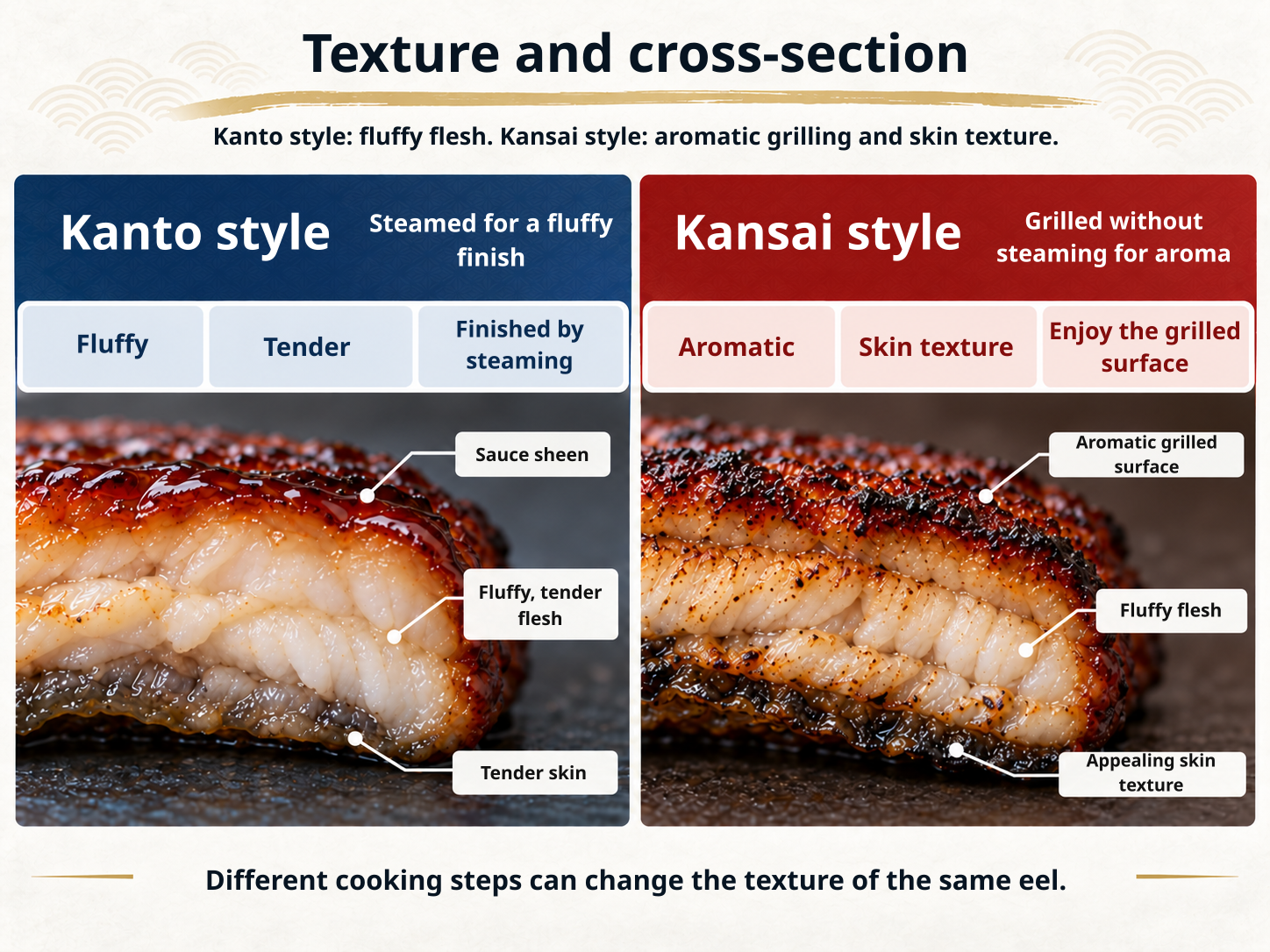
Steaming during preparation differs from reheating
In Kanto preparation, steaming helps soften eel after its first grilling. Times and finishing techniques vary. Steaming alone does not determine every aspect of fat retention or texture.
The product name shirayaki does not tell you whether steaming was used. Check the producer's explanation. Steaming or grilling a cooked product at home reheats it; it does not undo and repeat the original preparation.
Colour and photographs cannot prove the method
Sauce, glaze and finishing can all affect colour and grill marks. Dark-looking eel is not automatically Kansai-style, nor is a pale-looking serving automatically Kanto-style.
Ask whether the eel is steamed after the initial grilling, or whether it is jiyaki. Checking the cut and the heat treatment separately also accommodates restaurants that combine traditions.
Hamamatsu mixes traditions; hitsumabushi is a dish
Hamamatsu City describes both Kanto and Kansai styles in the area. No single city or river provides a strict nationwide border. The local Yoshimatsu listing also describes back-opened eel cooked Kansai-style.
Nagoya's hitsumabushi is a way of serving and eating eel rice with condiments and broth. That is a different classification from the cooking method. Check each hitsumabushi restaurant's steaming policy separately.
Choose by preference and follow takeaway instructions
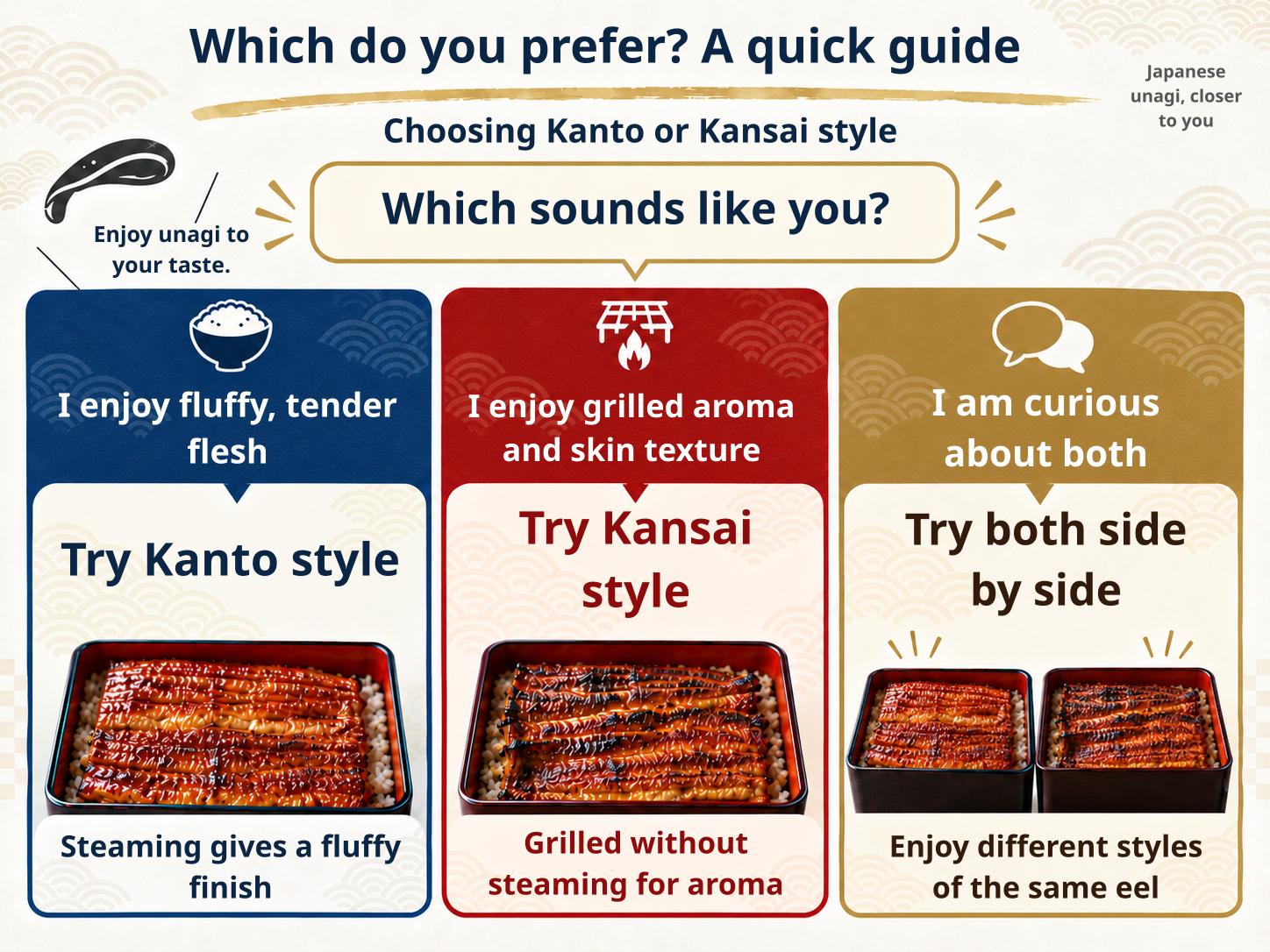
For a soft mouthfeel, a restaurant using steaming can be a useful starting point. For browned aroma and skin texture, consider direct grilling. These are preference guides, not a ranking of which style is better.
For takeaway kabayaki, follow the product's container, storage and reheating instructions. The regional style cannot determine microwave times or whether its pouch is suitable for boiling-water reheating.
Do unadon, unaju or shirayaki names tell you the style?
Unadon and unaju mainly distinguish the serving vessel or product arrangement, rather than steaming. Shirayaki preparations can also vary. Read dish names separately from cooking methods.
At an unfamiliar restaurant, ask about steaming and the expected texture. When comparing dishes, allow individual restaurants to differ instead of expecting every place in one region to taste the same.
Related articles