Bokumeshi is a Shizuoka dish that mixes prepared eel and burdock into rice after cooking. Unlike a bowl topped with kabayaki, its ingredients are distributed through the rice. Its connection with life around eel farms adds another way to understand the dish.
Combine the ingredients after the rice is cooked
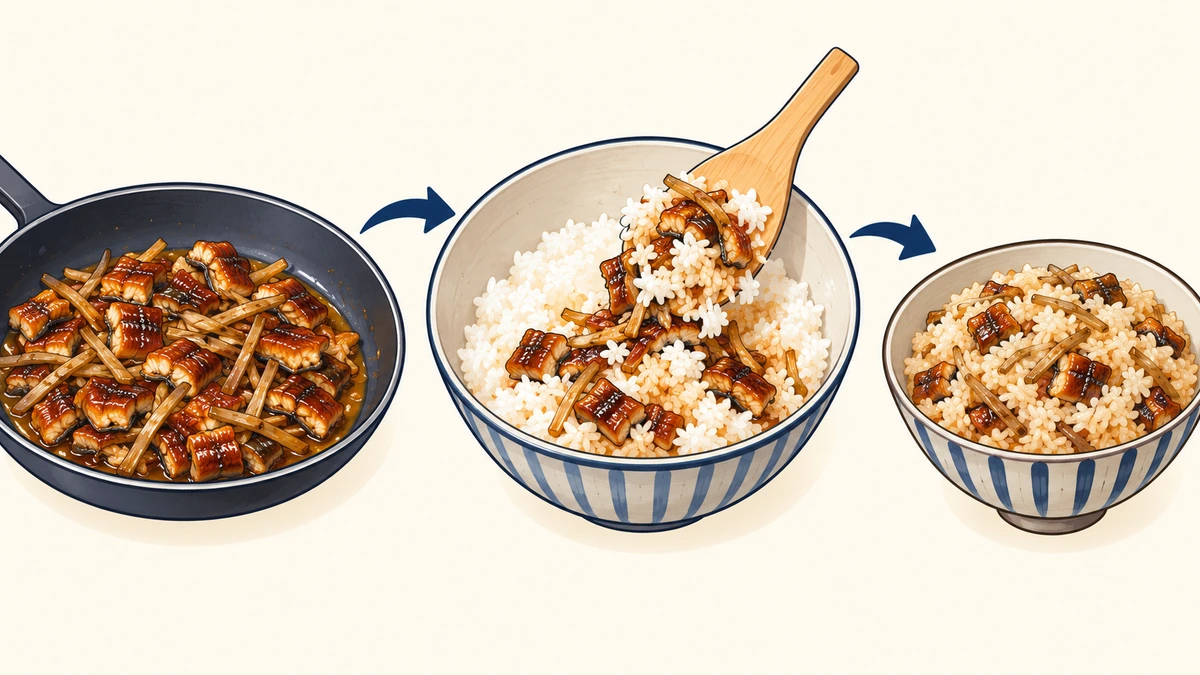
In the version introduced by Japan's agriculture ministry, cooked rice is mixed with an eel-and-burdock preparation. The timing differs from a rice dish in which raw rice and ingredients are cooked together.
Small pieces of eel and burdock are eaten with the rice. Looking at whether the ingredients sit on top or are mixed throughout is more useful than judging the dish by the serving vessel alone.
Mixed rice connected with eel-farming life
The ministry identifies Yoshida as a principal area of transmission. A specification by the Lake Hamanako producer cooperative also describes a meal eaten by pond workers spreading into homes and the wider community. The accounts from Yoshida and Lake Hamanako connect eel farming with local food culture.
The ministry and cooperative accounts relate the name to bokkui, a thick wooden stake, through a story comparing unusually large eels with those stakes.
A core of eel, burdock and rice
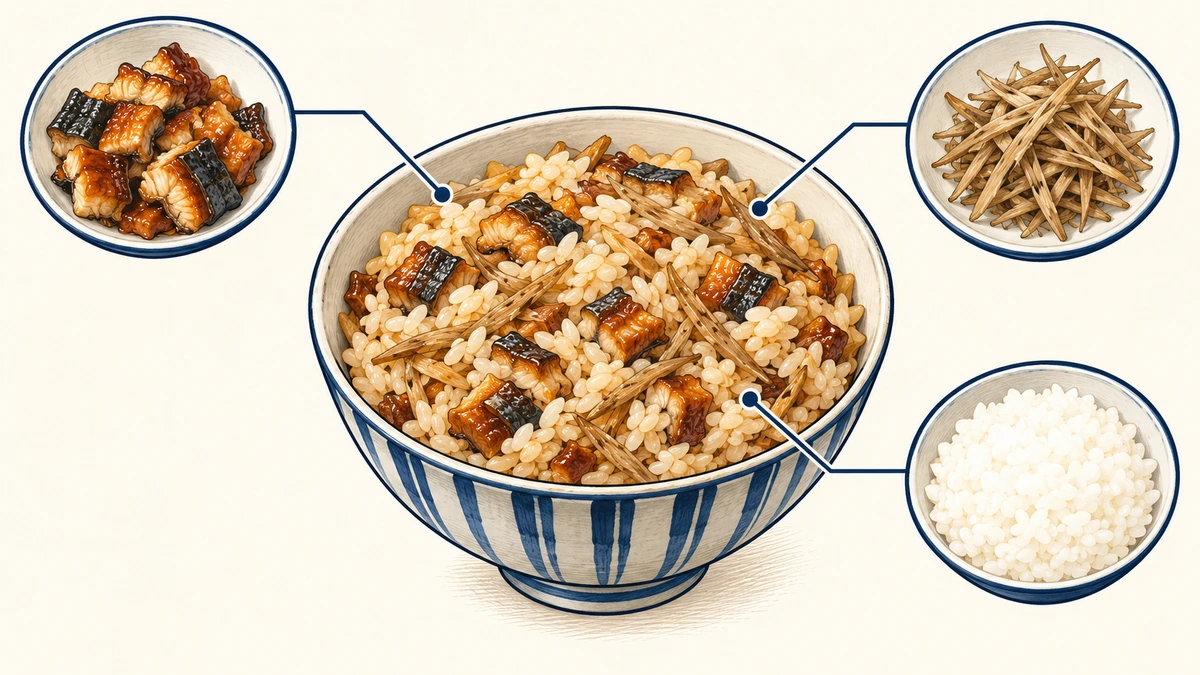
Eel, burdock and rice form the core. The ministry's example also includes green beans and sesame. With regional and household recipes, the garnish and finish can vary.
When ordering or shopping, the ingredient list and dish description tell you more about the garnish and seasonings. If you avoid egg, sesame or another ingredient, check the actual item rather than inferring its contents from the dish name.
Making it at home or using a rice mix
For home cooking, read the original recipe's quantities and preparation, including whether the eel specified is shirayaki or kabayaki. Using an already-seasoned ingredient can affect whether the same amount of seasoning suits your preparation.
With a commercial rice mix, first check whether it is mixed into cooked rice or cooked together with raw rice. Use the amount of rice given in that product's directions.
Compare how the eel and rice are arranged
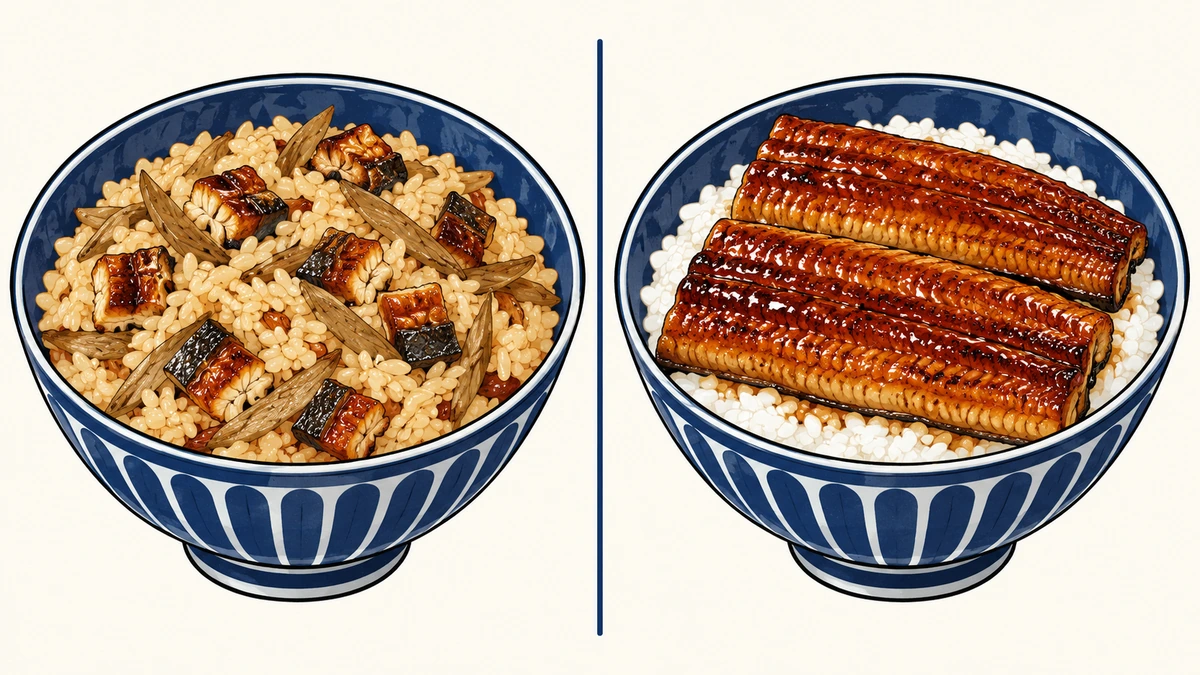
Vessels are the starting point for comparing unadon and unaju. With bokumeshi, look at the arrangement of the ingredients: kabayaki resting on top, or small pieces of eel and burdock mixed through the rice. That changes how the ingredients come together in a mouthful.
For a restaurant's house name, read its description of the rice and toppings first. Checking the portion and any separate sauce helps you choose the bowl you want.
Related articles