Kimosui is a Japanese soup containing eel offal, called kimo. Served alongside dishes such as kabayaki or shirayaki, it has a different role from grilled kimoyaki or the stock supplied for hitsumabushi rice. Understanding those differences helps you choose a restaurant set or a packaged version.
Look at the stock and garnishes
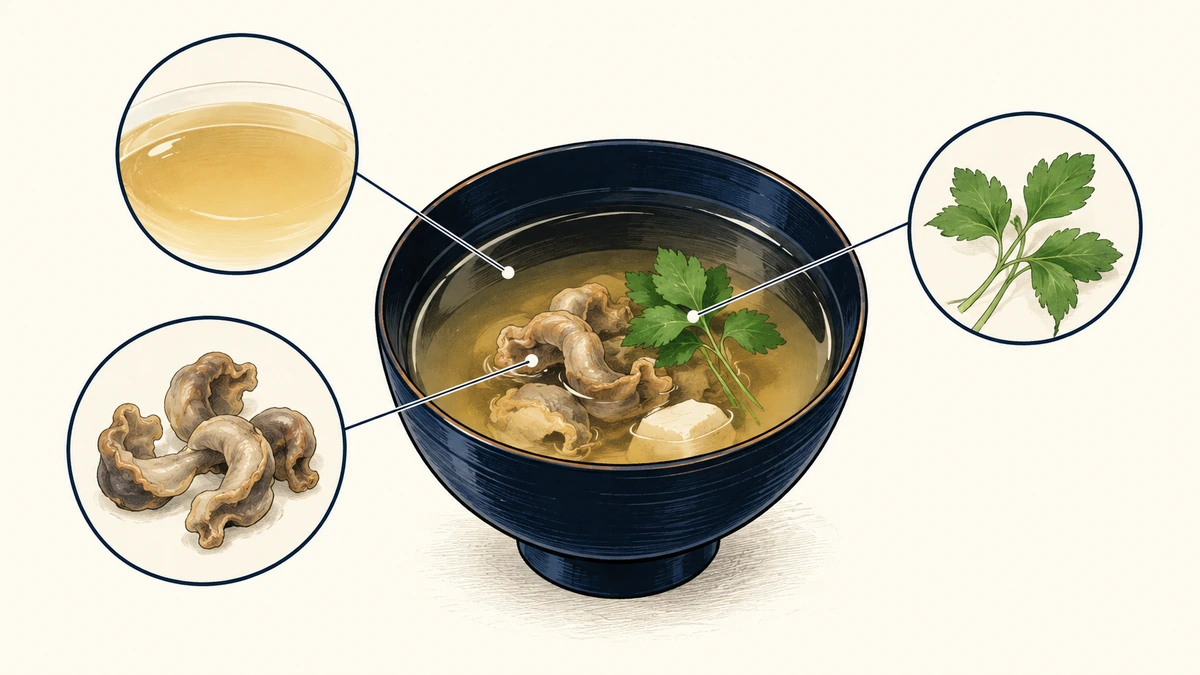
A bowl of kimosui can contain more than kimo and liquid. Maruni Unagi's packaged example includes wheat-gluten pieces, yuzu and mitsuba. Kawasui's example lists stock ingredients including bonito flakes, mackerel flakes, shiitake and kombu.
Alongside the kimo, notice how the stock and garnishes make up the bowl. These are two product examples; the combination is specific to the restaurant or product.
Kimoyaki is a grilled dish
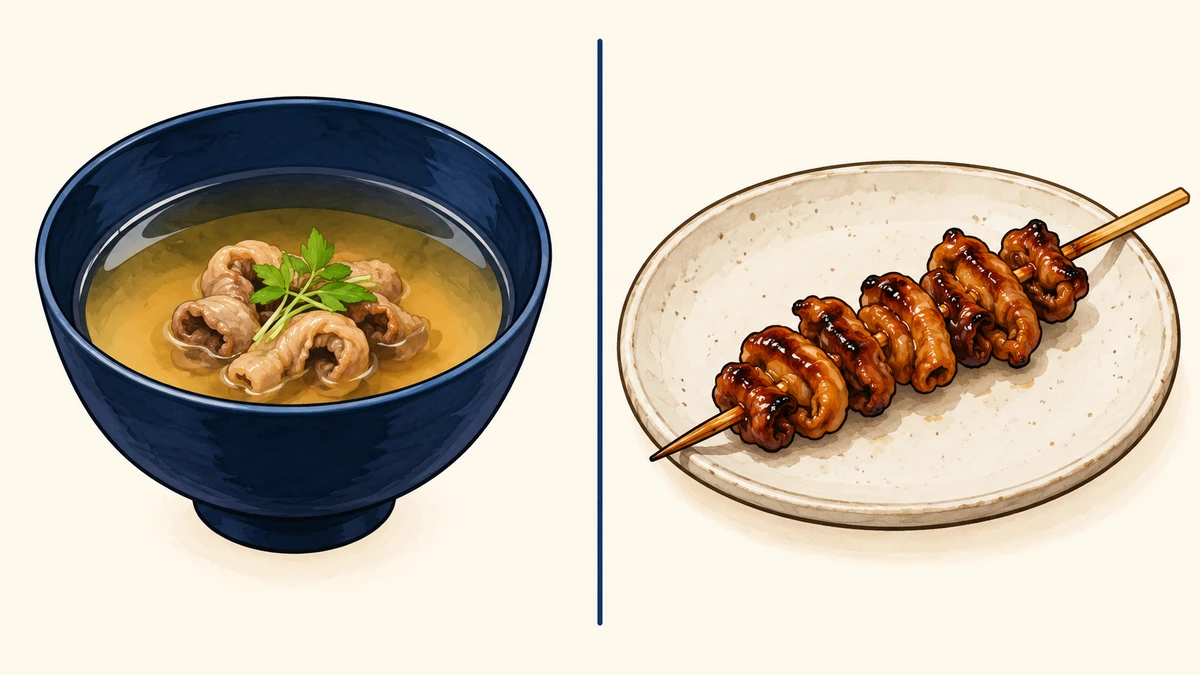
Shibuya Matsukawa lists kimosui and kimoyaki separately on its official menu. Kimosui is soup; kimoyaki is grilled. Choose according to whether you want a soup with your eel meal or another grilled item alongside it.
It is different from stock poured over hitsumabushi
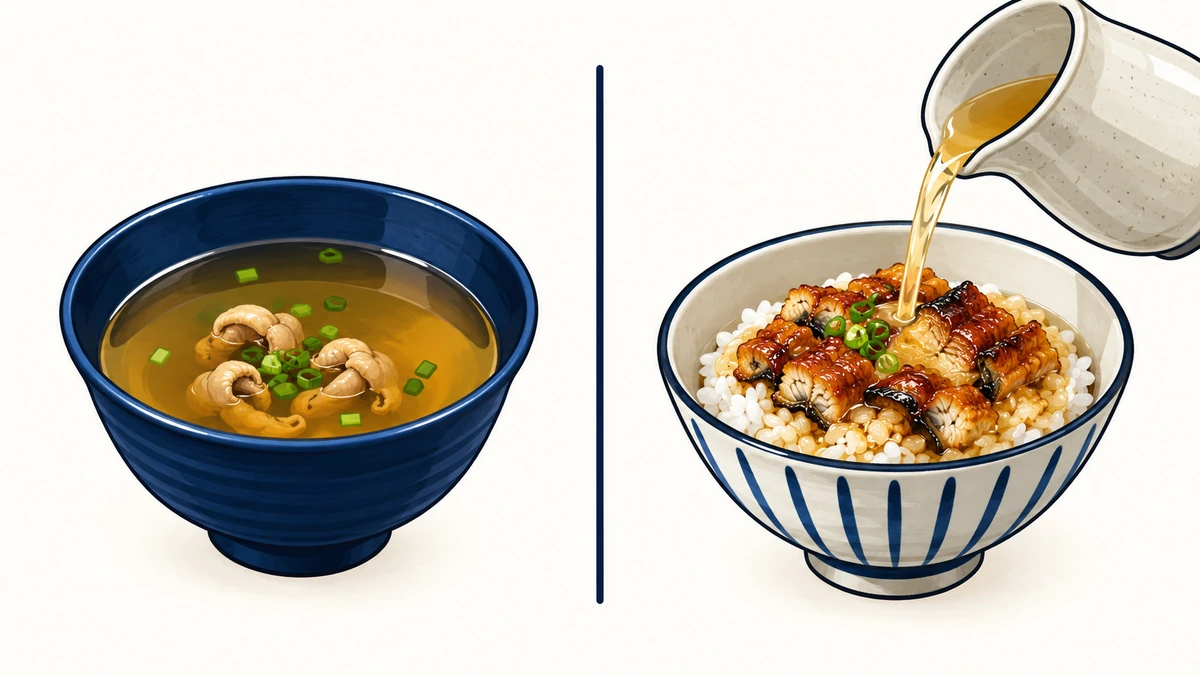
Kimosui is enjoyed from its own soup bowl. Stock supplied with hitsumabushi is intended for the eating method that adds liquid to rice. Similar-looking vessels do not establish the same purpose, so follow the restaurant's serving guidance.
Check the soup in the set you want
See whether kimosui is included or ordered separately. If the menu only says soup, ask, 'Is the soup in this set kimosui?' If you prefer to avoid kimo, name the dish you are ordering and ask whether another soup can be chosen.
Check storage and preparation before buying
Maruni has a room-temperature product example, while Kawasui has a frozen one. Before buying, see whether the storage requirements fit your journey and plans at home, then prepare the delivered product according to its label. Check the handling after opening and the amount of water for that product.
Read the stock and garnish ingredients too. Both examples carry wheat and soy information. If you avoid a particular ingredient, use the actual product's labeling and the maker's guidance.
Plan the rest of the eel meal
The unadon and unaju guide compares vessels and meal contents. If you want to understand adding stock to rice, continue to the hitsumabushi guide.
Related articles