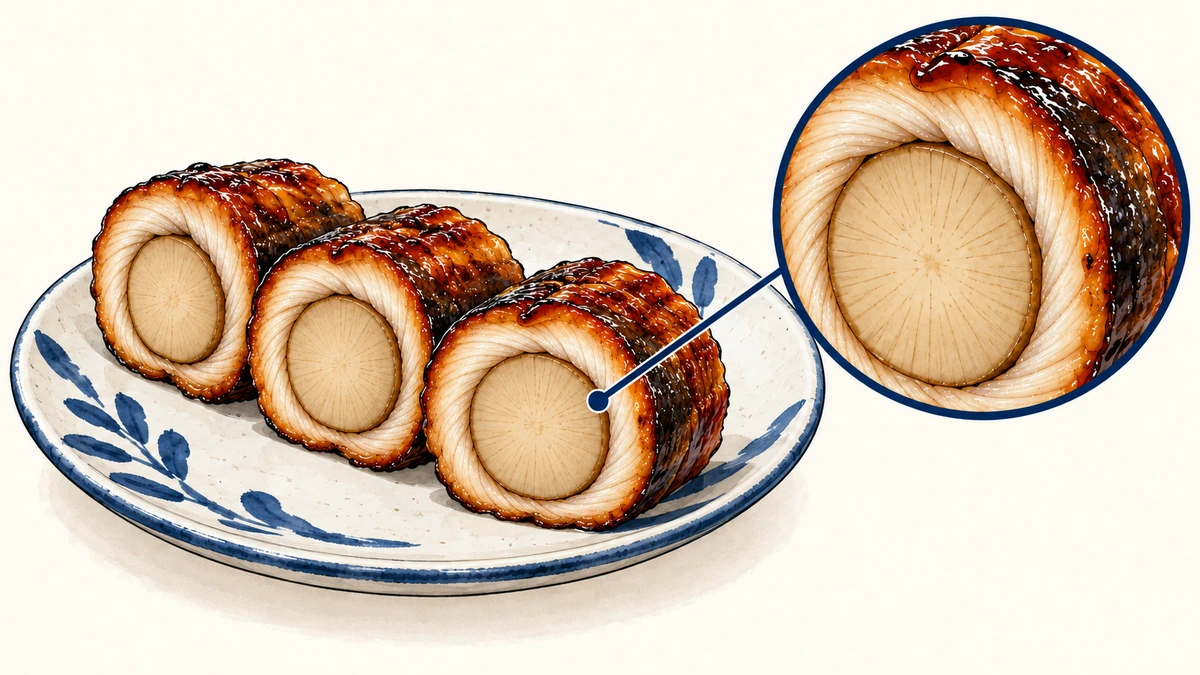
Eel yawatamaki wraps eel around a burdock core. Its cut face shows that layered structure, which differs from eel wrapped in an omelette or from rolled sushi. To choose an eel version, look at the wrapper and the way the product is prepared and sold.
Burdock inside, eel outside
七條鮒定, a Kyoto eel specialist, describes its eel yawatamaki as eel wrapped around burdock and grilled. 大國屋 also offers a product made by wrapping eel around burdock and grilling it with sauce.
Wrapping the burdock leaves a visible core and outer layer when the roll is sliced. Thinking of it as a way to enjoy eel and burdock together reveals a different arrangement from a familiar kabayaki fillet.
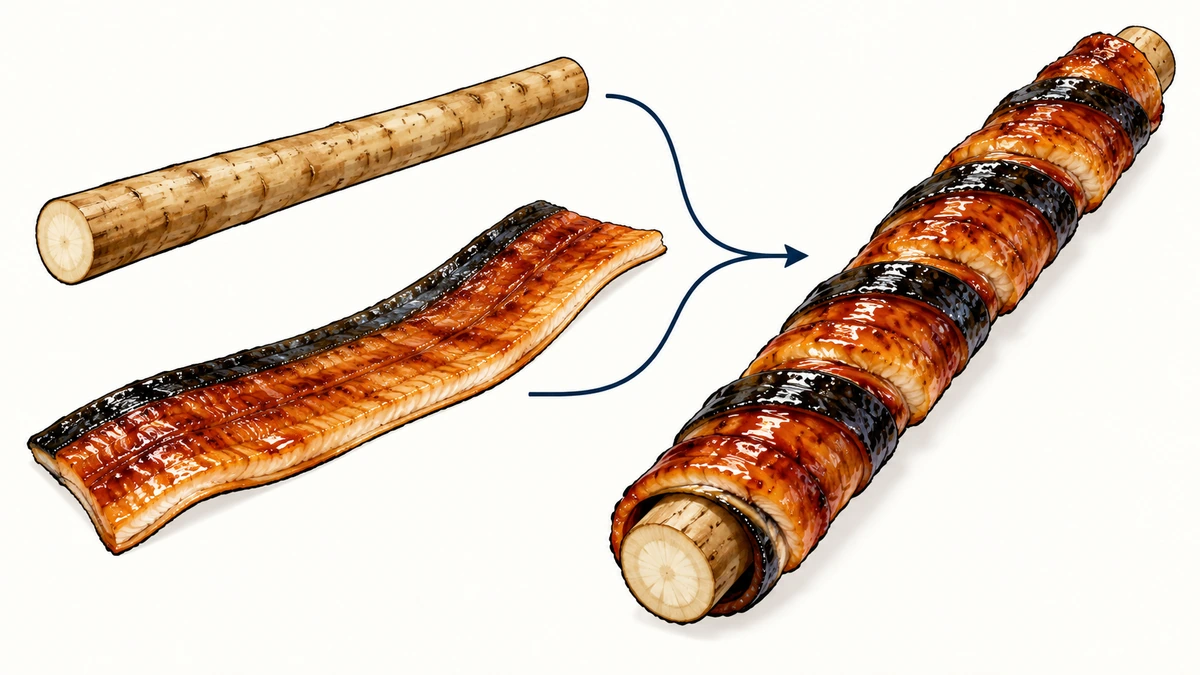
Yawata City's account of the name
Yawata City's newsletter links the name to local burdock being wrapped in eel or loach. The account connects the regional dish with a combination of local foods.
Other wrappers, and the difference from umaki
The city also describes present-day versions wrapped in beef, pork, chicken and anago. If a menu simply says yawatamaki, its description will help you identify the wrapper.
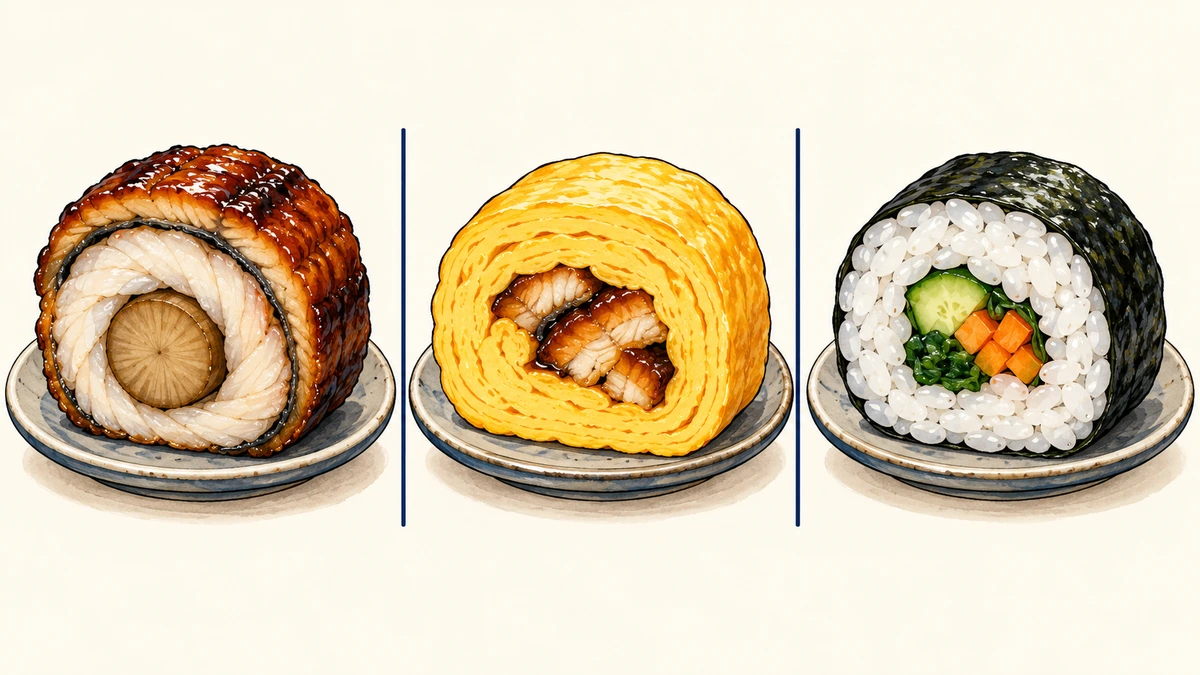
Umaki wraps eel in a Japanese omelette. Eel yawatamaki has burdock at the center, while an omelette roll has eel inside the egg. A round cut face alone does not make a dish sushi; the description also tells you whether rice or seaweed is involved.
Check the shape, quantity and prepared-food instructions
See whether the product is whole or sliced and whether sauce or condiments are included. This tells you what preparation is needed at the table. Any stated number of rolls, weight or slice count helps you decide whether it suits a small additional dish or the center of a meal.
Before buying, also check whether it is a finished product to warm or something requiring cooking. The product description and supplied labeling fill in details that the dish name cannot. If origin matters, read the ingredient-origin information separately from the place name in yawatamaki.
Serving a finished roll in slices
七條鮒定's product directions describe slicing a whole roll onto a plate, warming it, and finishing with the supplied sauce and sansho. Follow those directions for that shop's product.
Follow the slicing and warming guidance for the product you have, presenting the eel around the burdock core. Check whether your order is an individual dish or a set with rice, then balance its quantity with the rest of the meal.
Related articles