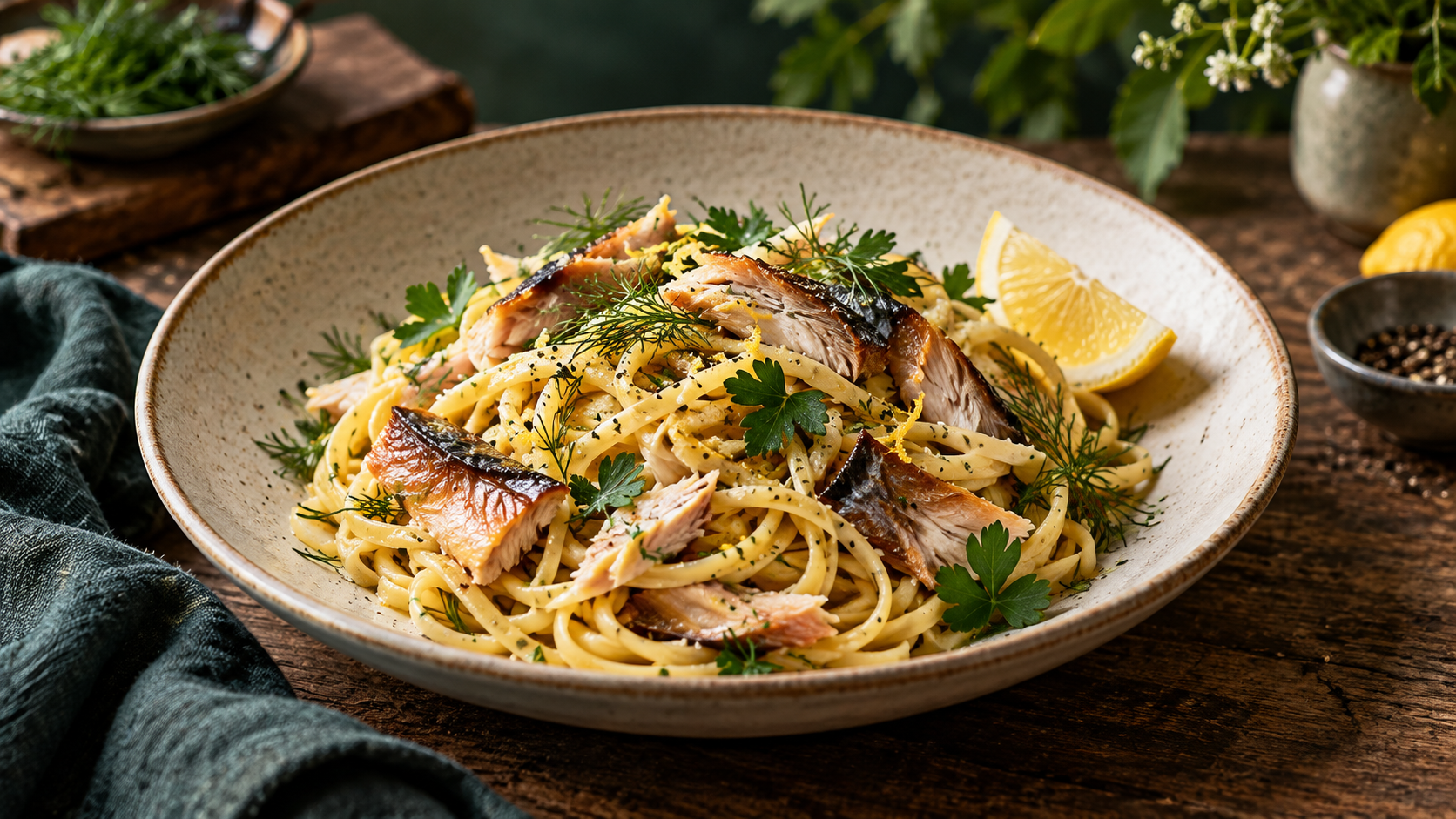
Illustrative serving suggestion for smoked eel pasta; AI-generated editorial artwork, not a photograph of a tested recipe or commercial product.
The point of smoked eel pasta is to retain the fish's smoky aroma and substantial flakes instead of burying them under salt or a heavy sauce. First, determine from the actual package whether the eel is ready to eat or must be thoroughly cooked before it goes into the pasta.
The quantities below are an editorial two-serving adaptation, not a kitchen-tested recipe or nutritional analysis. A published pasta recipe from the Hamanako Eel Fishery Cooperative specifies 100 g of dry pasta and 50 g of grilled, sauced eel per person; using smoked eel instead requires checking its salt content and cooking directions separately. 1
Check the ingredients and product
1. Read the cooking instructions on the product
Check the name, ingredients, storage conditions, use-by date, instructions after opening and any directions such as 'ready to eat' or 'cook before eating'. Neither a smoked appearance nor the word 'smoked' proves that the fish has been fully cooked. Cook products requiring heat thoroughly as directed before mixing them into pasta. The UK Food Standards Agency warns that merely warming cold-smoked fish in cooked pasta may not control Listeria; the US CDC also explains the risk of refrigerated cold-smoked fish. Pregnant people, older adults and people with weakened immune systems should take particular care. 4 5
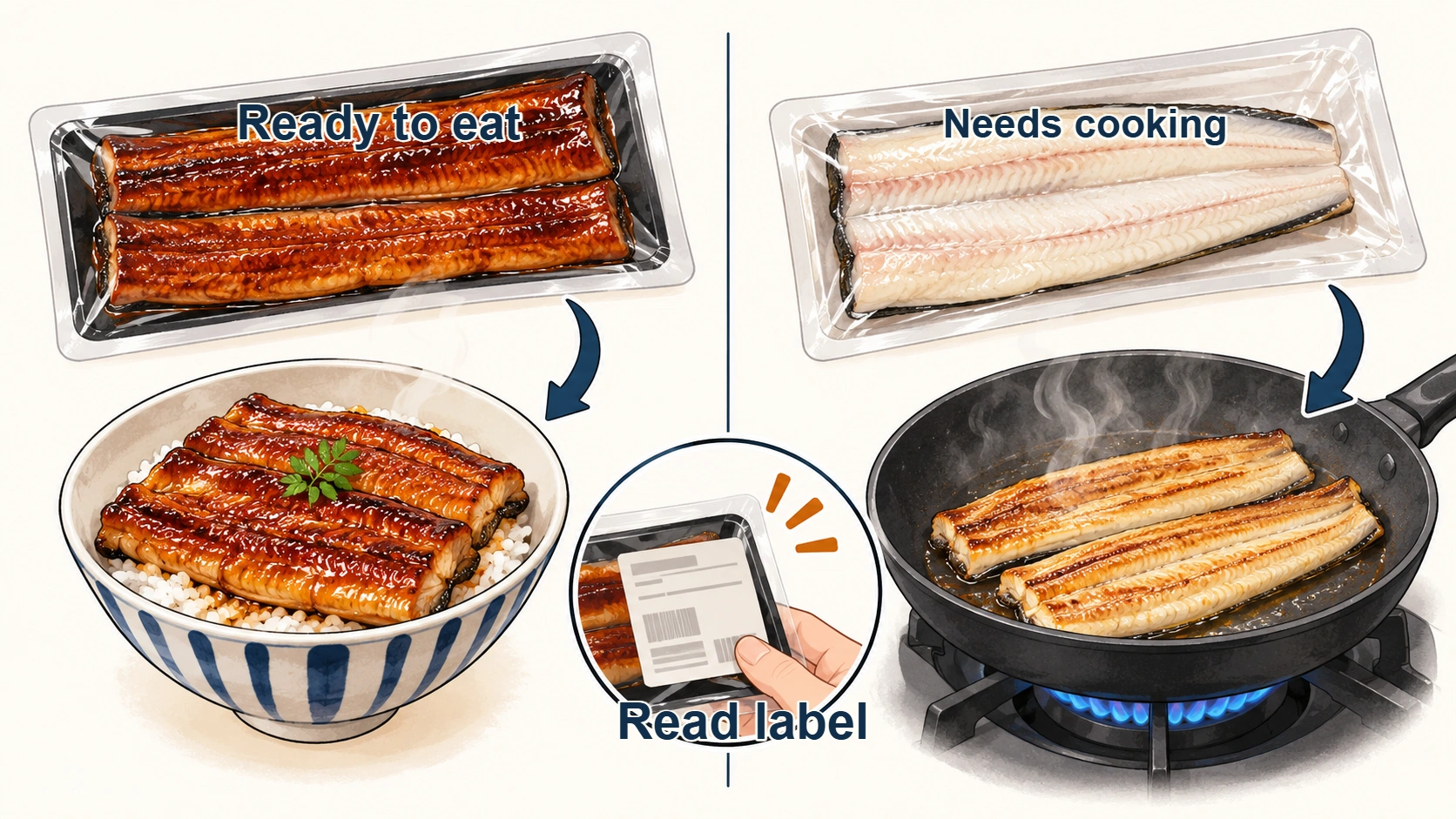
Diagram 1: Comparing ready-to-eat and cook-before-eating smoked products, with the package instructions as the decision point.
2. Choose ingredients that let the smoke stand out
Use smoked eel and dry pasta as the foundation, supported by greens, olive oil and garlic. Keep a little lemon and fresh herbs separate so they can be added after tasting; avoid starting with cheese, soy sauce or other salty toppings. Kikkoman's separate recipe for sautéed unsmoked eel uses balsamic vinegar and leafy vegetables, which illustrates a possible contrast of richness and acidity. It does not establish a formula for smoked eel pasta or its safe heating conditions. 2
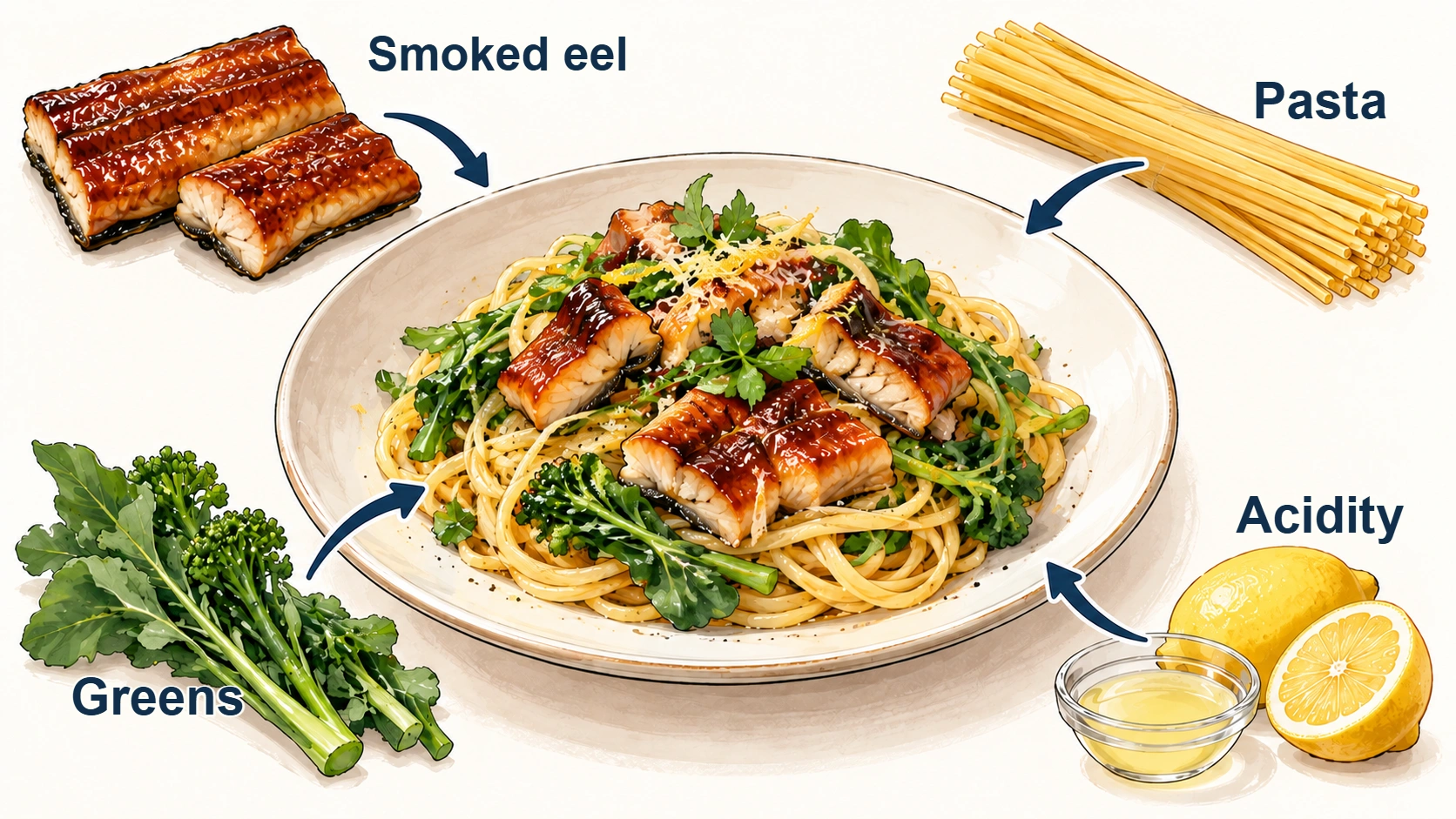
Diagram 2: Smoked eel, pasta, leafy greens and an acidic finishing element shown as separate components.
Illustrative ingredients for two servings
The 200 g pasta, 100 g eel, 30 mL oil and one garlic clove are a two-serving scaling of the Hamanako recipe's per-person quantities for grilled eel, not quantities tested with smoked eel. Adjust for the product's salt, fat and cooking instructions. In the Kikkoman measurement convention, one Japanese tablespoon is 15 mL, so two equal 30 mL; do not silently substitute a different national spoon size. 1 8
Preparation
3. Separate large flakes and remove visible bones
With clean hands and utensils, pull the eel into relatively large pieces using fingers or a fork. Remove bones and hard fragments that you can see or feel, and check each portion rather than assuming the fillet is boneless. This step cannot guarantee removal of every fine bone, particularly relevant when serving children. Keep utensils that touched uncooked fish separate from ingredients intended to be eaten without additional cooking, and follow ordinary cross-contamination precautions. 6
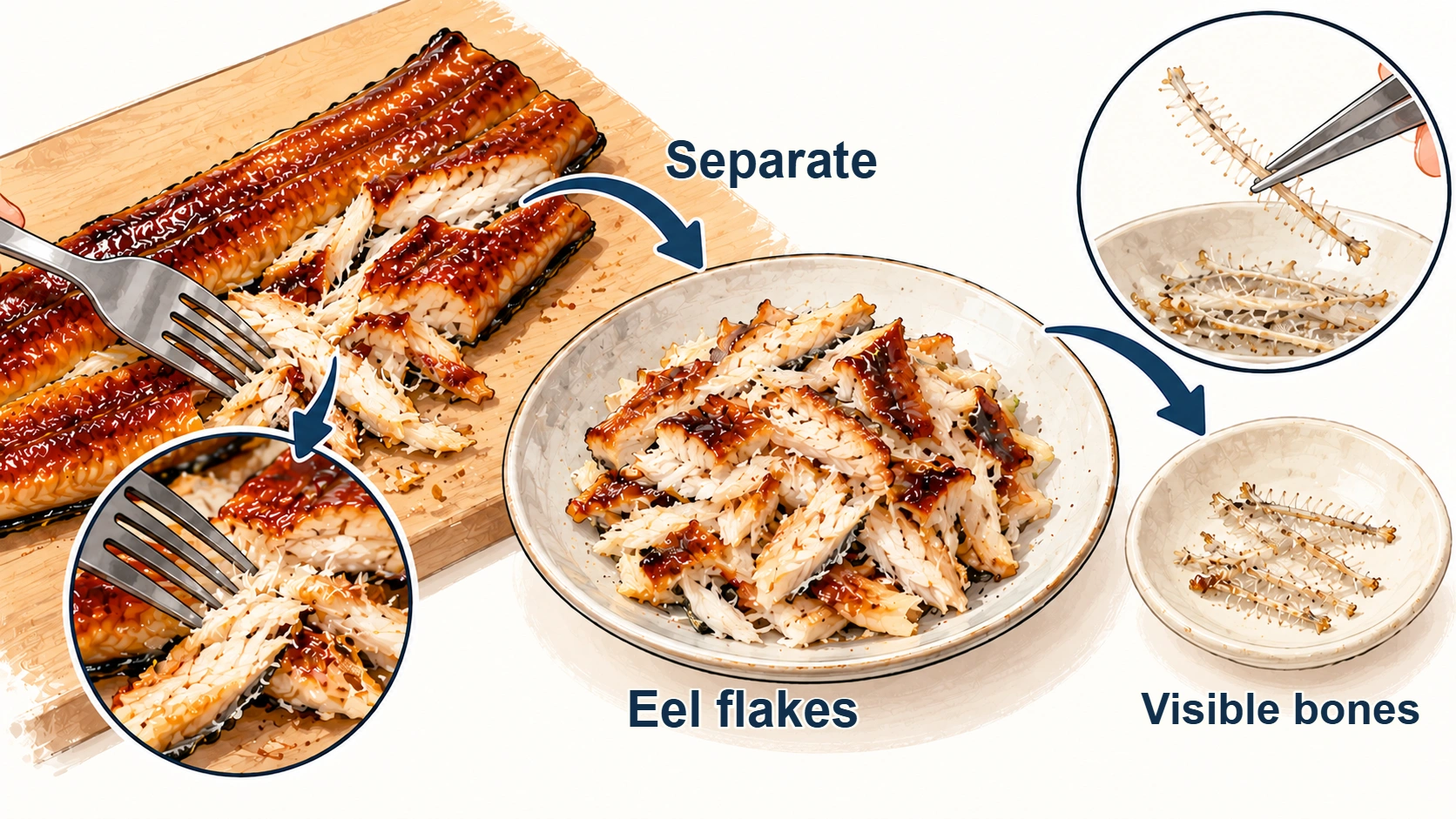
Diagram 3: Separating the eel into generous flakes and removing the visible bones into a different dish.
4. Save cooking water before draining
Cook the spaghetti for the time printed on its package. Just before draining, collect a little cloudy pasta cooking water in a separate cup; then drain without rinsing the strands. Barilla's pasta guide explains that the starch in this water helps sauce coat the pasta and recommends combining drained pasta with sauce. You do not need to use all the reserved water: introduce it a little at a time until the texture is lightly glossy, while considering the water's salt. 3
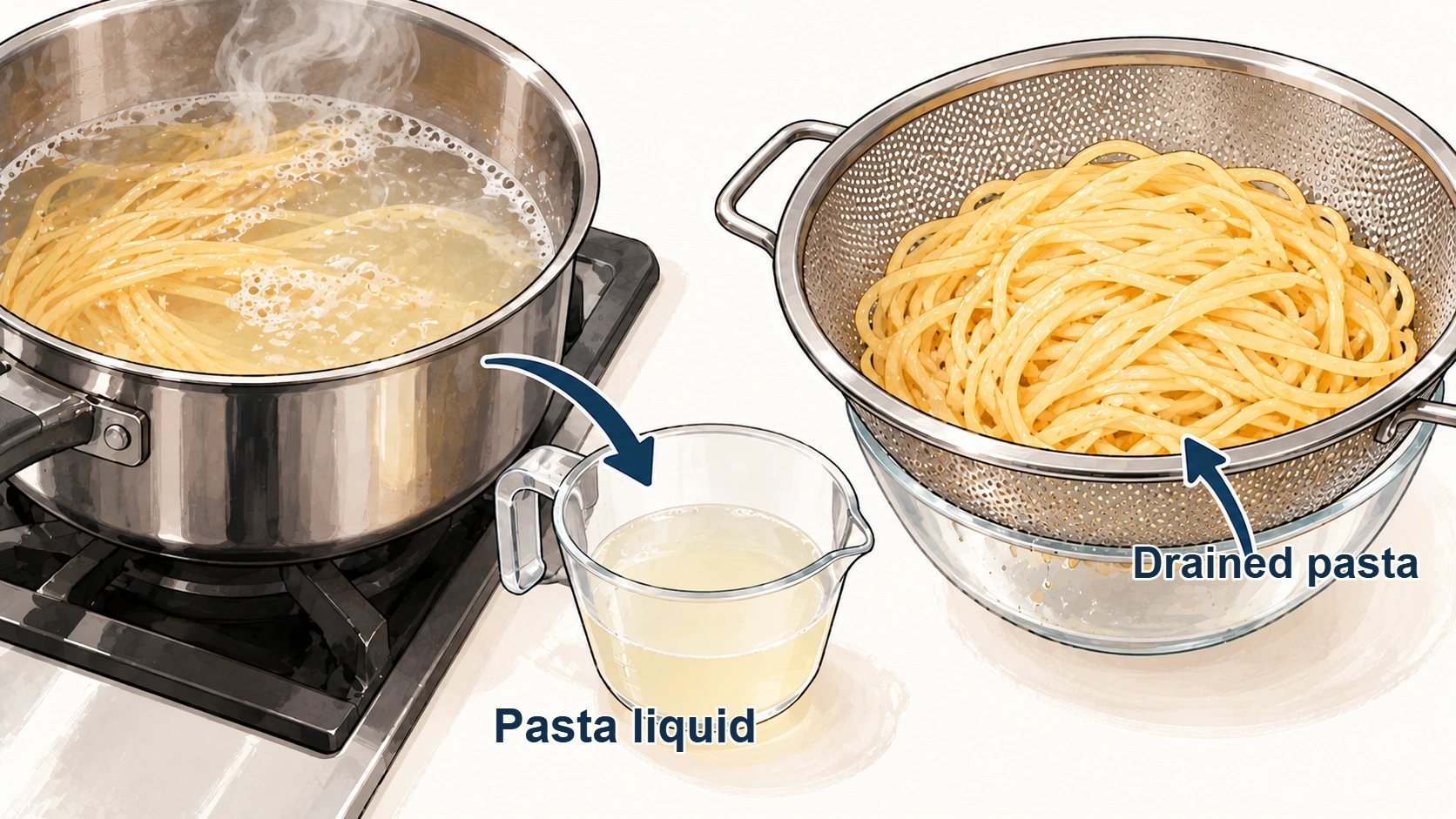
Diagram 4: Reserving a little pasta cooking water beside the drained spaghetti before mixing the sauce.
Combining the pasta
5. Build the sauce base before adding eel
Warm the olive oil and garlic gently in a skillet until fragrant, and cook the greens as needed. Keep the smoked eel out of the pan at this stage, and do not add a strongly salted seasoning by default. The moisture from the vegetables and oil form a light base that does not overpower the smoke. The illustration is schematic; extra items pictured are not compulsory ingredients. If your eel needs cooking, complete the manufacturer's required cooking procedure separately before proceeding. 4
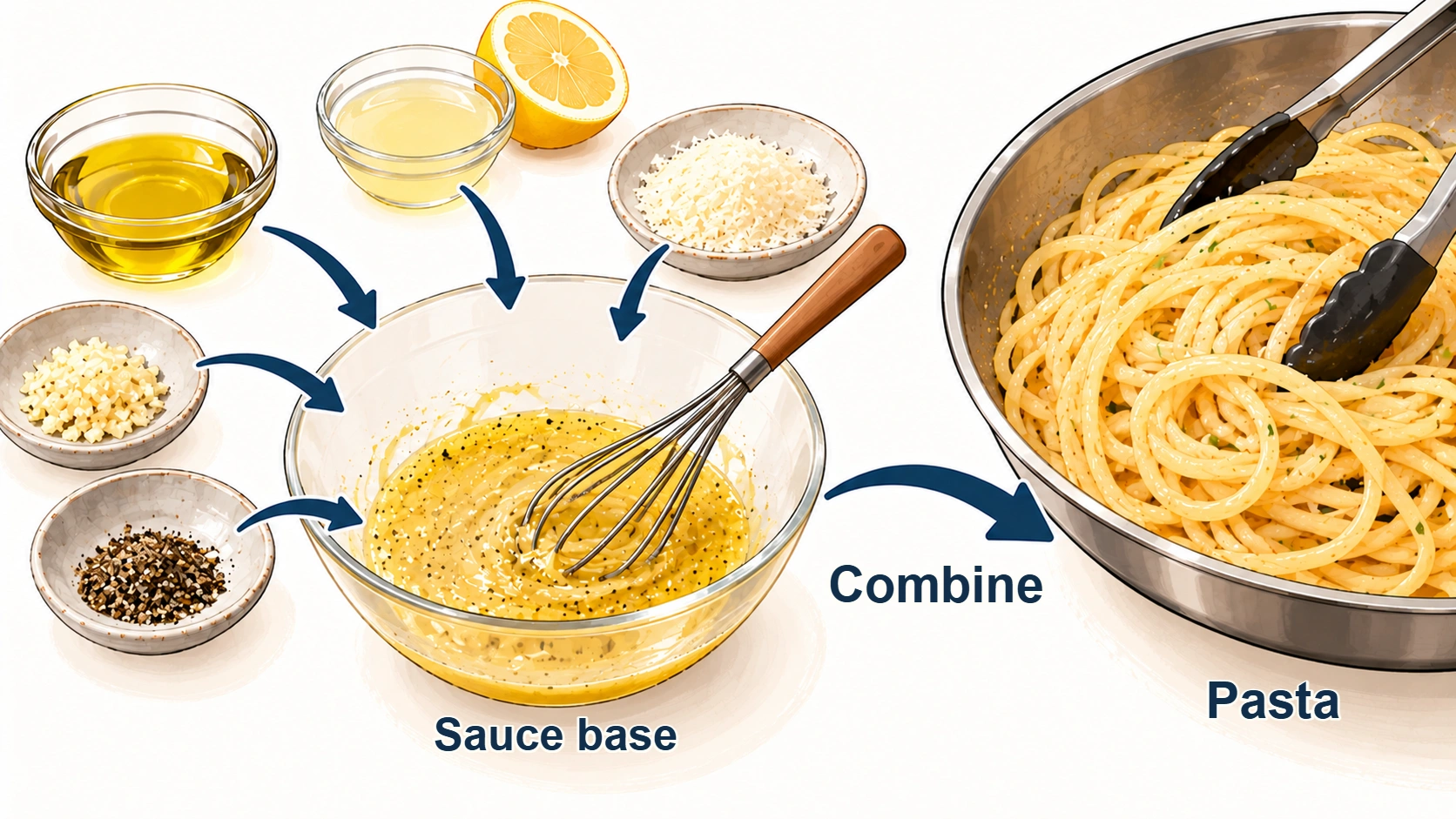
Diagram 5: Preparing the light sauce base before adding the eel, then combining that base with the pasta.
6. Fold in the eel at the end
Add the drained pasta to the skillet and loosen it gradually with the reserved cooking water. Toss just until the oil and liquid make a thin coating, then introduce the eel that is already safe to use and fold it through with tongs. Keep several generous flakes intact rather than vigorously stirring them into shreds. This brief combining step is not a substitute for fully cooking cold-smoked or other cook-before-eating fish; observe the package requirements first. 3 4
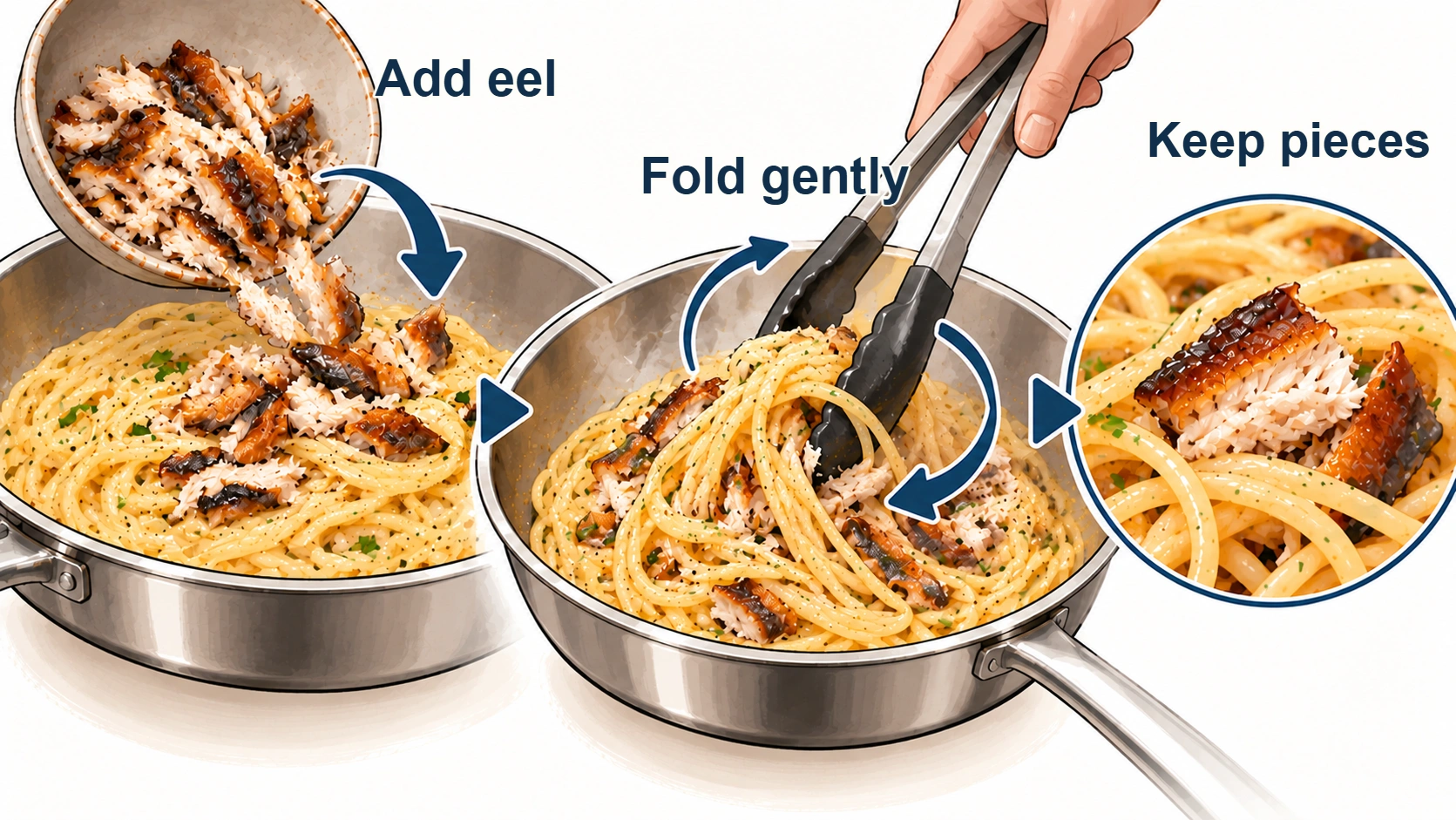
Diagram 6: Adding prepared eel last and gently folding it through the noodles without breaking every piece.
7. Taste before adding more salt
Taste a forkful containing both pasta and eel before reaching for extra salt or pepper. The smoked product and the pasta water may already contribute considerable sodium, while seasoning varies between brands. Begin with an unsalted sauce, then adjust only if the assembled dish needs it; the amount of water or vegetables can also change the balance. No universal additional-salt quantity is appropriate across products, so consult the nutrition label as well as your taste.
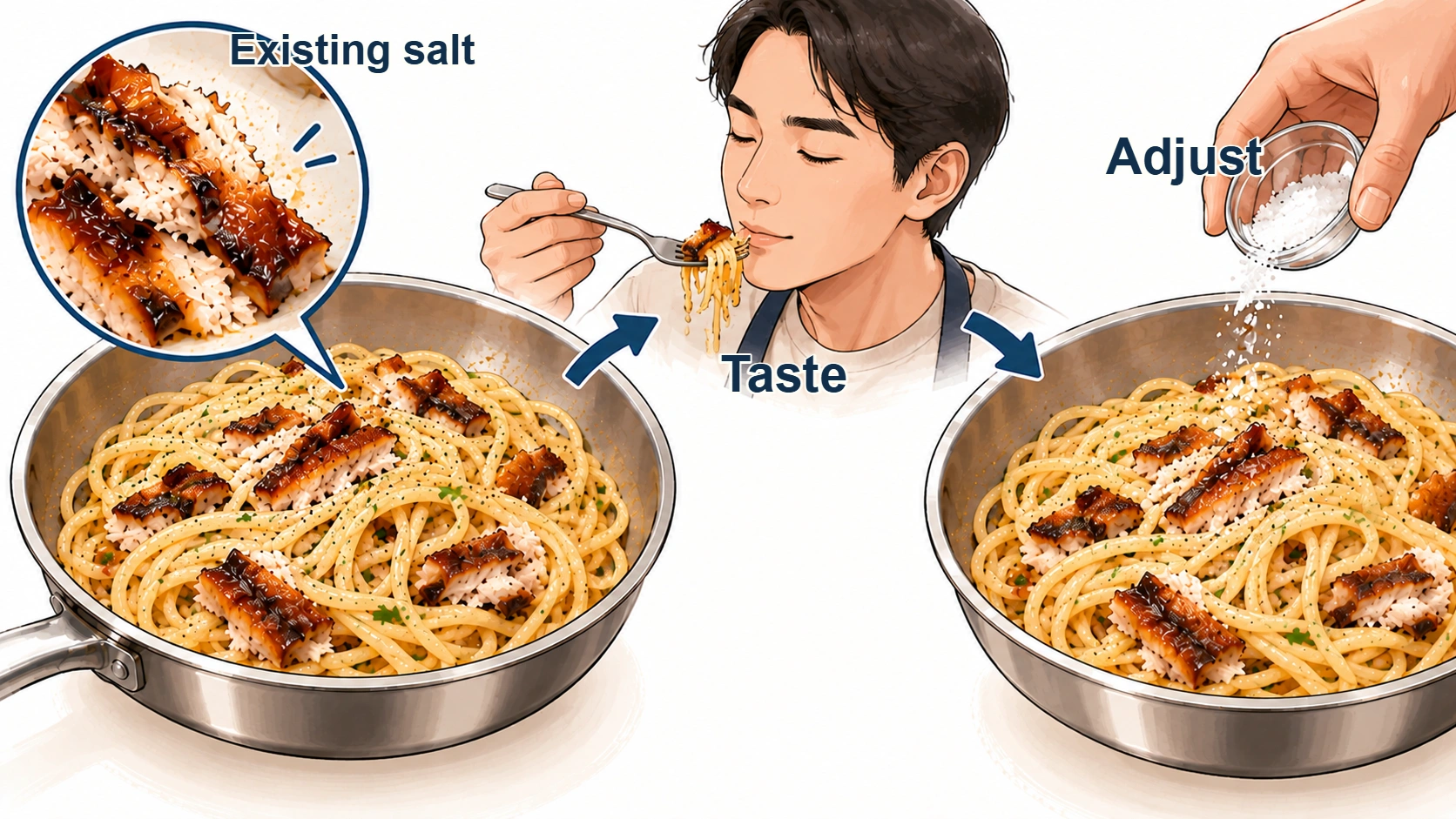
Diagram 7: Accounting for salt already in smoked eel, tasting the pasta, and only then adjusting seasoning.
Finishing
8. Keep citrus and herbs optional
Add lemon juice or a little vinegar in small increments only if you want a brighter finish. Parsley or dill can be scattered just before serving, or offered separately so the eel's smoke remains central. Neither acidity nor herbs are mandatory. Kikkoman's balsamic-and-greens pairing concerns a different dish made with unsmoked eel; it is a culinary reference, not an experiment proving this particular smoked-eel combination. 2
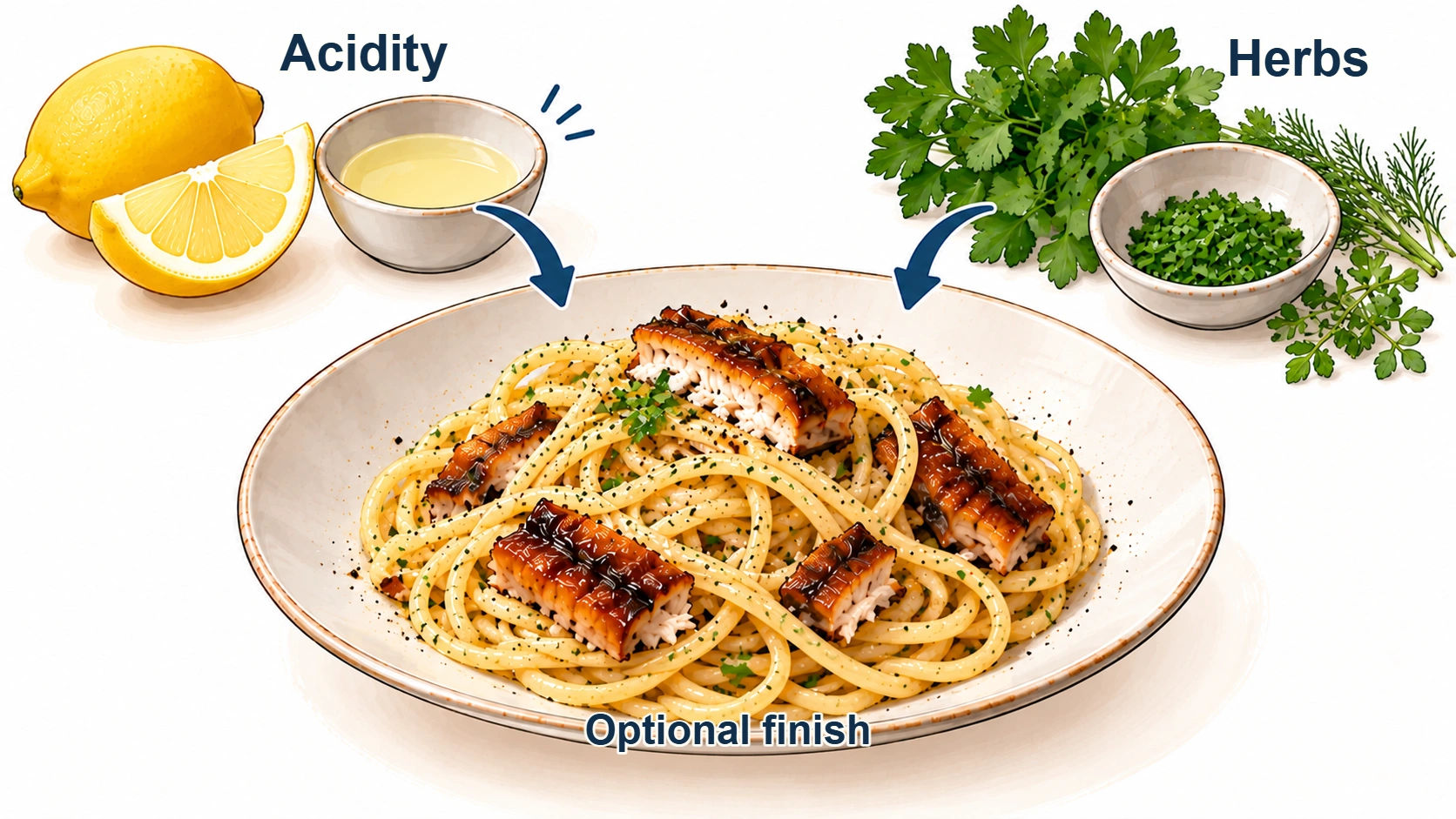
Diagram 8: Lemon and fresh green herbs presented as two independent, optional finishing touches.
9. Transfer to a warm plate and serve promptly
Move the pasta straight onto warmed plates, keeping the larger eel pieces visible, and serve without prolonged holding at room temperature. Japan's Ministry of Health, Labour and Welfare advises prompt cooling of leftovers in shallow containers and thorough reheating, rather than extended room-temperature storage. Do not assume a universal number of safe storage days; follow the actual food's instructions and conditions. Expiry dates generally refer to unopened products stored as specified, according to Japan's Consumer Affairs Agency. 6 7
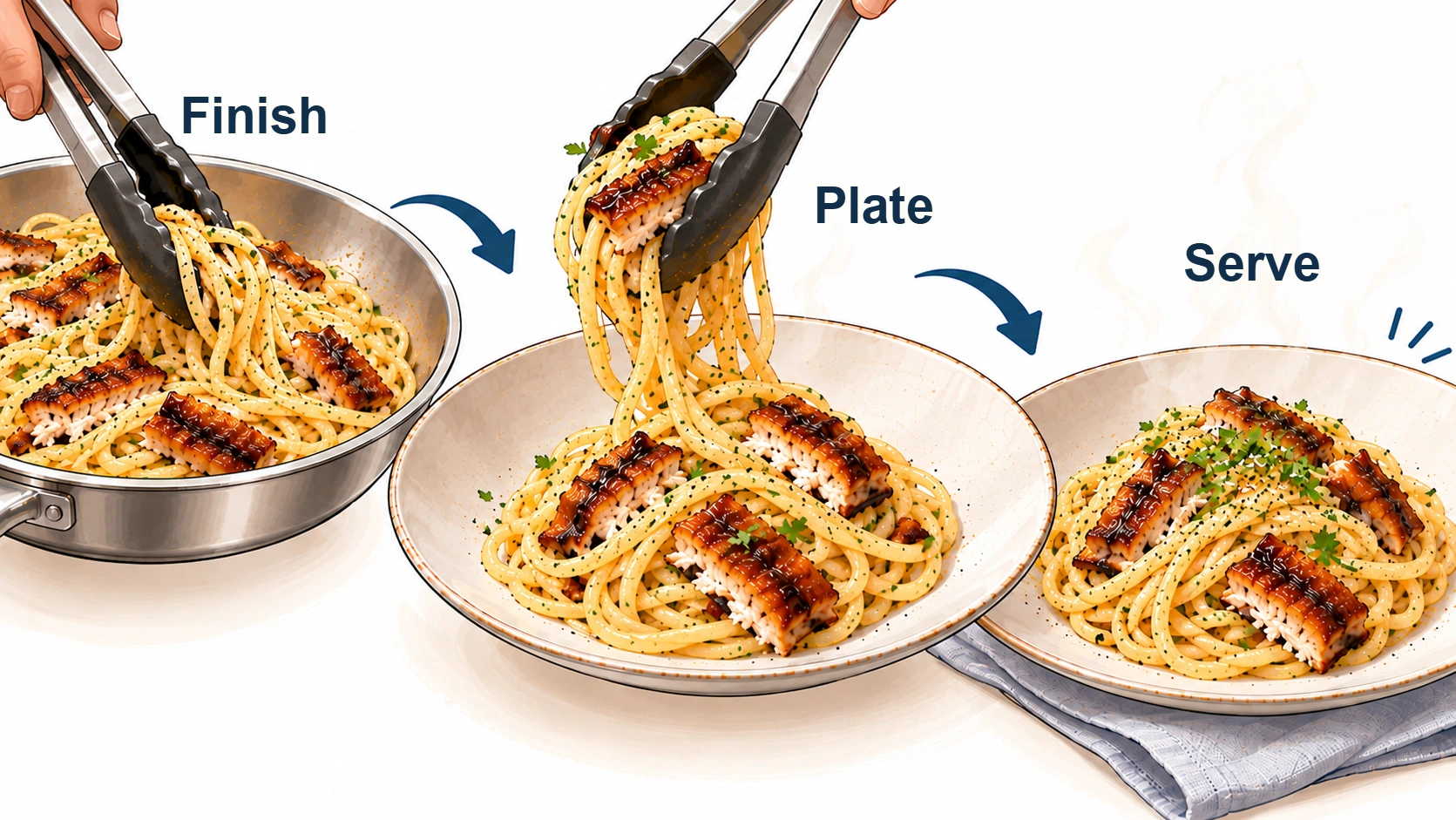
Diagram 9: Transferring finished eel pasta from the skillet directly to the serving plate without long holding.
Sources and limits of applicability
Hamanako Eel Fishery Cooperative, Japanese-style Hamamatsu eel pasta — Published 2025; establishes the original per-serving dry pasta, grilled eel, oil and garlic amounts. Not a smoked eel recipe.
Kikkoman, Sautéed eel with balsamic sauce — Official recipe using unsmoked shirayaki eel, acid and greens; not evidence for smoked-eel heating.
Barilla, How to Cook Pasta — Manufacturer's instructions for package cooking times, reserving starchy water and finishing pasta in sauce.
UK Food Standards Agency, cold-smoked fish warning — Advice on Listeria for higher-risk consumers and why brief warming in pasta is insufficient.
US CDC, How Listeria Spread: Pâté and Cold-Smoked Fish (11 August 2024) — General food-safety information, not testing of a particular eel product.
Japan Ministry of Health, Labour and Welfare, Six steps to prevent food poisoning at home — Cross-contamination prevention, heating, cooling and leftovers.
Japan Consumer Affairs Agency, Reducing food waste at home — Difference between date types and the storage assumptions applicable to unopened food.
Kikkoman, Home Cooking measurement conventions — Defines a Japanese tablespoon as 15 mL.
Related articles