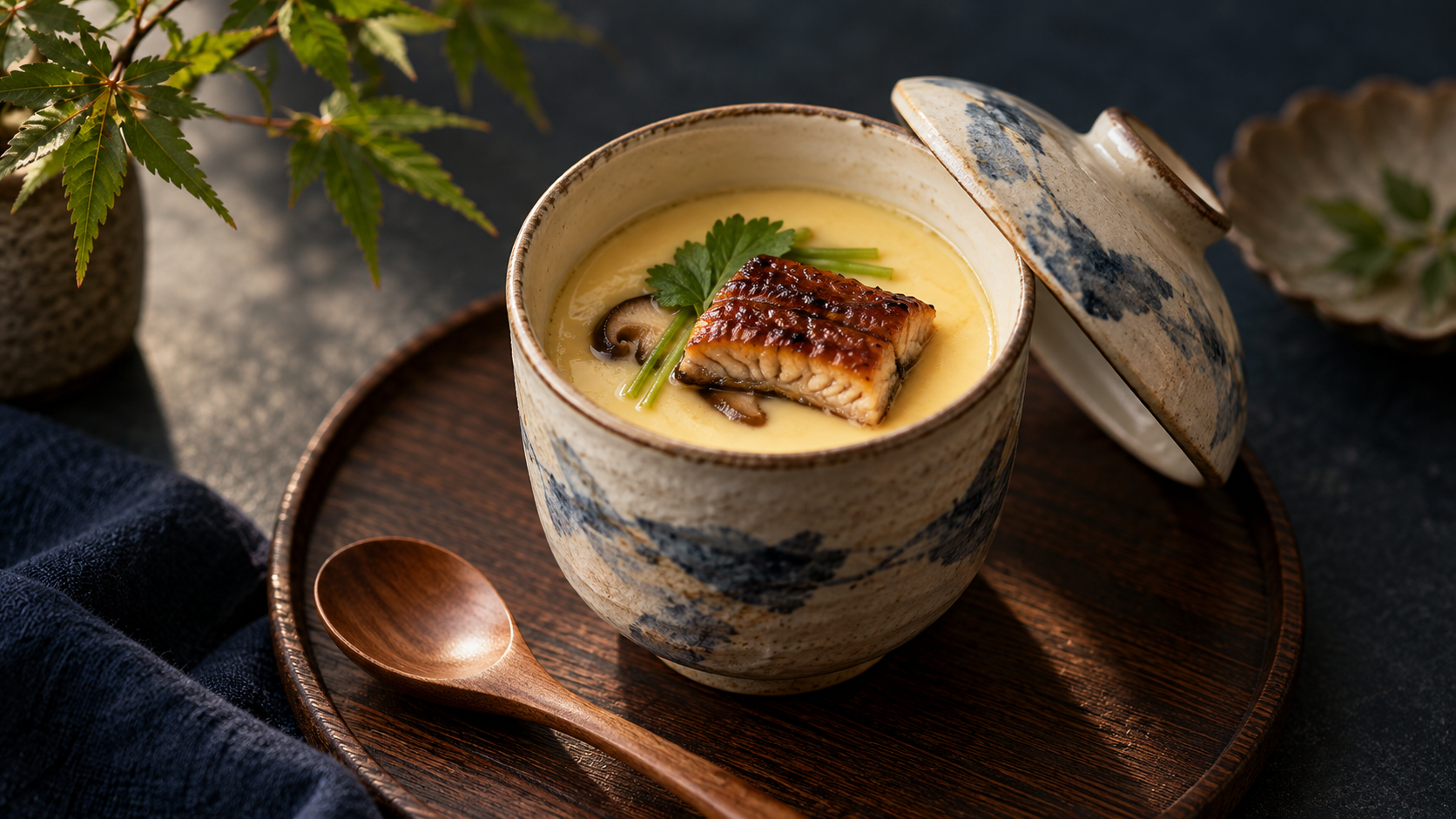
For eel fried rice, stir beaten egg until softly set, add and loosen the rice, distribute the tare sauce supplied with the grilled eel, then gently fold in the cut eel. Finish with sliced scallions and adjust salt and pepper only after accounting for the glaze. This order helps preserve both the cooked eel pieces and the texture of the rice.
The quantities and core sequence here come from Tohto Co-op’s “Eel Fried Rice,” published in its fourth July 2008 issue for two servings with an estimated preparation time of 20 minutes. This is an attributed recipe, not one tested by this publication. Kikkoman also publishes “Eel and Egg Mixed Rice,” but that is a different, non-stir-fried dish: its ingredient quantities and microwave settings should not be transferred to fried rice. (Tohto Co-op, “Eel Fried Rice” (fourth July 2008 issue; two servings; 20 minutes); Kikkoman, “Eel and Egg Mixed Rice” (a different preparation for context))
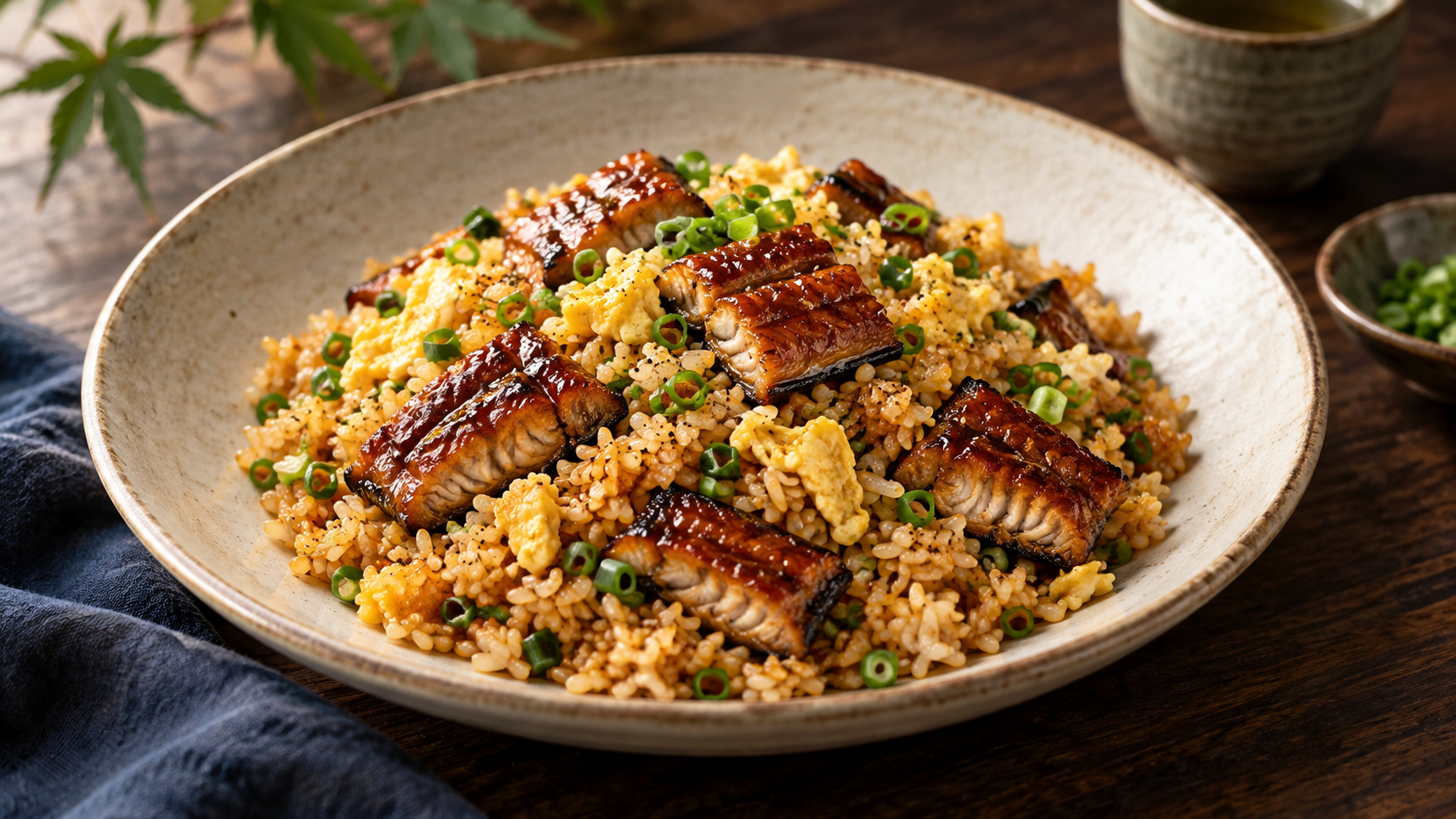
Finished-dish illustration generated by AI; not a photograph of a tested recipe.
Designing the ingredients
The eel already carries its glaze
Kabayaki is already seasoned. In Tohto Co-op’s method, the packaged eel sauce goes into the rice before the eel, and salt and pepper are adjusted only afterward. Adding soy sauce or mirin from the outset is unnecessary. The amount and strength of packaged tare vary, so do not simply combine seasoning amounts borrowed from another recipe. (Tohto Co-op, “Eel Fried Rice” (fourth July 2008 issue; two servings; 20 minutes))
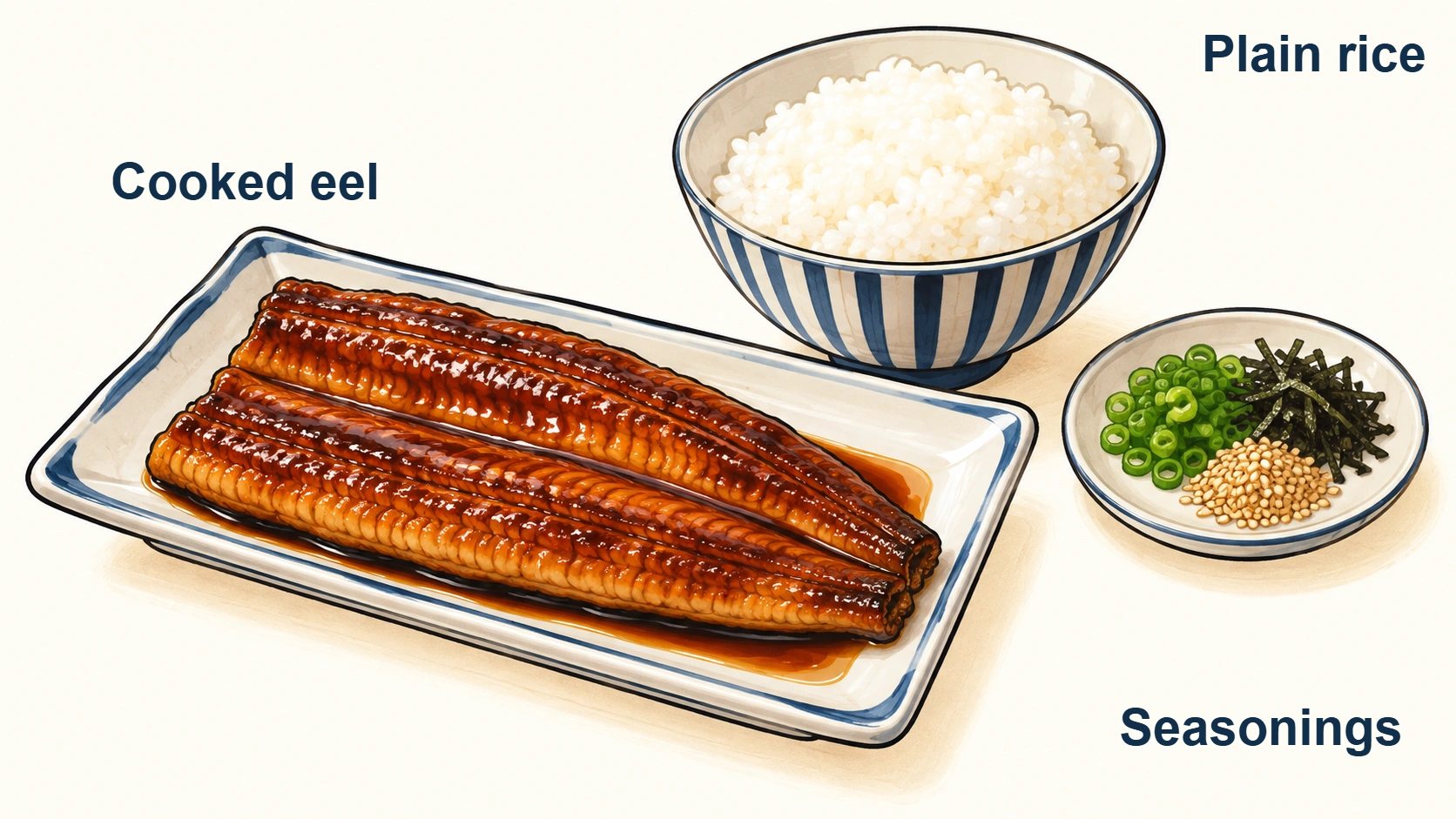
Cooked glazed eel, plain rice and seasonings: the eel brings flavour before extra seasoning is added.
Match the quantities and cutting sizes
The source ingredients for two servings appear below. Cut the eel into approximately 1.5 cm cubes and the scallions into thin rounds so each spoonful can include rice and eel. Carrots and mushrooms shown in the diagram are optional visual examples, not ingredients in the cited baseline recipe. If added, cook them thoroughly and avoid adding excess moisture. (Tohto Co-op, “Eel Fried Rice” (fourth July 2008 issue; two servings; 20 minutes))
A Japanese tablespoon is 15 mL according to Kikkoman’s measuring guide. The 30 mL figure is a volume, not a claim that the oil weighs 30 g. (Kikkoman, “How to Measure a Tablespoon” (15 mL))
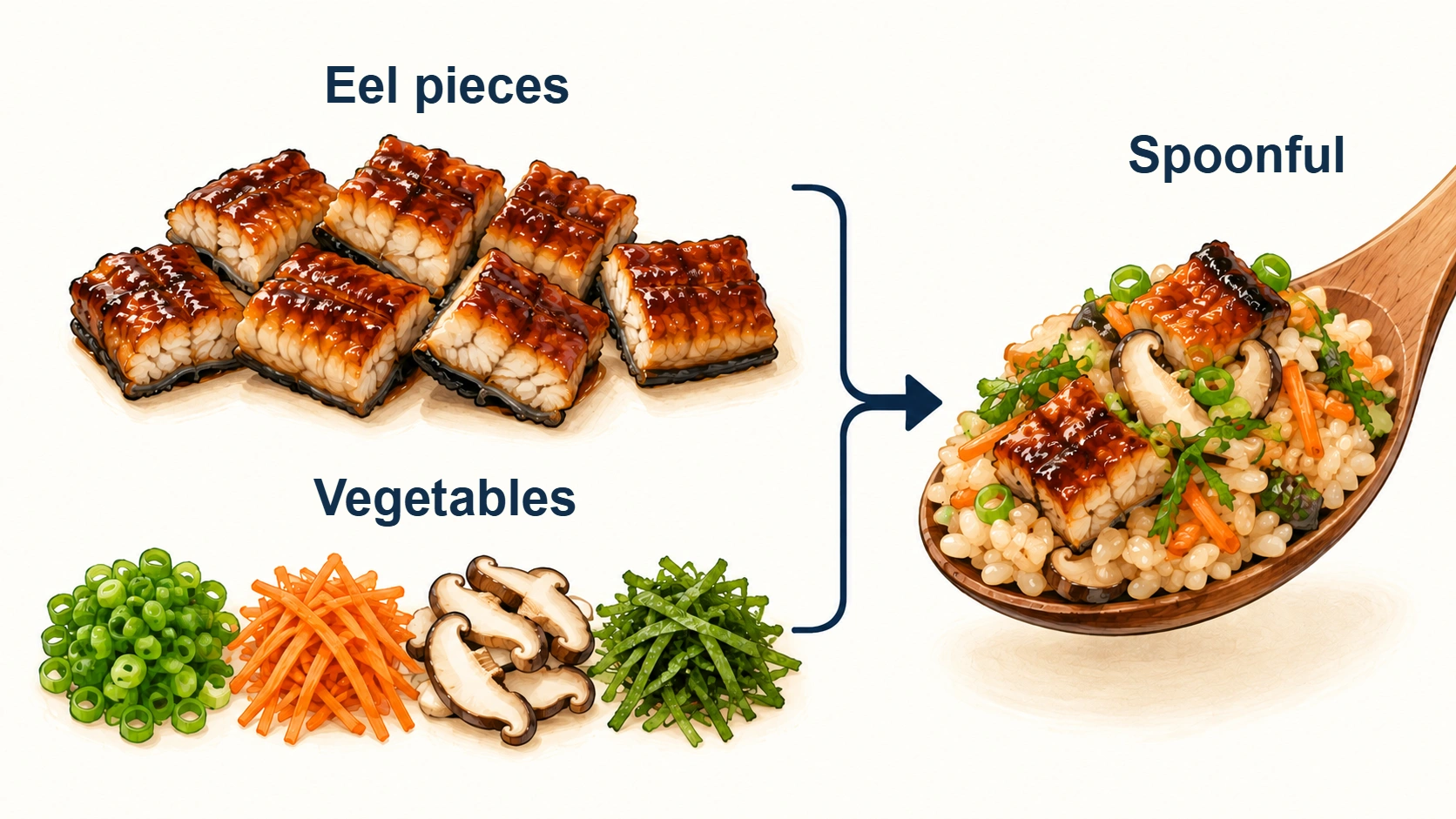
Cut the eel and any optional vegetables to suit a spoonful; vegetables are not mandatory in the reference recipe.
Before stir-frying
Prepare everything before heating the pan
Check the package directions for thawing and reheating the cooked kabayaki; thaw safely when required, then cut it. Beat the egg, slice the scallions, have the supplied tare close by, and set out the rice tray and wok. Doing the preparation first avoids stopping midway through cooking. It does not mean leaving food at room temperature for an extended period.
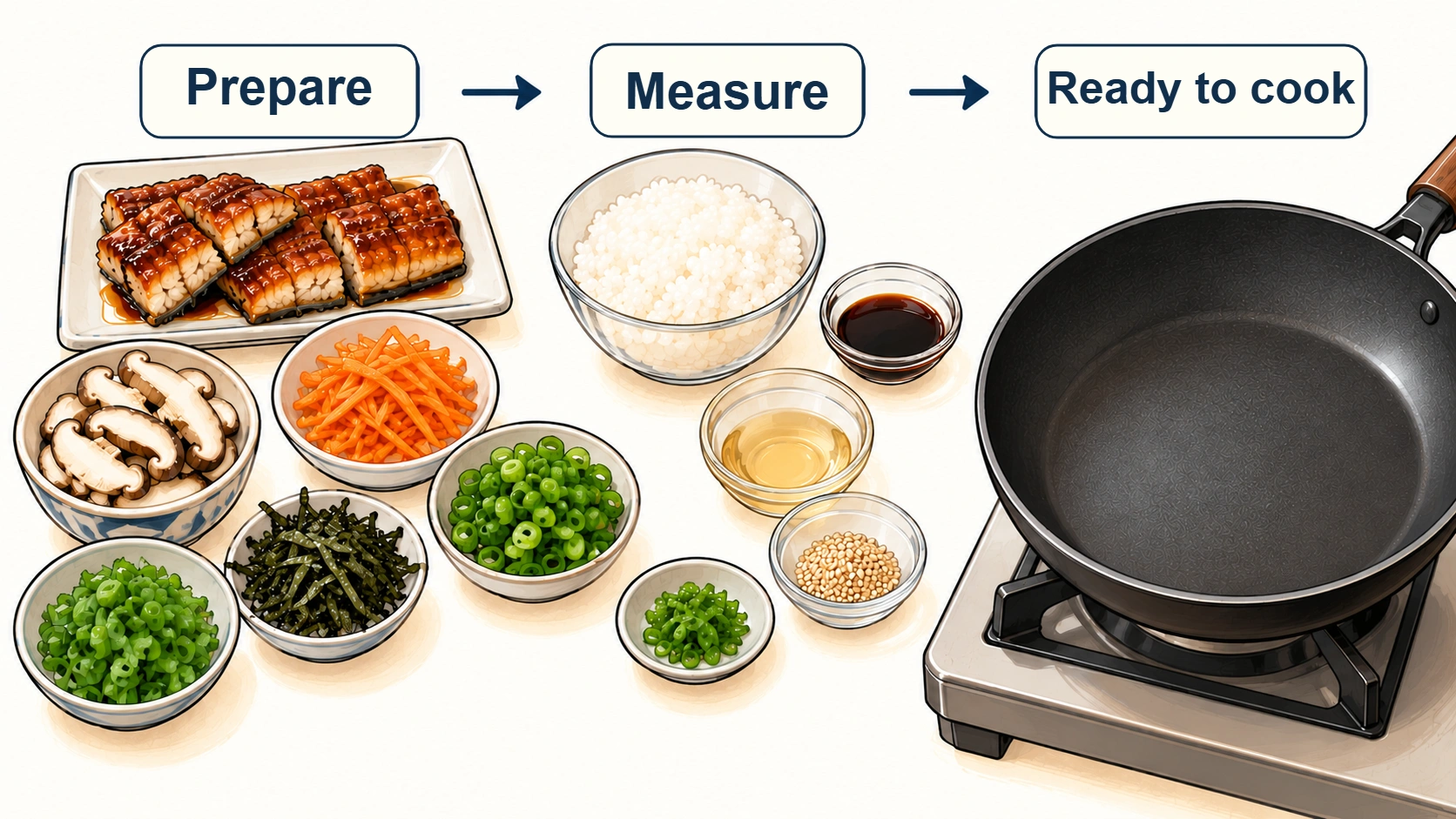
Have egg, rice and seasonings prepared before warming the pan.
Loosen the rice without mashing it
Tohto Co-op spreads the cooked rice on a tray to let it cool before frying. The purpose is to reduce clumping and excess surface moisture, not to hold cooked rice at room temperature for a long time. Move promptly into cooking, breaking up large clumps gently and lifting or cutting through the rice with a spatula rather than compressing the grains. The illustration compares separated grains with a damp, compact mass.
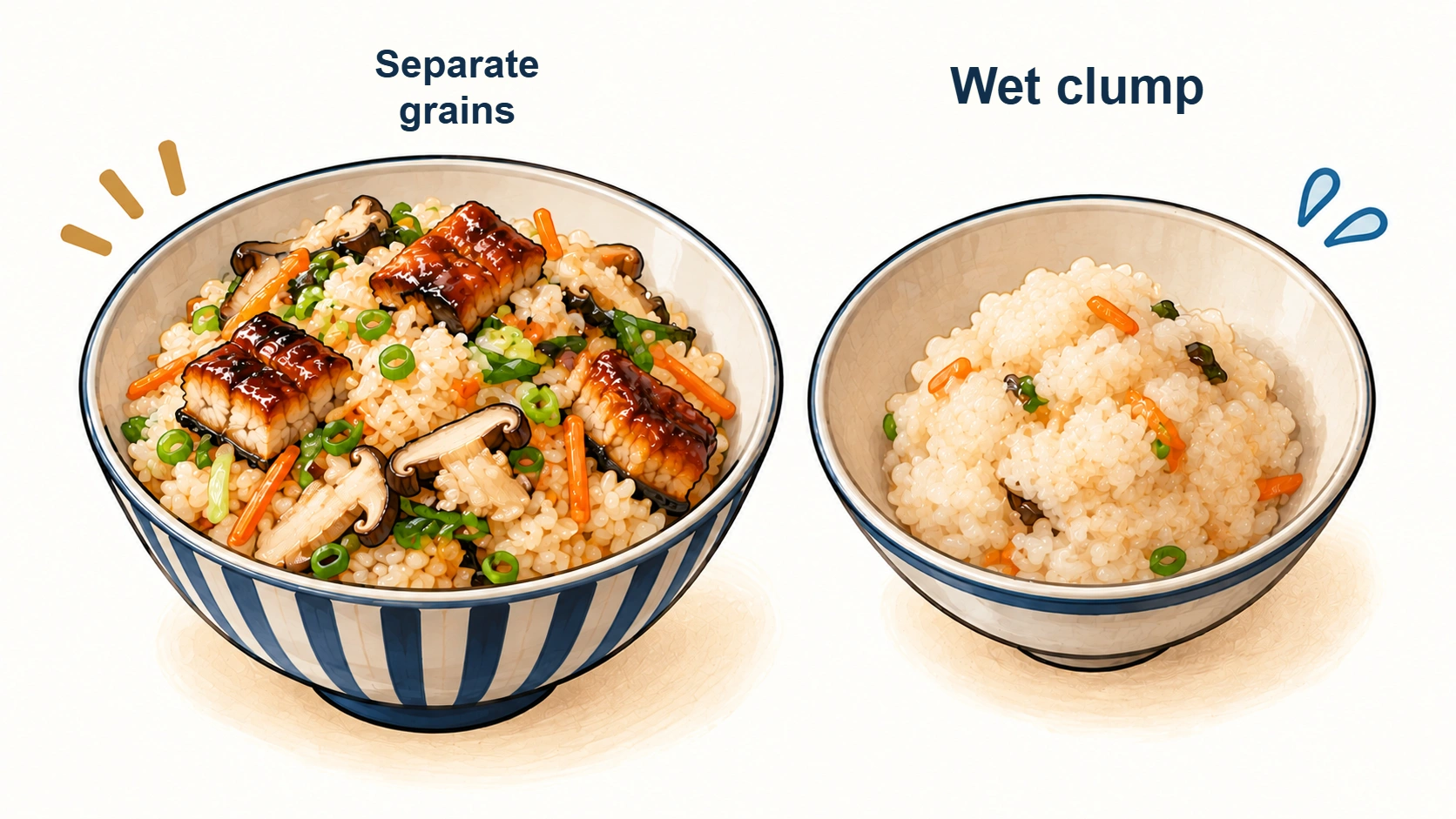
Schematic contrast between distinct rice grains and an overly wet clump.
Stir-frying and combining
Add the rice when the egg is softly set
Heat the stated salad oil in a wok, add beaten egg and stir broadly. When it is still softly set, add the rice and stir-fry while separating the grains. This is the order given in the Tohto Co-op recipe. Pan size and heat differ by kitchen, so there is no invented fixed number of seconds for each stage. (Tohto Co-op, “Eel Fried Rice” (fourth July 2008 issue; two servings; 20 minutes))
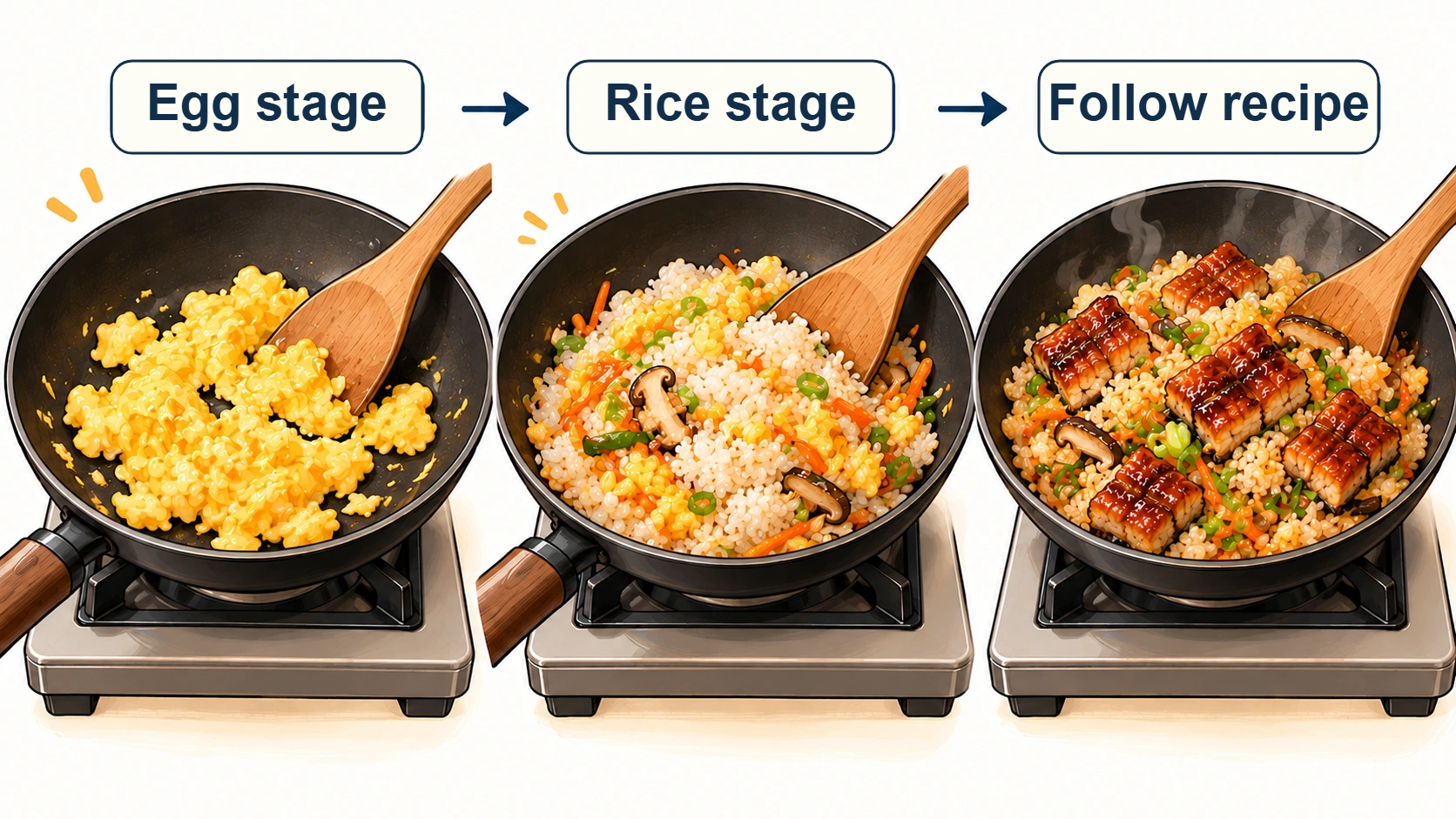
The source sequence adds rice while the egg is softly set.
Mix in tare first; fold in eel afterward
Once the rice is loosened, mix the packaged kabayaki sauce evenly through it. Only then add the 1.5 cm eel pieces. Lift and turn the rice from underneath rather than pressing the eel with the spatula. The recipe uses already cooked kabayaki: this is a combining and thorough-heating step, not a method for cooking raw eel. (Tohto Co-op, “Eel Fried Rice” (fourth July 2008 issue; two servings; 20 minutes))
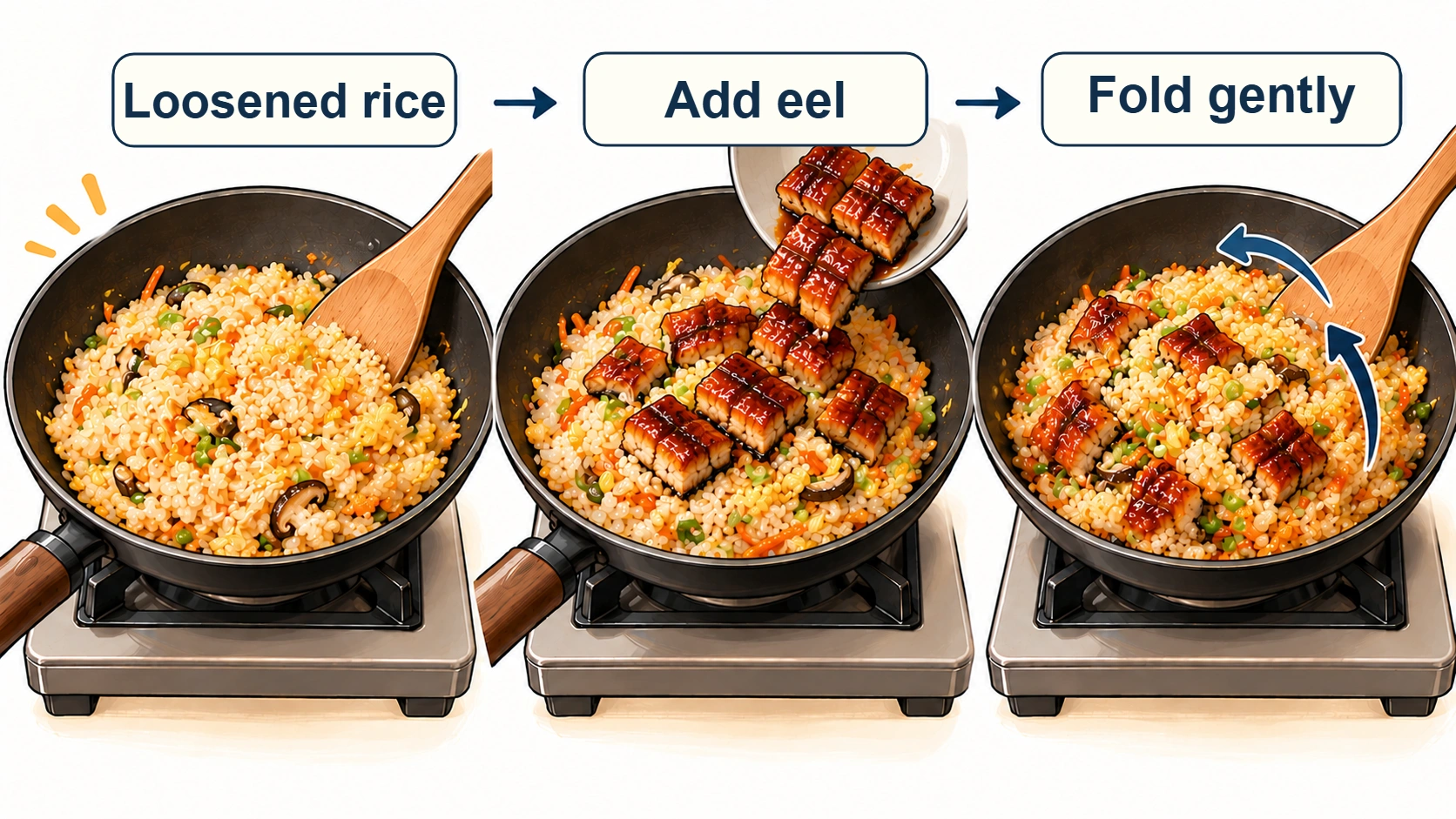
Season loosened rice with the included tare, then turn the eel through gently.
Season sparingly at the end
The source says to use the sauce that accompanies the eel and gives no fixed quantity in millilitres. Start with that product’s supplied sauce, ensure the food is thoroughly cooked, then judge whether salt or pepper is needed. The pouring shown in the diagram is schematic, not a recommendation to add a large amount. Excess liquid makes the rice wet and can overwhelm the eel’s existing flavour. (Tohto Co-op, “Eel Fried Rice” (fourth July 2008 issue; two servings; 20 minutes))
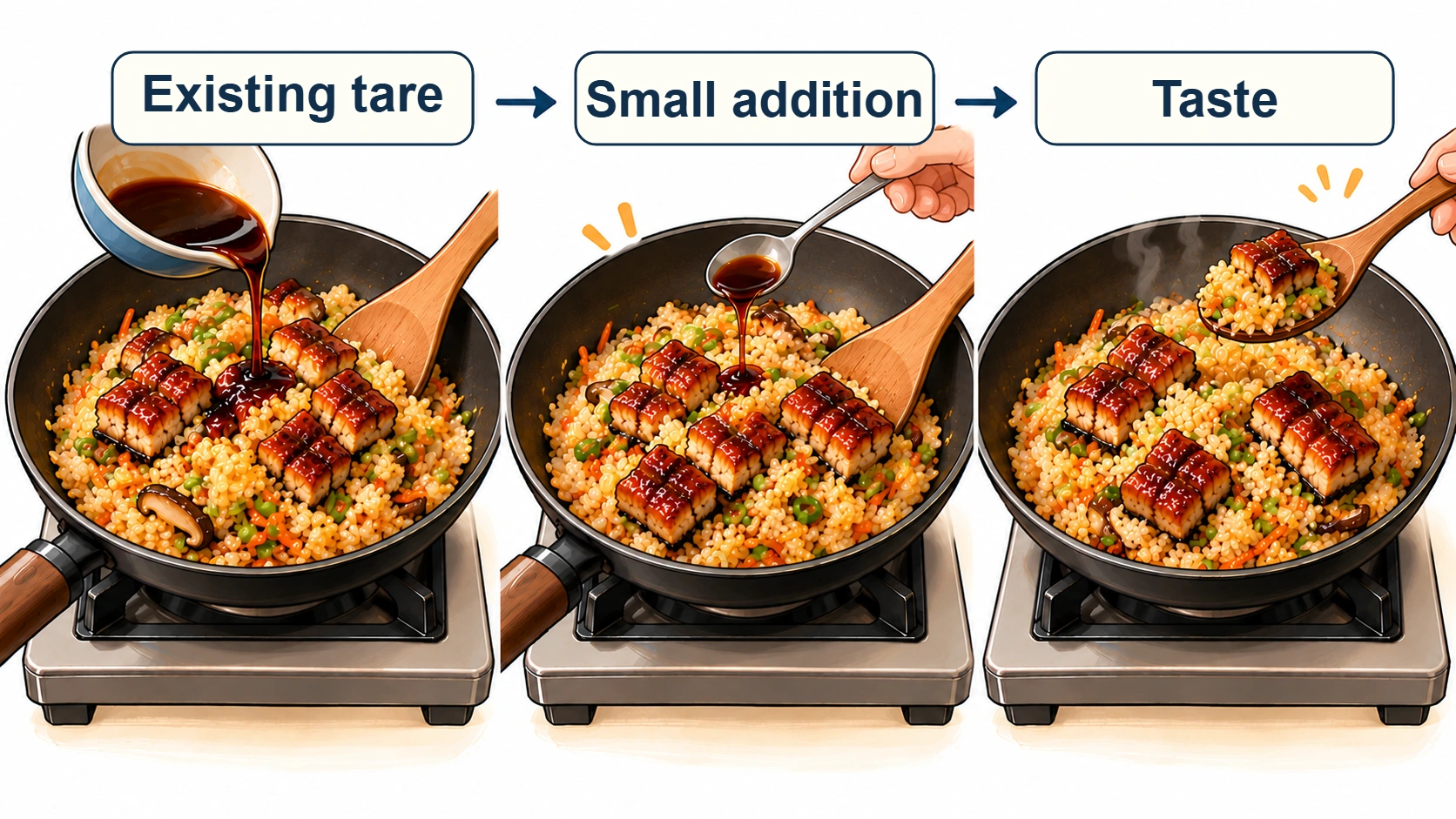
Consider existing tare before adding seasoning; depicted sauce quantities are not measured.
Finishing and serving
Heat the mixture evenly
Turn the rice, egg and eel evenly through the pan so no cold pockets remain. Japan’s Ministry of Health, Labour and Welfare gives a general household-cooking reference of a food-centre temperature of 75°C for at least 1 minute. This is not a time specified by the Tohto Co-op recipe. Steam alone cannot establish safety; follow the product’s cooking directions and appropriate food-safety guidance. (Ministry of Health, Labour and Welfare, “Six Points for Preventing Food Poisoning at Home”)
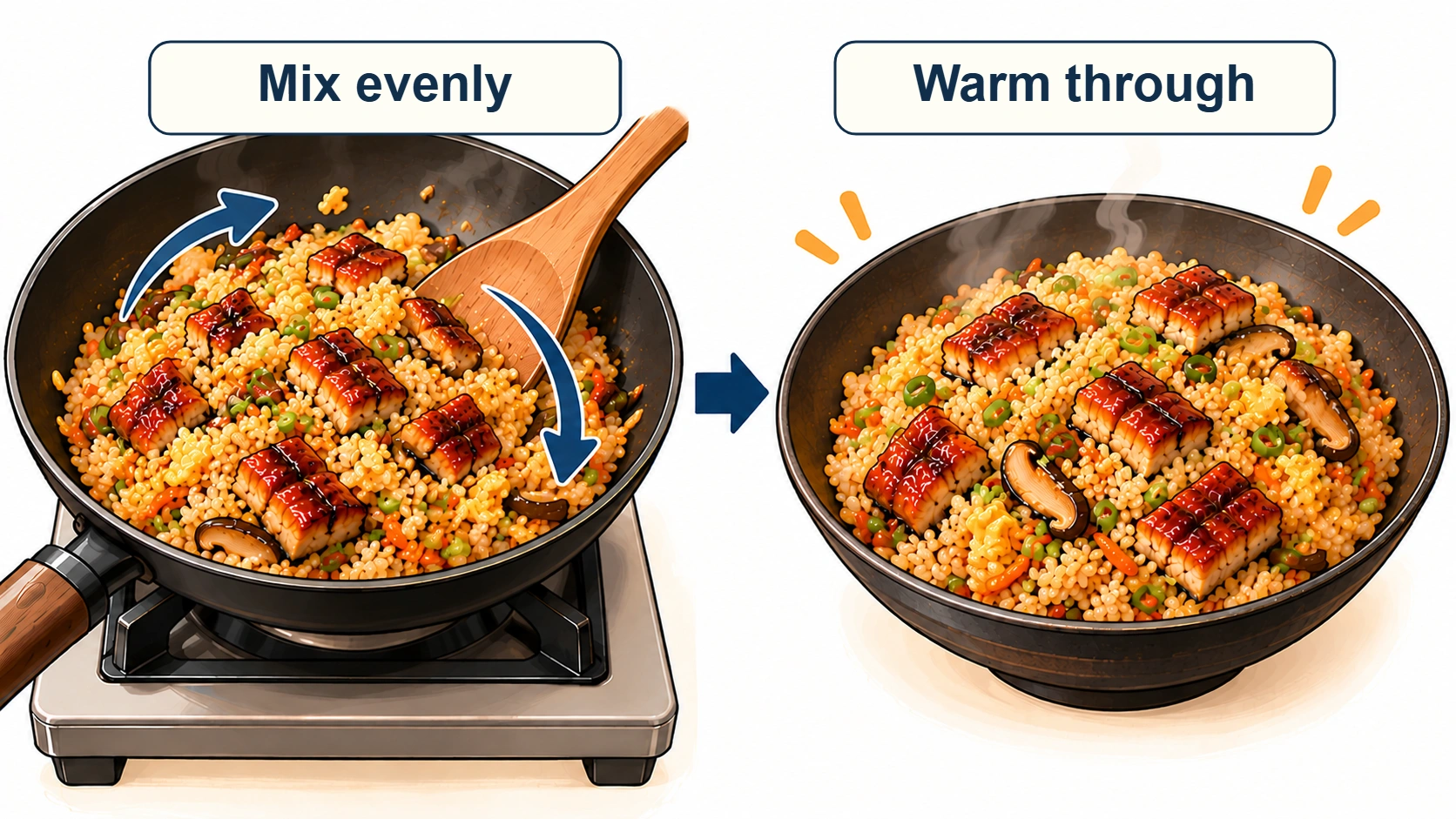
Schematic of distributing heat and mixing evenly.
Add scallions and serve without a pool of sauce
Stir the sliced scallions through once at the end and transfer the rice to a plate. A useful visual target is identifiable eel pieces, separated grains and no puddle of added sauce at the bottom. The source’s 20-minute estimate is its published recipe time, not a time measured in this kitchen. (Tohto Co-op, “Eel Fried Rice” (fourth July 2008 issue; two servings; 20 minutes))
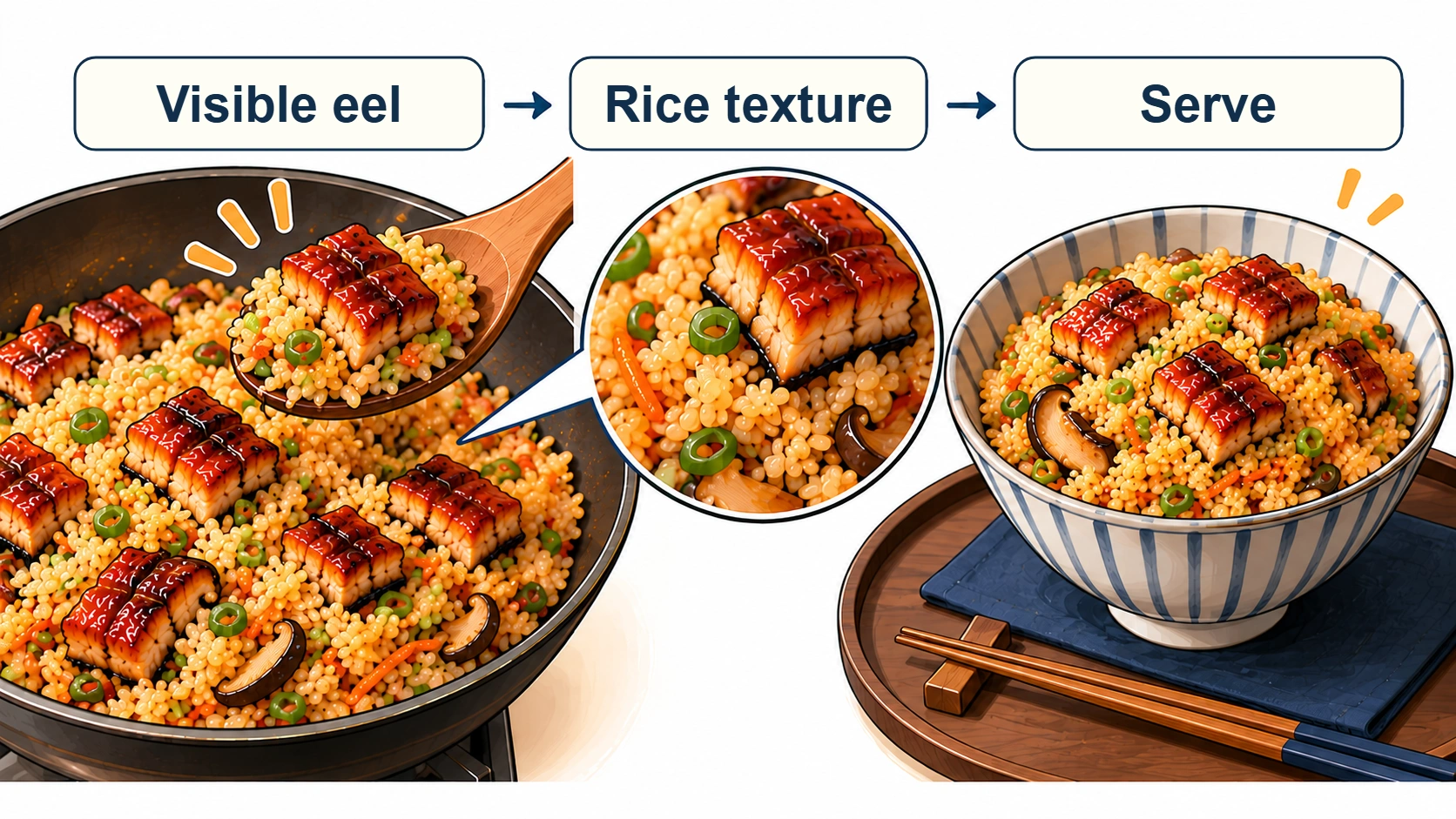
Serve with discernible eel and rice grains, without flooding the plate with sauce.
Food safety for cooked rice and eel
Rice dishes, including fried rice, can be associated with Bacillus cereus food poisoning. Japan’s Ministry of Agriculture, Forestry and Fisheries advises against making large batches of rice for prolonged storage and recommends quickly dividing leftovers into smaller portions for refrigeration or freezing. Briefly spreading rice in preparation must not become extended room-temperature storage. (Ministry of Agriculture, Forestry and Fisheries, “Bacillus cereus”)
Do not leave cooked dishes at room temperature for long; promptly cool leftovers in clean, shallow containers. The health ministry recommends thorough reheating, but reheating cannot reliably make improperly stored rice safe again. Discard food with questionable handling or condition. No universal safe storage duration is asserted here. (Ministry of Health, Labour and Welfare, “Six Points for Preventing Food Poisoning at Home”; Ministry of Agriculture, Forestry and Fisheries, “Bacillus cereus”)
Primary sources
Tohto Co-op, “Eel Fried Rice” (fourth July 2008 issue; two servings; 20 minutes)
Kikkoman, “Eel and Egg Mixed Rice” (a different preparation for context)
Ministry of Health, Labour and Welfare, “Six Points for Preventing Food Poisoning at Home”
Ministry of Agriculture, Forestry and Fisheries, “Bacillus cereus”
Related articles