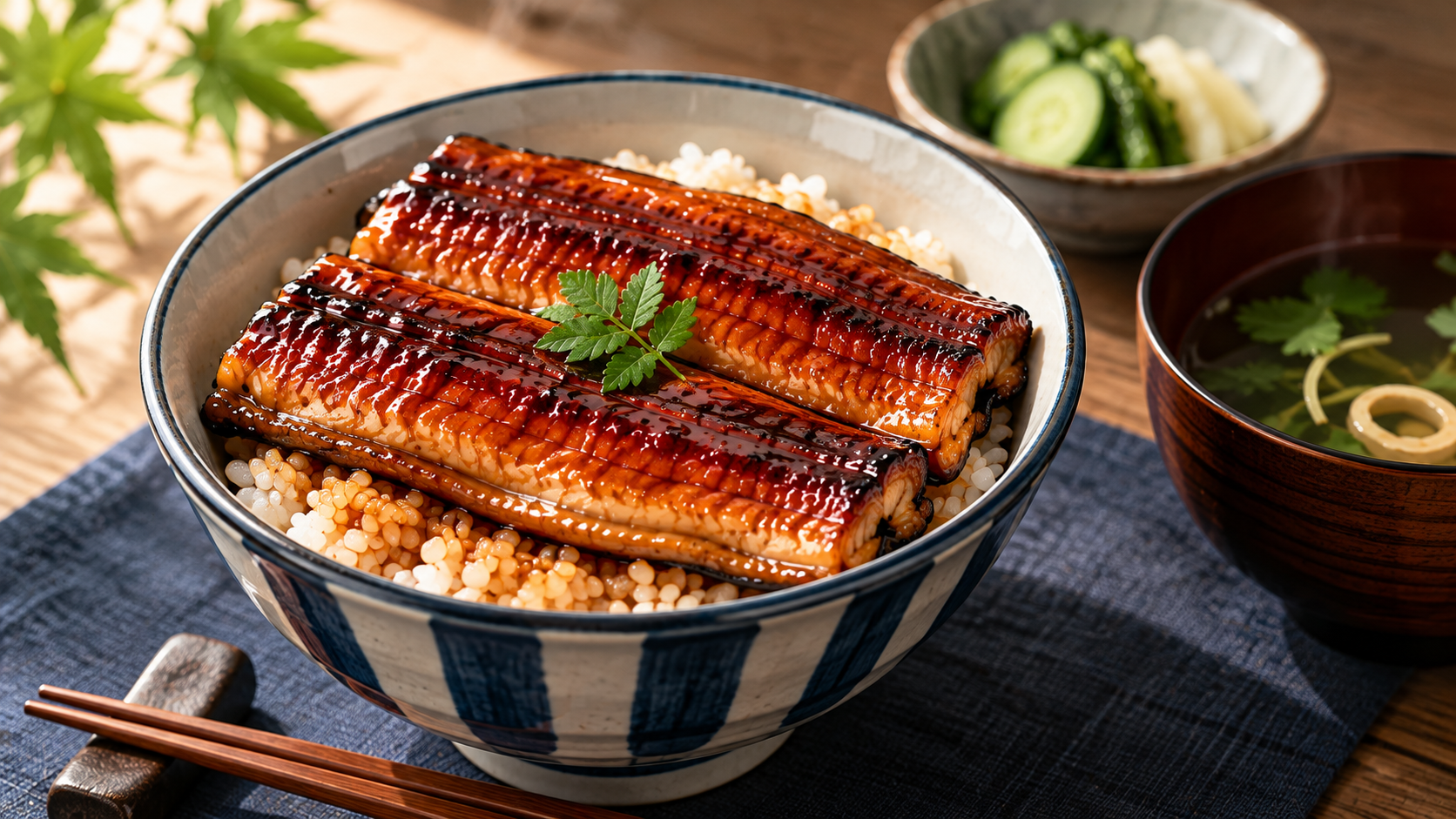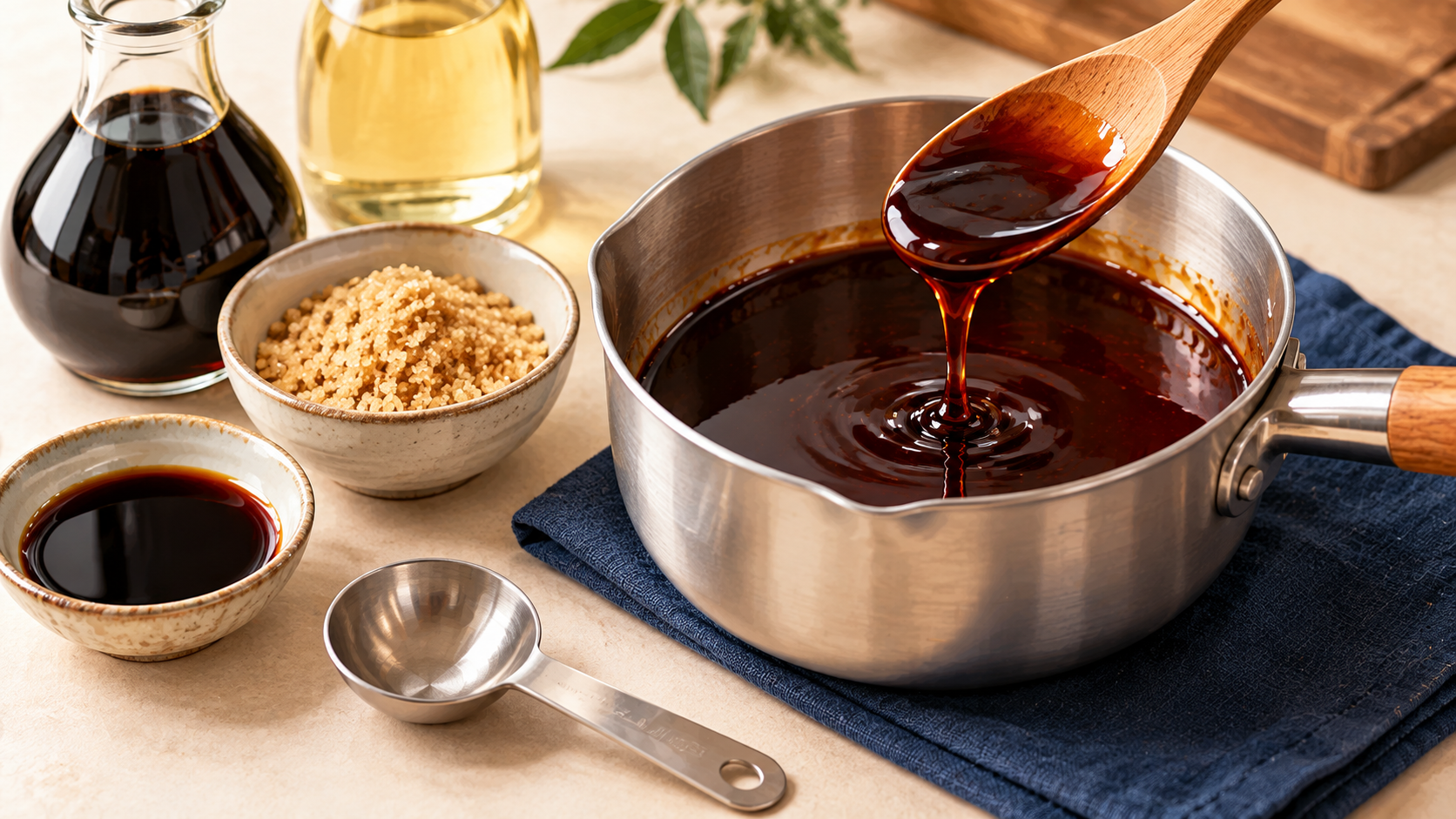
The four-ingredient sauce shown in an AI-generated editorial illustration, not a photograph of a tested recipe.
Unagi sauce, or tare, can be made with soy sauce, hon mirin, sake and sugar. Kikkoman's published recipe specifies 4 Japanese tablespoons each of soy sauce, hon mirin and sake, plus 3½ tablespoons of sugar for two servings. It heats the mirin and sake first, then adds the remaining ingredients. The listed total preparation time is 15 minutes. 1
This guide explains that recipe's measurements and cooking sequence, how to scale it, adjust the result and handle leftovers. It does not present an independently tested recipe, tasting or storage-life study.
Ingredients and measuring
Four ingredients and the base formula
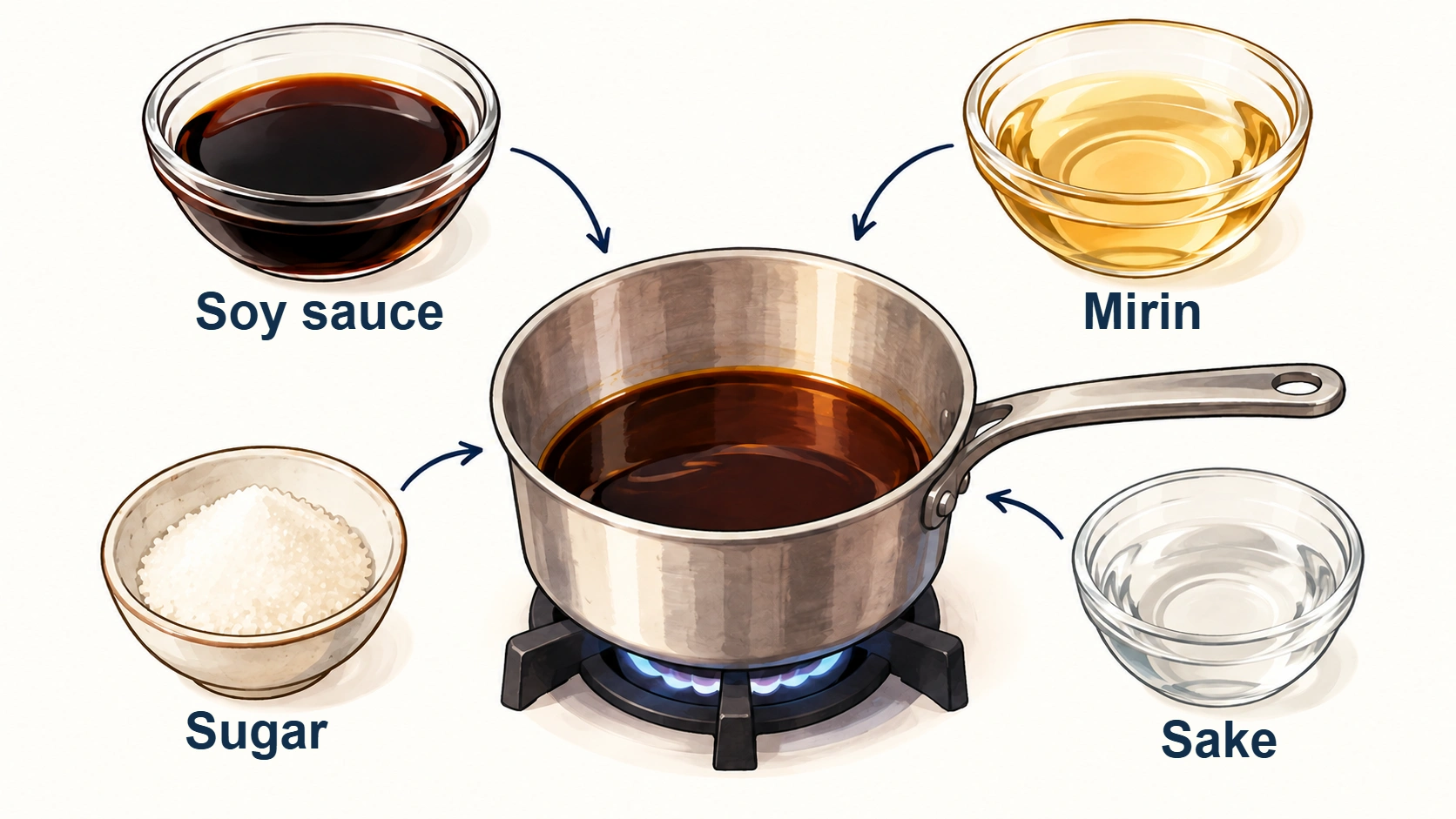
The four components of the sauce. Bowl sizes are illustrative, not the actual proportions.
The quantities and specific products come from Kikkoman's “Basic Unagi Sauce” recipe. A different soy sauce or cooking sake may change the salt content and flavor. The roles in the table describe ingredients qualitatively; they are not measured tasting results. 1
Spoon sizes and final yield
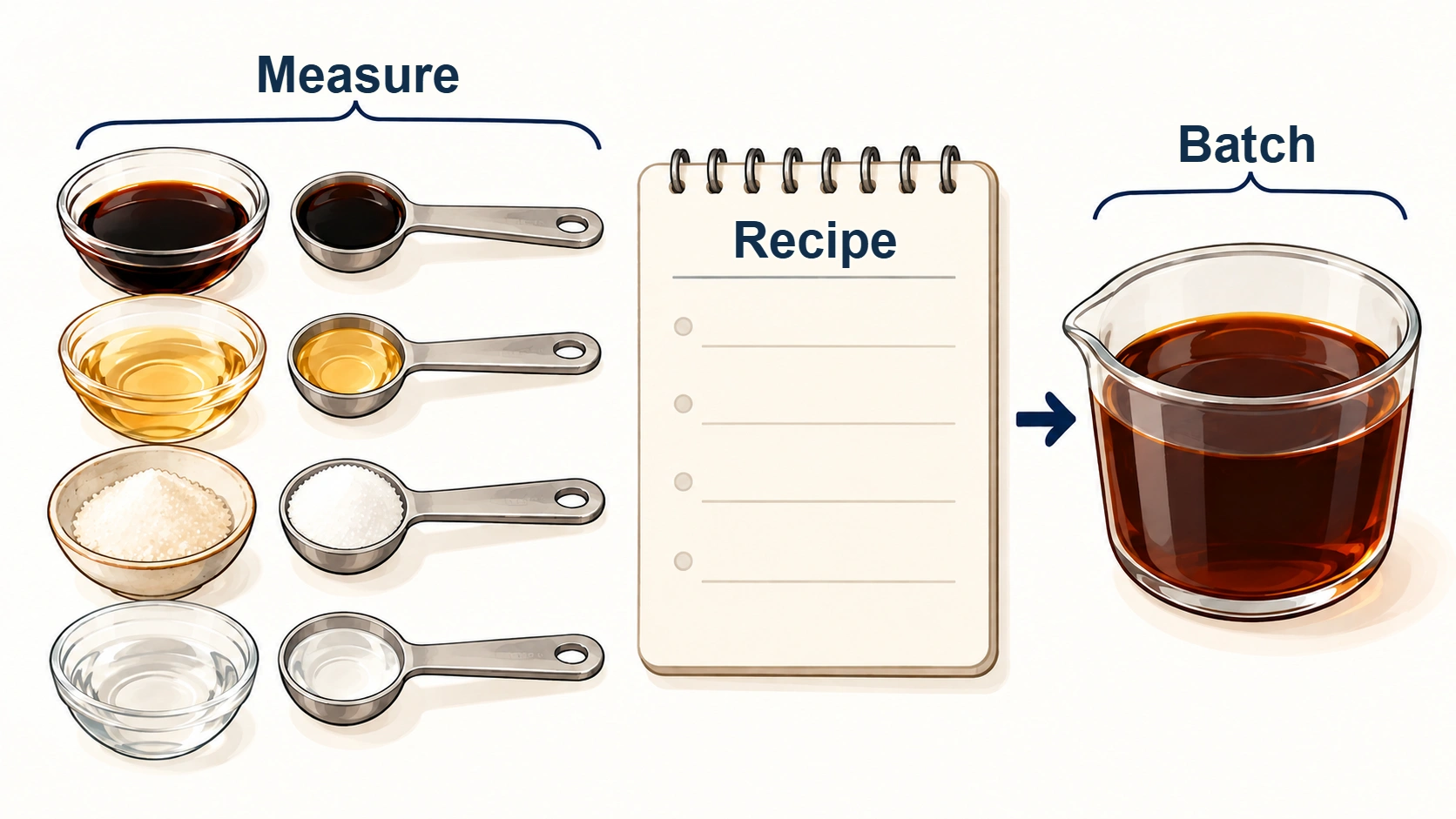
Measure each ingredient before cooking. The combined starting volume will not equal the volume after reduction.
Under Kikkoman's Japanese recipe conventions, 1 tablespoon is 15 mL and 1 teaspoon is 5 mL. Check your utensils rather than assuming a tablespoon in another country has the same capacity. Level off the sugar; do not convert a volume measure to grams without ingredient-specific data. 2
As liquid evaporates, the yield depends on pan width and heating. “Two servings” is the source's serving designation, not a guarantee of how much sauce a particular eel fillet needs.
Half and double batches
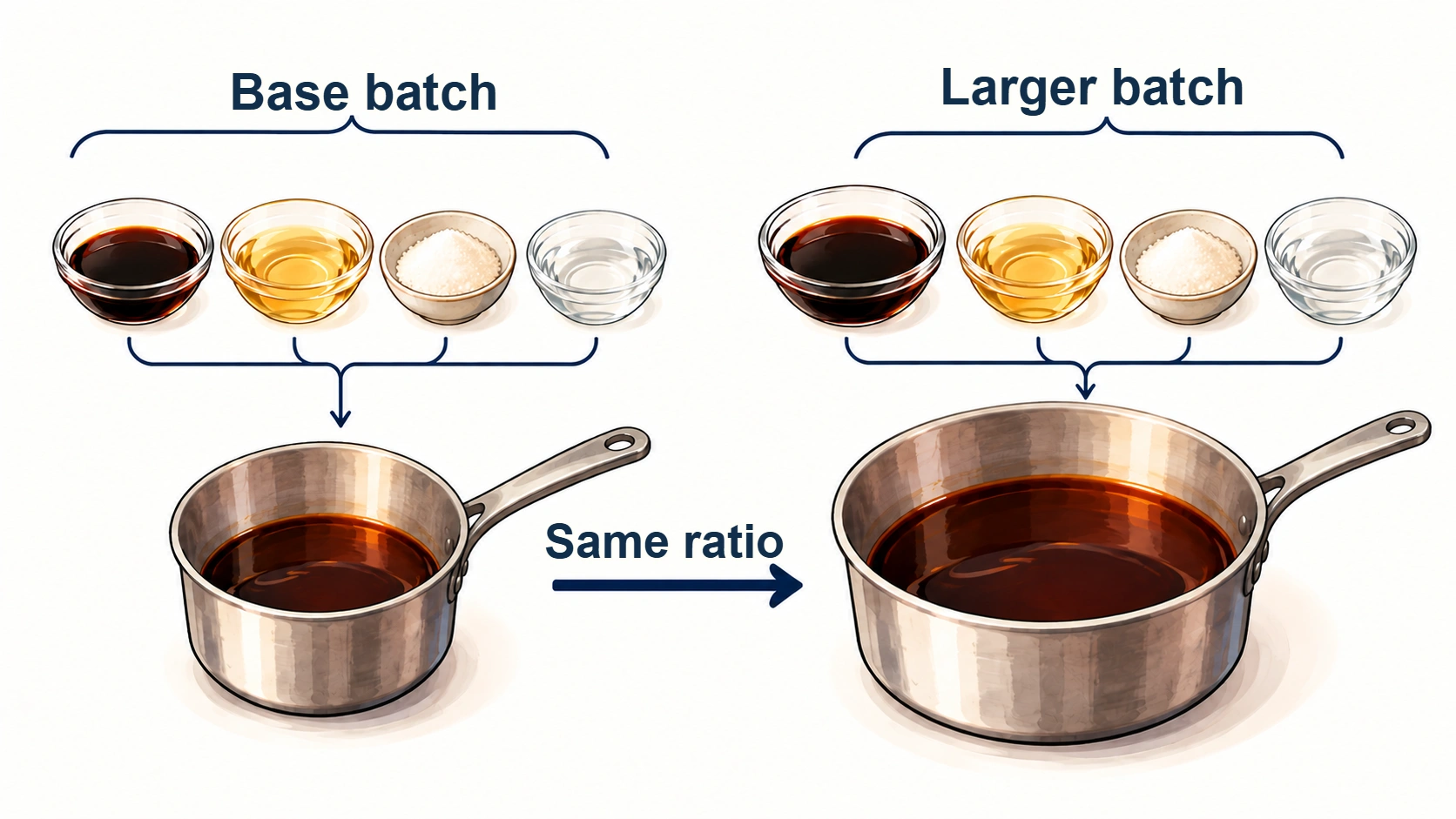
Scale all ingredients by the same factor. Cooking time does not scale by that factor.
These are arithmetic conversions of the source formula, not independently tested batches. Even with identical proportions, different liquid depths and evaporating surfaces mean that cooking time cannot simply be halved or doubled. Watch the liquid level and texture, and prepare only what you expect to use.
Cooking and finishing
Simmer mirin and sake first
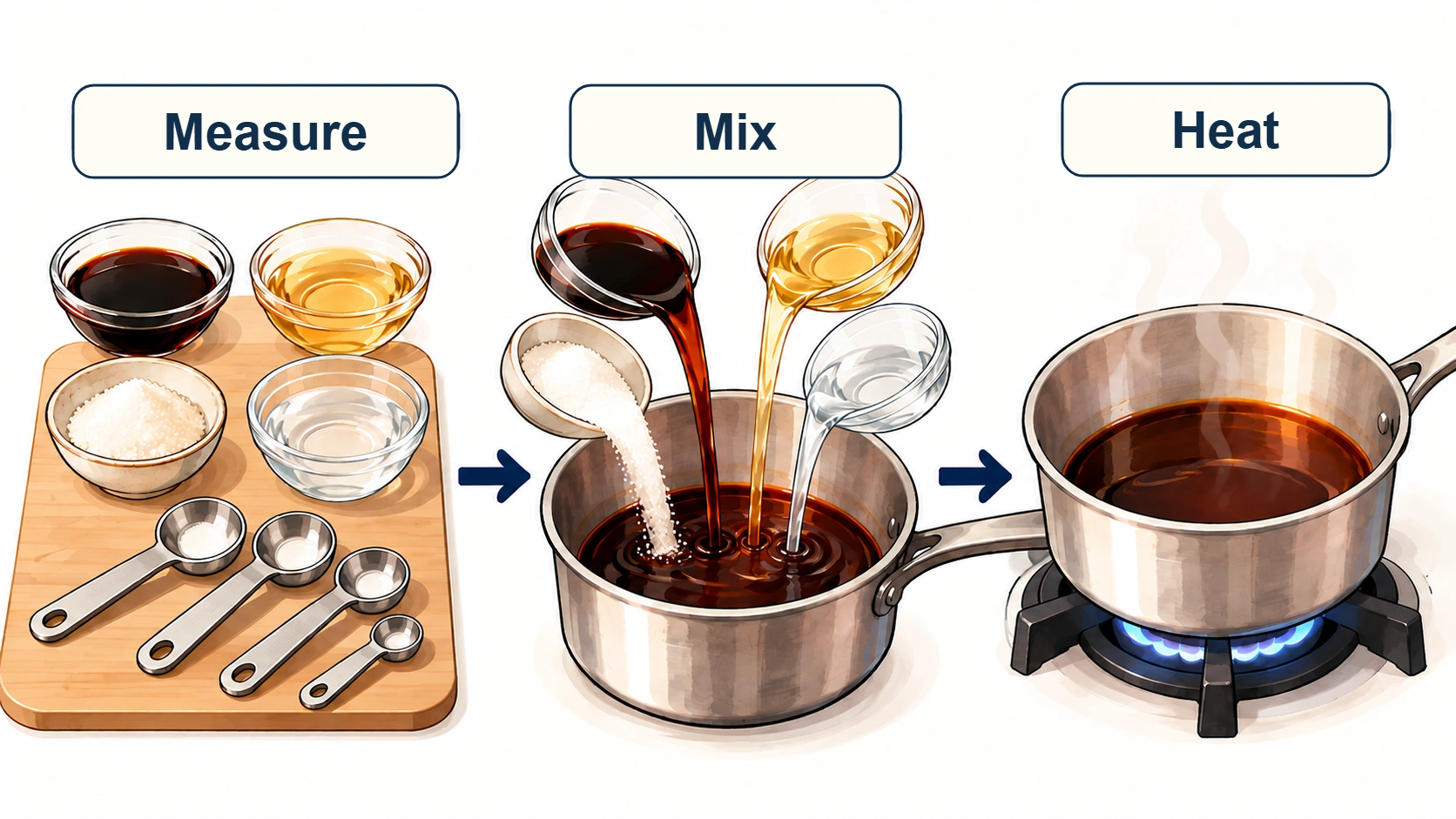
An overview only: the official recipe heats mirin and sake before adding sugar and soy sauce.
Kikkoman's method is as follows. 1
Bring hon mirin and sake to a boil in a small pan. Keep the liquid gently bubbling over approximately medium heat for slightly less than 1 minute; the recipe describes this as cooking off alcohol.
Add sugar and soy sauce, stirring with a rubber spatula or similar utensil.
Keep roughly the same heat and reduce for 3–5 minutes, aiming for roughly one-half to one-third of the original liquid volume and a thicker consistency.
Turn off the heat and transfer to a clean container once the sauce has cooled enough to handle.
Kikkoman warns that a small flame may appear inside the pan when heating mirin and sake. Do not deliberately ignite the liquid, lean over the pan or leave the stove unattended. The durations and reductions are targets from this recipe, not guarantees for every pan and burner.
Watch the pan during reduction
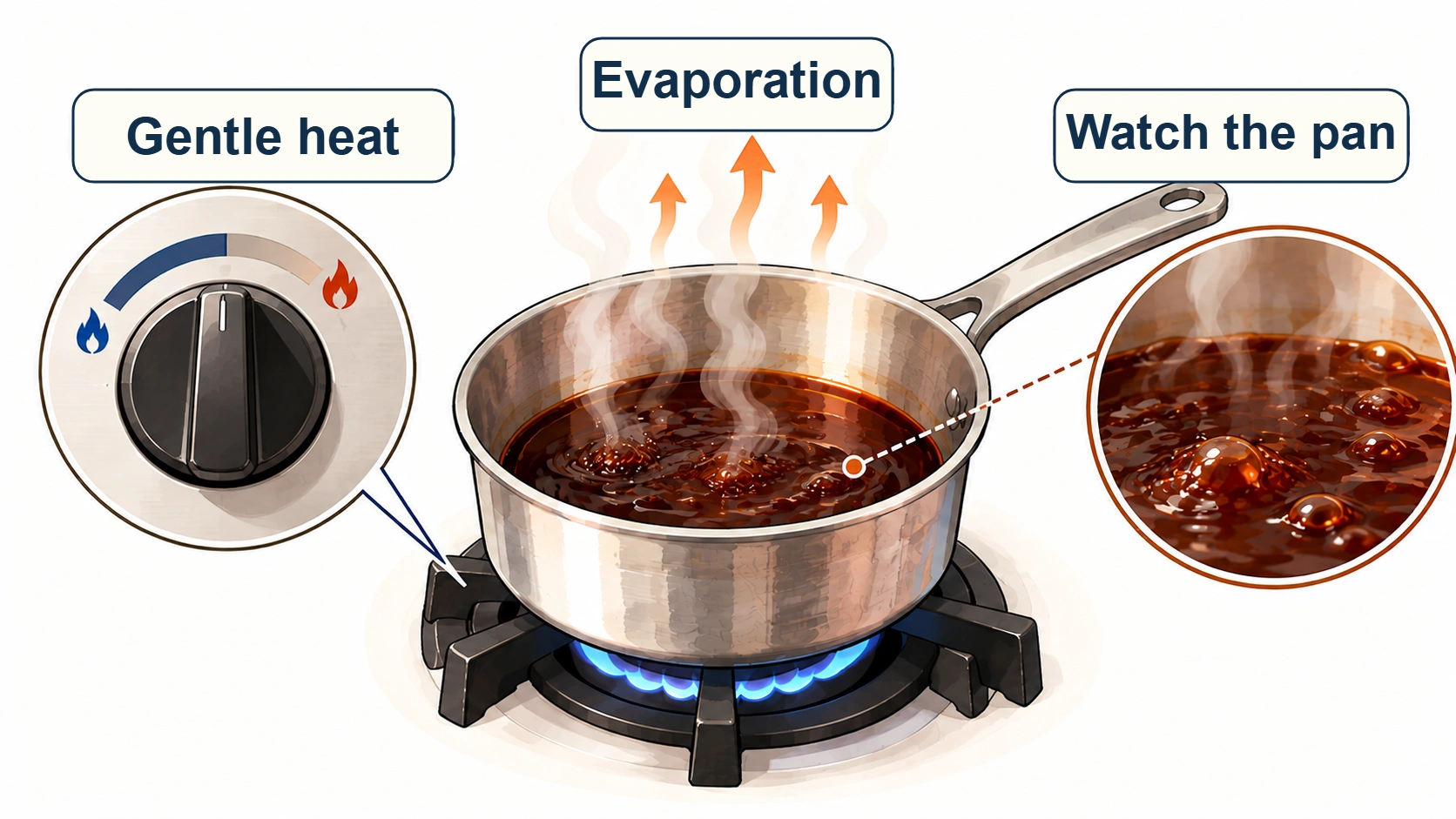
A schematic reminder to monitor evaporation, liquid level and bubbling, not an actual temperature measurement.
Reduction removes water and concentrates flavors while thickening the sauce. A wide pan, deeper liquid or different burner changes evaporation. Check the level and how the sauce flows from a spoon rather than relying on a timer alone. Excessive reduction can make it too intense or cause the sugar-containing sauce to scorch. 1
Texture when hot and when cooled
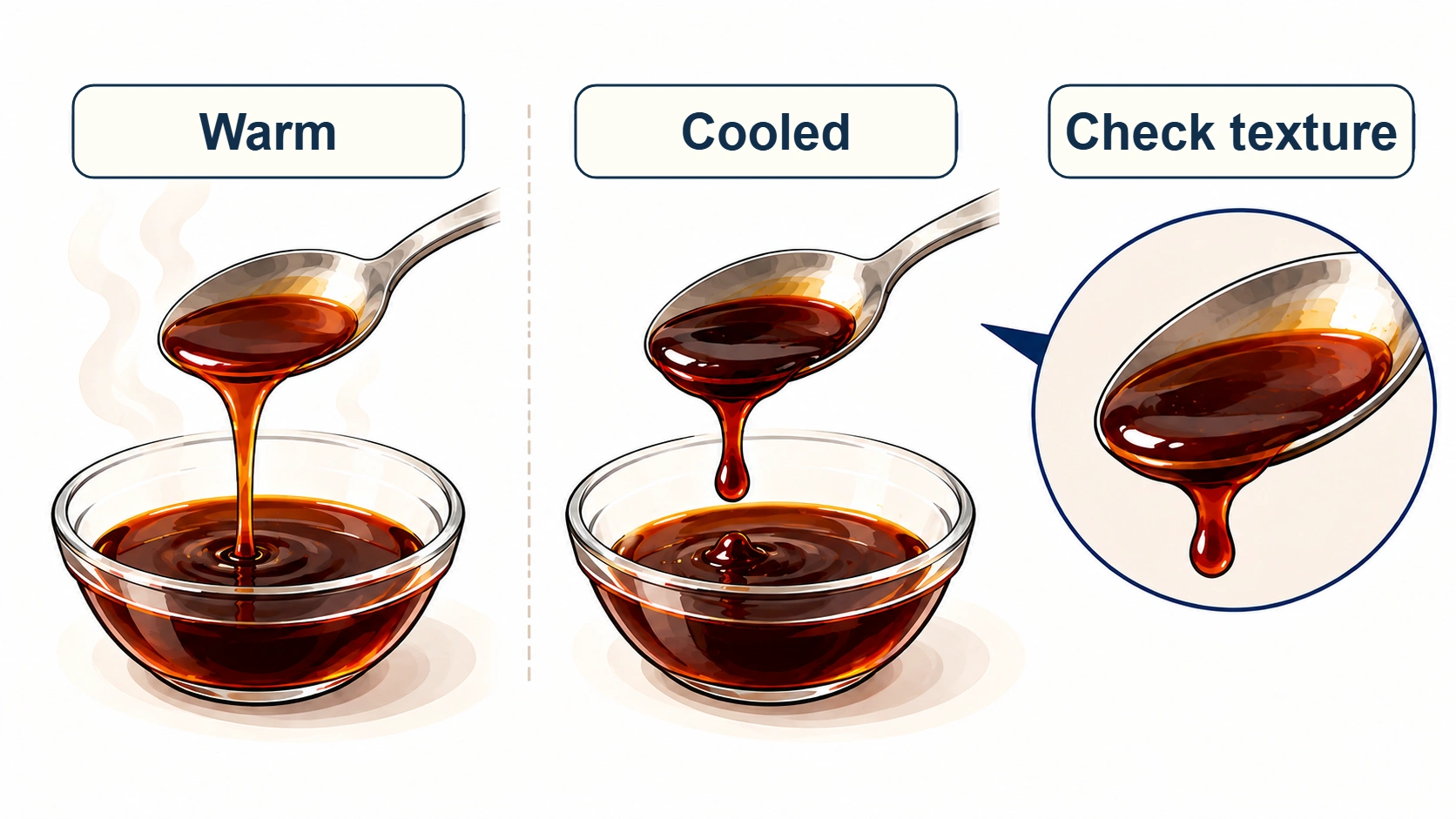
A conceptual comparison of flow with temperature, not a measured viscosity experiment.
A sugary sauce may seem thinner when hot and thicker when cool. Check it again after the initial heat has dissipated. A glaze used during grilling and a sauce poured over rice need not have identical consistencies. The drawing illustrates a possible difference, not a verified result for every ingredient combination.
Flavor adjustments and serving
Adjust sweetness, saltiness and thickness separately
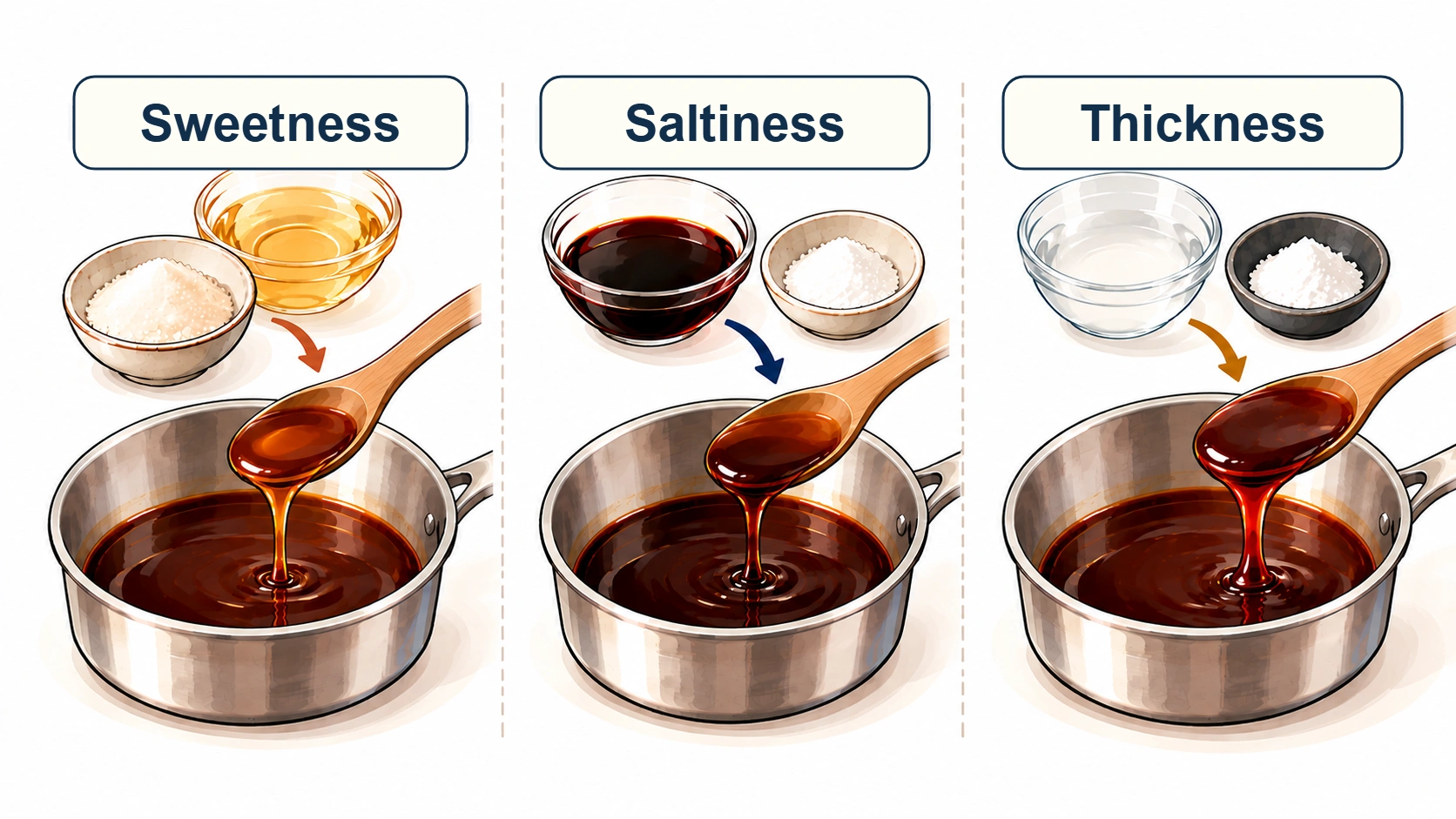
Change one variable at a time. The ingredients pictured are not instructions to add all of them.
These are reasoned adjustment examples, not taste-tested reformulations. Adding water to an overly concentrated sauce changes both flavor and storage conditions. If needed, adjust only the portion intended for immediate use.
Brushing while grilling versus adding at the table
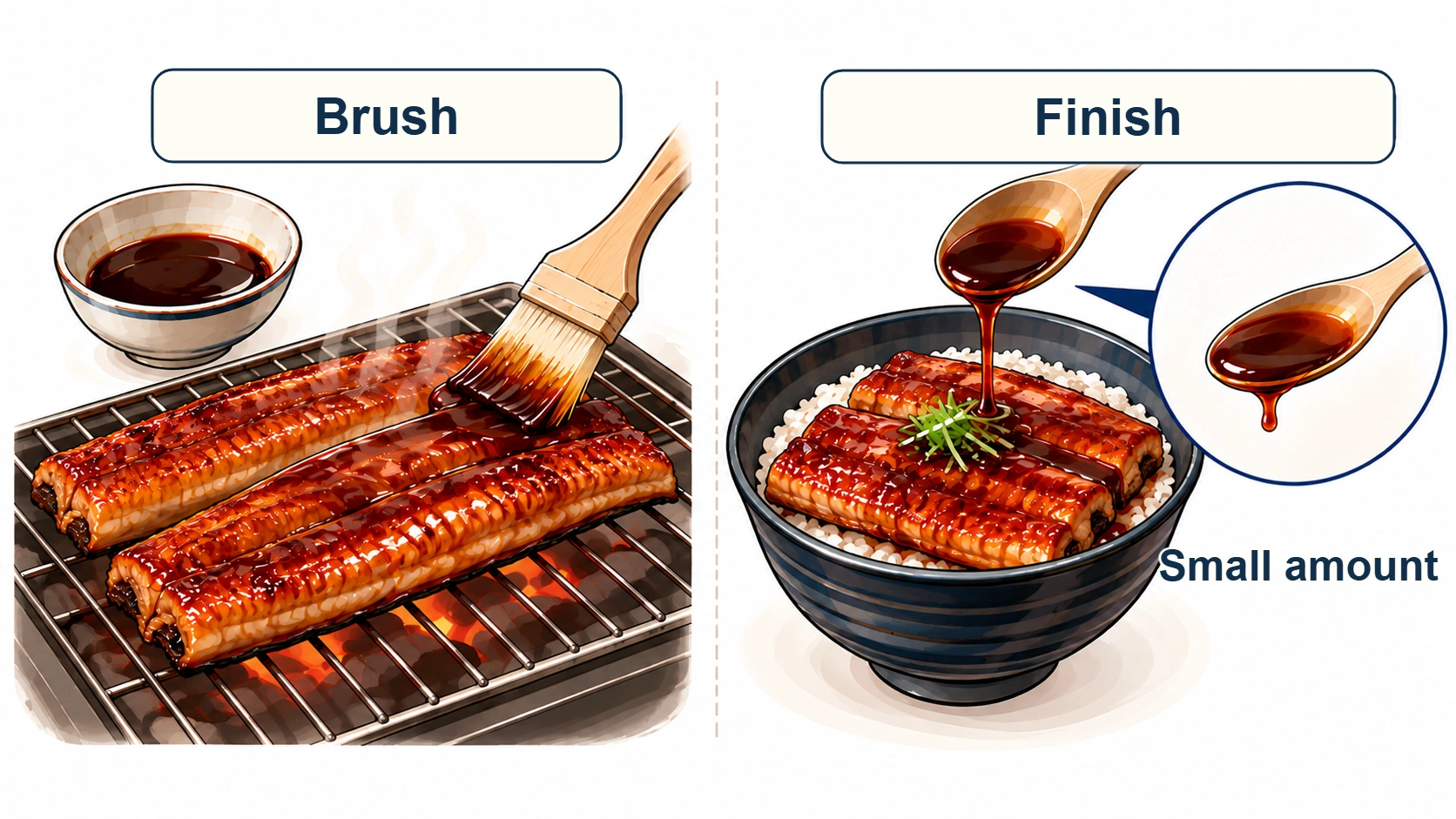
A cooking glaze and a finishing drizzle have different uses; reserve the serving portion with clean utensils.
During kabayaki grilling, sauce can be brushed on to provide gloss and roasted aroma. Japan's Ministry of Agriculture, Forestry and Fisheries describes a Tokyo-style kabayaki process in which eel is first grilled without sauce, then coated and grilled again. Avoid burning the sauce; follow the product's instructions for precooked eel. 4
For serving, pour a little sauce over warmed eel and rice, then adjust to taste. Kikkoman's hitsumabushi recipe likewise pours the sauce supplied with packaged eel over the plated dish. 5 Keep the brush that touches food separate from the clean spoon used for serving.
Handling leftover sauce
Keep clean utensils away from raw-food contact
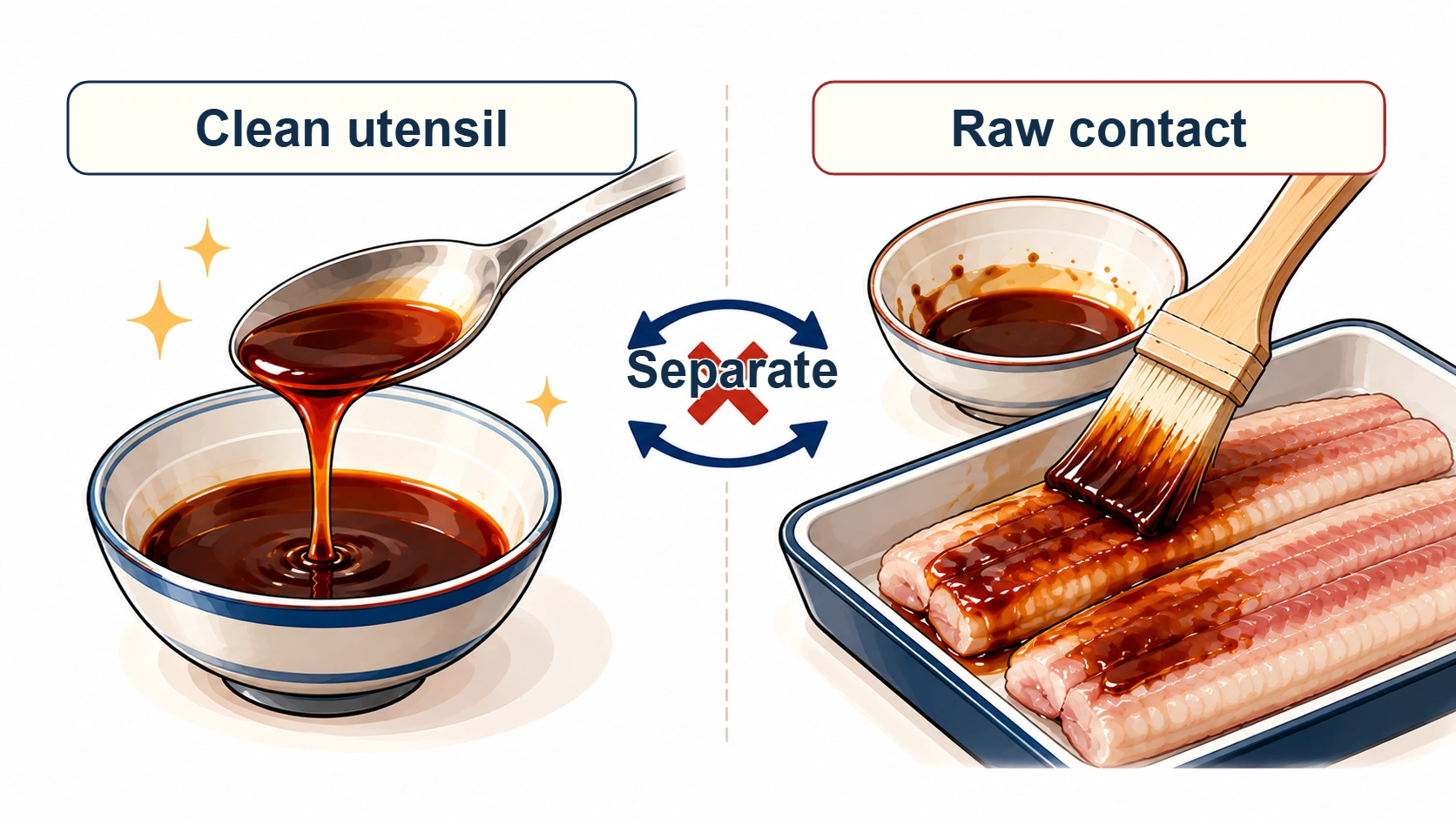
Prevent cross-contamination: never return a food-contact brush to sauce intended for storage.
Portion out sauce for cooking and for storage before either is used. A brush that touches raw fish can transfer microorganisms to the storage container. Japan's Ministry of Health, Labour and Welfare advises cleaning utensils used on raw meat and fish and preventing contact with ready-to-eat foods. 3 Do not assume reheating makes potentially contaminated sauce reliably safe.
No universal shelf life for homemade sauce
Move unused sauce to a clean container, avoid prolonged time at room temperature, cool it promptly, refrigerate it and use it soon. Japanese health guidance advises clean utensils, shallow containers for rapid cooling and discarding leftovers that are old or suspicious. 3 Soy sauce and sugar do not automatically make a homemade sauce shelf-stable. The cited recipe does not state a universal number of refrigerated storage days, so this article does not invent one.
Follow the label on packaged sauce
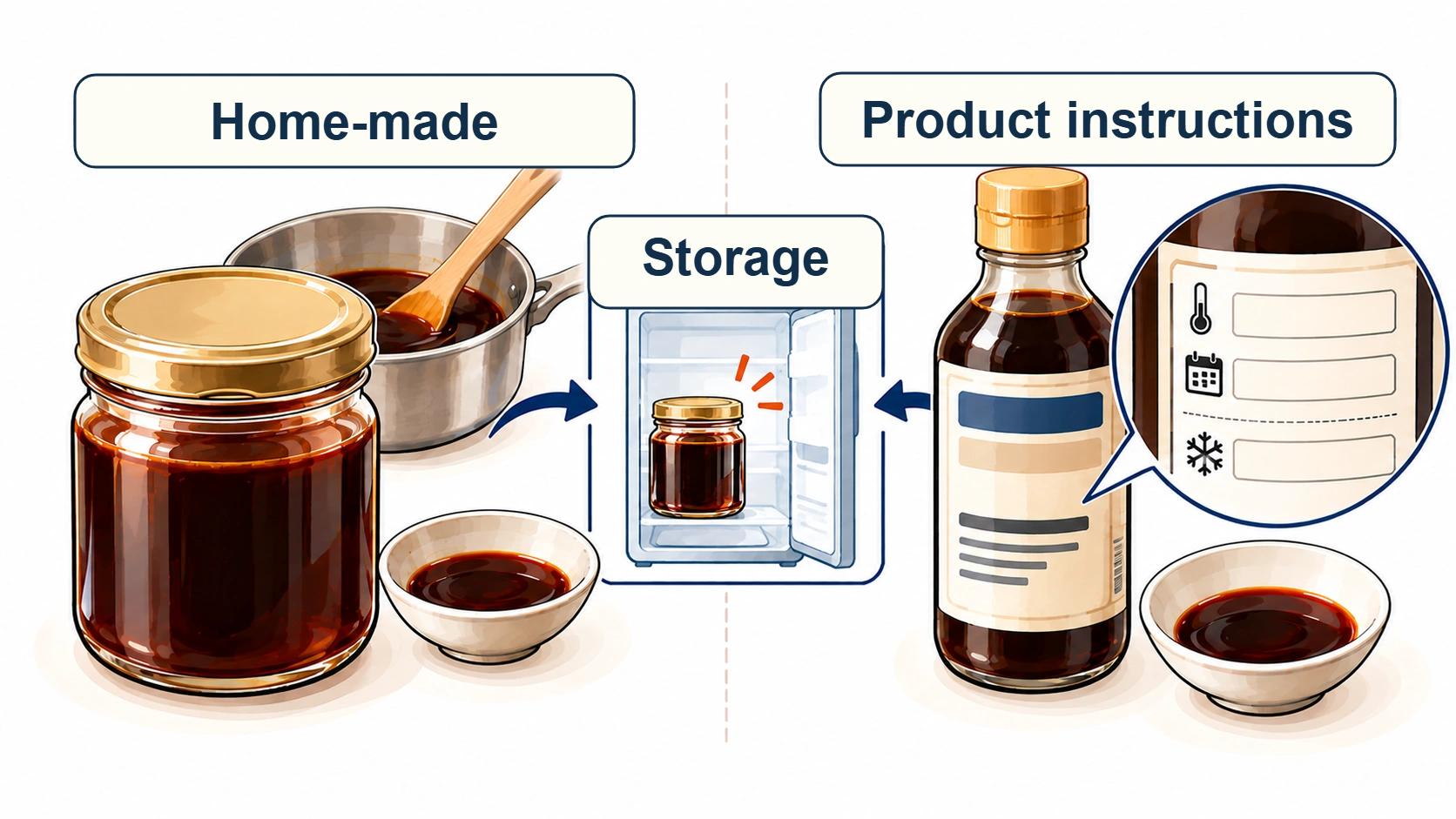
Homemade handling differs from packaged-product instructions. The illustrated label is fictional and contains no actual dates.
Japan's Consumer Affairs Agency explains that date labels assume the product remains unopened under the stated conditions. Once opened, follow the package and use it promptly rather than assuming the printed date still guarantees safety. 7 6
Other uses
Cleanly reserved unused sauce may also flavor rice or a fish teriyaki dish. Heating the sauce previously does not mean the fish or meat added later has been cooked thoroughly. Discard suspect leftovers without tasting them for safety. 3
Key points
The published two-serving base is 4 Japanese tablespoons each of soy sauce, hon mirin and sake, plus 3½ of sugar. Heat mirin and sake first; add the others and reduce while checking liquid level and texture. Scale ingredients proportionally, not the cooking time. Keep flavor preferences separate from food-safety decisions and reserve leftovers hygienically.
Sources
Kikkoman, “Basic Unagi Sauce” (Japanese) — Two-serving recipe, 15-minute total time, cooking order and reduction targets.
Kikkoman, “Home Cooking Measurement Conventions” (Japanese) — Capacities of Japanese measuring spoons.
Japan's Ministry of Health, Labour and Welfare, “Six Points for Preventing Food Poisoning at Home” — Clean utensils and safe handling of leftovers.
Ministry of Agriculture, Forestry and Fisheries, “Eel Kabayaki, Tokyo” — Description of brushing eel with sauce during grilling.
Kikkoman, “Easy Hitsumabushi at Home” — Example of finishing eel with sauce.
Ministry of Agriculture, Forestry and Fisheries, “Food Poisoning Prevention Tips” — Handling food during cooking, storage and after opening.
Consumer Affairs Agency, “Reducing Food Loss at Home” — Interpreting food date labels and storage guidance.
Sources checked: 31 October 2026. All images are AI-generated explanatory illustrations, not records of cooking or preservation experiments.
Related articles