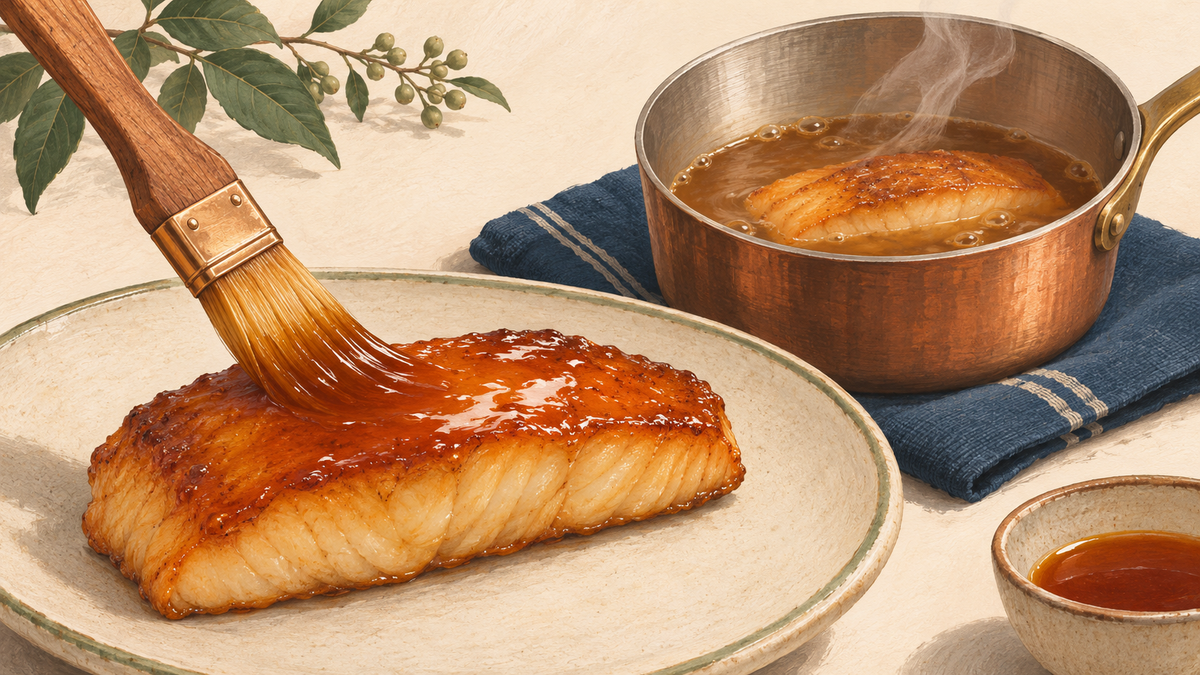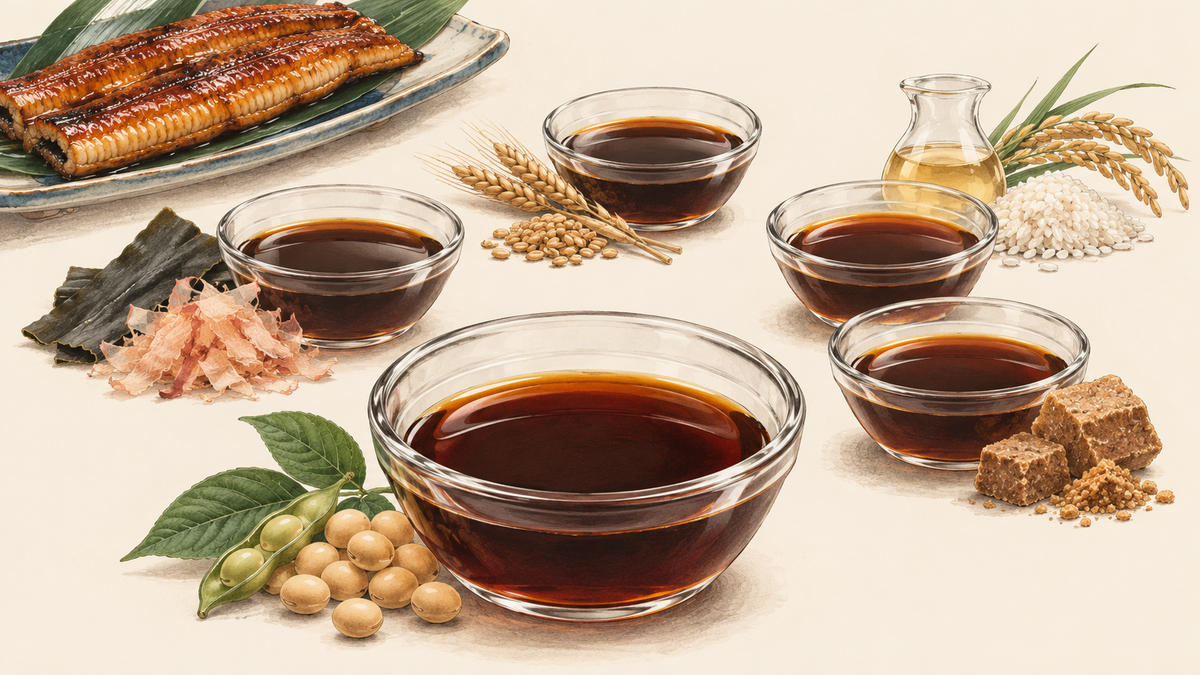
Editorial illustration of similarly colored sauces with different ingredient examples; neither recipes nor rankings are implied.
Teriyaki sauce is one practical option when unagi sauce is unavailable. Check the product instructions first; if heating is required, heat the sauce before tasting it. Mentsuyu (Japanese noodle dipping sauce or soup base) adds a dashi note, while yakiniku (Japanese barbecue) sauce may bring garlic or sesame. None should automatically replace eel sauce in equal quantities. With already cooked eel, taste a small portion separately, then brush on a thin layer or serve the sauce on the side.
The reference flavor is a sweet-salty balance built on soy sauce and sugar. Kikkoman's published basic eel-sauce recipe uses soy sauce, sugar, hon-mirin (sweet rice cooking wine) and cooking sake. This is one recipe, not a universal formula for every bottled eel sauce. Kikkoman: basic eel sauce recipe (ingredients and method)
Similar color does not mean identical sauce
A dark brown color and a glossy surface do not establish flavor equivalence. Even a soy-and-sugar teriyaki sauce can include vinegar, garlic and ginger. Mentsuyu often brings bonito or kelp stock, while yakiniku sauce may emphasize aromatics and sesame oil. What matters is the taste and aroma that remain on the food, not the appearance in a bowl.
The comparison above uses published ingredient lists for three specific Kikkoman products: Teriyaki Sauce, Koidadashi Hontsuyu and Wagaya wa Yakinikuya-san Medium. It is a guide to choosing a use, not a ranking from taste tests, a claim about every product in these categories or an equal-volume conversion. Kikkoman: Teriyaki Sauce (product ingredients and label) Kikkoman: Koidadashi Hontsuyu (concentration and ingredients) Kikkoman: Wagaya wa Yakinikuya-san Medium (ingredients and allergens)
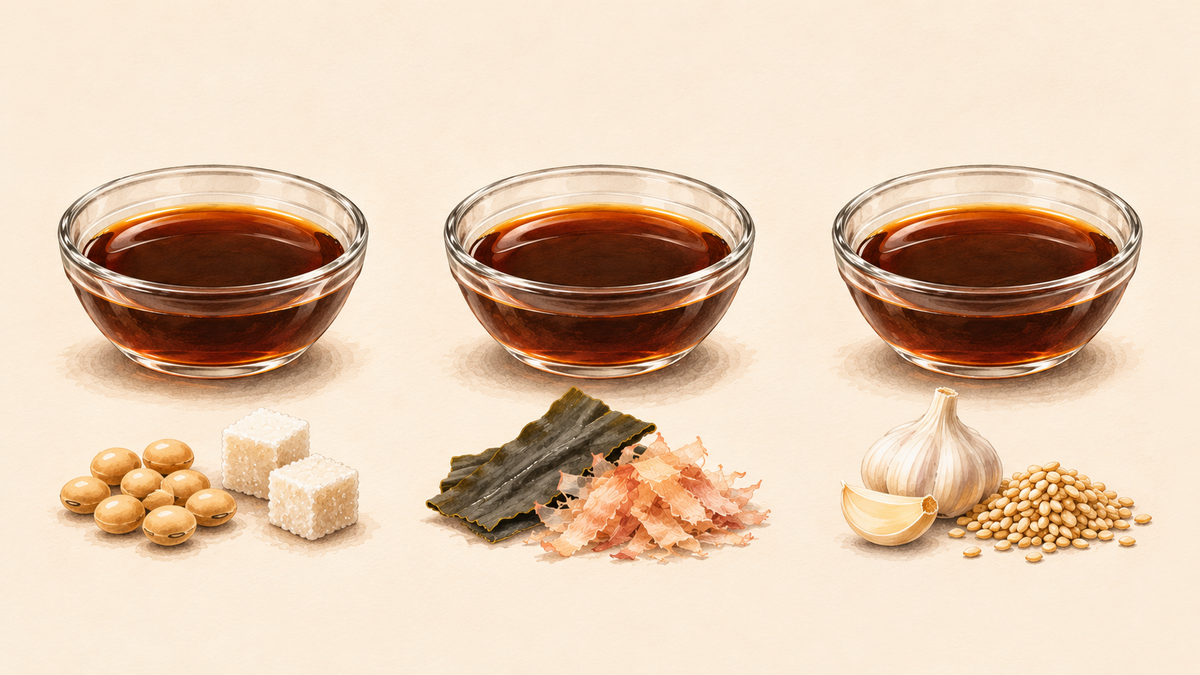
Schematic showing that similarly colored sauces can use different combinations of ingredients.
Assess sweetness, saltiness and aroma separately
Do not treat sweet, salty and strongly aromatic as the same kind of 'strength.' Ask separately whether more sweetness is needed, whether saltiness is already too high and whether the aroma overwhelms the eel. The ingredient drawings illustrate different flavor inputs; they are not formulas for the products named here.
Reducing a too-salty sauce is not a fix: evaporation can concentrate the flavor further. Adding sugar or mirin also changes the amount of liquid and potentially the cooking process. Do not simply stir uncooked mirin or sake into a cold, ready-to-serve sauce; if using them, follow a recipe that specifies the required heating procedure. Kikkoman: basic eel sauce recipe (ingredients and method)
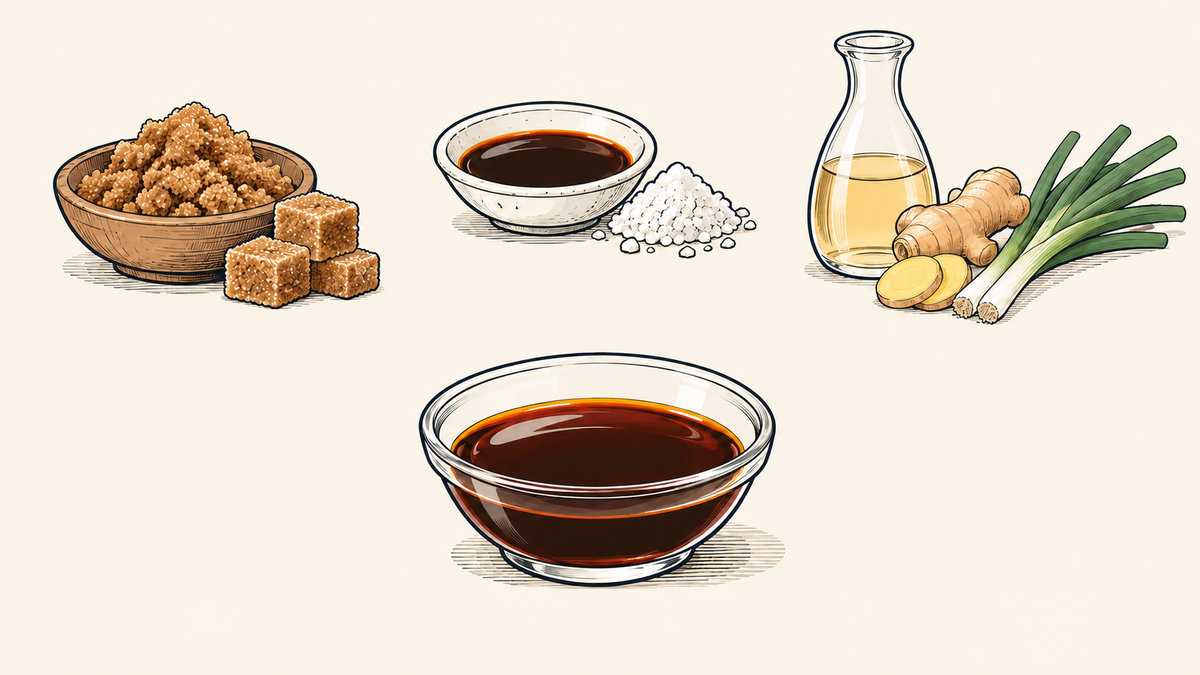
Schematic separating sweetness, saltiness and aroma as three independent flavor inputs.
Concentrated mentsuyu needs different handling
With mentsuyu, first check whether the bottle says concentrated or ready to use. Kikkoman explains that the '4× concentrate' designation on its Koidadashi Hontsuyu means one part sauce to three parts water for noodle dipping broth. It is not a manufacturer-approved ratio for glazing eel. Read the directions for the product and dish you actually have. Kikkoman official FAQ: meaning of 4× concentrate for noodle dipping
Using plenty of concentrate neat can make salt and fish-stock flavors dominate; excessive dilution may make a glaze run off. Set aside a small amount to adjust before altering the whole bottle or batch. Never infer a direct exchange ratio with eel sauce or teriyaki sauce just from a concentration number.
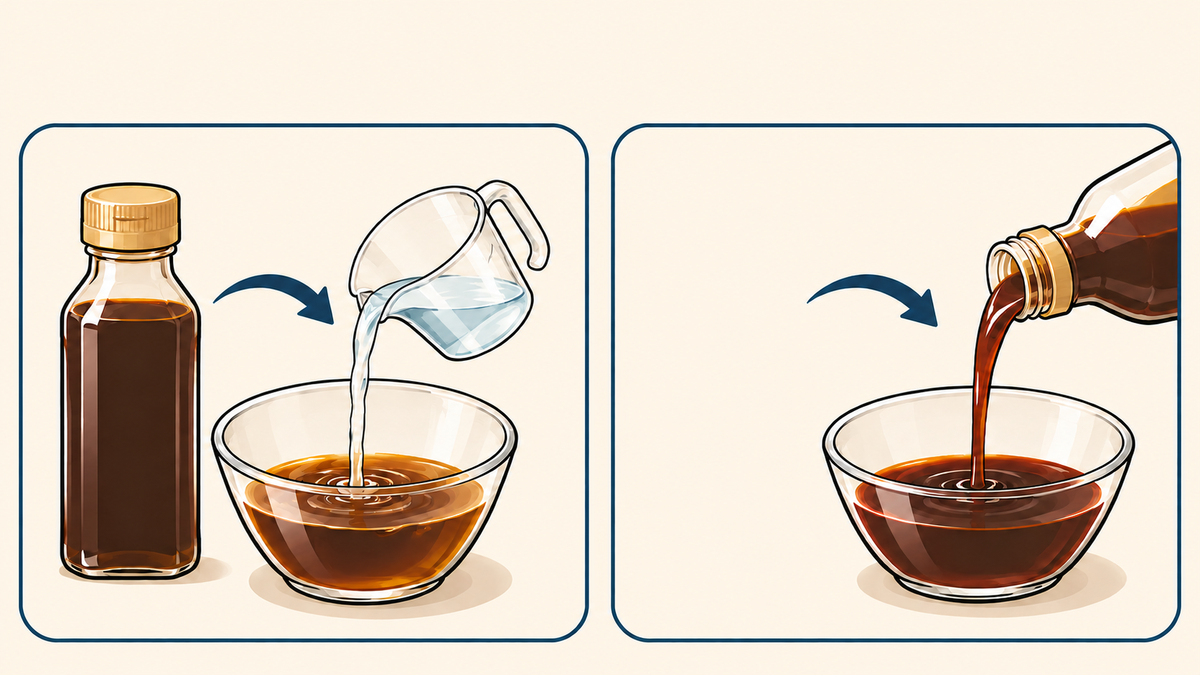
Illustration distinguishing a product requiring dilution from one intended for direct use.
Taste the substitute before brushing it onto eel
Check the product instructions first; if heating is required, heat the sauce before tasting it. Before brushing, put a little sauce in a separate dish and taste it with a clean spoon. Check the balance of sweetness, saltiness and lingering garlic or dashi flavors. Then use a little on cooked, properly heated eel. Whether a commercial sauce is ready to eat or must be heated depends on its instructions; tasting never replaces required cooking.
Do not reuse brushes or spoons that have touched raw ingredients for tasting or serving. Japan's Ministry of Health, Labour and Welfare recommends clean utensils and tableware, and thorough cooking of foods that require heating. Follow the relevant food and package instructions for reheating and storage as well. Japan Ministry of Health, Labour and Welfare: preventing food poisoning at home
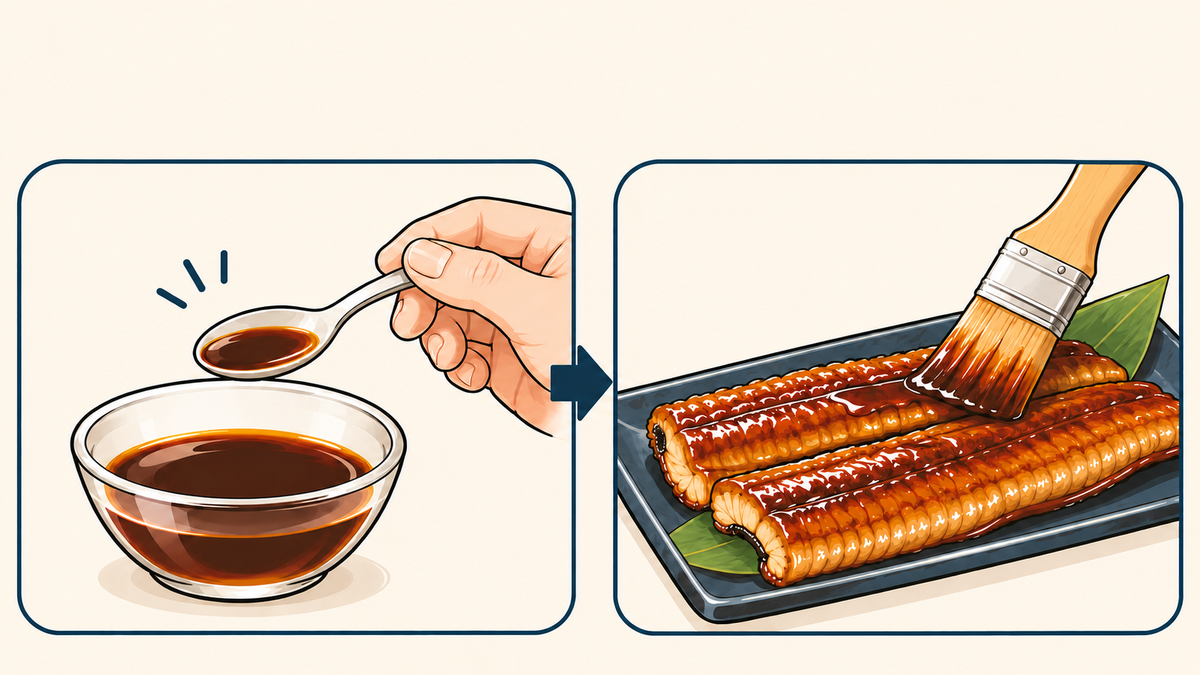
Sequence: taste sauce with a clean spoon before brushing it over cooked eel.
Use a light glaze and offer extra sauce separately
A thick coating is difficult to undo once applied. Brush a thin layer first, then offer extra sauce in a separate small dish so diners can add more. The illustration shows a serving option, not a tested or mandatory quantity.
With rice, decide whether the sauce should season the eel, the rice or both before pouring. A thinner sauce spreads readily through rice, while a more viscous sauce tends to remain on the fish surface. That handling difference can matter more than the sauces' similar color.
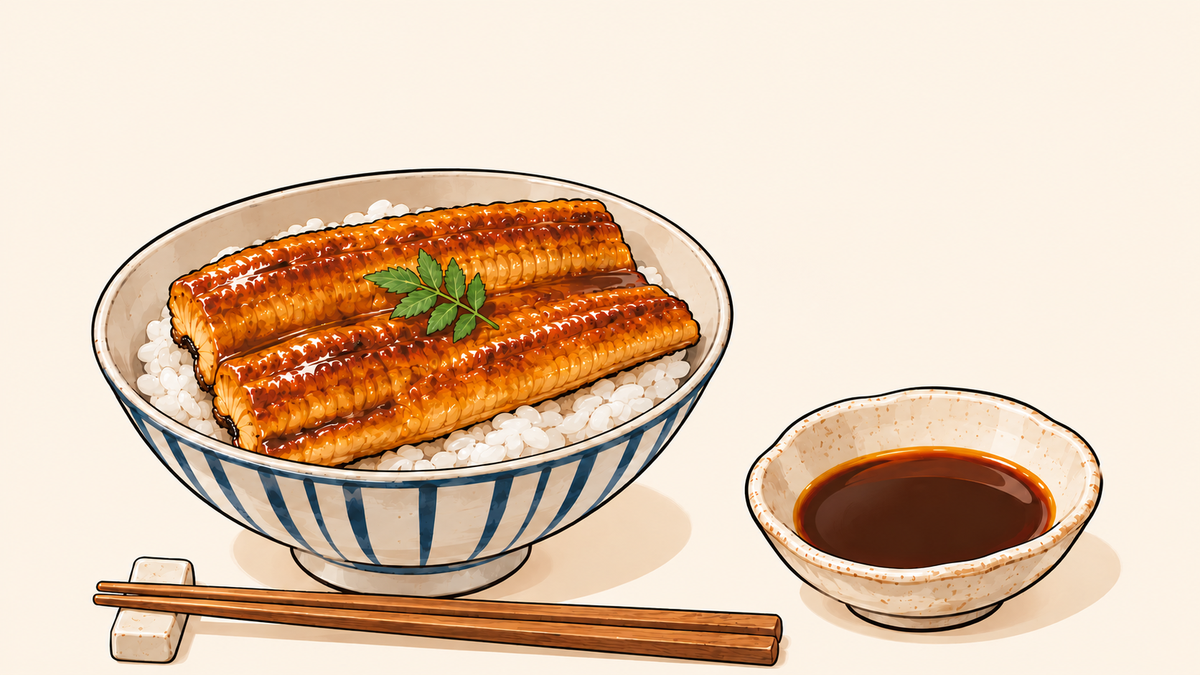
Serving example with lightly glazed eel and additional sauce in a separate dipping dish.
Check ingredient labels as well as flavor
Read the actual ingredients and allergen statement, not just the sauce name. In the specific products checked, Kikkoman lists wheat and soy for its Teriyaki Sauce and Koidadashi Hontsuyu; its Wagaya wa Yakinikuya-san Medium also lists pork, apple and sesame. This Koidadashi Hontsuyu contains fish-derived stock ingredients. Kikkoman: Teriyaki Sauce (product ingredients and label) Kikkoman: Koidadashi Hontsuyu (concentration and ingredients) Kikkoman: Wagaya wa Yakinikuya-san Medium (ingredients and allergens)
These examples do not guarantee the contents of another brand, a reformulated product or a newer batch. Check the package you hold and contact the maker when dietary restrictions or allergies matter. Japan's Consumer Affairs Agency publishes current guidance on processed-food allergen labeling. Ingredient symbols in the image do not certify that anything is absent. Japan Consumer Affairs Agency: food allergen labeling guidance
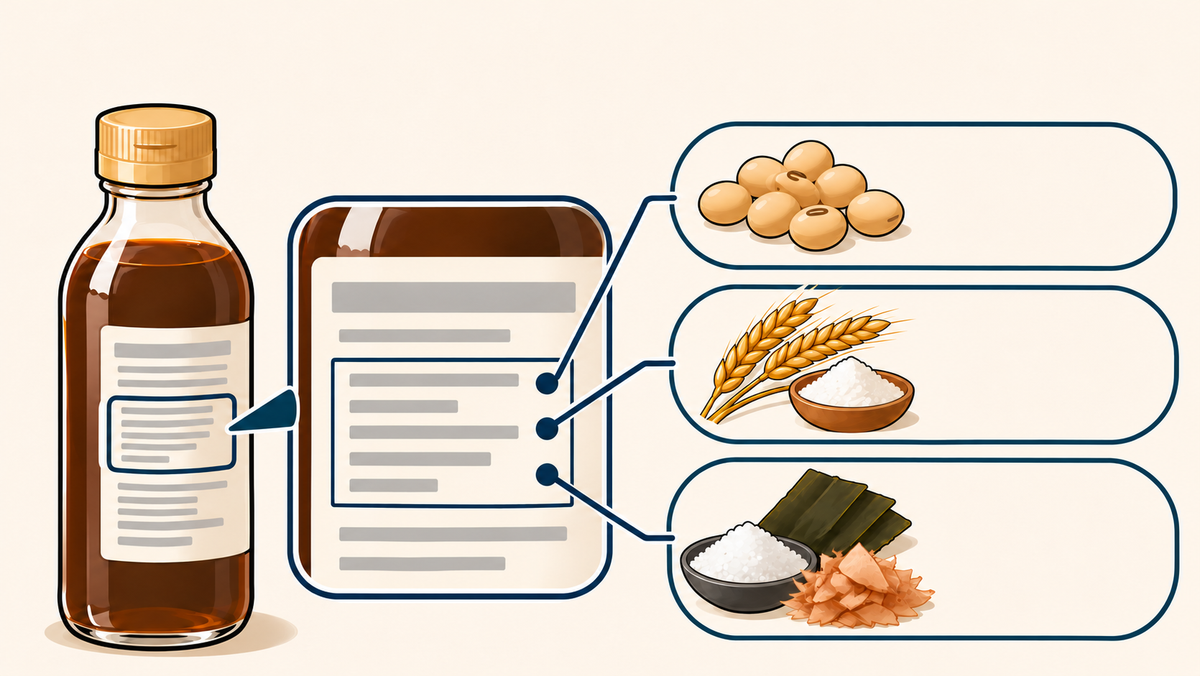
Ingredient symbols beside a product-label illustration; this does not certify allergen absence.
Choose according to the finished dish
For a finishing glaze, try a little teriyaki sauce first, moving strong aromatic sauces to the side if needed. For rice seasoning, mentsuyu may be useful if its dilution and saltiness are checked. For stir-frying eel with vegetables, the garlic and sesame profile of yakiniku sauce may fit the dish. These are three different uses, not interchangeable measured doses.
Kikkoman's eel-and-egg mixed-rice recipe shows eel sauce being mixed into warm rice, but does not test equal substitutions using the three alternatives discussed here. The practical sequence is to define the dish, read the label and make a small taste adjustment before committing to a full coating. Kikkoman: eel-and-egg mixed rice (use example)
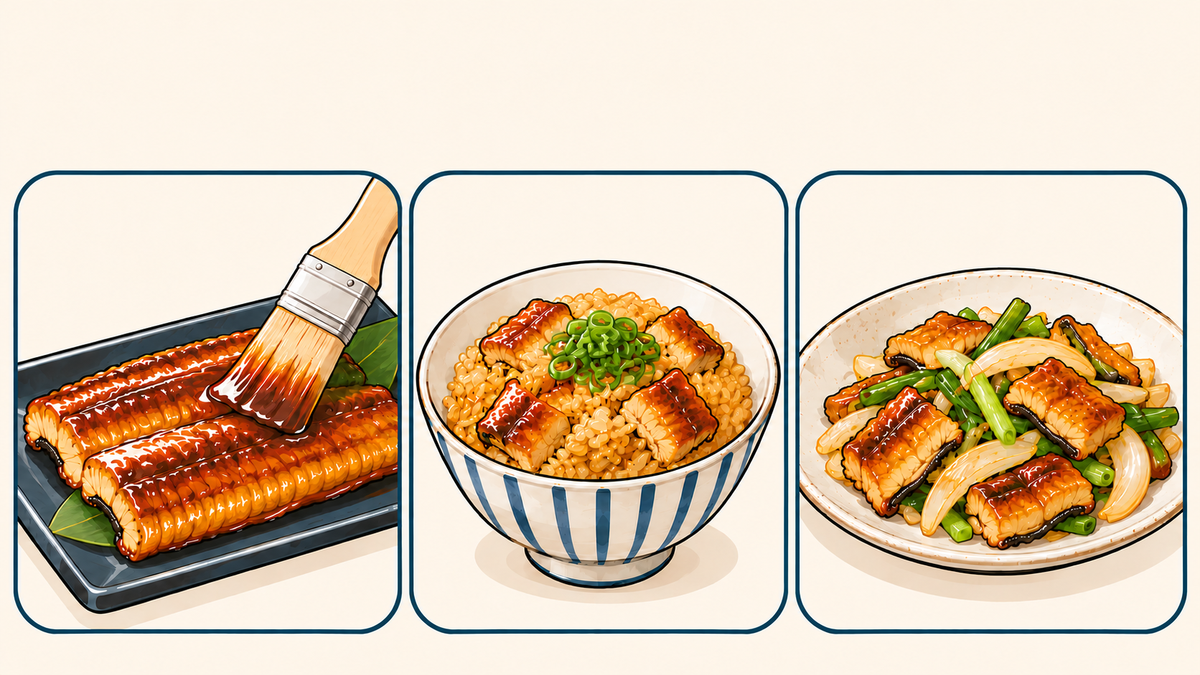
Three distinct applications: coating eel, seasoning rice and stir-frying with vegetables.
Official sources consulted
Kikkoman: Koidadashi Hontsuyu (concentration and ingredients)
Kikkoman: Wagaya wa Yakinikuya-san Medium (ingredients and allergens)
Kikkoman official FAQ: meaning of 4× concentrate for noodle dipping
Japan Consumer Affairs Agency: food allergen labeling guidance
Japan Ministry of Health, Labour and Welfare: preventing food poisoning at home
Related articles