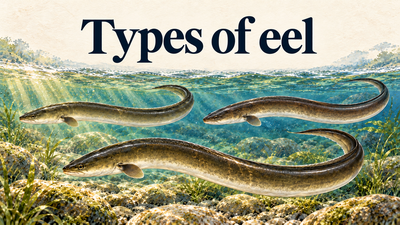
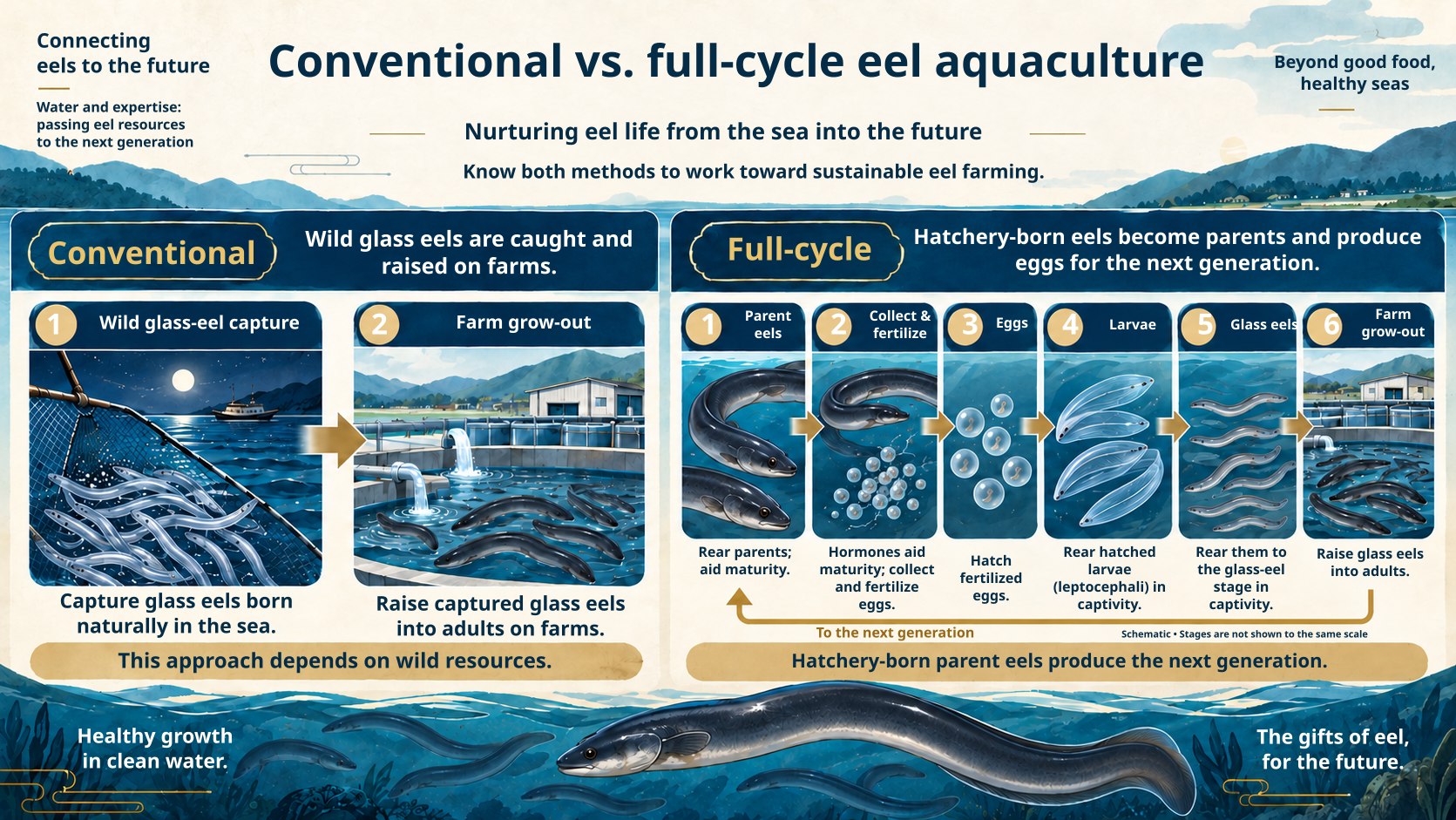
Eel farming generally means placing wild juvenile eels, known as glass eels, in farming ponds and raising them to food size while managing their feed and water environment. A label saying “farmed” does not mean that people raised the fish from eggs. This differs from full-cycle aquaculture, which produces the next generation from parent fish and maintains the reproductive cycle in captivity. Japan’s Fisheries Agency also treats the present dependence of Japanese eel farming on wild seed and the practical introduction of artificially produced seed as separate issues. This article focuses on the farming processes behind everyday eel meals, explaining growing periods, husbandry and their relationship to prices and wild resources.
Where does eel farming begin?
Let us distinguish the starting point of farming from how eels grow until they are ready to eat.
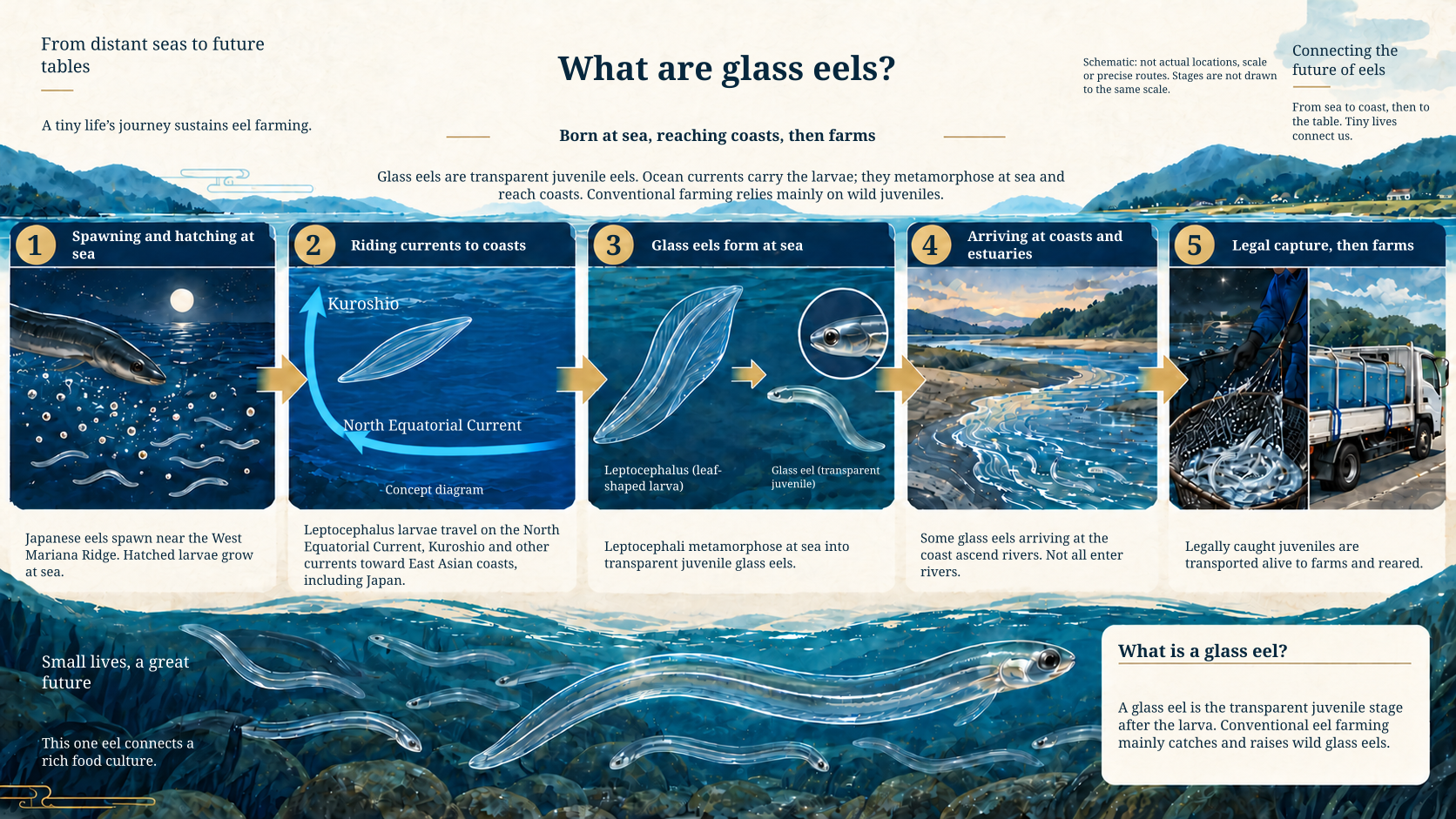
It starts with tiny glass eels
“Glass eel” names a stage of growth, not a fish species. In Japanese eels, larvae born at sea grow and metamorphose into this slender, transparent form. The Japanese word shirasu should not lead you to confuse them with the juvenile fish used for dried whitebait. Fisheries Agency and Japan Fisheries Research and Education Agency resource materials also outline the full life cycle.
In farming, placing these juveniles in ponds is called stocking. Farms can manage the process of growing fish, but cannot freely determine how many wild juveniles arrive. This starting point is a defining feature of ordinary eel farming.
Wild eels and farmed eels: the difference
Using wild glass eels does not make the grown fish wild-caught. Fish fed by people and raised in ponds until food size are farmed eels. Separating “where the juveniles came from” from “how they grew to food size” makes labels easier to understand.
Nor does the word “wild” alone determine which tastes better. When choosing a product, consider the actual serving you will eat: its size, cooking method and storage condition, as well as how it was raised.
From stocking to shipment
We follow the work on the farm through receiving juveniles, growing them, then grading and shipment.
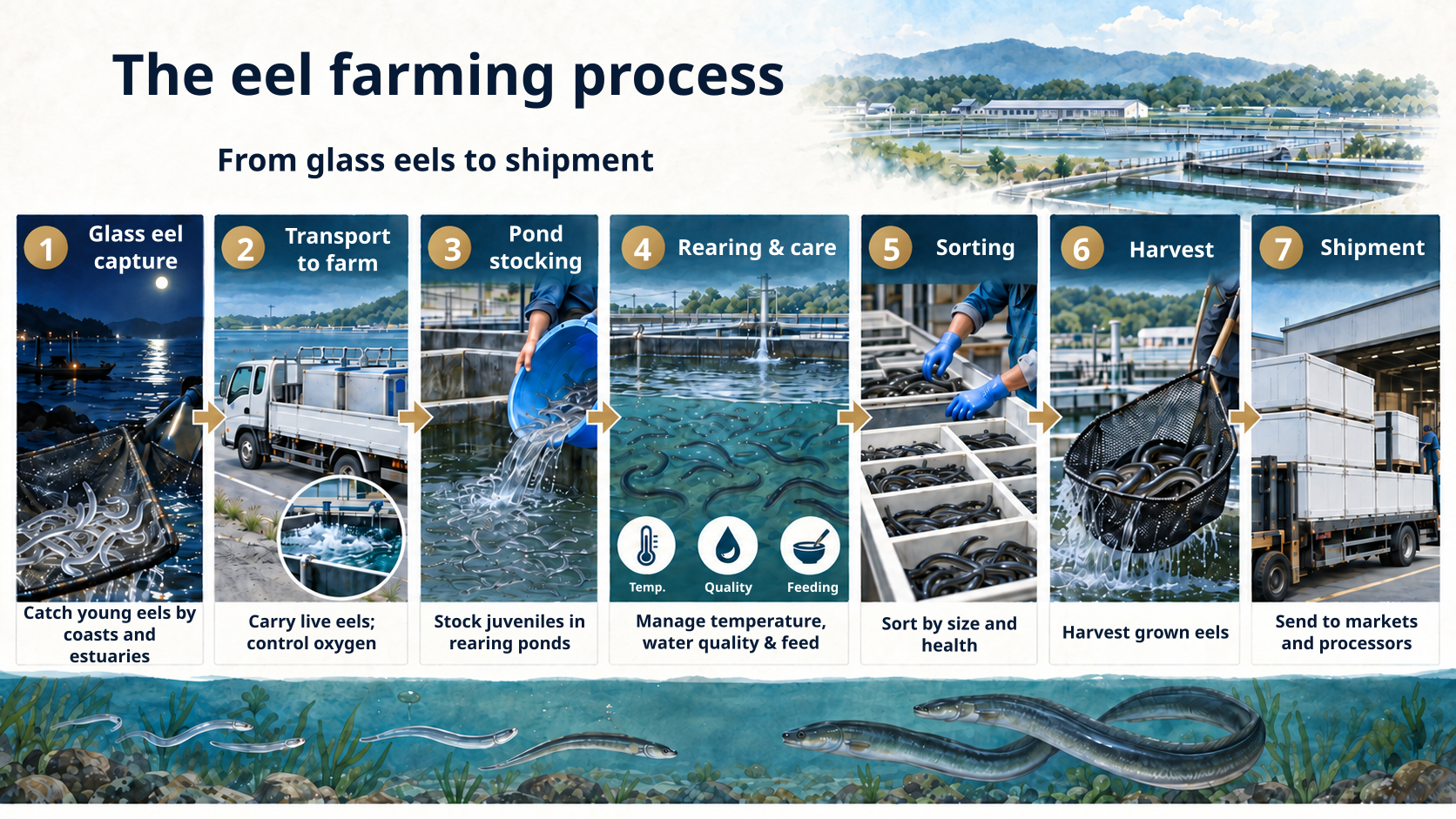
1. Receive juveniles and begin raising them
After stocking, the fish are encouraged to feed in the rearing environment and managed while their growth is monitored. Farming involves understanding the fish’s condition and responding to changes, rather than simply putting them in a pond and waiting. One farm example introduced by the Fisheries Agency also includes separating fish of different sizes after stocking.
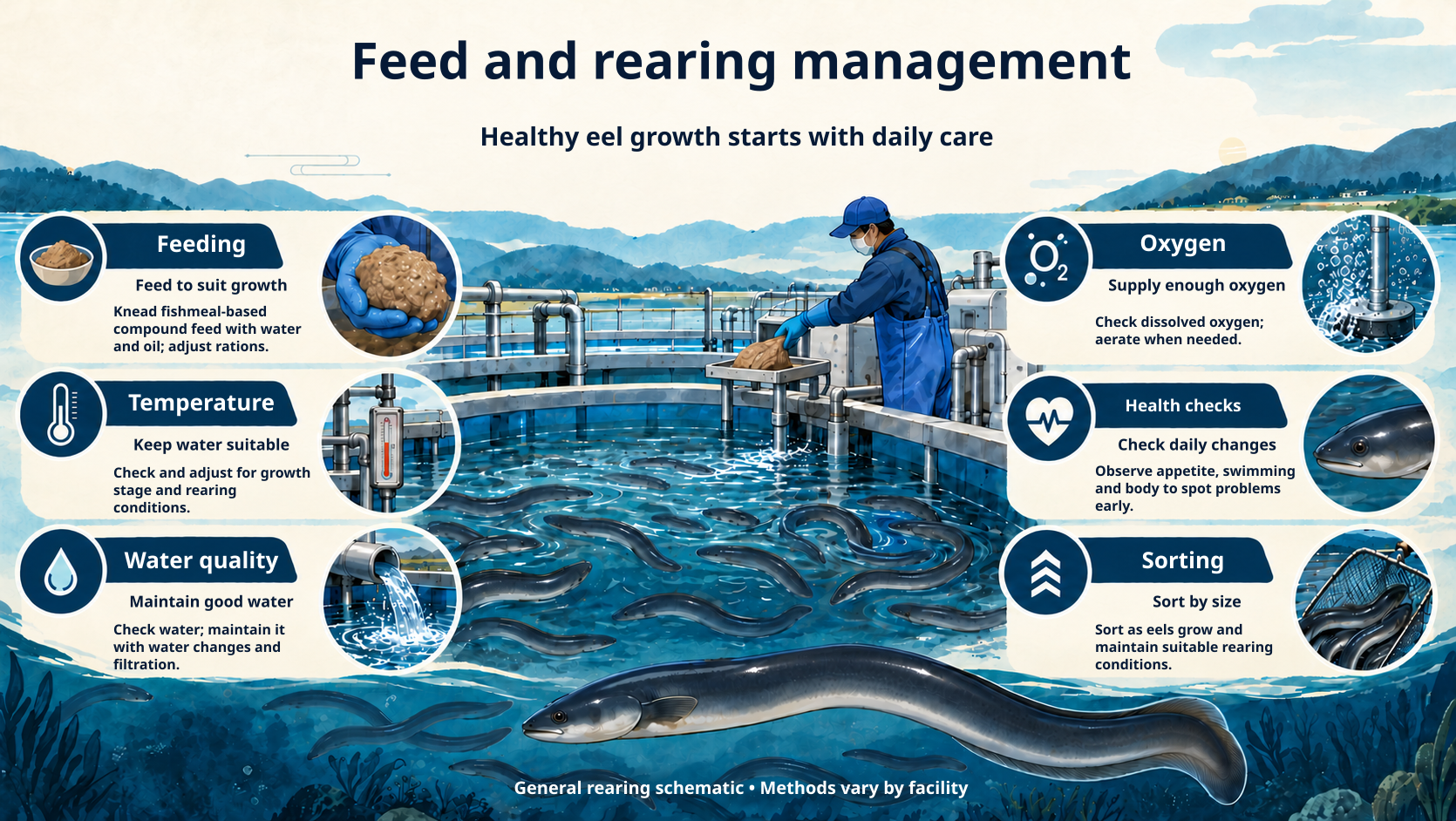
2. Manage feed and the water environment
As general examples, the Japan Eel Farming Fisheries Cooperative Federation describes heated ponds under greenhouse-style covers and the use of compound feed. Water sources include groundwater. However, facilities and management methods are not identical on every farm.
Saying that eels “grow naturally because the area is warm” overlooks the work of farming. Securing water, operating equipment and maintaining feeding suited to the fish are separate management tasks. Look at the management practices producers explain, rather than judging quality from equipment alone.
3. Check growth, grade and ship
Once grown, fish are checked for size and other characteristics, graded for their intended use and sent to processors or restaurants. Regions and businesses also have their own approaches to handling before shipment. For example, Shizuoka Prefecture’s account of Yoshida Town describes handling fish taken from farming ponds in a cold-water holding facility. This is an example from that producing area, not a procedure common to all of Japan.
How many months until shipment?
The Fisheries Agency describes methods that take around six months and others that take a year or longer. Stocking dates and growing plans vary, so it is inaccurate to say that farmed eels always take six months or that larger fish were necessarily raised longer.
Do not confuse the time fish reach shops with the time they were stocked. Fish sold in summer were not necessarily started that spring. Time to shipment does not directly rank flavour, either. For a tasting comparison, matching individual fish weight and grilling method as well as considering growing time makes differences easier to identify.
How does ordinary farming differ from full-cycle aquaculture?
Ordinary farming mainly grows juveniles to food size. Full-cycle aquaculture must also connect egg collection, hatching, larval rearing and raising the next generation of parent fish. It is also distinct from recirculating aquaculture: recirculation describes water use, while full-cycle aquaculture describes maintaining generations.
Research aimed at using artificially produced seed has involved successive improvements to feed and rearing methods. The Agriculture, Forestry and Fisheries Research Council also identifies a large, stable supply of artificially produced glass eels as a challenge in reducing dependence on wild resources.
Research success, experimental production and widespread stable supply are different achievements. The related article “Full-cycle eel aquaculture” discusses the latest research stage and challenges in more detail.
Why farming still needs resource management
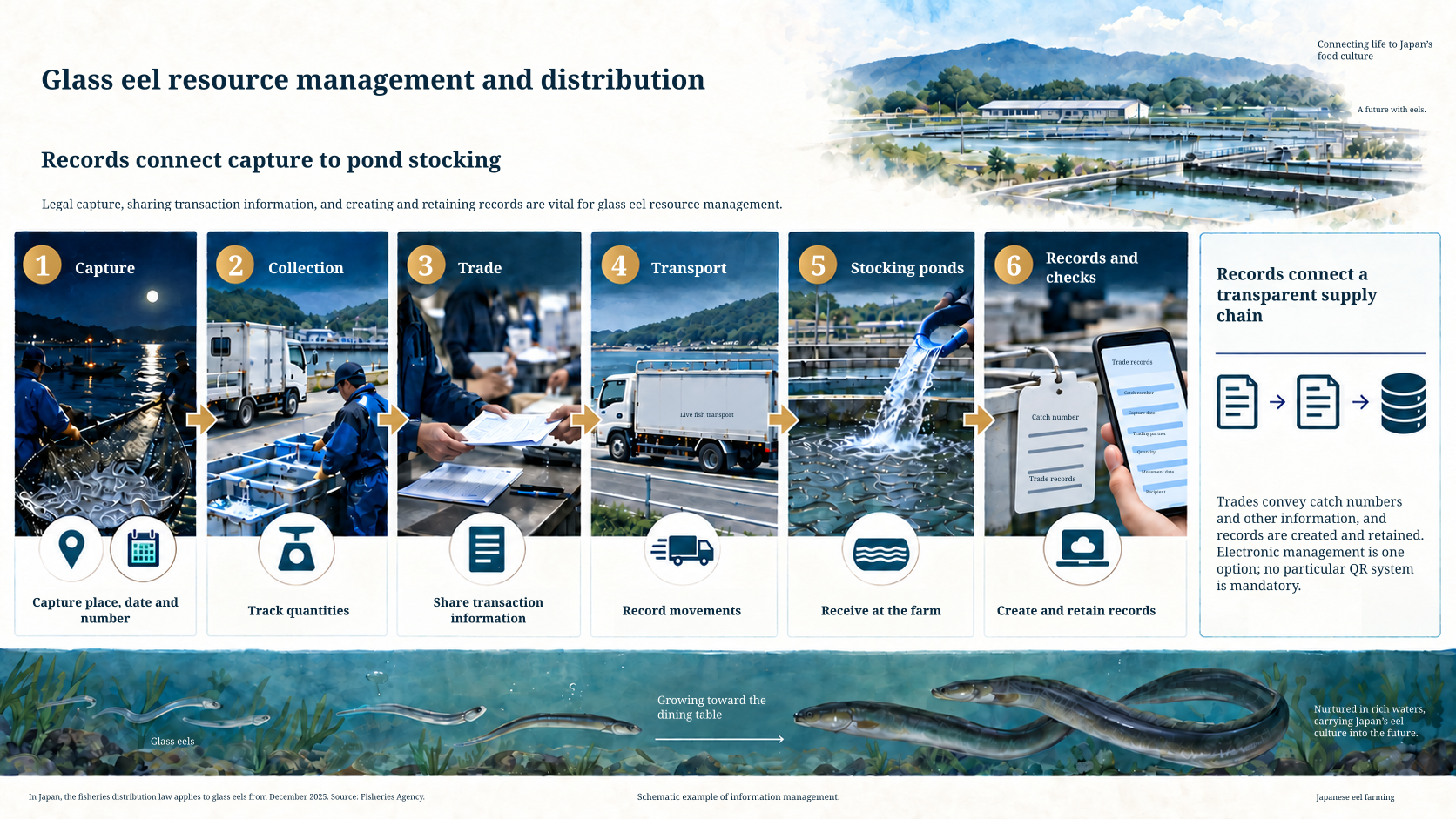
As long as wild juveniles are used, farming remains connected to resources in seas and rivers outside the ponds. The Fisheries Agency manages resource use through measures such as farming permits and controls on stocking quantities. The word “farmed” alone does not justify a conclusion that wild resources are unaffected.
As a buyer, you can check whether producers and sellers explain provenance and distribution, alongside the producing area. A detailed explanation is different from holding a particular certification, so check actual labelling for any certification claim.
Frequently asked questions
- Why do prices change even for farmed eels?
- Securing juveniles depends on wild resources, and growing and processing also cost money. Retail prices cannot be explained solely by plentiful or poor juvenile catches. Individual fish also differ in weight and processing condition, so check the net quantity when comparing prices.
- Do farmed eels not lay eggs?
- Raising fish for food and keeping them for reproduction are separate processes. Ordinary food production does not mean producing the next generation from parent fish. The full-cycle aquaculture article explains reproductive techniques in detail.
- Does the producing area determine the farming method?
- Some methods are characteristic of particular regions, but not every facility in one prefecture is necessarily the same. Use origin as a starting point, then check each producer’s account of husbandry and the product itself.
Related articles