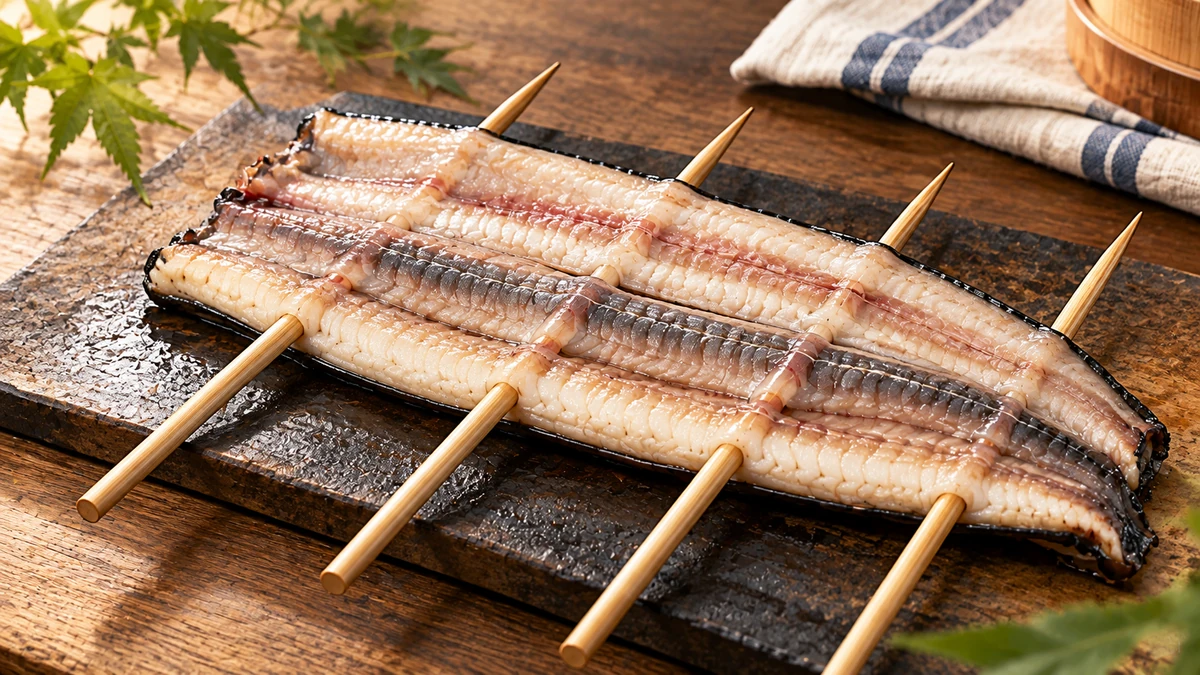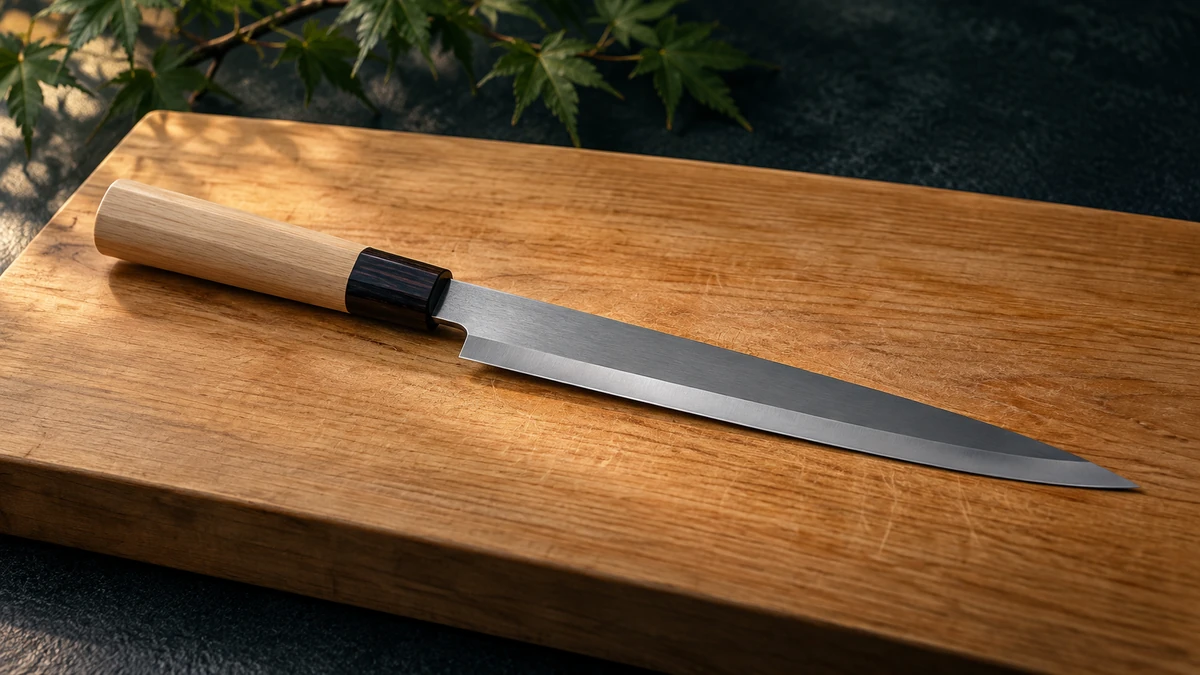
An unagi-saki (eel-opening knife) is a specialist blade used in preparing eel. To identify a type, look beyond its regional name: consider the tip, cutting edge, spine, the work intended by its maker and the maintenance it requires.
This is a guide to understanding and selecting equipment, not instructions for cutting a live eel. People without practical training should not attempt live-eel preparation on their own; use professionally prepared eel or consult a qualified specialist.
None of the visuals are photographs, measured drawings or product specifications.
How to examine an eel knife
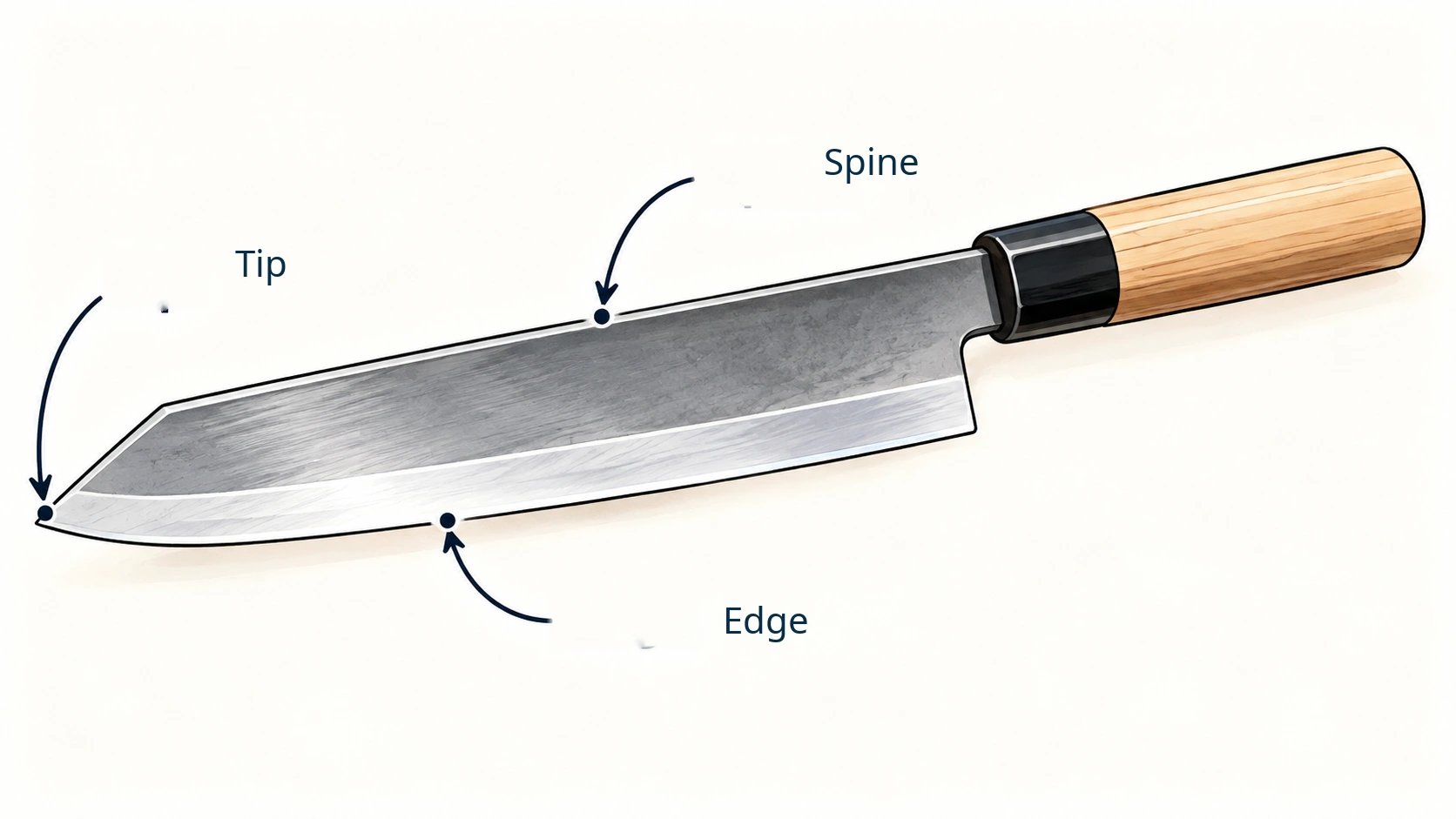
01. Identify the tip, edge and spine
Start with the tip at the end of the blade, the sharpened edge, and the spine on the opposite side. The point’s sharpness, the length of the cutting line and the thickness or projections of the spine offer clues to design. They do not, by themselves, prove where a knife was made or every task it can perform. Kai’s guide to knife parts also notes variations in terminology.
02. Separate blade geometry and purpose from the name of a style
Eel-opening knives range from narrow, elongated profiles to broader blades and compact hatchet-like forms. Cross-checking Tojiro’s 2019 guide against Mizuno Tanrenjo’s descriptions gives the following distinctions. Measurements are Tojiro’s reference sizes for professional knives, not industry-wide standards.
The table describes examples documented by particular makers. It does not certify a knife’s manufacturing origin, nor mean that only one shape exists in each region. Sakai City explains its division of knife-making into forging, sharpening and handle fitting; this history does not itself identify an individual eel knife’s pattern.
Tools and working conditions
03. Evaluate the stable board and clear workspace as well as the knife
A sound, non-wobbling cutting board, adequate open space and an arrangement that keeps the blade away from other utensils all matter. Kai explains cutting-board materials and edge contact. Follow the Ministry of Agriculture’s food-hygiene advice as well: avoid contact between equipment used for raw fish and ready-to-eat food, and wash that equipment promptly. This article does not teach how to pin down and split a live eel.
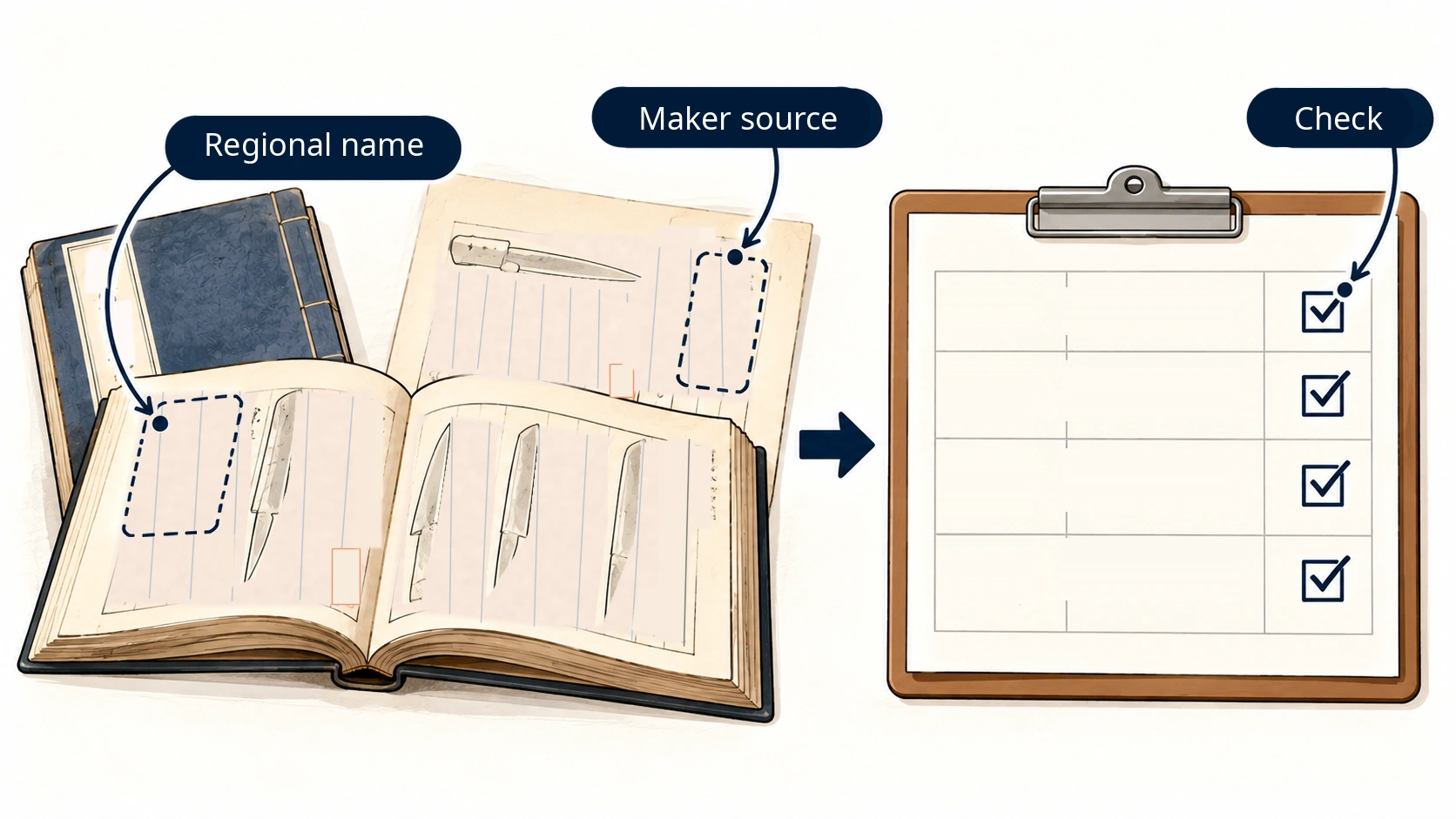
04. Check regional terms against maker records and historical sources
For names such as Edo-saki or Osaka-saki, compare the blade silhouette, spine and handle construction with the maker’s product drawings, photographs, model number and description. Sakai Traditional Crafts Museum’s CUT exhibition explains cutlery history and manufacturing with real objects and models, but a general exhibition description cannot authenticate a particular knife.
For historical context, a National Diet Library exhibition identifies an eel-dish illustration in Edo Meisho Hyakunin Isshu, dated to the Shōtoku era (1711–1716), and links to the digitized original. This documents eel-food culture, not the geometry of today’s named regional knives. Unknown shapes should not be reconstructed by guesswork.
Everyday knife care
05. Clean promptly and dry thoroughly
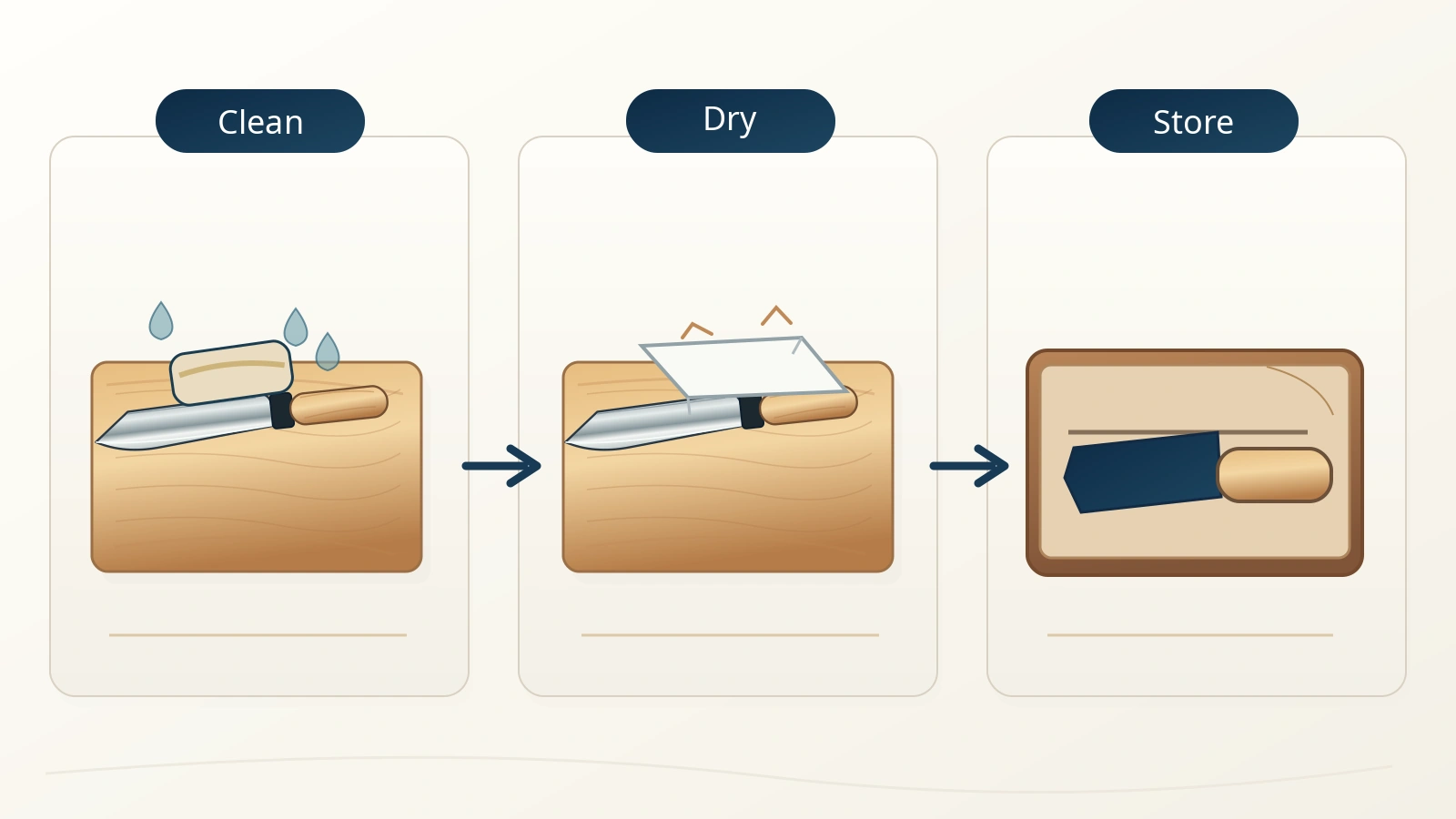
After use, wash with a suitable soft sponge and pH-neutral dishwashing detergent, rinse, then remove moisture from blade and handle and allow both to dry before storage. Tojiro’s official care instructions warn that residues containing salt or acid and prolonged dampness can cause corrosion. Do not leave the knife submerged or dry it in an oven or microwave. This article does not demonstrate a hand position for wiping sharp edges: follow the specific product’s safety instructions.
06. Protect the edge and store it separately
Once fully dry, put the knife in a fitting sheath or edge guard and keep it apart from loose metal tools that might strike its edge. This reduces avoidable contact injuries and chipping. Tojiro’s repair-service instructions also require robust protection to prevent the point from protruding during shipping. Shipping packaging and everyday storage are different, so choose a protector suitable for the specific product.
What to confirm before choosing
07. Consider steel, corrosion and sharpening separately
Carbon steel calls for especially careful moisture control. Stainless blade steel can also rust in certain conditions: “stainless” does not mean maintenance-free. Kai’s material FAQ distinguishes carbon steel, stainless steel and composite constructions. Confirm whether the blade is single- or double-bevelled, its steel specification and whether the maker accepts sharpening or repairs. For chips or deformation, consult the maker or a professional sharpener instead of removing substantial metal without training.
08. Describe the intended task and consult the maker or a specialist
Do not buy on the strength of a regional name alone. Explain the exact task and the user’s experience to the maker or specialist retailer, then verify the specifications and aftercare available. Sakai Traditional Crafts Museum’s shop information also describes comparing knives and asking craftspeople for advice. Useful questions include:
What task is envisaged, and does live-eel handling need to be left to an experienced professional?
Are the model number, blade orientation, dimensions and handle construction documented by the maker?
Can the user maintain the washing, corrosion prevention and storage required for this steel?
Is there a clear contact for sharpening, repairs and technical advice?
The useful question is not which regional name is most famous, but how that particular blade’s geometry, intended job and upkeep fit together. For the separate topic of cooking and opening traditions, see differences between Kanto and Kansai eel.
Related articles