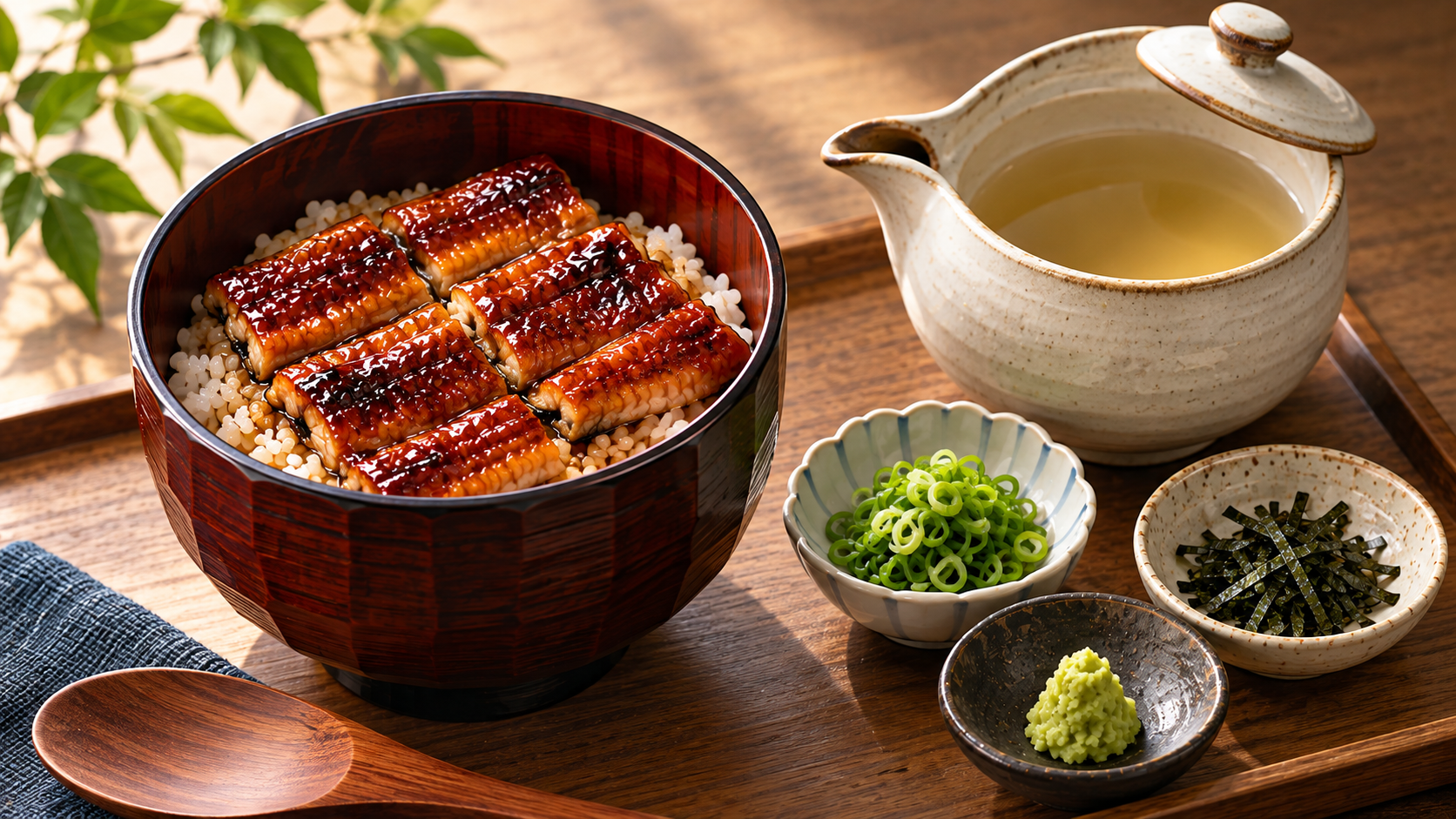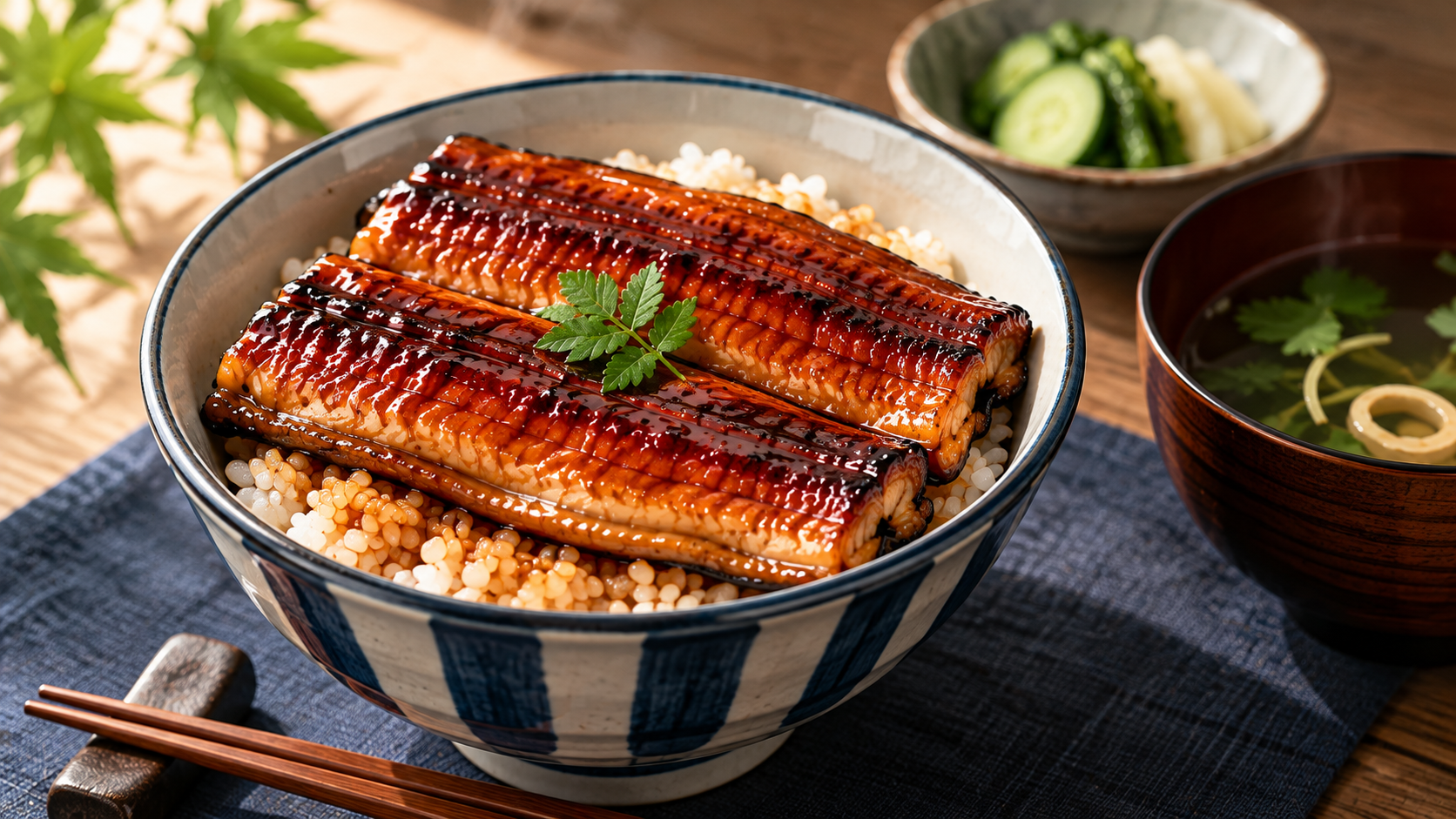
Home-style unadon made by placing warmed kabayaki over hot rice. This is an AI-generated editorial illustration.
For home unadon, the basic idea is simple: bring together hot rice, pre-cooked eel kabayaki and tare just before eating. Rather than adding extra cooking steps, the result depends more on reheating the eel according to its package directions, timing it with the rice, and avoiding too much sauce.
This article focuses on assembling one meal from commercially sold pre-cooked kabayaki, not on the differences between serving vessels. For bowls, quantities and price differences, see “Unadon vs. Unaju.” Detailed comparisons of reheating methods are covered separately in “How to Reheat Unagi Kabayaki.” Here, product instructions and official recipes are the reference points.
Ingredients and meal planning
1. Think of unadon as three layers: rice, kabayaki and tare
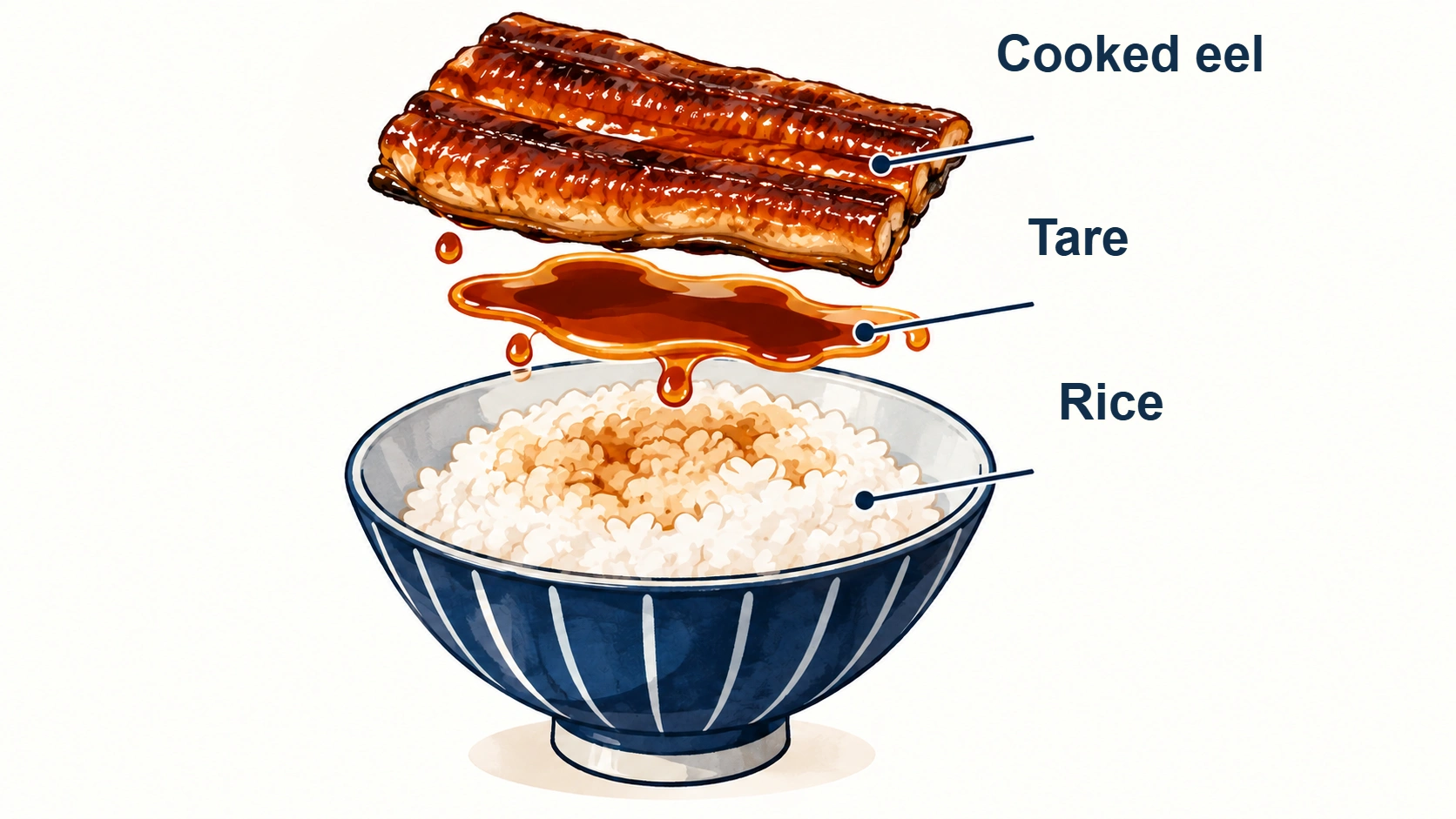
Diagram 01: The basic structure of unadon—rice topped with a small amount of tare and pre-cooked kabayaki.
The minimum setup is hot rice, pre-cooked kabayaki and tare. Garnishes and side dishes can be added if desired, but it is easier to assemble the meal when these three core elements are ready at compatible temperatures and in sensible amounts.
Kikkoman's seminar recipe published on July 8, 2025, “Unadon: Making Commercial Eel Kabayaki Delicious at Home,” uses one whole commercially sold kabayaki eel and 600 g of hot rice for four servings. That is the design of one specific recipe, not a nationwide standard for one serving. Adjust the eel and rice according to the product, appetite and bowl size.
2. Work backward from the number of servings
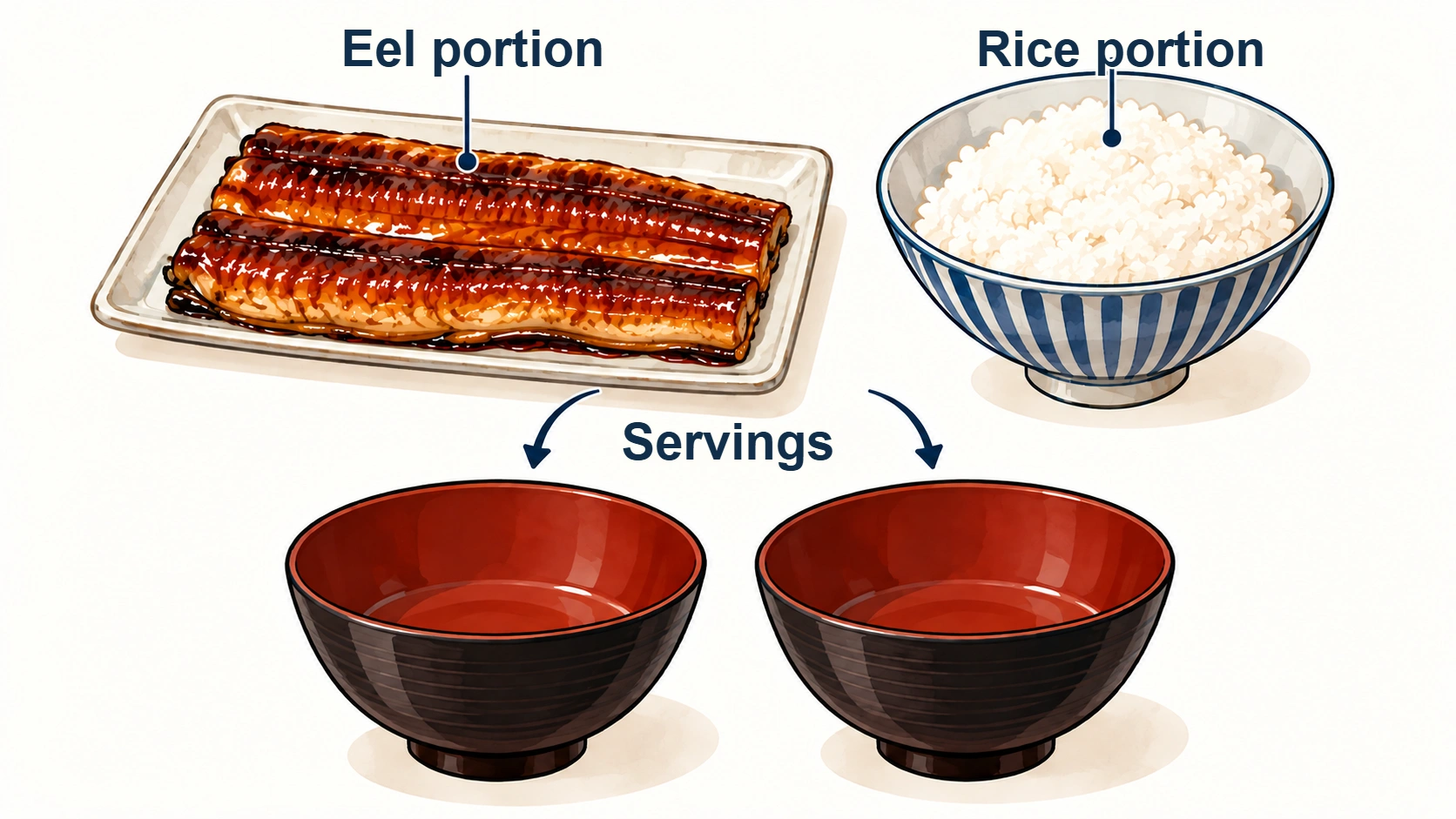
Decide first how many people will share the eel, then prepare the rice. In the Kikkoman example above, one eel and 600 g of rice are divided among four people, but there is no need to treat that ratio as a universal household standard.
In practice, check the package weight, suggested number of servings and reheating directions first. Then consider the bowls you have and the number of diners. If the fillet is small, avoid burying it under an oversized mound of rice; if it is large, cutting and slightly overlapping the pieces can make the bowl easier to eat and better proportioned.
Preparation before plating
3. Confirm whether the eel is fully cooked or still requires cooking
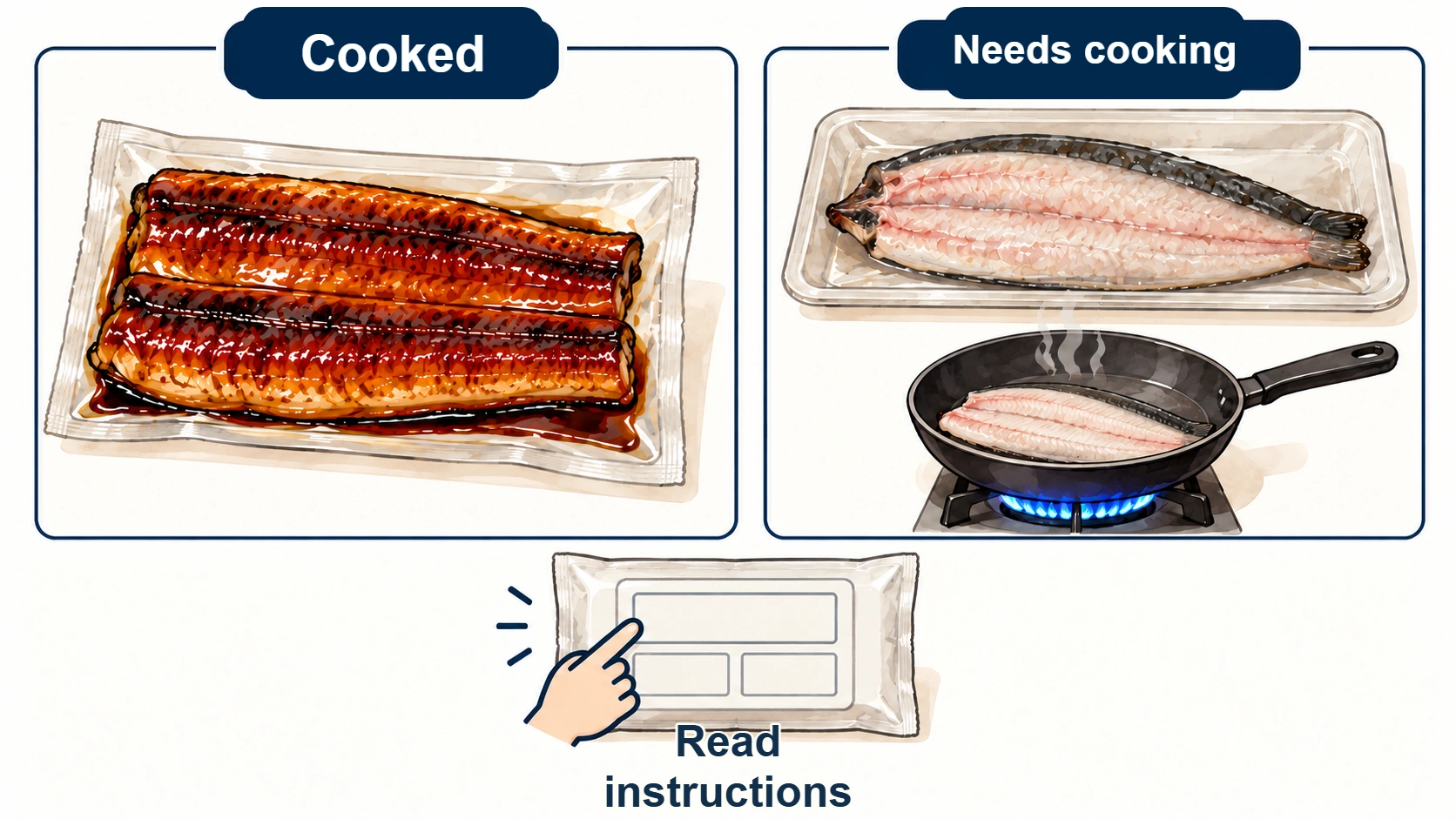
Eel is sold in more than one prepared form, including kabayaki and shirayaki. Kikkoman's ingredient page, “Unagi,” likewise notes that eel is sold as shirayaki and kabayaki. For unadon at home, do not rely on appearance alone: check the label to confirm whether it is already cooked, whether further cooking is required, and whether it is refrigerated or frozen.
This article assumes pre-cooked kabayaki. Reheating method and time vary substantially by product, so package directions take priority whenever they are provided. If the directions are absent or unreadable, do not simply copy the heating time from a different product.
4. Coordinate the rice finishing with the eel reheating
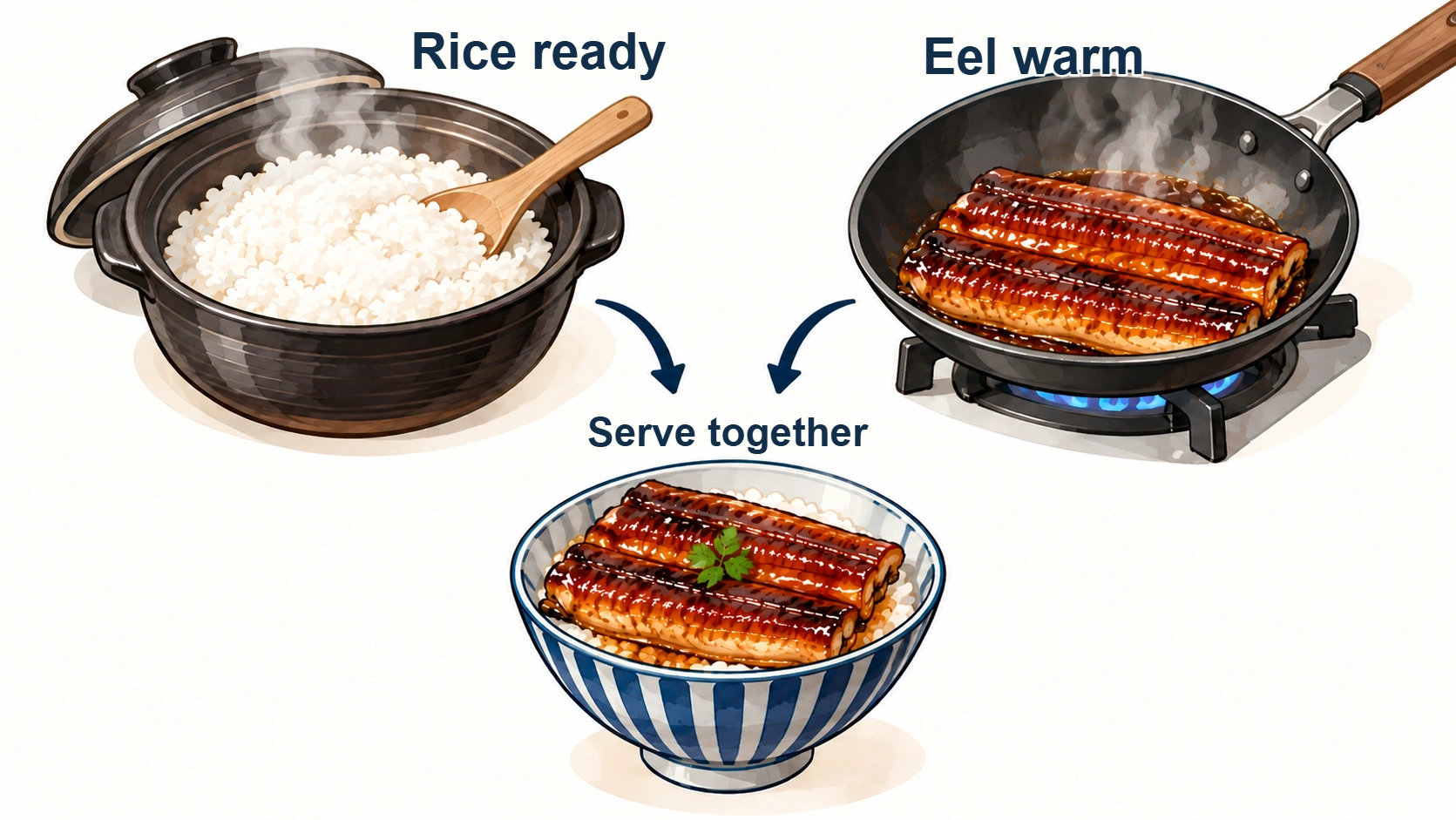
Diagram 04: Finish the rice and warm the eel separately so they come together at plating time.
A useful principle is not to finish one component far ahead of the other and leave it waiting. Begin preparing the eel according to its package directions shortly before the rice is ready so both can be served warm.
Kikkoman's 2025 recipe gives one specific method: rinse sauce from the commercial kabayaki under running water, pour hot water over it, dry it, place it skin-side up in a preheated toaster oven, then brush on the prepared sauce and continue toasting while watching carefully to prevent scorching. That is the method for that particular seminar recipe. If the product you bought specifies boiling in the pouch, microwave heating, a frying pan or another method, follow the product directions instead.
5. If cutting is needed, judge the pieces against the bowl after warming
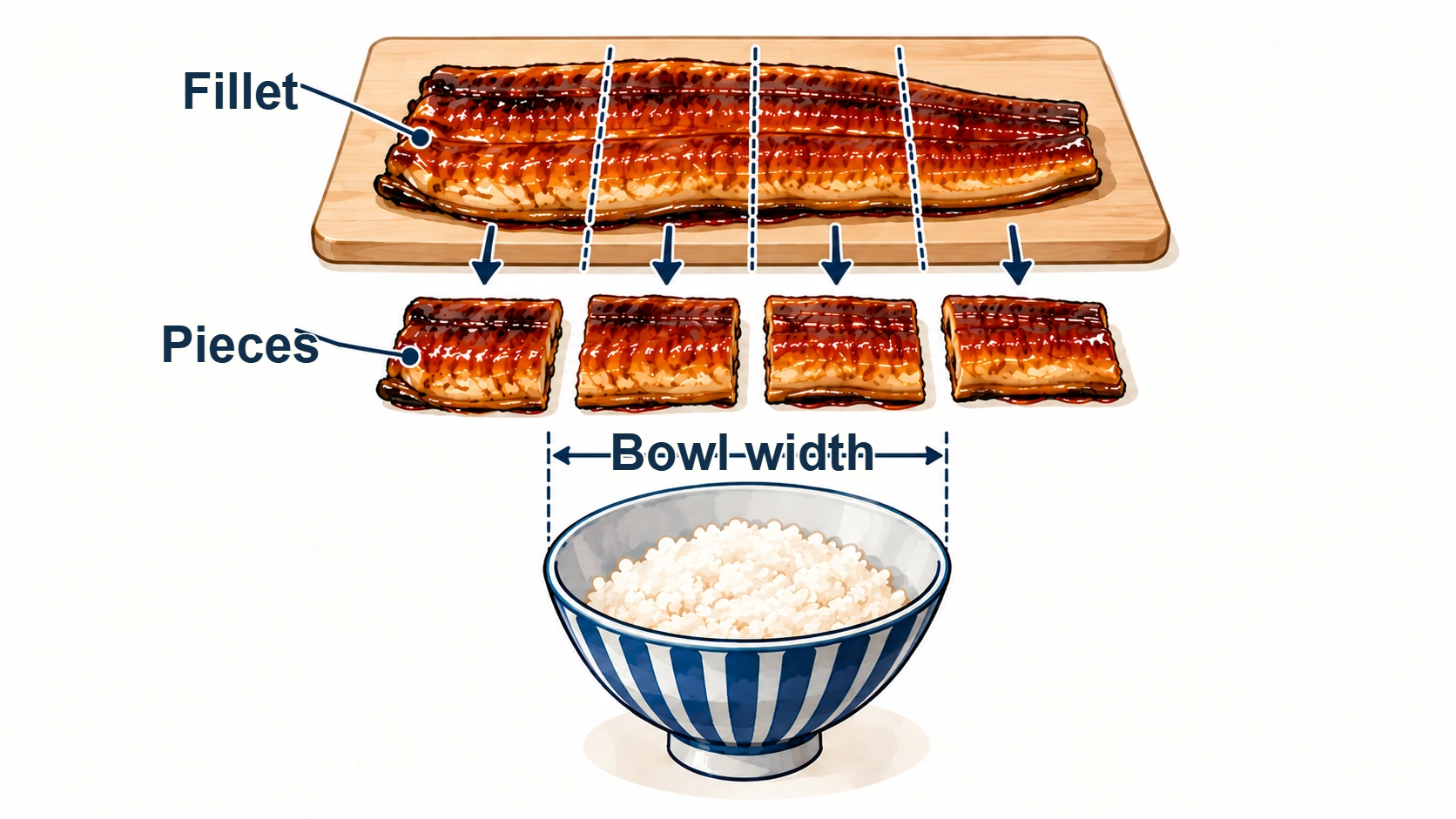
Diagram 05: A practical way to divide kabayaki into pieces that sit comfortably across the bowl.
If the fillet fits across the bowl, there is no need to chop it into small pieces. If it is too long, cutting it into two or several sections after warming can make it easier to arrange without breaking the flesh unnecessarily.
“Match the bowl width” here is a plating concept, not an official standard measurement. If the package or the official recipe you are following specifies cutting before reheating, follow that instruction instead.
Plating and tare
6. Layer rice, a small amount of tare, then the eel
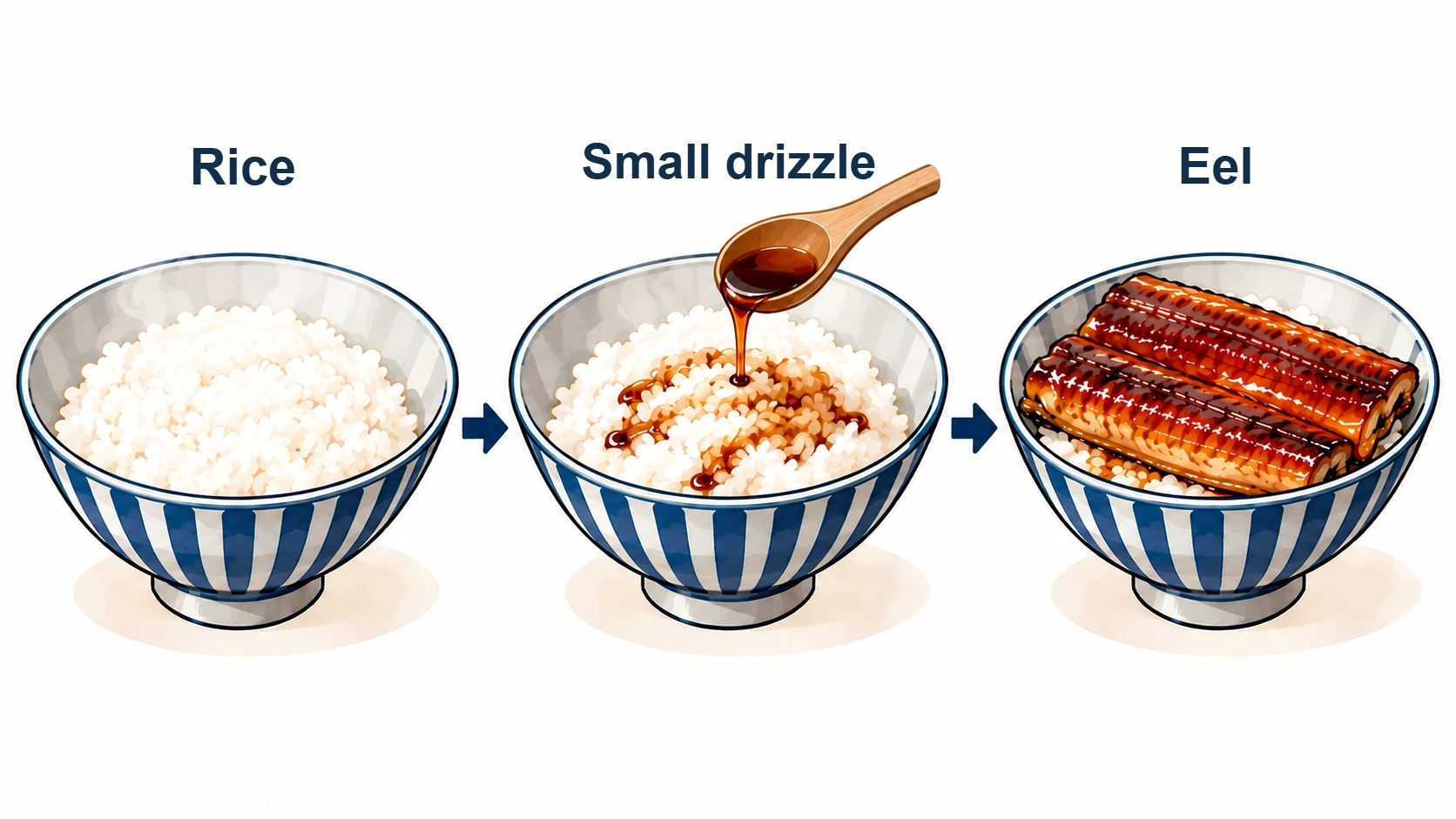
Diagram 06: Add rice first, use a small amount of tare if desired, then place the kabayaki on top.
Spoon hot rice into the bowl and level the surface gently rather than building a very high mound, so the eel can sit securely. Kikkoman's 2025 seminar report likewise explains that flattening the rice helps the eel sit stably and look neat.
That recipe adds sauce to the rice, places the eel on top, then brushes a small amount of sauce onto the eel for gloss. When using a packet of included tare, you also do not need to pour all of it on at once. Starting lightly makes it easier to add more after tasting.
7. Treat gloss on the eel and sauce soaking into the rice as separate jobs
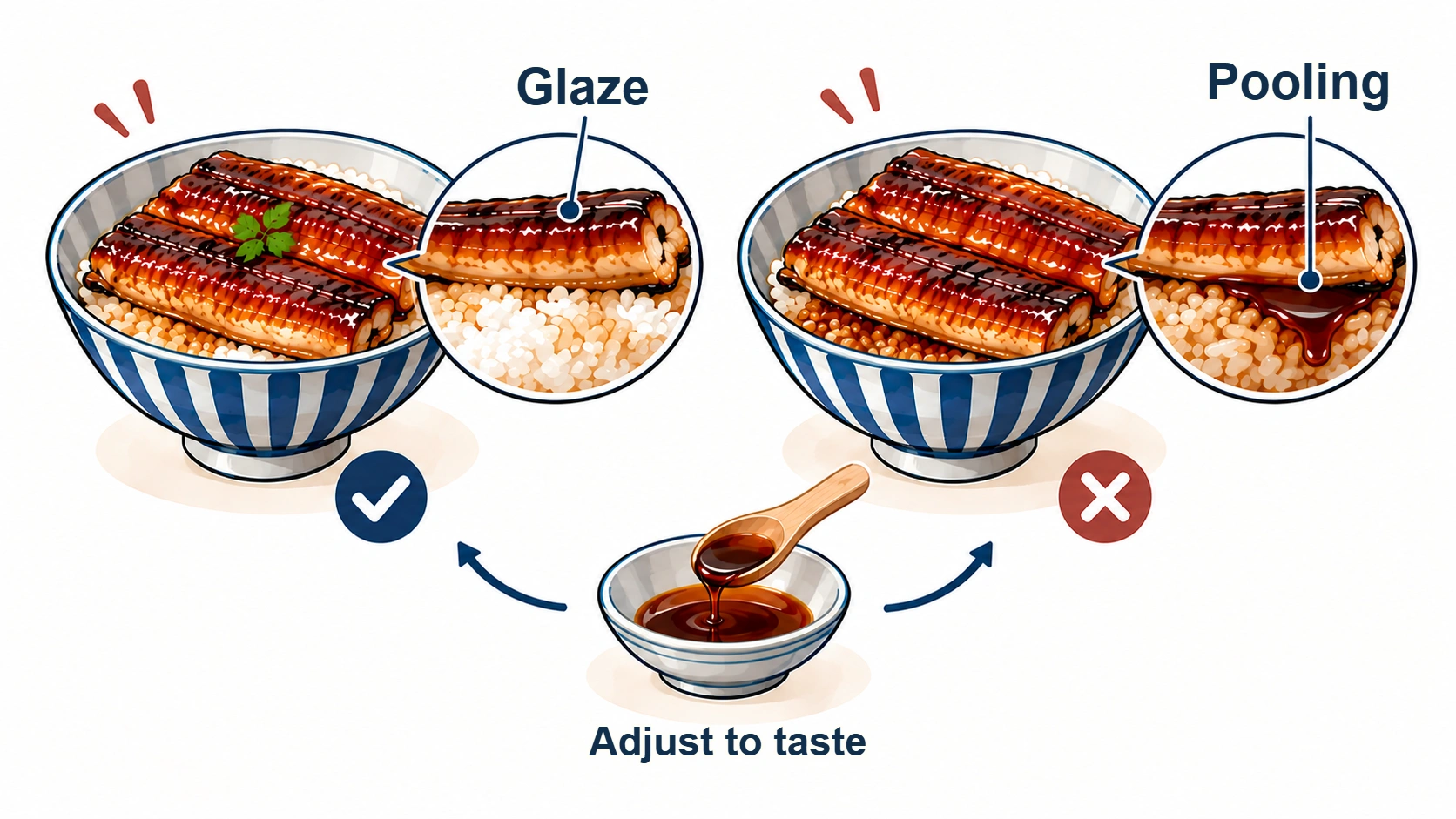
Diagram 07: Distinguish sauce used to glaze the eel from sauce that accumulates excessively in the rice.
A small amount of tare on the eel can provide aroma and shine. A large amount poured into the rice can dominate the flavor and change the rice texture. Keeping the initial amount restrained leaves room to add more at the table.
For its homemade tare, the Kikkoman seminar recipe lists a batch of 200 mL soy sauce, 200 mL hon-mirin and 50 g rock sugar. This is a preparation quantity for that recipe's sauce; it does not mean that the entire batch is intended to be consumed in four bowls. If your commercial kabayaki comes with tare, use its label and your own taste as the guide.
At the table and handling leftovers
8. Keep side dishes light and let the unadon remain the main bowl
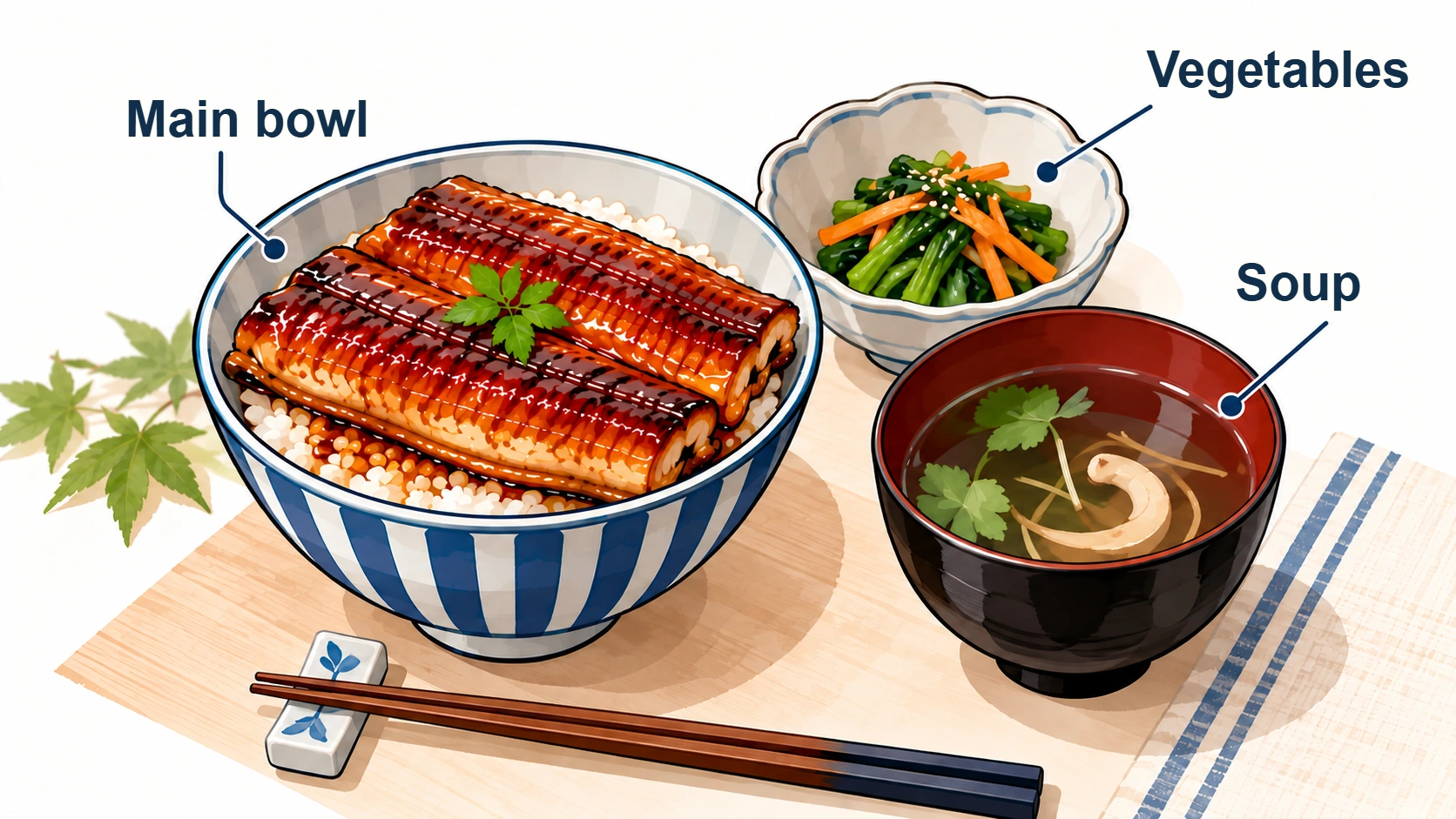
Diagram 08: One serving idea pairs unadon with vegetables and a light soup without assigning nutrition scores.
Unadon can stand on its own as a meal, but a vegetable side dish or light soup can provide a change of flavor when the tare is rich. This is presented as a meal-composition idea, not as a nutritional score or a prescribed ratio.
Optional garnishes include sansho pepper, shredded nori and sliced green onion. Kikkoman's 2025 recipe likewise lists those as optional finishing ingredients. Strongly aromatic garnishes can be served separately so each diner can adjust them.
9. Separate what you will eat now from what you will store
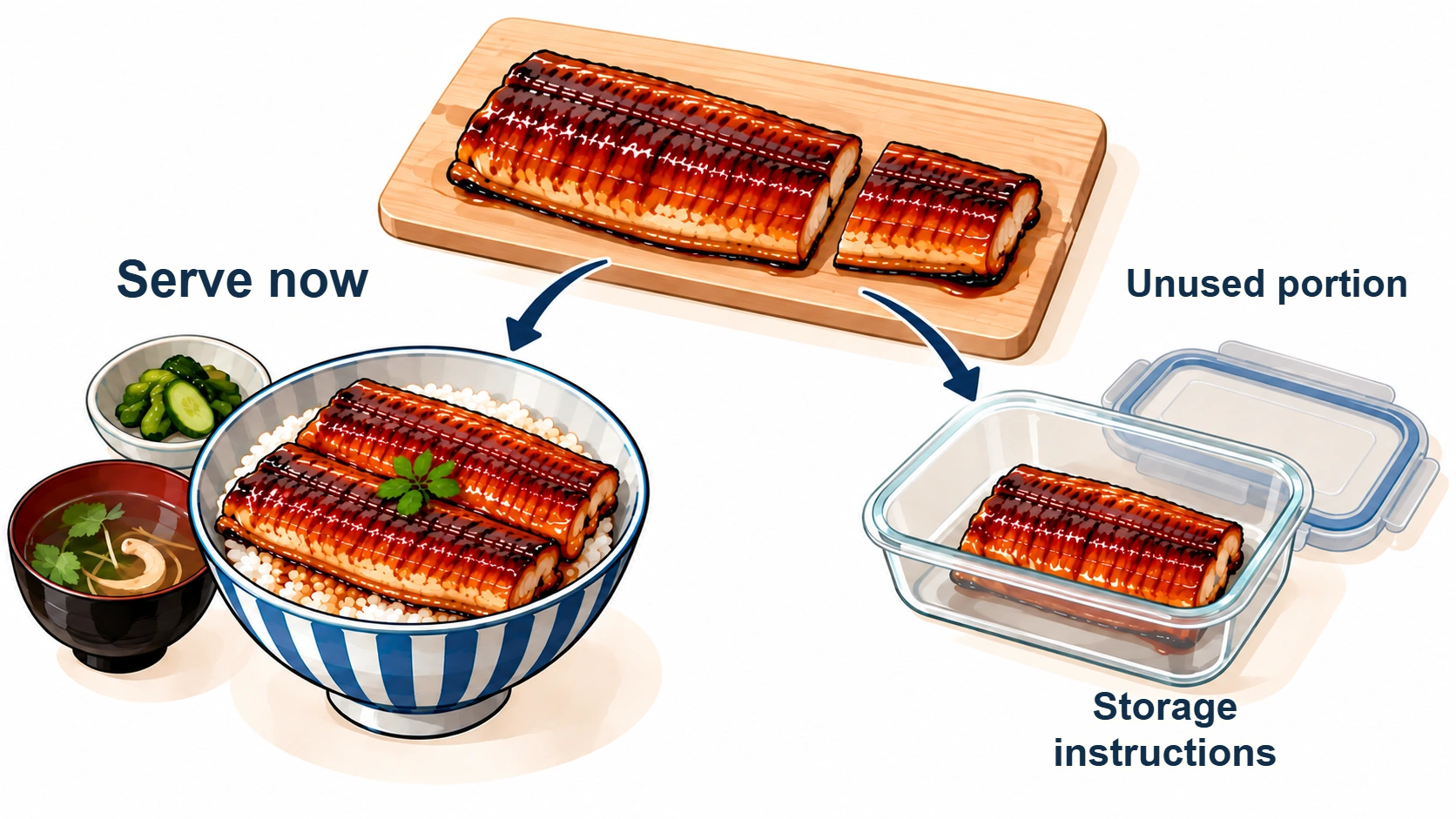
Diagram 09: Separate the portion for immediate serving from the unused portion and place the latter in a clean container.
If you already know part of the food will not be eaten, it is easier to manage safely when that portion is separated early with clean utensils instead of being left on the table for a long period and then returned to storage. Japan's Ministry of Health, Labour and Welfare (MHLW), in “Six Points for Preventing Food Poisoning at Home,” advises handling leftovers with clean utensils and dishes and dividing them into shallow containers so they cool quickly.
The same MHLW guidance gives 10°C or below for refrigerators and -15°C or below for freezers as temperature targets, and 75°C or above as a reheating target for leftovers. These figures are not a guarantee that food will remain safe for a particular number of days. Follow any storage method and date printed on the product, and discard food that has been left too long or seems questionable.
Summary
Home unadon does not require complicated cooking: coordinate hot rice with pre-cooked kabayaki, use tare conservatively and assemble just before eating. Do not generalize quantities or reheating conditions from a single recipe; the directions on the product you purchased should take priority.
Kikkoman's 2025 recipe is useful for assembly ideas such as leveling the rice and applying sauce in stages. For leftovers, follow MHLW household food-safety guidance: use clean containers, cool portions efficiently, control storage temperature and reheat adequately.
Sources
Kikkoman Corporation (July 8, 2025), “A long-established eel chef teaches how to enjoy eel at home” — ingredients, tare, reheating and plating example for unadon made with commercially sold kabayaki.
Kikkoman, “Unagi” — basic ingredient information, including commercially sold shirayaki and kabayaki.
Japan Ministry of Health, Labour and Welfare, “Six Points for Preventing Food Poisoning at Home” — household guidance on storage, cooking and leftovers.
Related articles