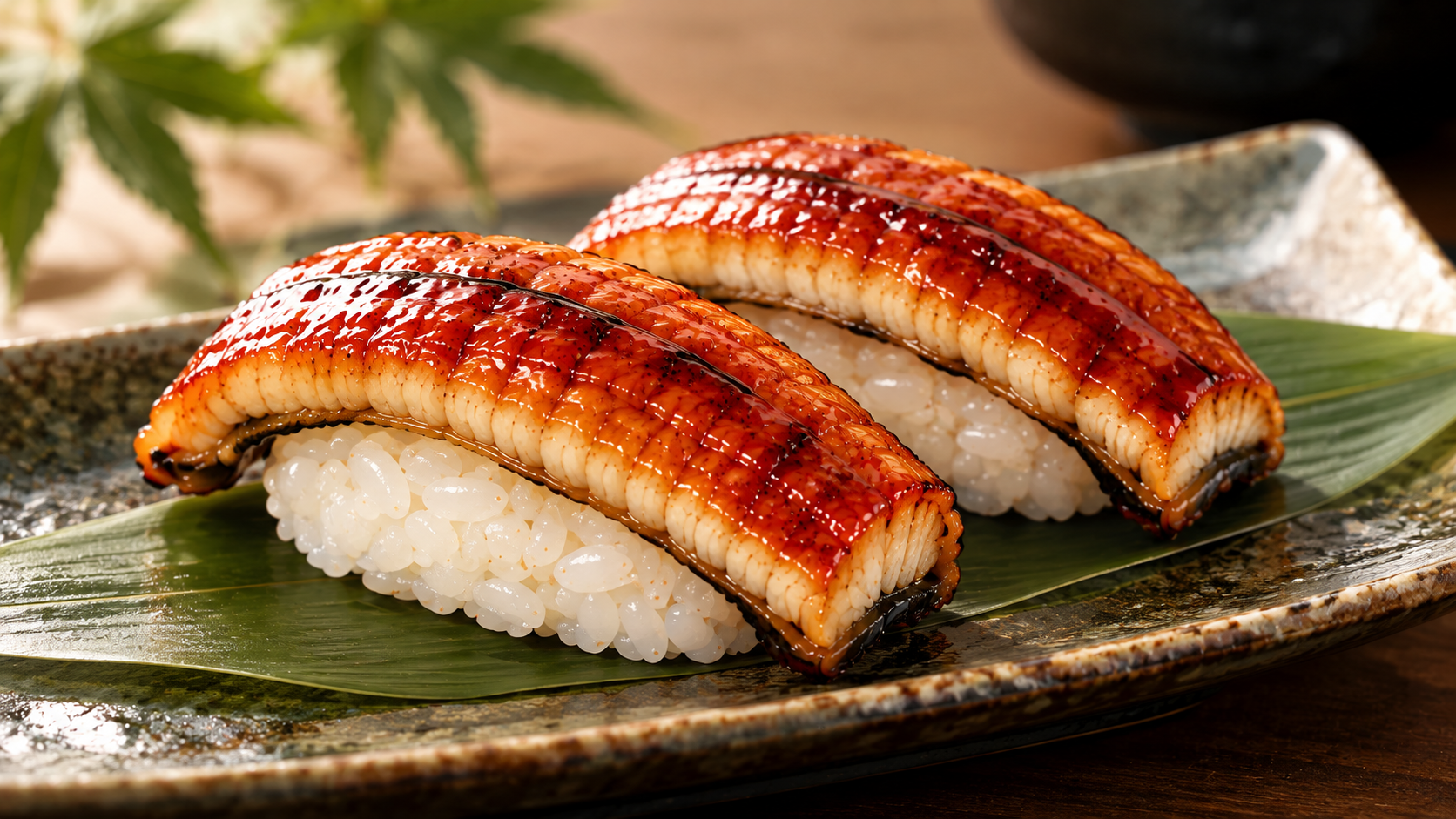
To make eel sushi rolls, cut cooked kabayaki eel into strips and roll it with seasoned rice, nori and cucumber. A thin roll with fewer fillings is easiest to handle; a thick roll allows more ingredients, while an inside-out roll places the rice outside. This guide covers rolled sushi, not pressed sushi or nigiri. Quantities come from Kikkoman’s published recipes; avocado and the inside-out method are clearly identified as editorial variations, not a recipe tested by this publication.
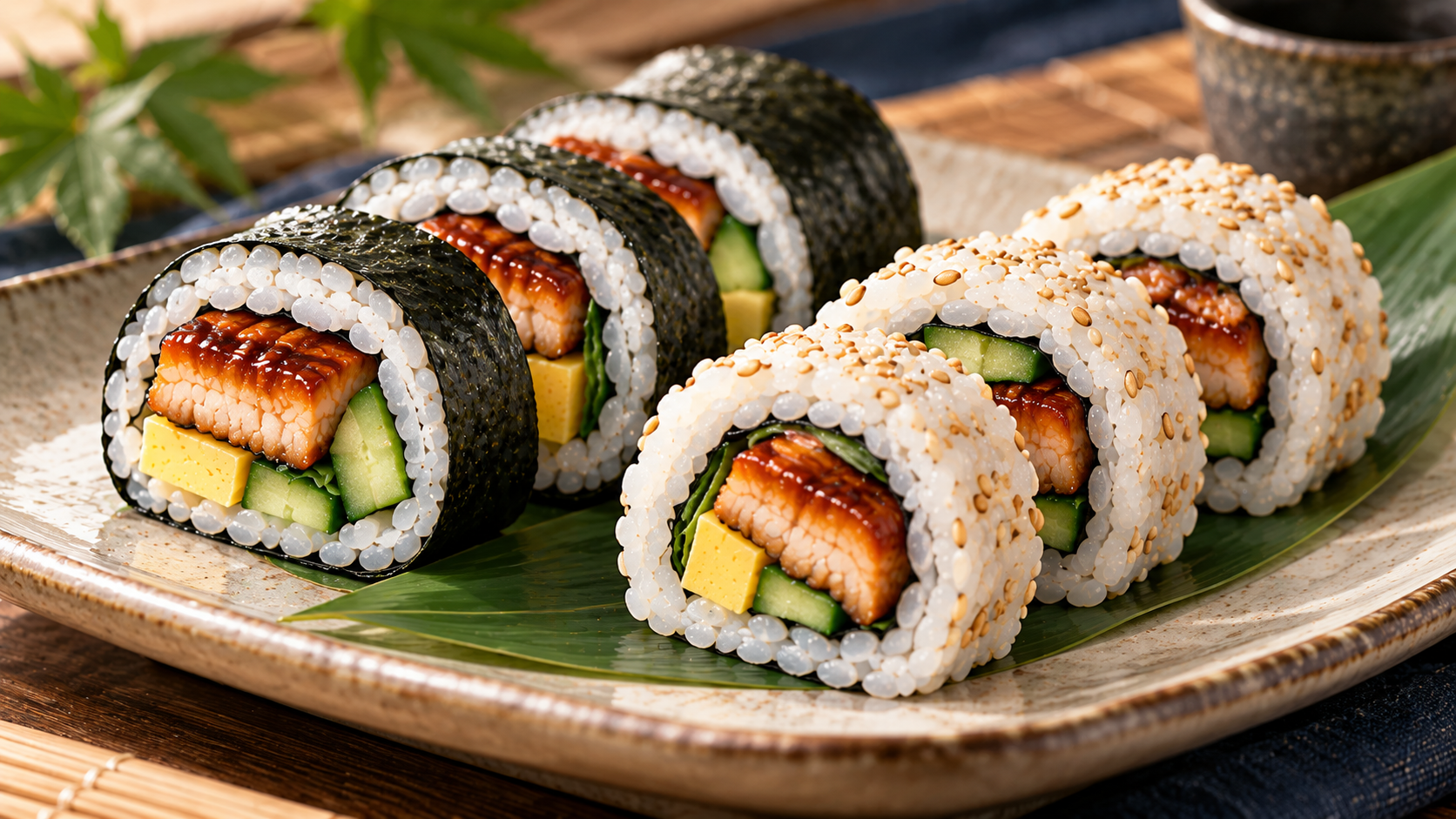
AI-created editorial serving illustration; not a photograph from an actual restaurant.
Types of sushi roll
How thin, thick and inside-out rolls differ
A thin roll uses a smaller piece of nori and fewer fillings. A thick roll accommodates several strips within a full sheet. For inside-out maki, rice forms the exterior and nori sits inside. Kikkoman’s four-serving “Unagi Roll” uses three full nori sheets halved lengthwise to make six rolls. Its 2019 “Unakyu Roll” uses two full sheets to make two rolls. These are different recipes: do not interchange their ingredient quantities or portion counts. (Kikkoman: “Unagi Roll” original recipe (four servings); Kikkoman KCC: “Unakyu Roll” (23 January 2019; two rolls))
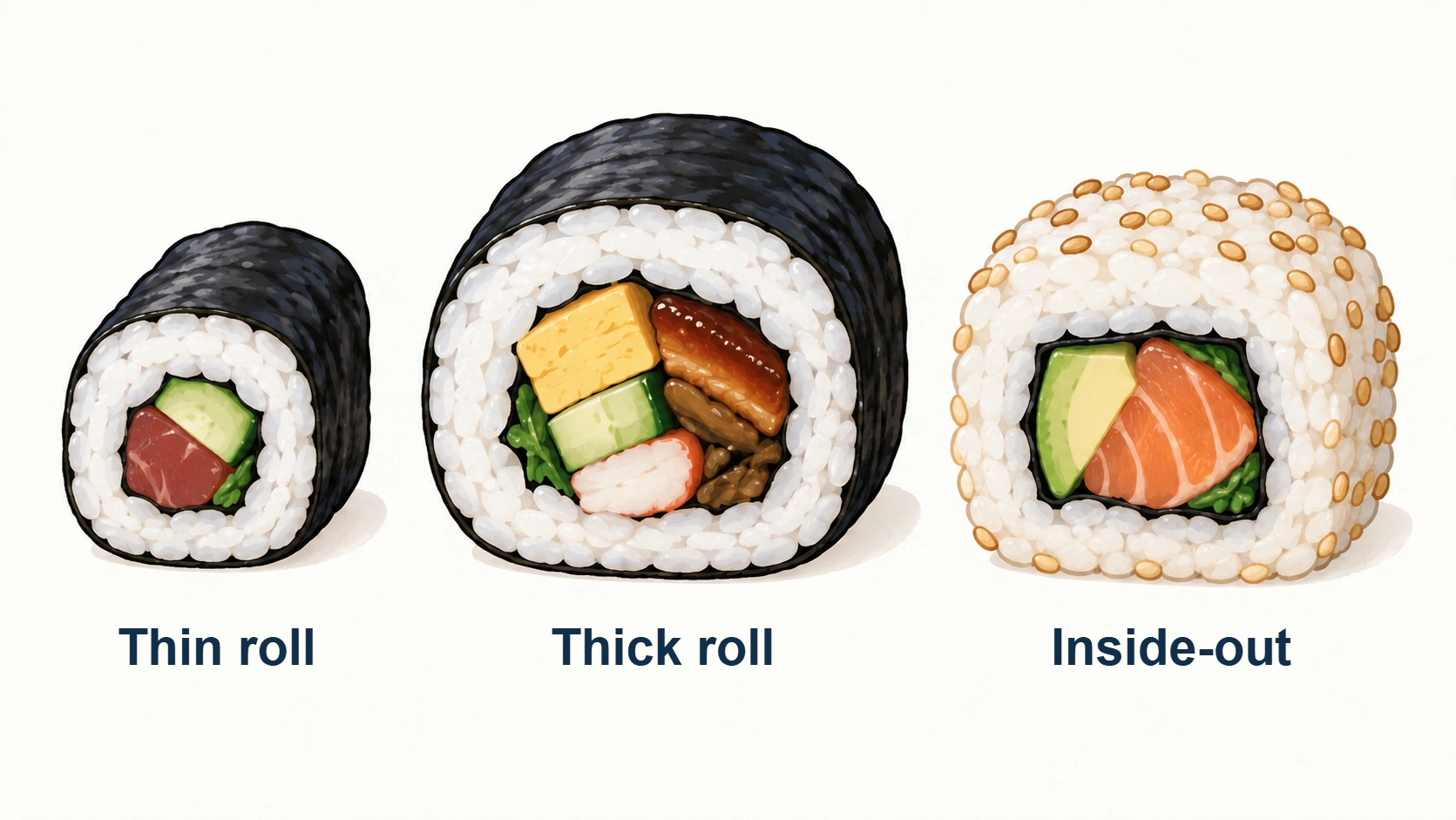
Figure 01 — Cross-sections of thin, thick and inside-out sushi rolls.
Choosing cooked eel and other fillings
Choose fully cooked kabayaki eel, not raw eel, and follow its package instructions. In the smaller-roll recipe, Kikkoman gently warms the eel in a microwave before cutting it into sticks. Pat cucumber dry and cut it, shiso and red pepper to fit. The thick-roll reference uses 70–80 g of eel for two rolls, alongside one cucumber, omelet, sweet-simmered shiitake and kanpyo strips. Avocado is an optional addition absent from those original recipes; use a restrained amount if you choose it. (Kikkoman: “Unagi Roll” original recipe (four servings); Kikkoman KCC: “Unakyu Roll” (23 January 2019; two rolls))
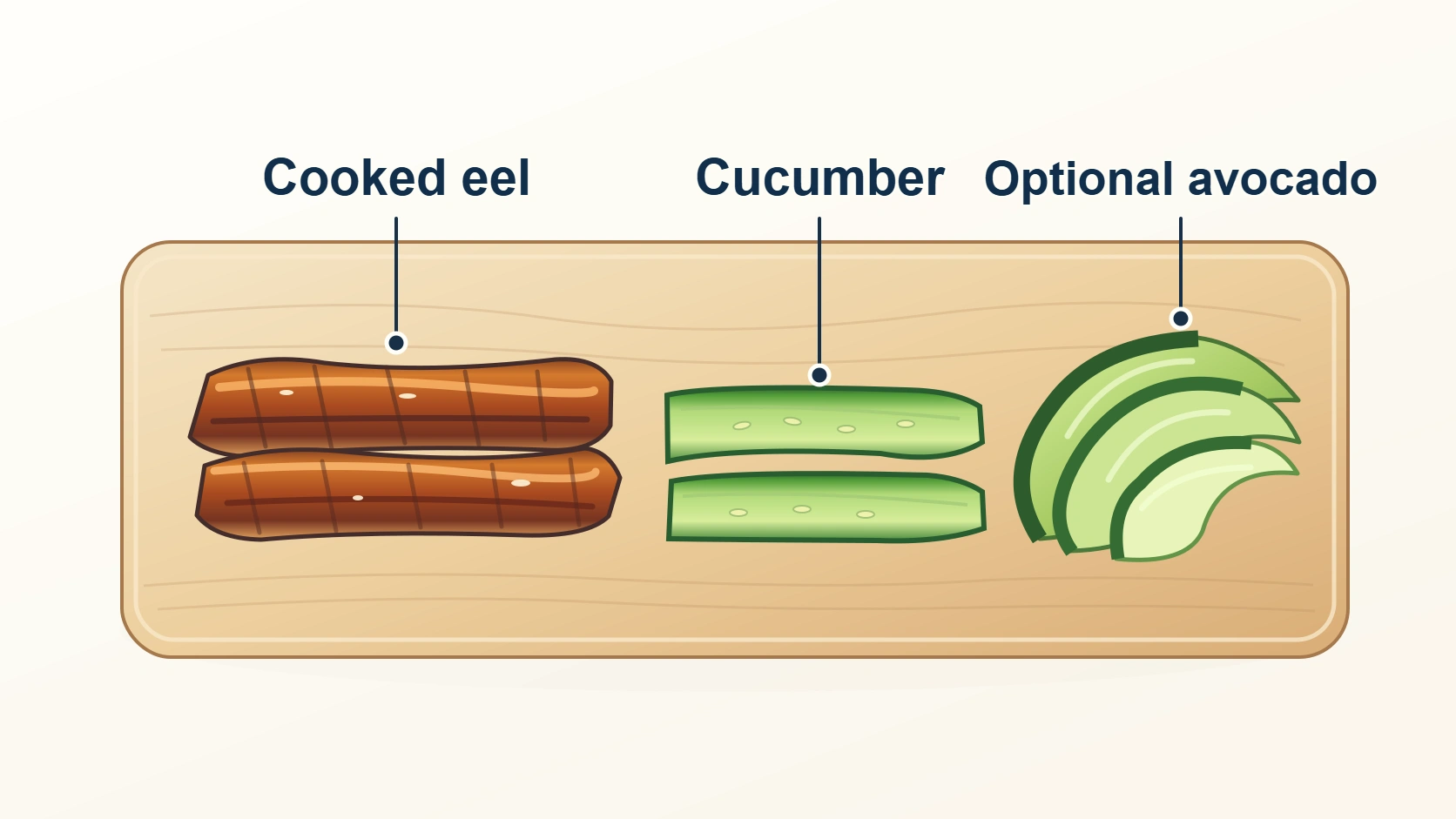
Figure 02 — Cooked eel strips beside cucumber and optional avocado.
Nori and seasoned rice
Reference quantities: Kikkoman’s four-serving eel rolls
These are the quantities stated in Kikkoman’s original “Unagi Roll” recipe, used here as a small-roll baseline. Do not silently combine them with the separate two-roll thick-roll formula. (Kikkoman: “Unagi Roll” original recipe (four servings))
Fillings: cooked kabayaki eel ½ skewer, green shiso 6 leaves, cucumber ½, red bell pepper ¼.
Base: warm cooked rice 300 g; full nori sheets 3 (cut lengthwise into 6 half-sheets).
Seasoned vinegar: vinegar 1½ tbsp, sugar 1 tbsp, salt ½ tsp.
Seasoning mixture: mayonnaise 1 tbsp, soy sauce ½ tsp, wasabi a little.
Kikkoman’s Japanese measurements define 1 tablespoon = 15 mL and 1 teaspoon = 5 mL. Do not replace these with another country’s spoon capacity or assume volume equals the same mass in grams. (Kikkoman: Home Cooking measurement conventions)
Spread the rice and leave a sealing edge
Fold the prepared vinegar mixture into warm cooked rice without crushing the grains. For Kikkoman’s smaller rolls, divide the rice into six portions and lay each half-sheet of nori lengthwise. Spread rice over roughly the nearest two-thirds, leaving the far third uncovered. The separate thick-roll recipe spreads rice thinly on a full sheet while reserving about 2 cm at the far edge. These are style-specific guides, not interchangeable measurements. (Kikkoman: “Unagi Roll” original recipe (four servings); Kikkoman KCC: “Unakyu Roll” (23 January 2019; two rolls))
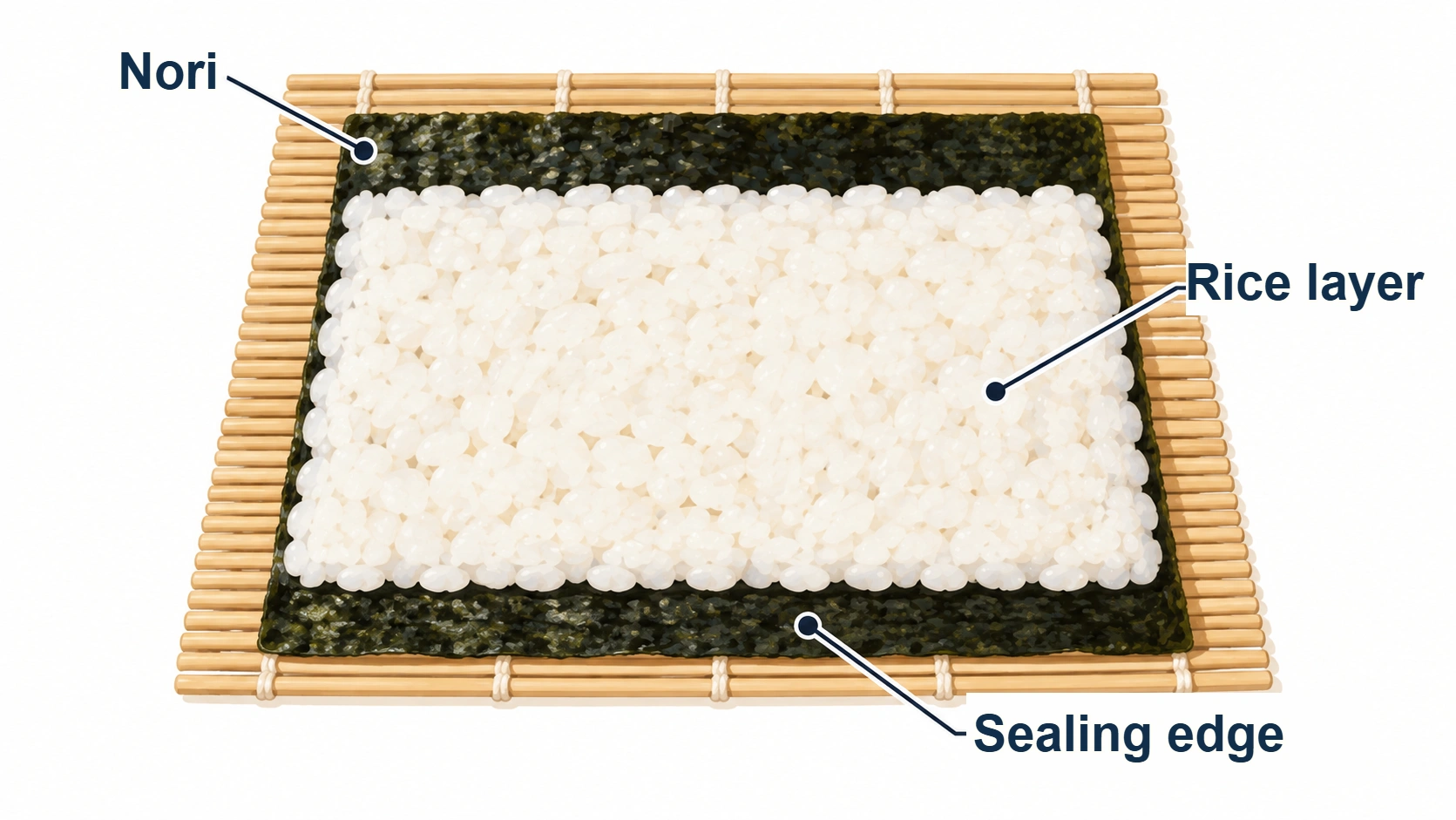
Figure 03 — Even sushi rice leaving a clear nori sealing edge.
Align the fillings in parallel strips
Place the eel, cucumber and slender vegetables in a single band of parallel strips across the near side of the rice. The smaller-roll original combines shiso, eel, cucumber, red pepper and its seasoned mayonnaise mixture. For a thick roll, egg and well-drained simmered mushroom and kanpyo can join the filling. Excess filling or liquid makes closing the roll difficult and can spoil a neat cross-section. (Kikkoman: “Unagi Roll” original recipe (four servings); Kikkoman KCC: “Unakyu Roll” (23 January 2019; two rolls))
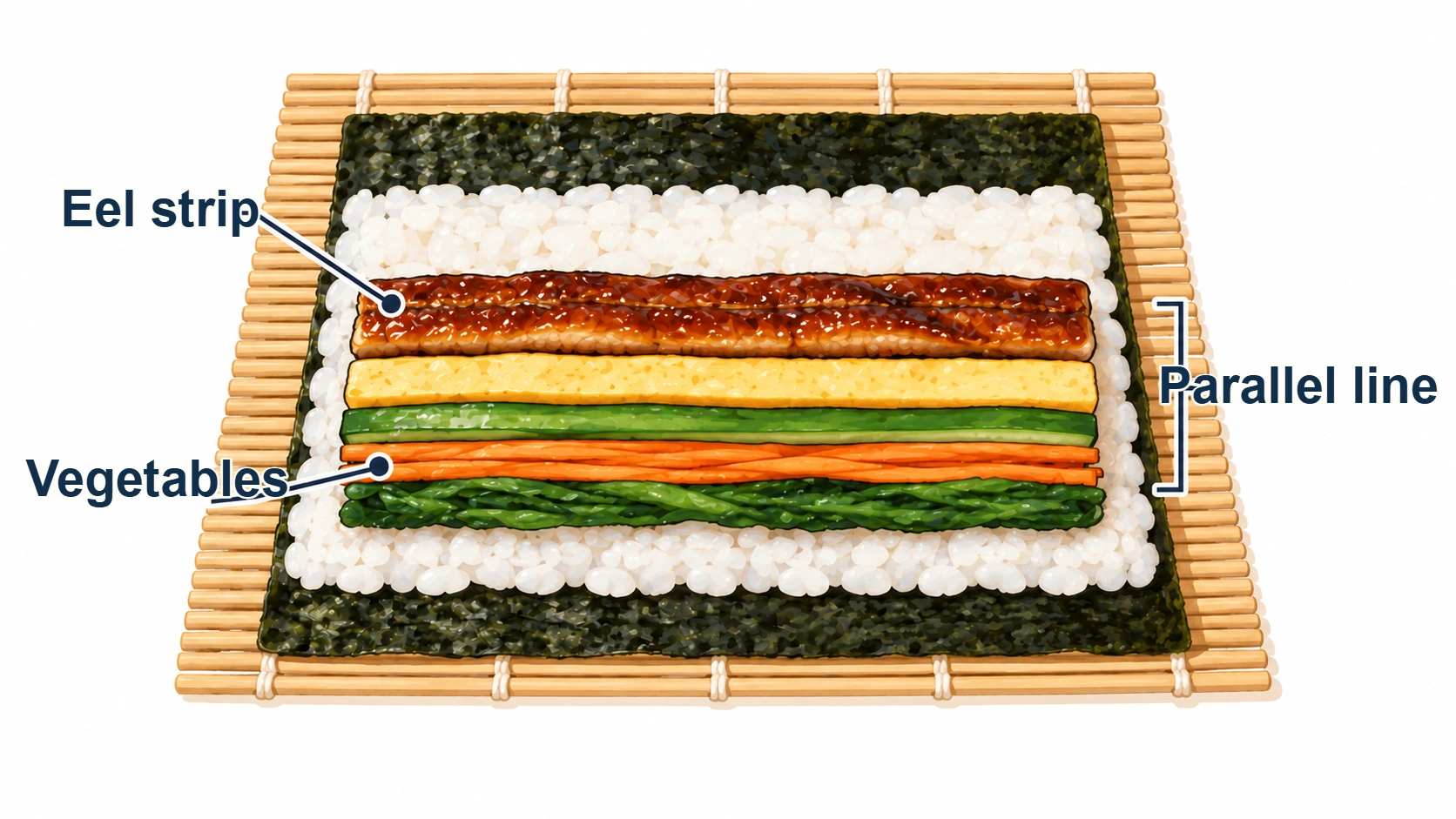
Figure 04 — Parallel strips of eel and vegetables on rice and nori.
Rolling the sushi
Enclose the fillings with the first turn
Lift the near edge of the nori or mat and support the fillings with your fingertips as the first turn encloses them. The Kikkoman small-roll recipe is specifically rolled by hand without a mat; its thick-roll reference uses a bamboo mat. Choose the technique appropriate to the roll rather than treating one tool as mandatory for every style. Apply even, moderate pressure instead of squeezing the contents out. (Kikkoman: “Unagi Roll” original recipe (four servings); Kikkoman KCC: “Unakyu Roll” (23 January 2019; two rolls))
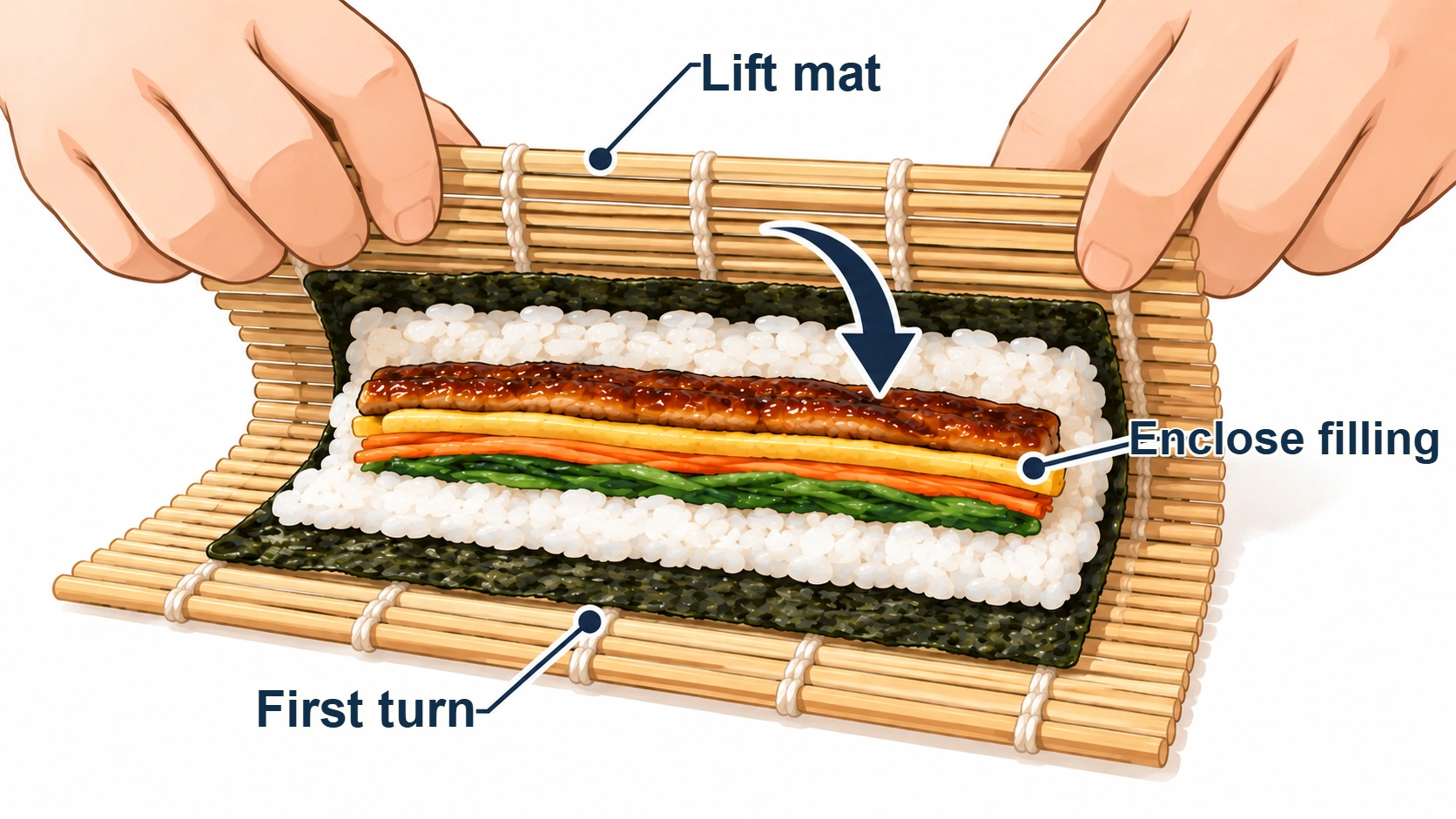
Figure 05 — First turn of a bamboo mat enclosing sushi fillings.
Keep the bamboo mat outside the sushi
When using a bamboo rolling mat, it should remain an external guide, never rolled into the food. Once the first fold has caught the filling, lift the near edge of the mat away while moving only the sushi forward. Rest the seam underneath to help the shape settle. The illustration explains the relationship between the mat and food; it does not prescribe an exact hand position. (Kikkoman KCC: “Unakyu Roll” (23 January 2019; two rolls))
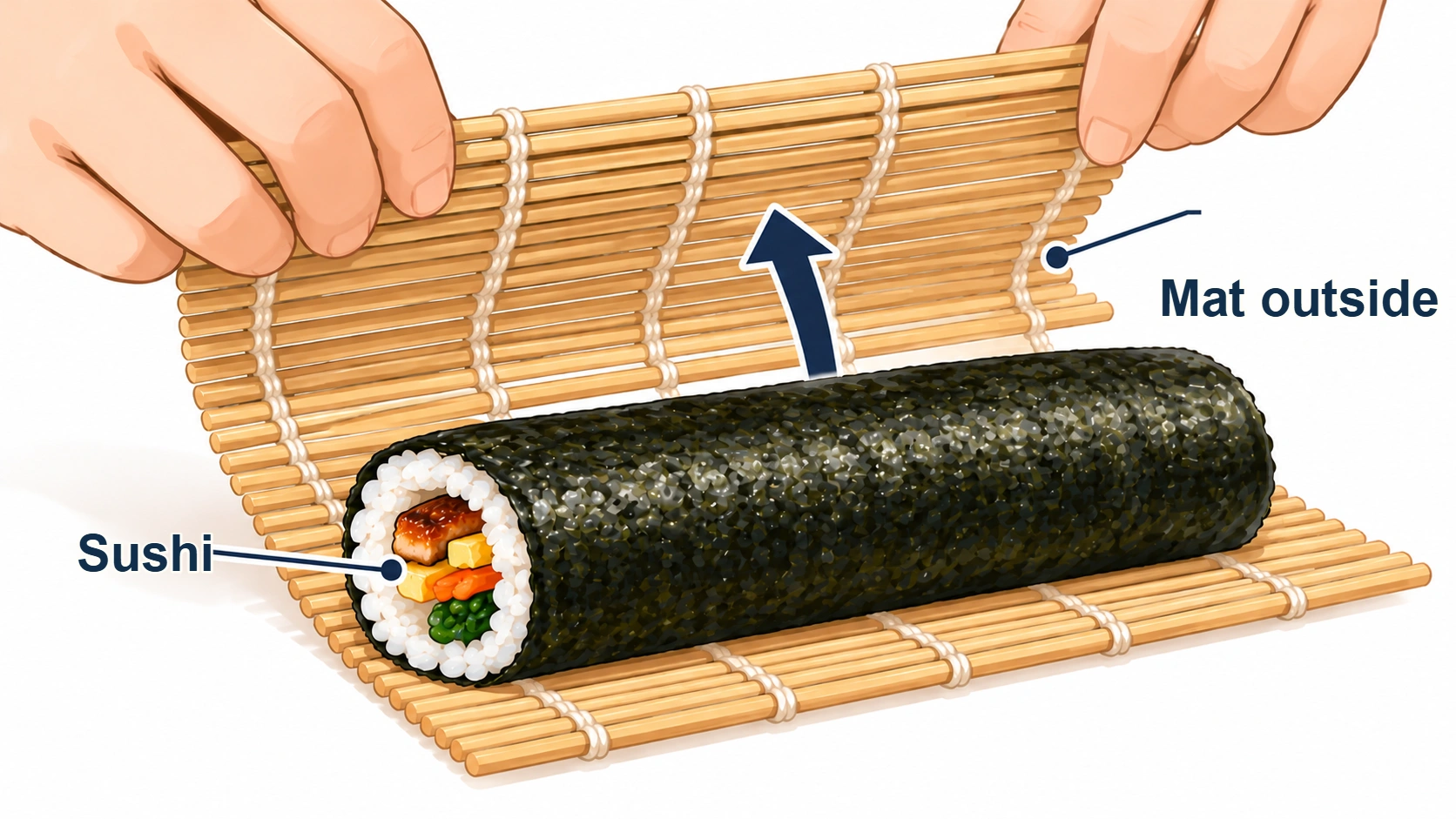
Figure 06 — Bamboo rolling mat lifted clear of the sushi.
Inside-out rolls require a separate assembly
An inside-out roll is an optional editorial adaptation, not the finished construction of either cited Kikkoman recipe. Cover the mat with food-grade cling film, spread a thin rice layer over nori, then flip it so rice faces the film and nori faces up. Put eel and cucumber on the nori and roll, peeling the mat and film away. Rice will form the exterior. Sesame or thin avocado slices are optional extras and are not included in the source ingredient quantities.
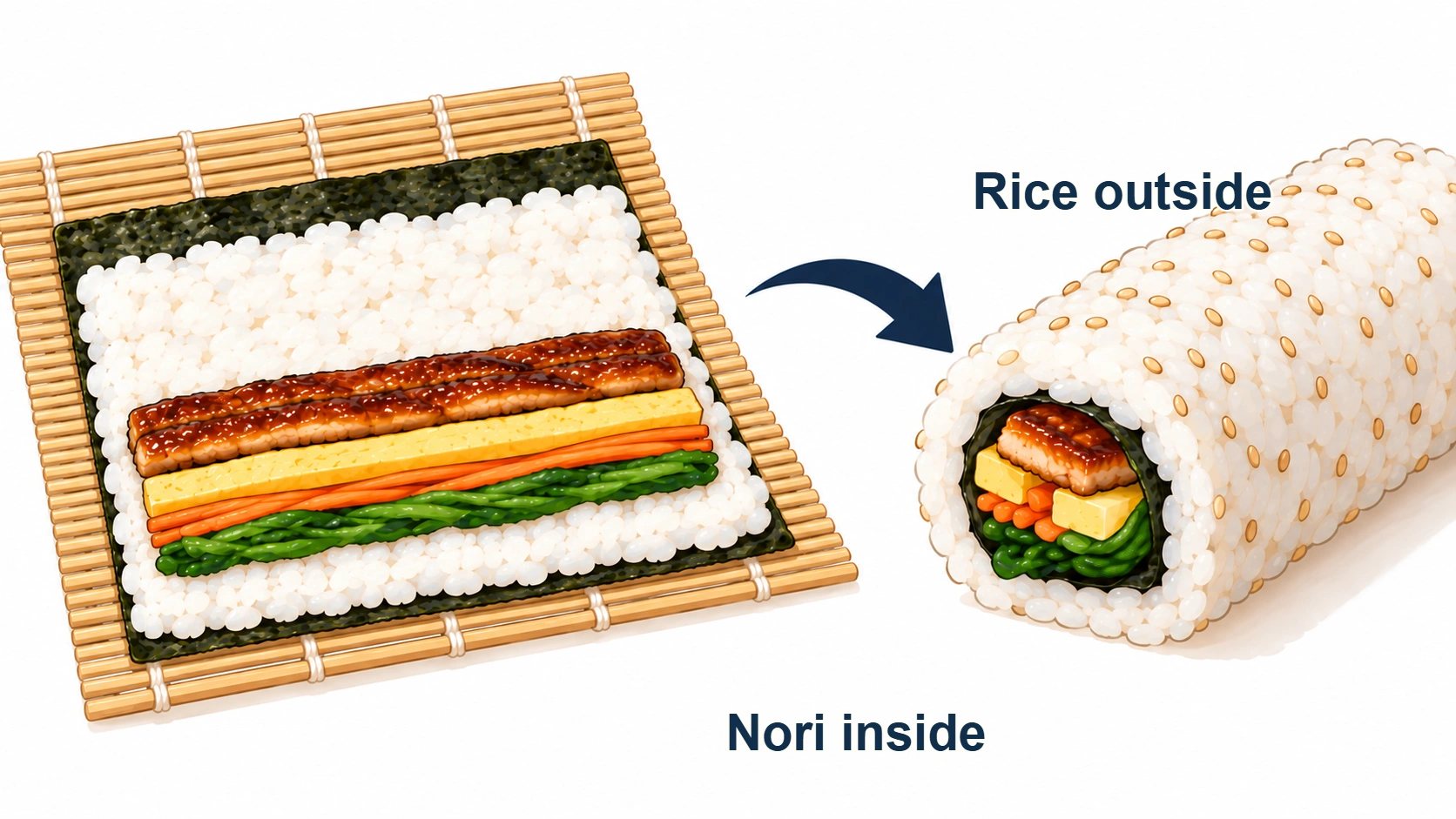
Figure 07 — Rice-outside and nori-inside roll assembly.
Slicing and serving
Cut the roll on a stable board
Put the roll on a clean, stable cutting board and use a sharp, clean knife without crushing the fillings. Kikkoman cuts each of its six smaller rolls into four pieces. In the 2019 thick-roll recipe, the roll rests for about five minutes before being cut into approximately eight pieces, wiping the knife with a damp paper towel between cuts. Those timings and counts belong to their respective sources, not every roll. Keep fingers clear of the blade. (Kikkoman: “Unagi Roll” original recipe (four servings); Kikkoman KCC: “Unakyu Roll” (23 January 2019; two rolls))
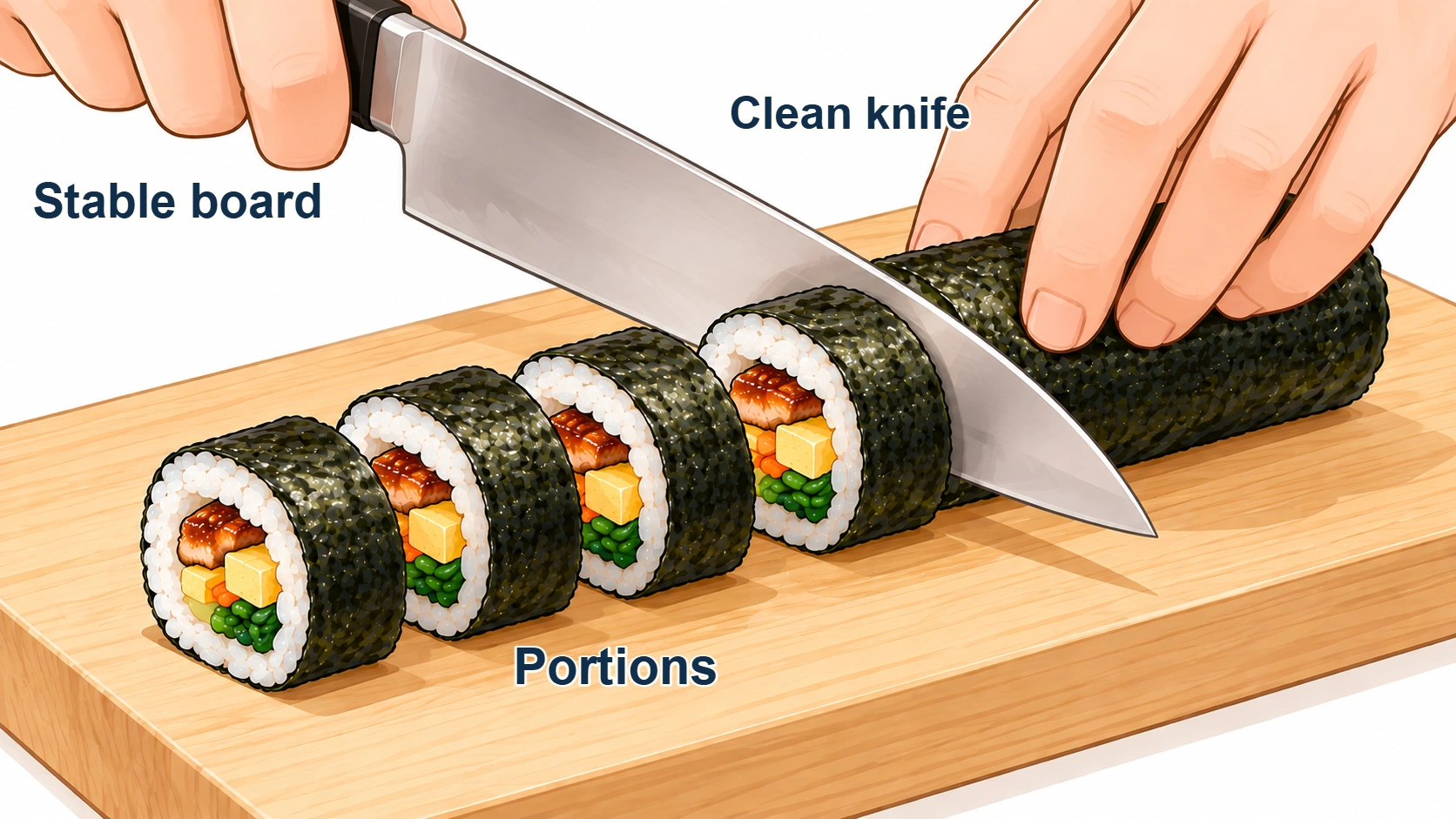
Figure 08 — Clean knife cutting rolls on a stable board.
Finish with only a little sauce
Kabayaki eel often already has a sweet-savory glaze. If adding tare, use only a narrow finishing line so the eel and vegetables remain visible; omitting extra sauce is also reasonable. Arrange the cut faces upright on a clean plate and serve promptly. Vinegared rice does not justify leaving prepared sushi at room temperature for long periods. Follow package directions and appropriate temperature control if it cannot be eaten immediately; this article assigns no universal storage period.
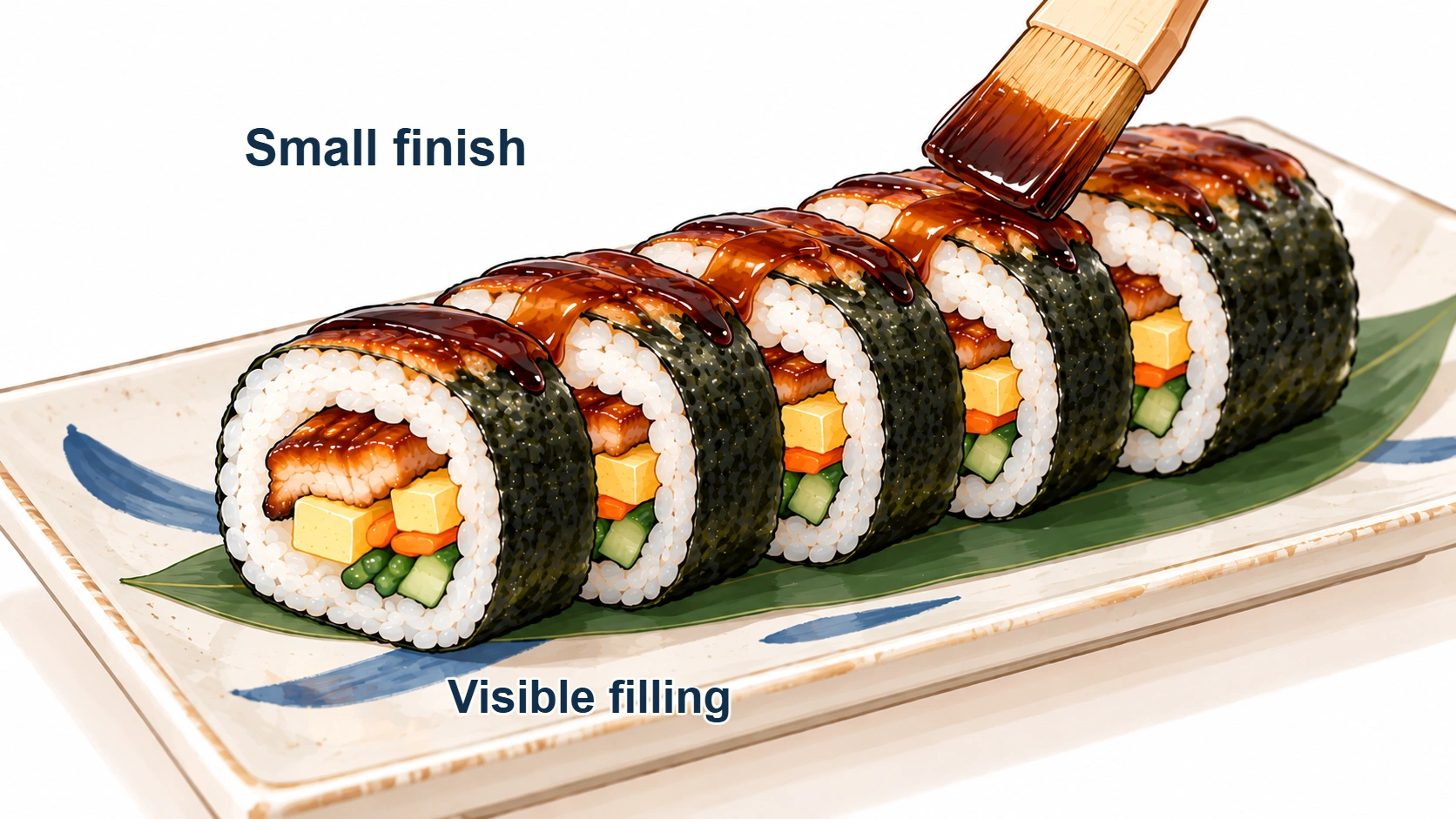
Figure 09 — Small line of tare on rolls with visible fillings.
Food safety still matters with cooked eel
Japan’s Ministry of Health, Labour and Welfare advises handwashing, cleaning utensils, avoiding cross-contamination from raw foods, adequate heating where required, and avoiding prolonged room-temperature storage. Its general benchmark for foods that require thorough cooking is 75°C at the centre for at least one minute; this is not a blanket reheating instruction for purchased, ready-cooked kabayaki. Follow the product label, wash produce and do not leave assembled rolls out for long. Cool and refrigerate leftovers promptly in clean containers; discard food if its safety is doubtful. (Japan MHLW: Six points for preventing food poisoning at home)
Primary sources and recipe credits
Sources checked: 31 October 2026. Original recipes and editorial adaptations are distinguished.
Related articles