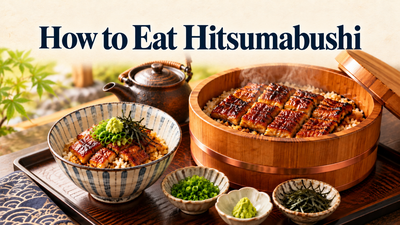
Leftover unagi sauce can be used to brush a thin finishing layer onto grilled food, toss a small amount with rice or vegetables, or dilute a separately measured portion for simmering. Its soy-sauce saltiness and sugar-derived sweetness and sheen arrive together. Adding it as though it were plain soy sauce or sugar can quickly make a dish too strongly seasoned.
First distinguish an unused commercial sauce, a homemade batch and sauce already used at the table. The ideas below are home-cooking adaptations, not ingredient quantities tested by the publishers of the cited recipes. For ingredients, allergens and instructions after opening, the label on your actual container takes precedence.
If a leftover sauce’s storage history or safety is uncertain, discard it without tasting. Do not return sauce that has touched raw meat or fish to the storage container; discard any of that sauce left over. If the product requires heating, follow its instructions before tasting. The images are editorial illustrations, not records of cooking or tasting.
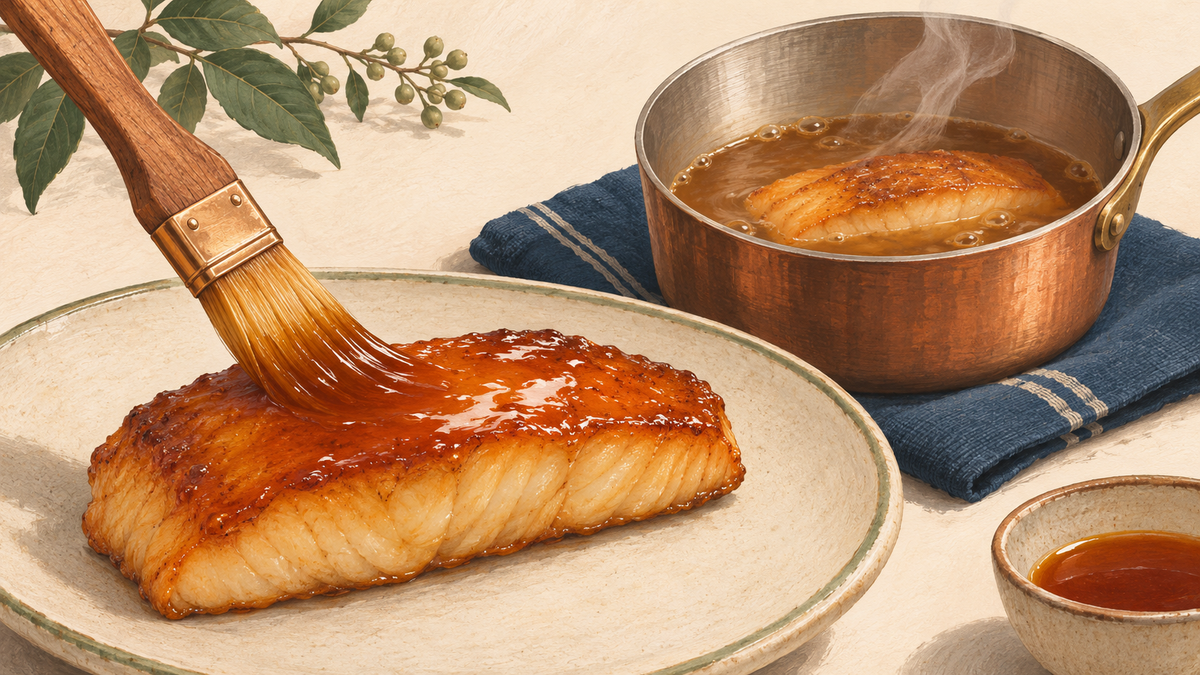
An editorial scene contrasts a brush applying a surface glaze to fish with fish cooking in a deeper liquid in a saucepan. The amounts are illustrative, not measured proportions.
A finishing glaze is not the same as simmering liquid
When brushed onto grilled fish, fried tofu or eggplant, sauce forms a thin coating on the surface. Simmering, by contrast, needs enough liquid in the pan to surround the ingredients. Using a concentrated sweet-salty glaze as the entire simmering liquid may result in excessive sweetness or saltiness. The two views show the difference in liquid depth, not a fixed formula.
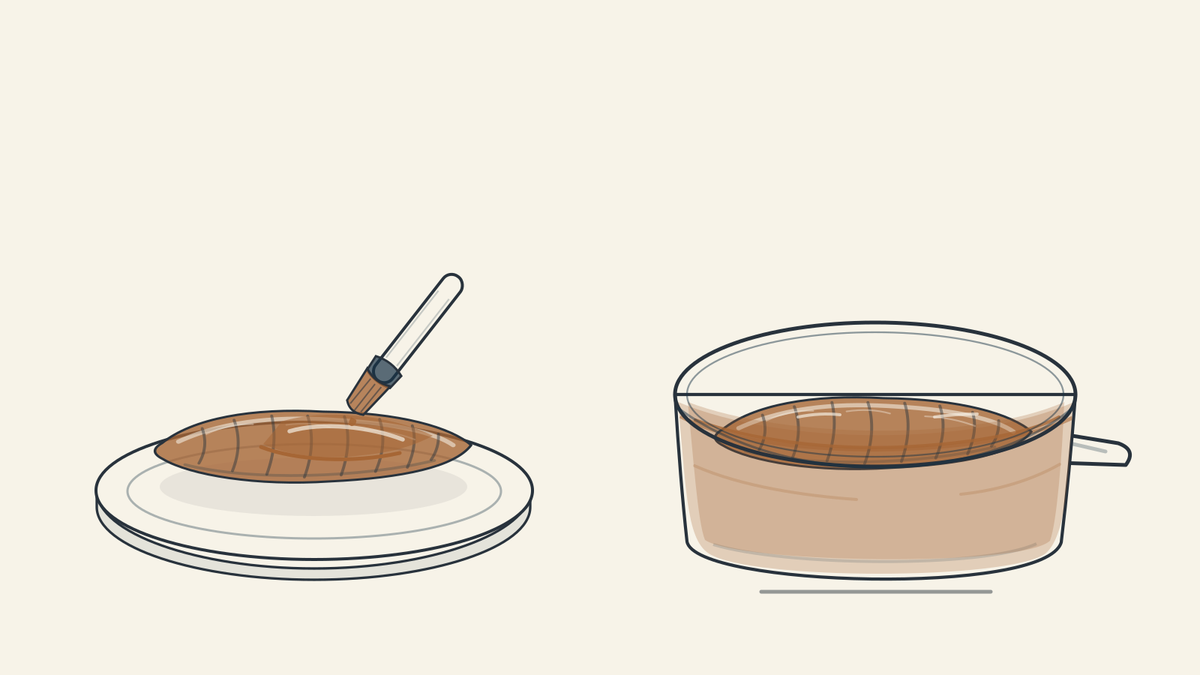
A thin surface glaze on the left versus food immersed in simmering liquid on the right. This diagram is a cooking schematic, not a recommended ratio.
Kikkoman's basic unagi-sauce recipe reduces mirin, sake, sugar and soy sauce (Kikkoman, basic unagi sauce: ingredients and reduction method). A separate commercial example, Nihon Shokken's 210 g unagi sauce, also lists starch syrup and eel extract (Nihon Shokken, 210 g unagi sauce: ingredients and nutrition declaration). Formulations therefore differ. Start with a little for glazing, and prepare additional cooking liquid when simmering.
Brush grilled rice balls lightly instead of soaking them
Shape the cooked rice and let its surface settle. Once the rice ball has developed some colour on a pan or grill, brush on a little sauce with a clean brush or spoon. Watch for scorching as you finish cooking. Soaking the rice deeply can leave the grains wet and the flavour overpowering; the heavily saturated example is what to avoid.
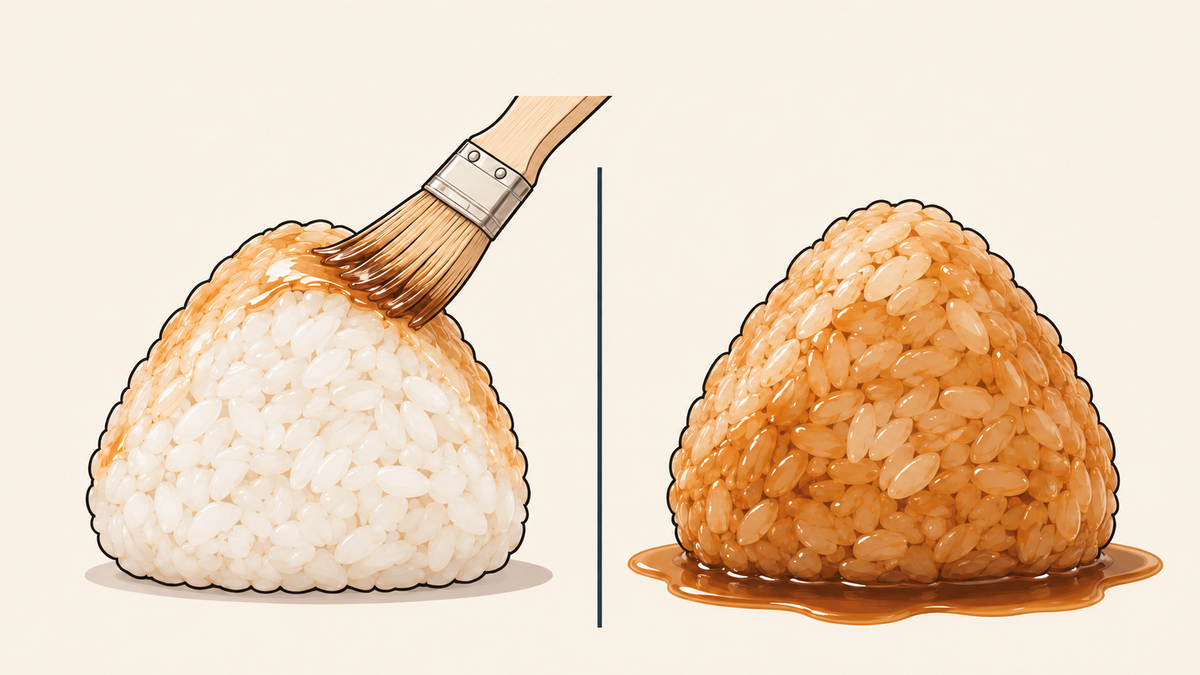
A light coating leaves individual rice grains visible; an overly saturated rice ball sits in a puddle. For grilling, adjust the surface rather than soaking the whole ball.
One Kikkoman grilled-rice-ball recipe brushes soy sauce onto one side, grills it and then coats the other side (Kikkoman, grilled rice balls: method of brushing soy sauce on the surface). It does not test an equal amount of sugary unagi sauce. The suggestion to use a thin coat here adapts the method, not its exact quantity.
Cook vegetables first, then add sauce near the end
Cook eggplant, cabbage or mushrooms until they are ready to eat and much of their surface moisture has evaporated. Add a small amount of sauce, toss briefly and avoid leaving a sweet pool sitting on the hot pan. Moist vegetables can dilute the taste, whereas continued reduction can intensify it. Adjust by the actual appearance and flavour.
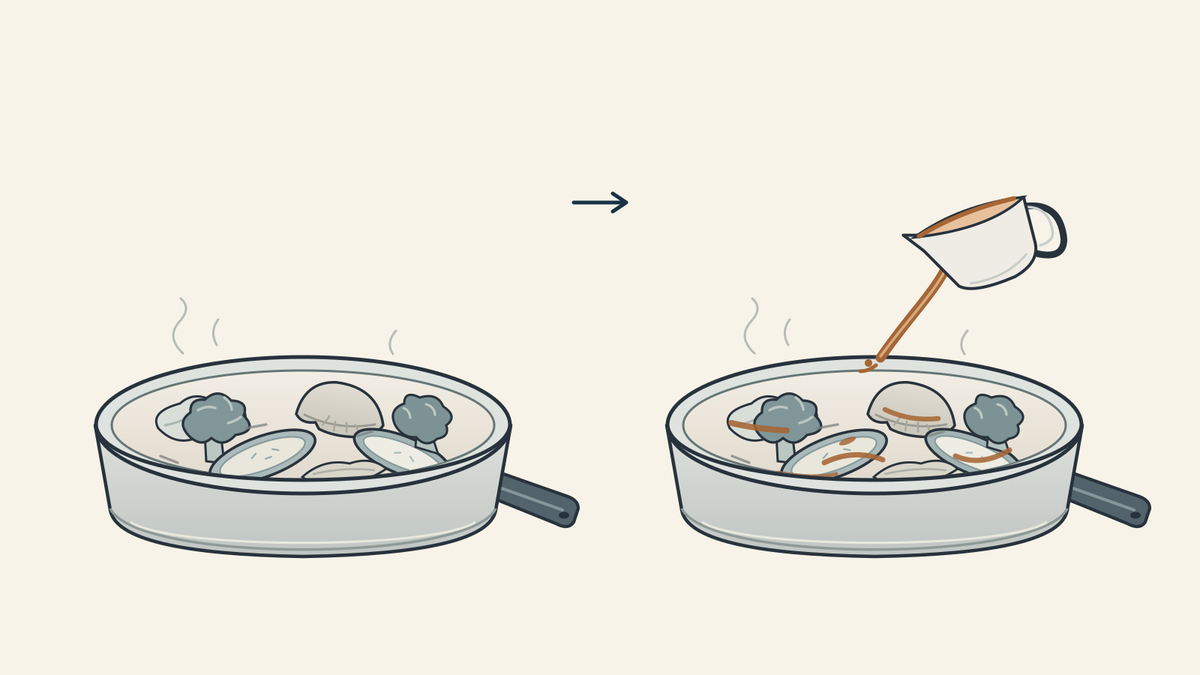
Vegetables are cooked first; a small splash of sauce is added at the finishing stage. The illustration does not prescribe prolonged reduction.
This is not a validated method for a particular bottled unagi sauce. In Kikkoman's chicken-and-seasonal-vegetable teriyaki recipe, the seasoning liquid is added after the ingredients have browned (Kikkoman, chicken and seasonal vegetables: finishing with seasoning). Its order of operations is a useful reference, but its quantities and cooking time do not transfer automatically to unagi sauce.
Taste before adding another salty seasoning
Commercial unagi sauces may already contain soy sauce and sugars. For a concrete example, Nihon Shokken's 210 g product lists soy sauce and syrups and declares 4.4 g of salt equivalent per 100 g (Nihon Shokken, 210 g unagi sauce: ingredients and nutrition declaration). That figure applies only to the listed product, not every brand or homemade sauce.
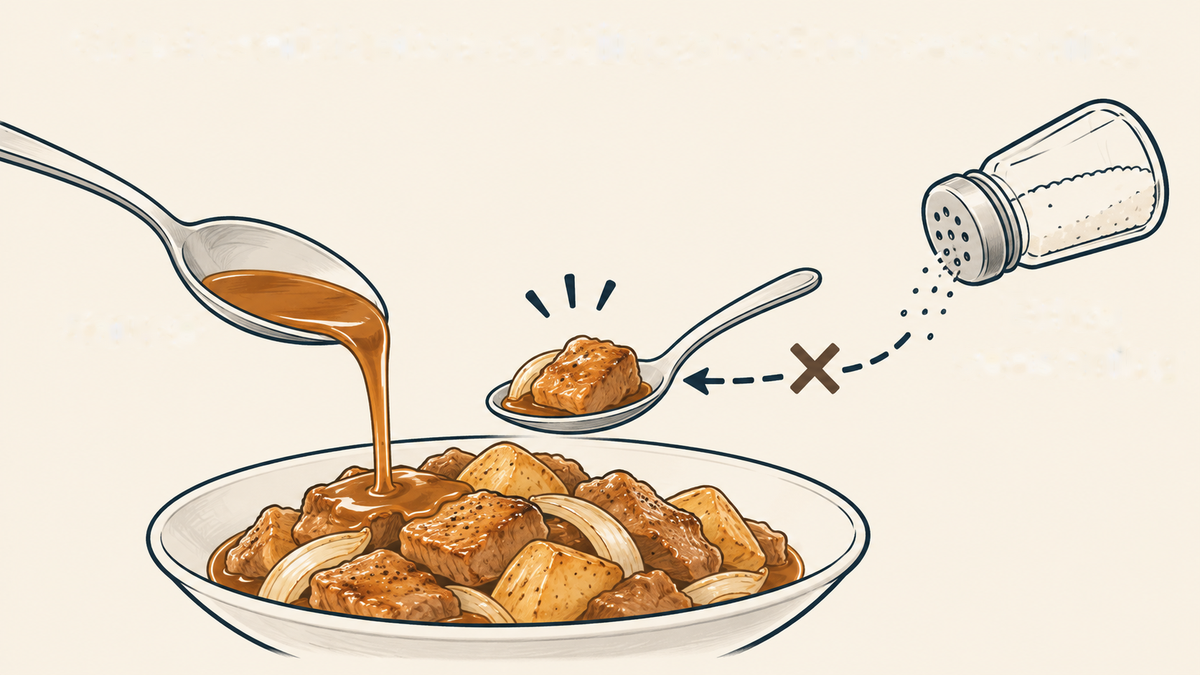
A tasting spoon interrupts the path between seasoning a dish with sauce and adding extra salt. Check the finished food before seasoning again.
Before adding salt, extra soy sauce or concentrated stock seasoning, taste the properly cooked dish using a clean spoon. Never taste raw-meat or raw-fish juices or food that has not been adequately cooked. For clean utensils, separation of raw foods and thorough cooking, consult Japan's Ministry of Health, Labour and Welfare guidance (Japan's Ministry of Health, Labour and Welfare: six household food-poisoning prevention points).
Dilute only the portion set aside for simmering
For simmered dishes, do not pour water or stock into the storage jar. Transfer unused sauce to a separate clean vessel, add water or a suitable low-salt cooking liquid gradually, then transfer the mixture to the pan before adding the ingredients. Foods release their own water and salt, so check the flavour during cooking and at the end. No universal dilution ratio is proposed.
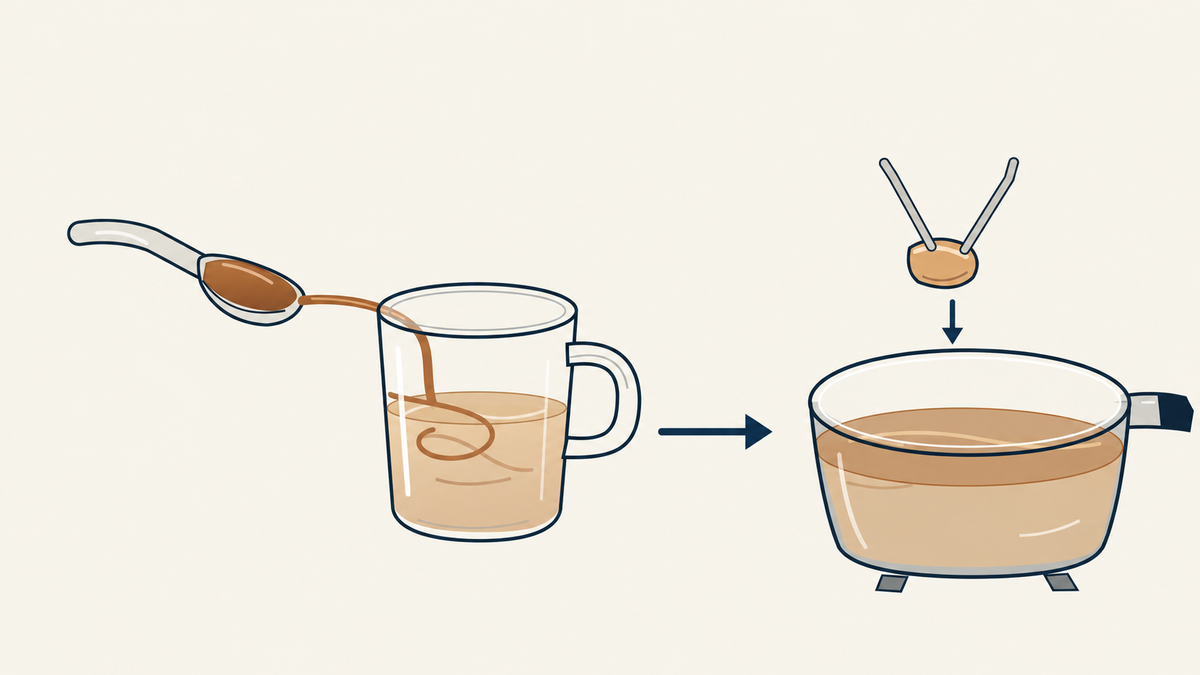
A small reserved portion of sauce joins cooking liquid before the mixture enters a saucepan and food is simmered. No fixed mixing ratio is implied.
Kikkoman's basic unagi sauce is deliberately reduced from mirin, sake, sugar and soy sauce (Kikkoman, basic unagi sauce: ingredients and reduction method). That explains why simmering calls for a separate decision about liquid volume; it does not establish a safe or ideal dilution ratio for every sauce. Cook meat and fish thoroughly as appropriate for the ingredients (Japan's Ministry of Health, Labour and Welfare: six household food-poisoning prevention points).
Never pour used dipping sauce back into storage
Do not return sauce from a dipping dish touched by serving chopsticks or food to a jar of unused sauce. Pour out only what you need into a separate dish in advance. Keep marinades that have touched raw meat or fish separate from untouched sauce as well.
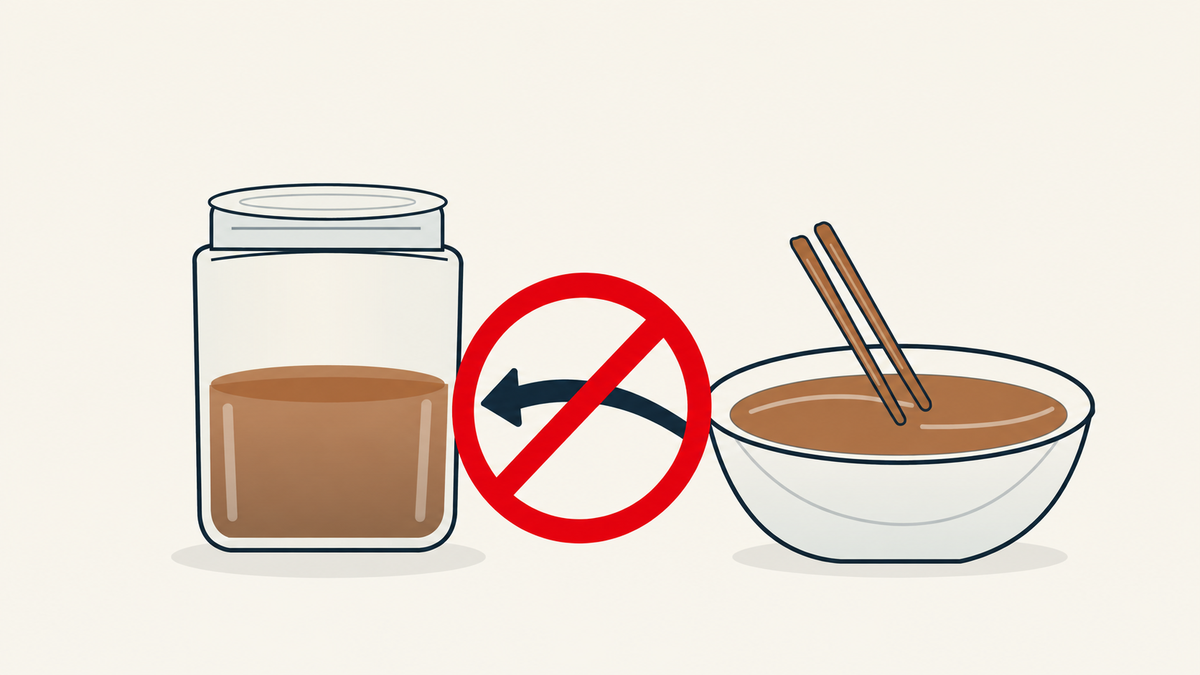
An unused, clean storage jar is kept apart from a dipping bowl contacted by used chopsticks; a blocked return arrow means the dip must not go back into the jar.
Japan's Consumer Affairs Agency explains that date marks assume unopened packaging stored as directed and do not guarantee safety after opening, even before the printed date (Japan's Consumer Affairs Agency: date-labeling guideline, Q&A on opened packs). Follow the product's post-opening directions; discard sauce whose handling history or condition is doubtful. The ministry's household food-safety guidance also applies (Japan's Ministry of Health, Labour and Welfare: six household food-poisoning prevention points). There is no defensible single storage duration for every leftover sauce.
Choose the next use according to the food
Think brush onto rice, toss through vegetables at the end, and use as a finishing glaze on cooked meat, fish or tofu. This lets the dish determine how much sauce is needed rather than the amount left in the bottle. Try a little in a separate portion first; avoid piling extra salt onto ingredients. Cook meat and fish safely for the particular food.
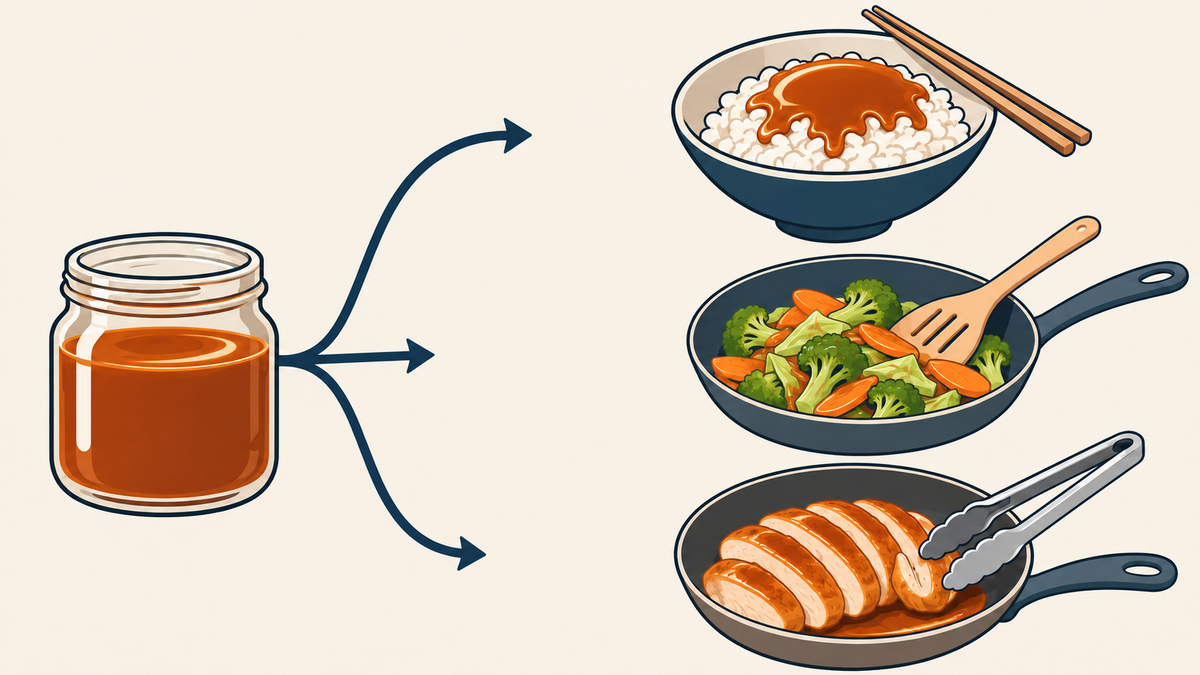
A single sauce jar branches toward rice, stir-fried vegetables and a cooked protein dish, each with a utensil suited to that application.
Kikkoman's chicken teriyaki recipe adds its mixed seasoning once the chicken has been cooked, then coats it to produce a glaze (Kikkoman, chicken teriyaki: adding seasoning after cooking). The recipe does not use unagi sauce. The choices below borrow an approach to cooking, not tested replacement measurements.
The most useful question is not simply what can I put leftover unagi sauce on? but does this dish need brushing, tossing or dilution? Use it as a convenient sweet-salty seasoning while checking the actual product label and food-handling conditions each time.
Primary sources consulted
Kikkoman, basic unagi sauce: ingredients and reduction method
Kikkoman, grilled rice balls: method of brushing soy sauce on the surface
Kikkoman, chicken and seasonal vegetables: finishing with seasoning
Nihon Shokken, 210 g unagi sauce: ingredients and nutrition declaration
Japan's Ministry of Health, Labour and Welfare: six household food-poisoning prevention points
Japan's Consumer Affairs Agency: date-labeling guideline, Q&A on opened packs
The cited recipes apply to the ingredients and seasonings specified by their publishers. Applying their methods to unagi sauce here is an editorial cooking suggestion, not a report of recipe trials or shelf-life testing.
Related articles