The liquid poured over hitsumabushi should complement the sauce already coating the grilled eel. At home, there are two useful, distinct approaches: warm diluted shirodashi (seasoned Japanese soup base), or extract unseasoned stock from kombu and bonito flakes. The first follows Kikkoman’s official hitsumabushi recipe, while the second follows Kikkoman’s kombu-and-bonito dashi guide. Do not combine their quantities as if they were one recipe.
This is an explanation of published home-cooking instructions, not a restaurant replica or a claim that the dishes were tested by this publication.
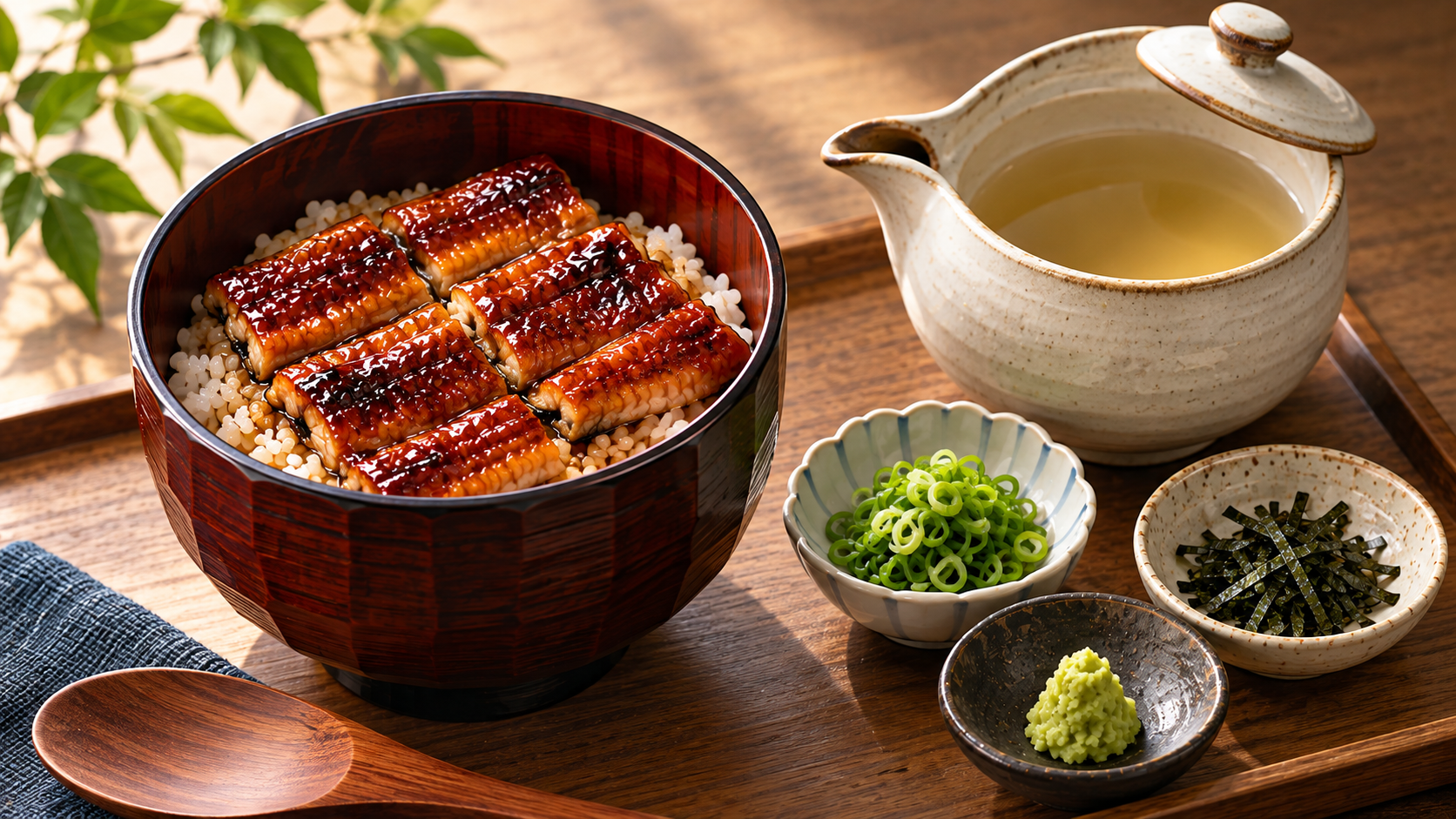
An editorial illustration, not a photograph of any named restaurant or commercial product.
What should you pour?
1. Distinguish dashi, tea and a separate soup
The word ochazuke does not mean that every hitsumabushi serving is finished with brewed tea. Aichi Prefecture’s hitsumabushi guide describes adding dashi at the third stage; the Nagoya-meshi guide describes dashi or tea. Dashi is stock extracted from ingredients such as kelp and dried bonito, whereas tea is brewed from tea leaves.
A clear soup served on the side, including kimosui (eel-liver soup), is a different course. Do not automatically pour a separately served soup over the rice without checking how the dish is intended to be served. See the explanation of kimosui and clear eel soup for that distinction.
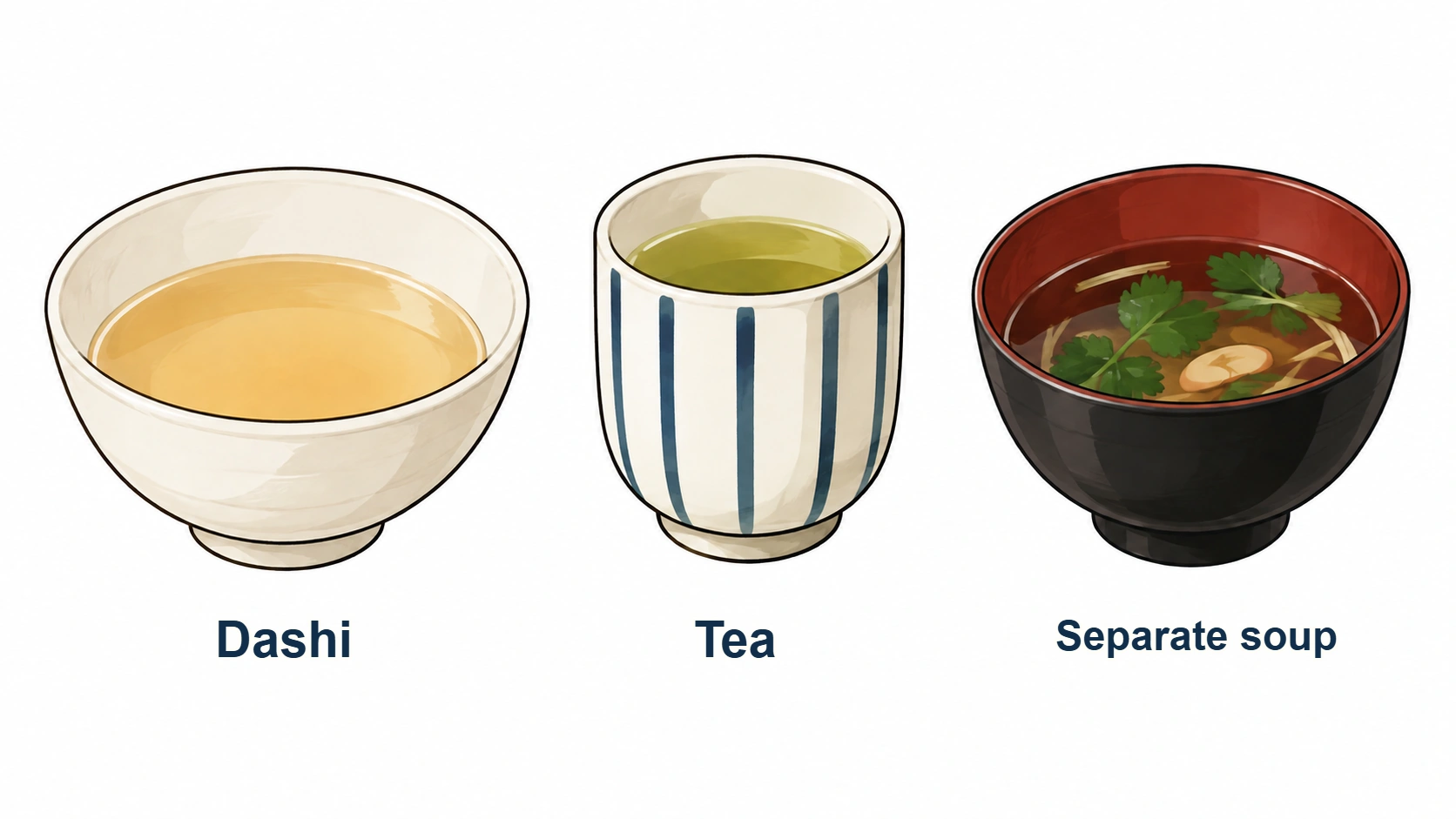
Dashi, tea and a separately served soup have different roles.
2. Choose the ingredients for the stock
For a homemade combined stock, use kombu, shaved bonito flakes and water. Kikkoman’s kombu-and-bonito dashi guide gives one specific recipe: 800 mL water, 10 g kombu and 10 g bonito flakes. It is a general method for making dashi, not a formula published specifically for hitsumabushi.
The same source also covers kombu-only stock and bonito stock. They have different aromas; “dashi” should therefore not be treated as a single standardized product. Keep the ingredients and method attached to the recipe you are using.
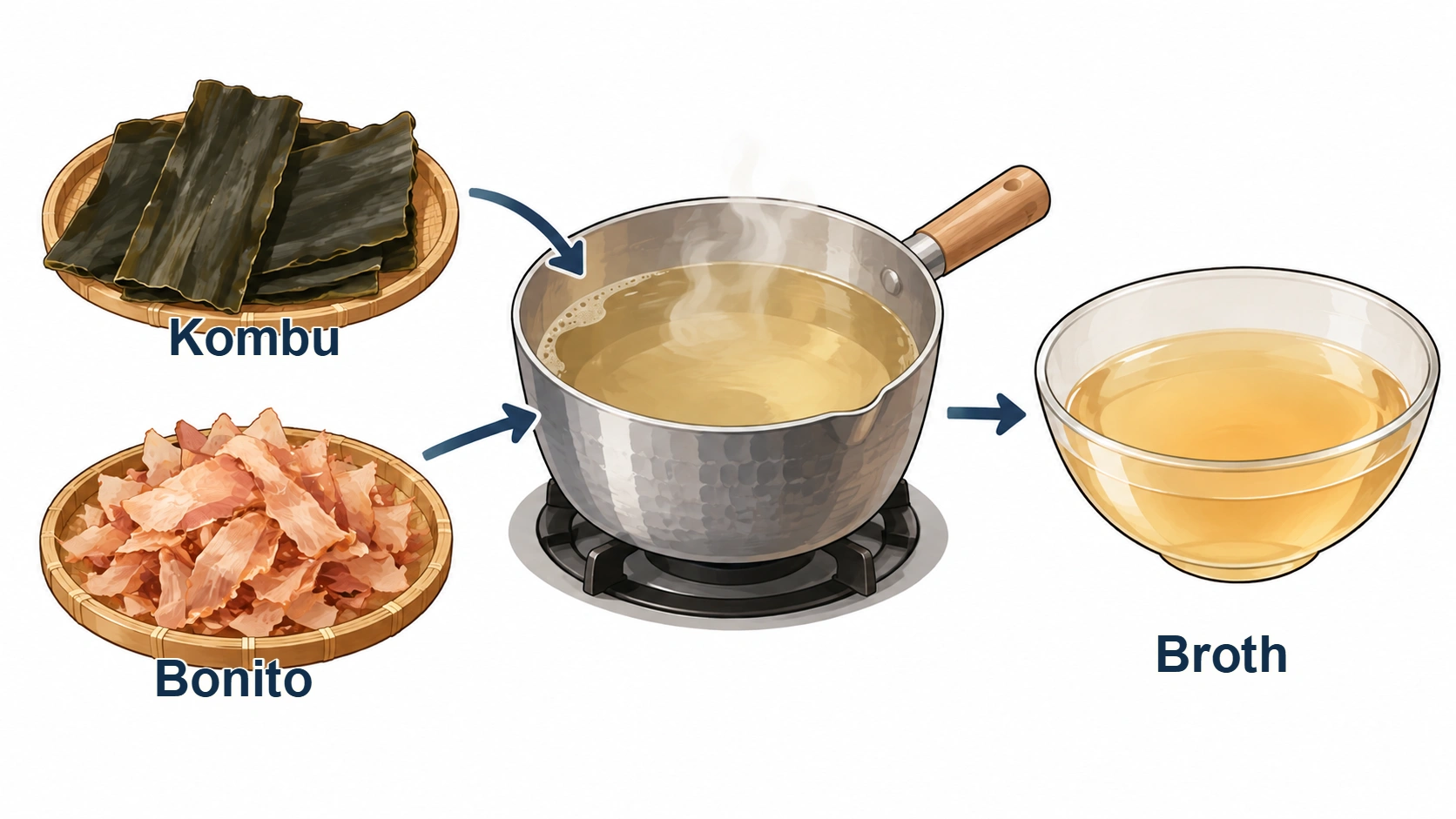
Kombu, bonito flakes and water are the components of the cited combined stock.
Making dashi at home
3. Follow the quantities of a specific recipe
For the quick route, Kikkoman’s official hitsumabushi recipe specifies, for two servings, 50 mL of the named product Kikkoman Umami Hirogaru Kaori Shirodashi and 350 mL water. Combine them in a saucepan and warm them. The ingredients total 400 mL before heating, but the source does not prescribe a volume for each bowl.
For stock made from raw ingredients, instead follow the 800 mL water / 10 g kombu / 10 g bonito method in Kikkoman’s kombu-and-bonito dashi guide. That is not a dilution ratio for concentrated shirodashi. Other brands and concentrations may need different dilution; consult the label rather than copying 50:350 blindly.
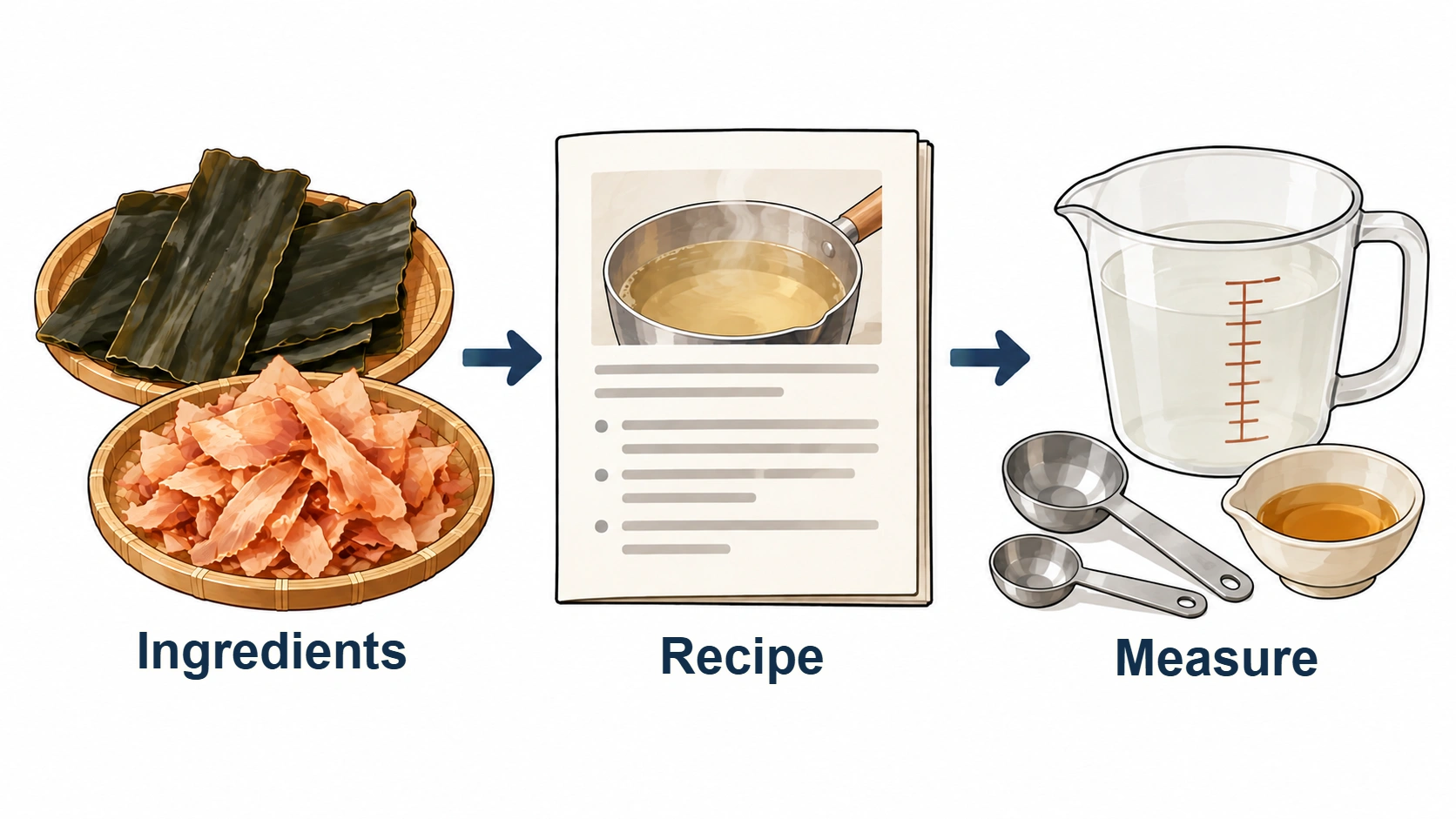
Keep quantities from the quick shirodashi recipe separate from those of extracted dashi.
4. Extract the stock, then strain it
According to Kikkoman’s kombu-and-bonito dashi guide, gently wipe the kombu with a wrung-out damp cloth and leave it in the water for at least 30 minutes. Heat over moderately low heat. Just before boiling, switch off the heat and remove the kombu. Only then add the bonito flakes; allow approximately 2 minutes, until the flakes begin to sink.
Strain through a paper-lined sieve into a clean container without squeezing the solids. The diagram depicts “extract → strain → clear stock” schematically; it does not override the source's actual order or instruct you to boil both ingredients together continuously.
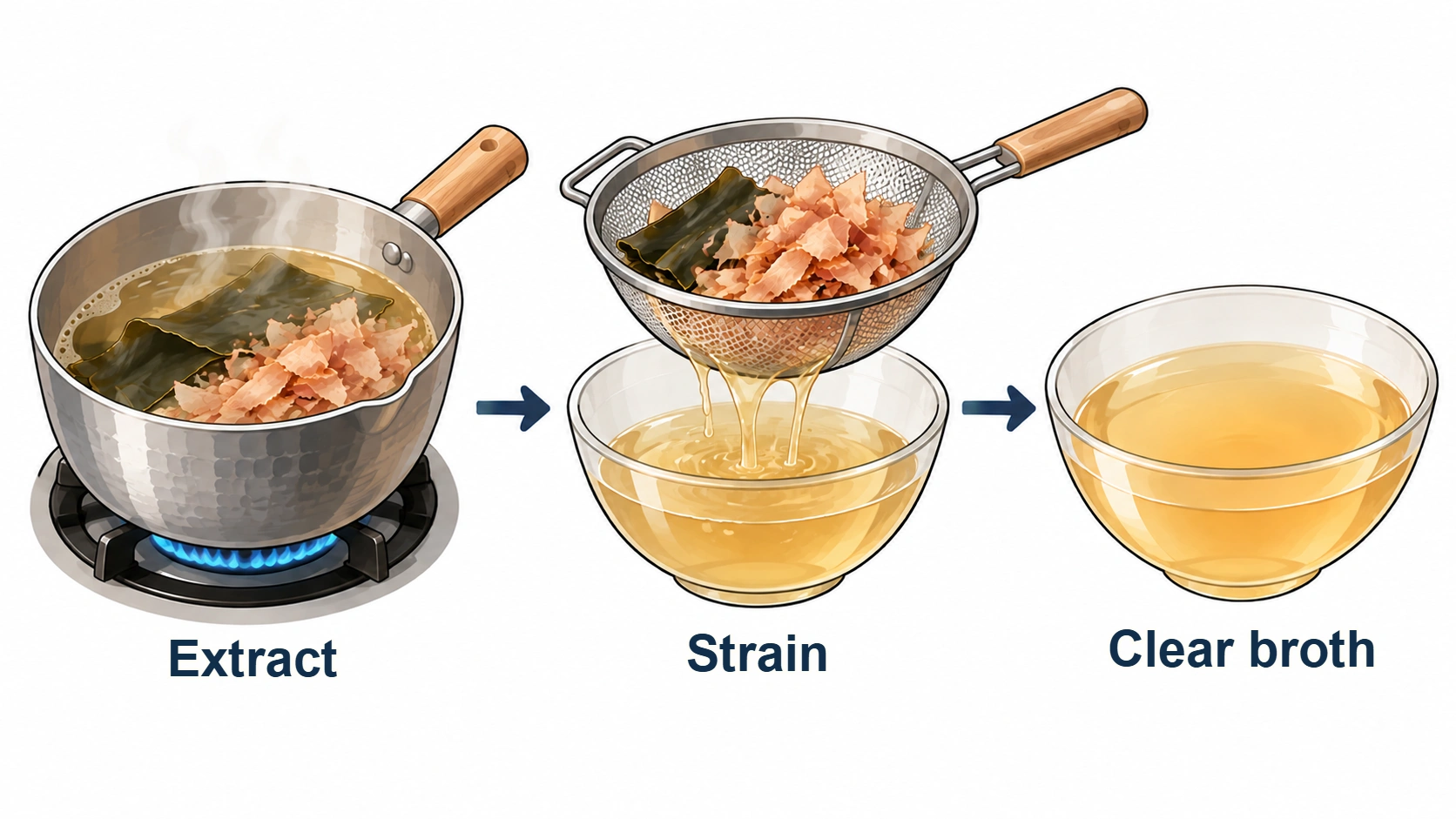
Conceptual diagram: the verified method removes kombu before adding bonito.
5. Season only after tasting
The basic homemade stock above contains no added soy sauce or salt in the extraction recipe. A practical household adjustment is to taste a little with the finished eel and rice before deciding whether seasoning is necessary. There is no evidence-based universal amount of extra salt or soy sauce specified in this source.
By contrast, the 50 mL shirodashi plus 350 mL water route already uses a seasoned product under Kikkoman’s official hitsumabushi recipe. Do not assume it requires extra seasoning. The resulting intensity also depends on the glaze and the product used.
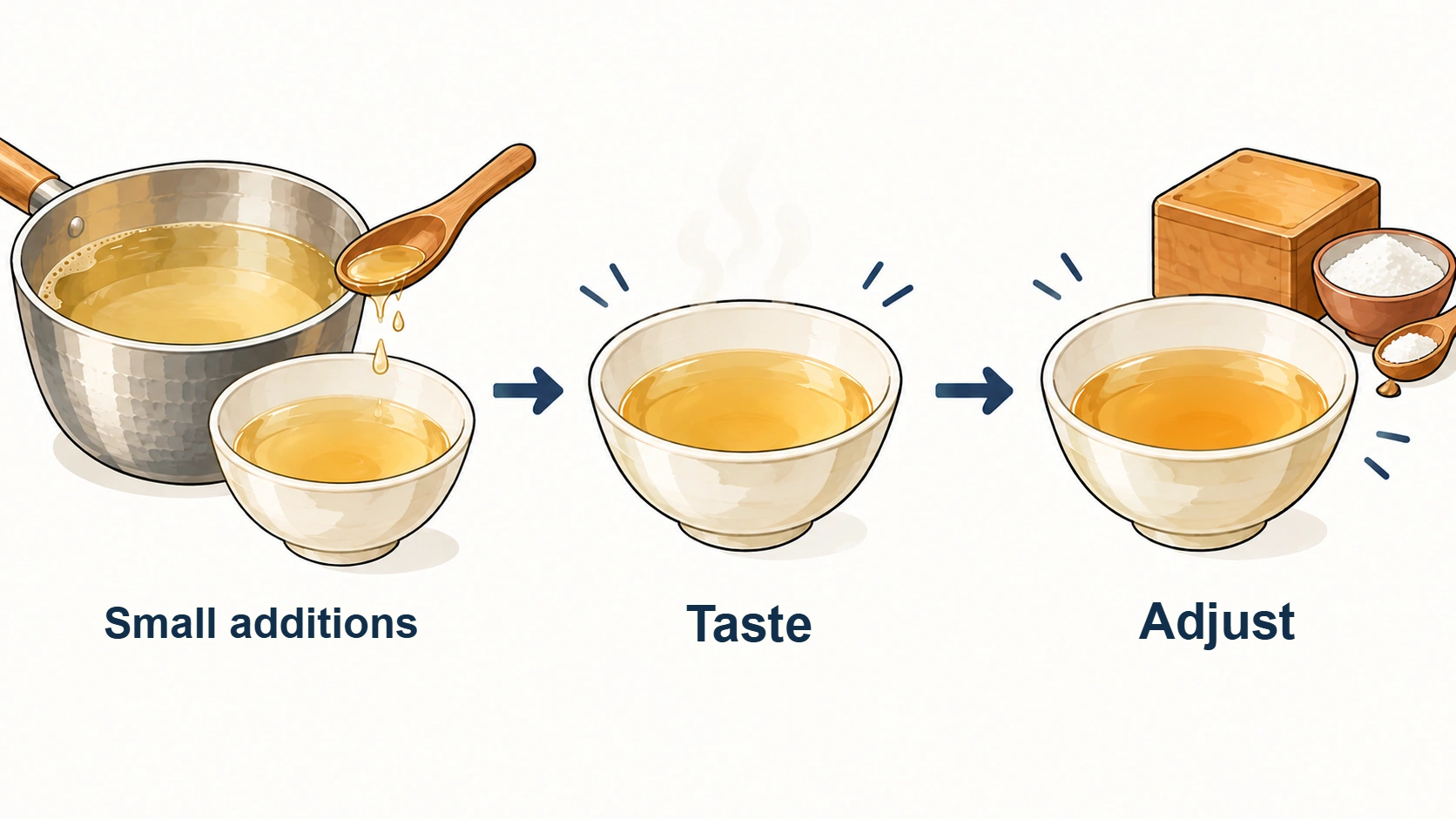
Taste the combined meal before adding extra seasoning.
Balancing the eel and rice
6. Account for the glaze already on the eel
Kabayaki eel has already been glazed with a sweet-and-savory sauce. In Kikkoman’s official hitsumabushi recipe, the eel is cut into 1 cm-wide pieces, placed over rice and drizzled with its accompanying sauce before portioning. Assessing the broth alone can therefore make the finished bowl more intensely seasoned than expected.
Judge the broth together with glazed eel and rice. The arrow in the illustration signifies how the glaze contributes flavor to the meal; it is not an instruction to transfer the glaze into a separate bowl of soup.
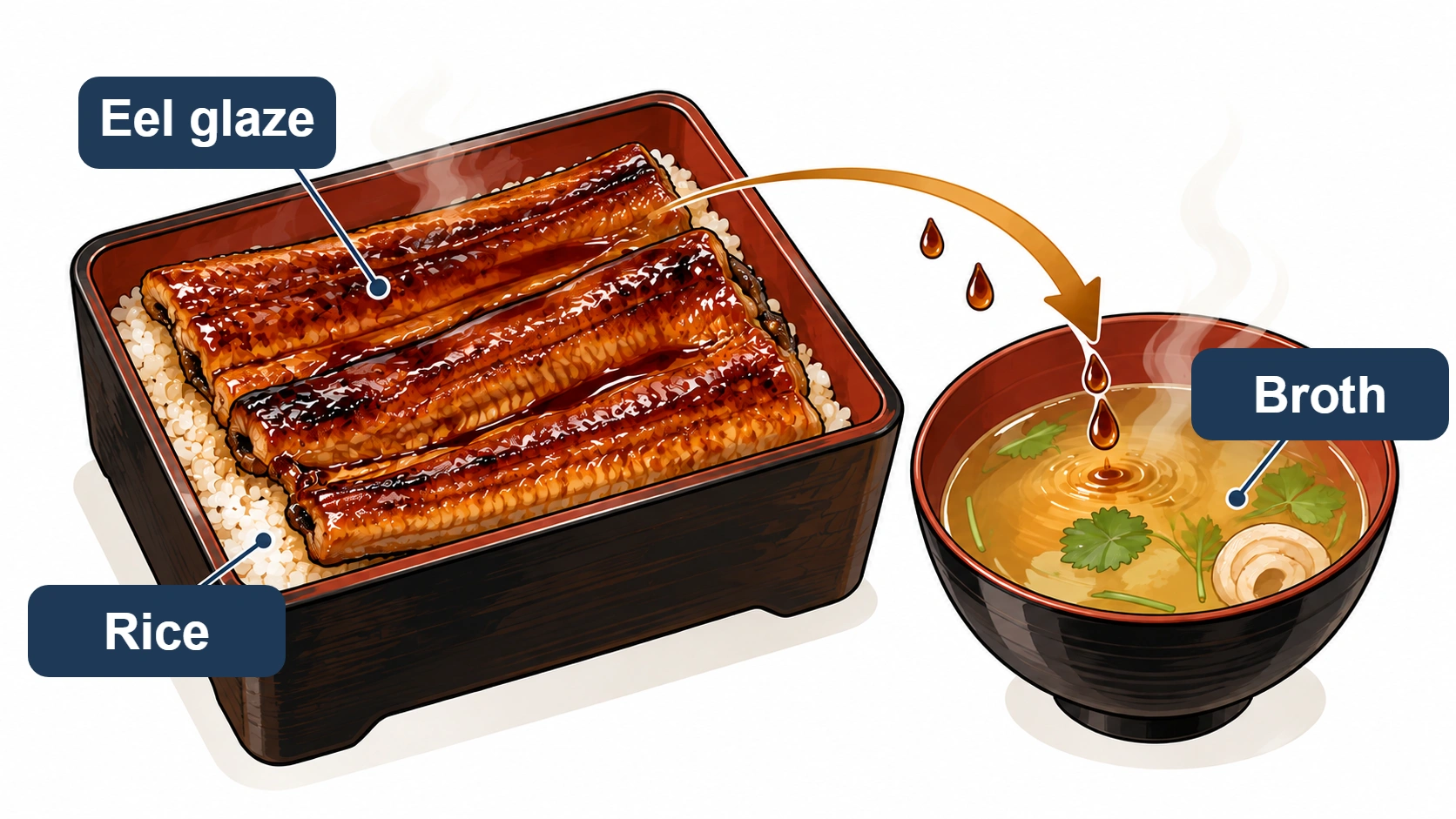
The eel glaze also influences the flavor of the broth-finished bowl.
7. Pour broth into an individual small bowl
Keep the stock in a pot or pouring vessel and add it to an individual small bowl, not the entire shared serving. Both Aichi Prefecture’s hitsumabushi guide and Kikkoman’s official hitsumabushi recipe describe dividing the eel rice into a bowl before adding dashi, so the rest stays ready for another style of eating.
The shirodashi recipe directs you to warm the liquid but supplies no exact pouring temperature or milliliters per individual bowl. Adding a little and topping up to preference is a serving suggestion, not a quoted recipe measurement. For the complete eating sequence, see the illustrated guide to eating hitsumabushi.
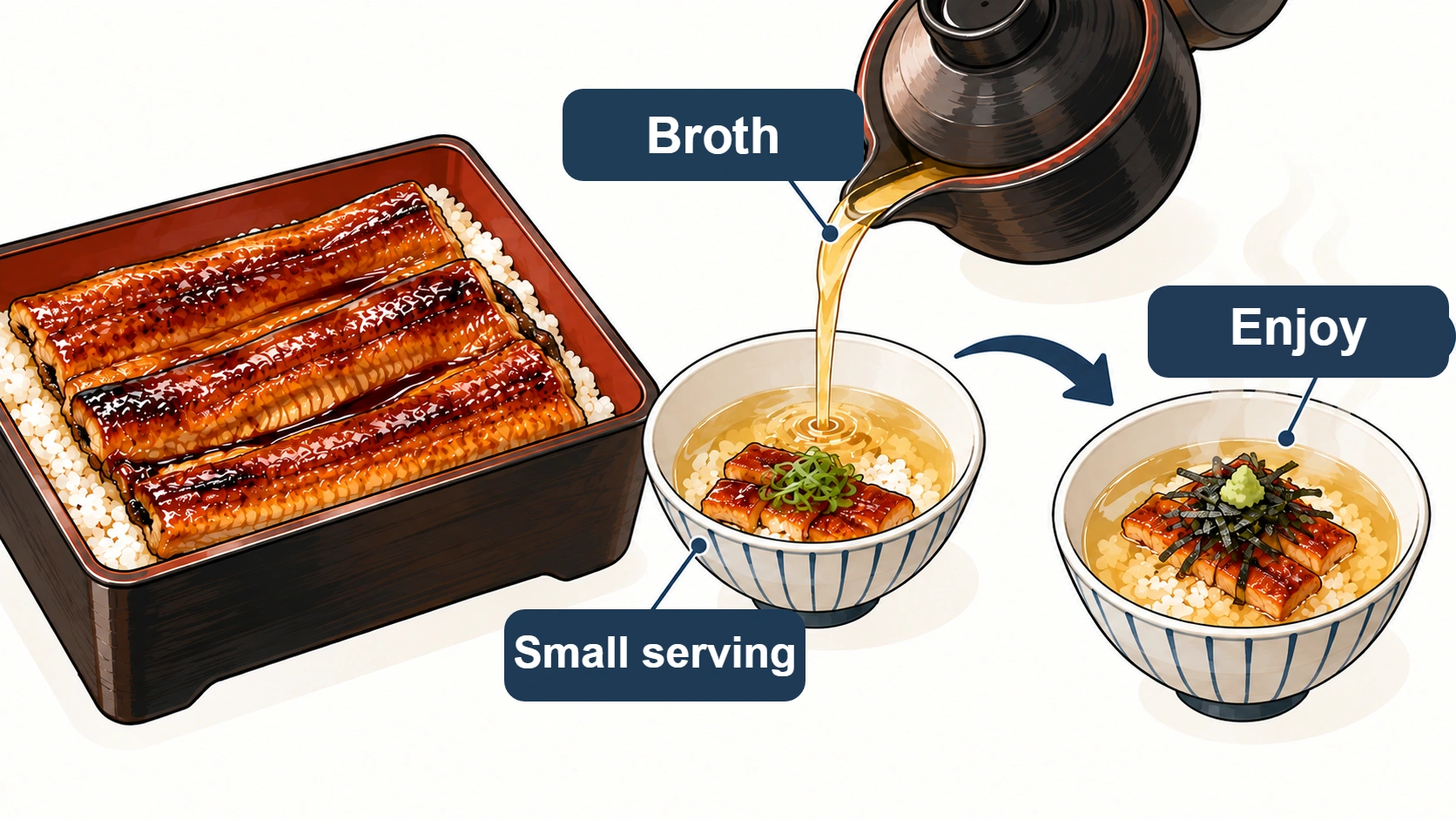
Pour into a smaller individual portion rather than soaking the entire shared dish.
Garnishes and serving
8. Serve garnishes separately
Place sliced scallions, shredded nori and prepared wasabi in small separate dishes, allowing each diner to choose. Kikkoman’s official hitsumabushi recipe also lists toasted white sesame and powdered sansho pepper in optional amounts; it gives no fixed gram quantities for those garnishes.
Trying a small addition in the individual bowl makes it easier to notice the stock's aroma before the stronger garnishes dominate. This is flexible home-serving advice, not a rule binding all Japanese restaurants.
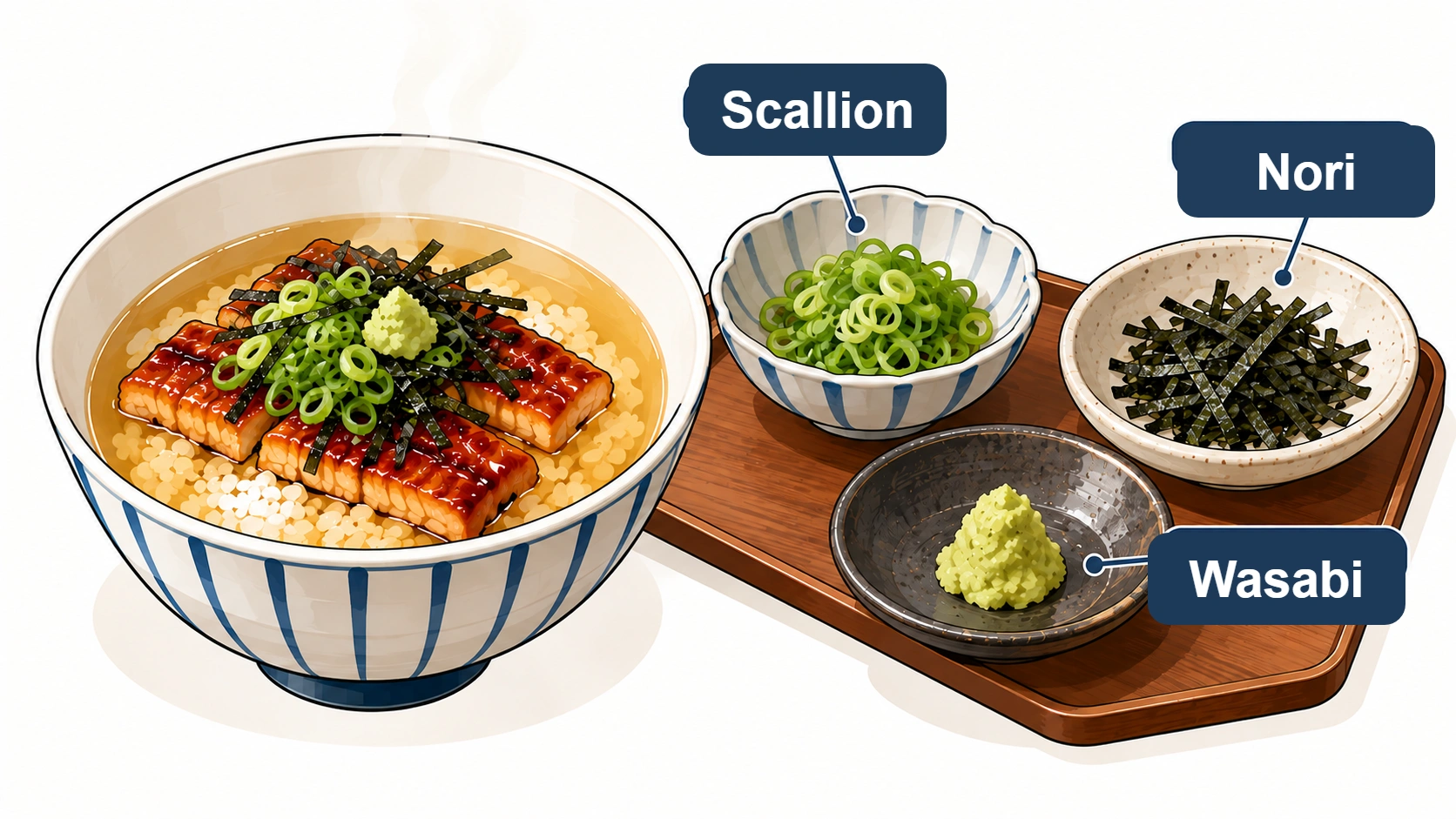
Optional garnishes can be added one at a time.
9. Keep the plain, garnished and broth stages distinct
The same eel rice can be appreciated plain, with garnishes, then with broth. This progression is described by both Aichi Prefecture’s hitsumabushi guide and the publicly available Japan Institute of Sports Sciences’ published hitsumabushi recipe. Here the point is not to repeat a full eating guide, but to see what changes when the pouring liquid is added.
The practical choice is between warming the specified shirodashi at its published dilution and making kombu–bonito stock by the published extraction method. Keep separately served soup distinct, and taste the finished bowl with the eel glaze taken into account.
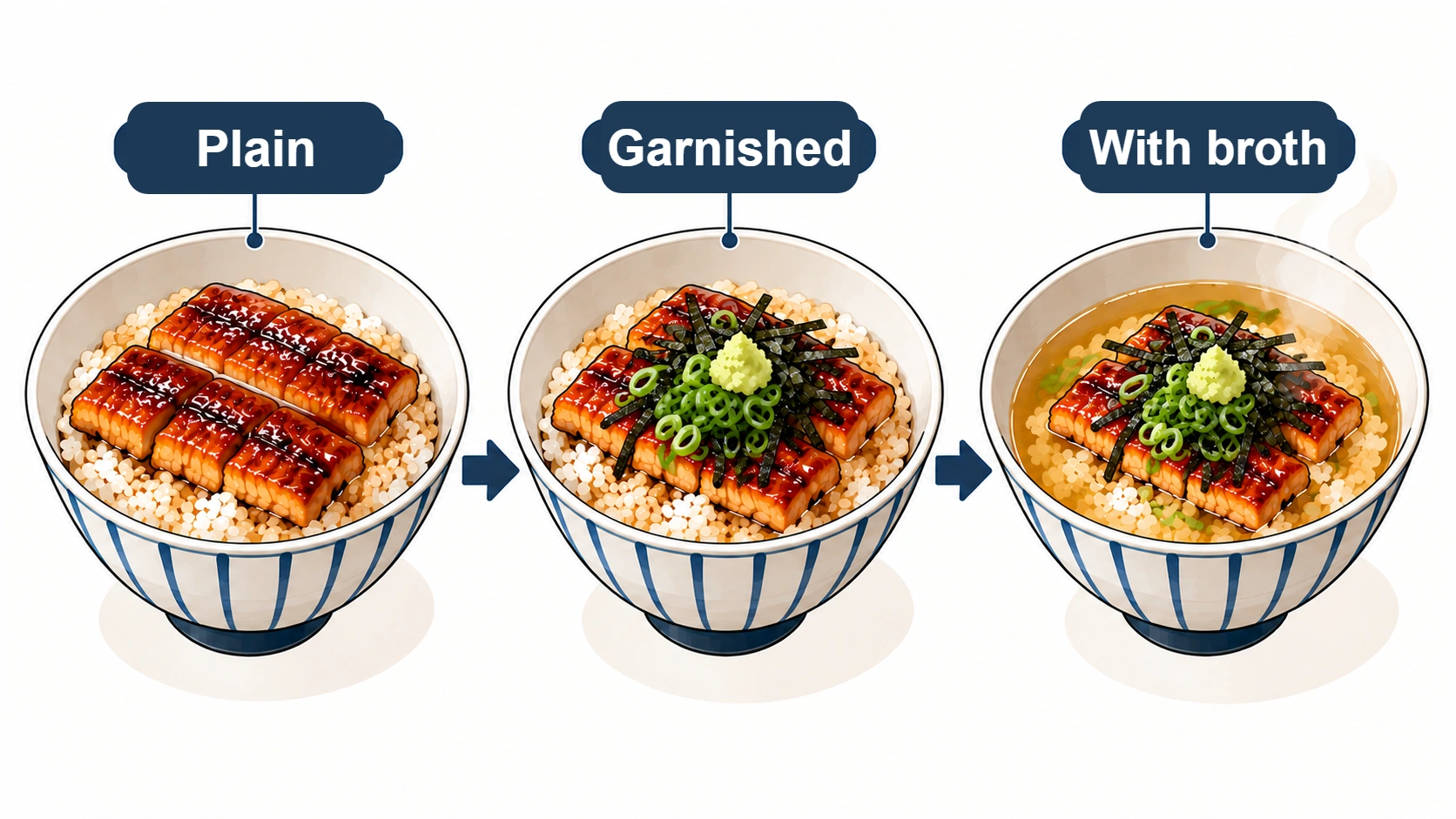
Compare the same eel rice plain, garnished and with broth.
Sources consulted
Kikkoman’s official hitsumabushi recipe — Confirms 50 mL of its specified shirodashi and 350 mL water for two, plus the warming and serving instructions.
Kikkoman’s kombu-and-bonito dashi guide — Confirms 10 g each of kombu and bonito, 800 mL water, at least 30 minutes soaking and roughly 2 minutes for the flakes.
Aichi Prefecture’s hitsumabushi guide — Documents portioning, garnishing and pouring dashi over hitsumabushi.
the Nagoya-meshi guide — Explicitly mentions dashi or tea as the liquid for the third portion.
Japan Institute of Sports Sciences’ published hitsumabushi recipe — Public recipe dated August 2009 describing dashi served with portioned eel rice.
Further reading
Related articles