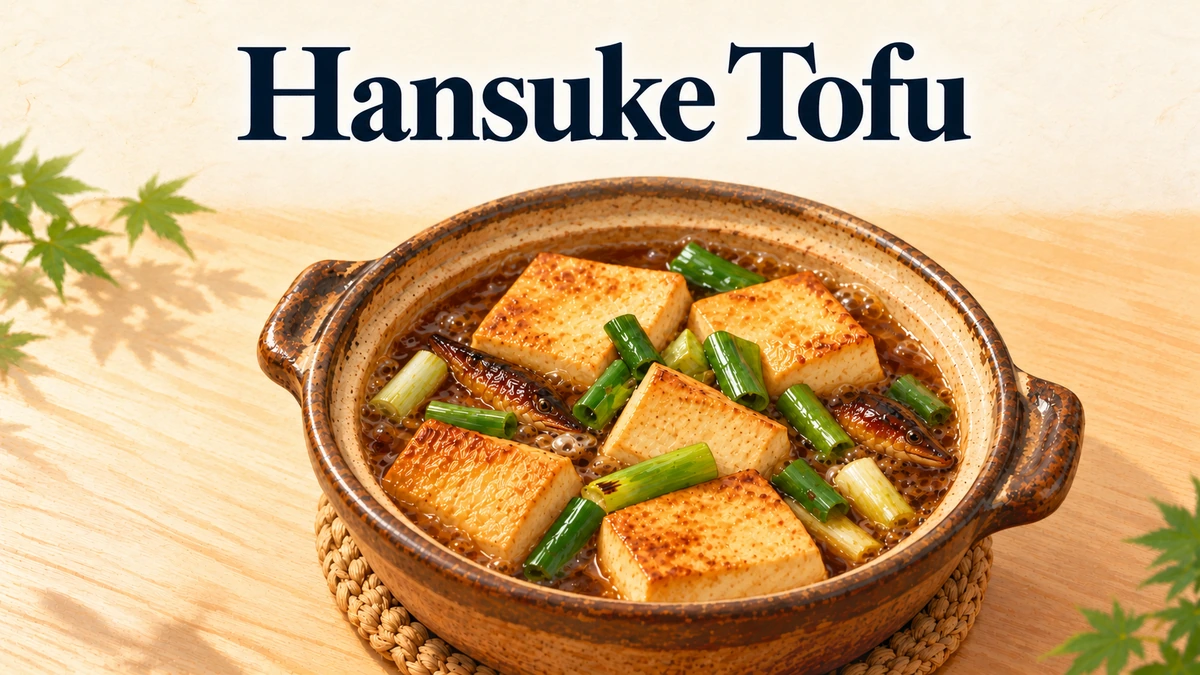
Choosing unagi kushiyaki, or grilled eel skewers, becomes easier when you separate three questions: Which part is it? How is it seasoned? How many skewers come with an order? Decide whether you want eel flesh or would also like to try head, fin or offal skewers. Then use the menu as a starting point for a conversation, rather than assuming every unfamiliar name has one fixed meaning.
How eel skewers differ from a kabayaki fillet
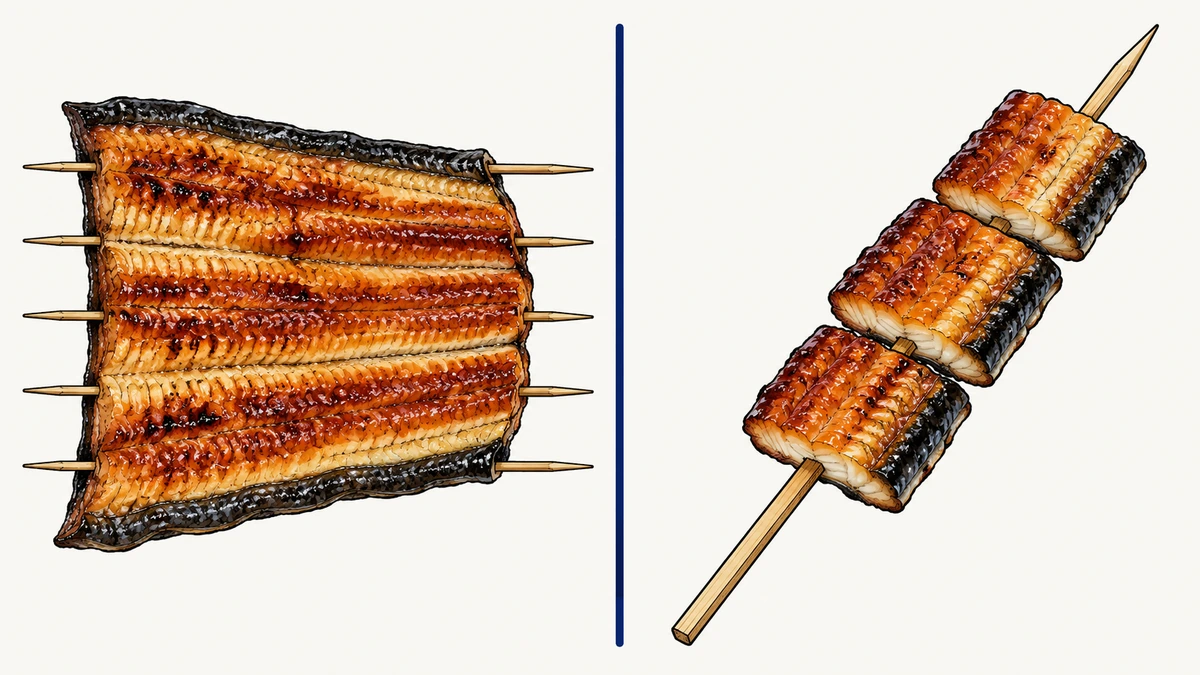
Kabayaki also involves skewers: the Hamanako fish-farming cooperative describes opening the eel, skewering it and grilling it with sauce. A skewer holding a fillet for cooking does not, by itself, identify a separate cut.
This guide concerns menus that list individual grilled skewers by part or preparation. The useful question is what each named skewer contains, rather than simply whether the eel was cooked on a stick.
Decode kabuto, hire, kimo and reba
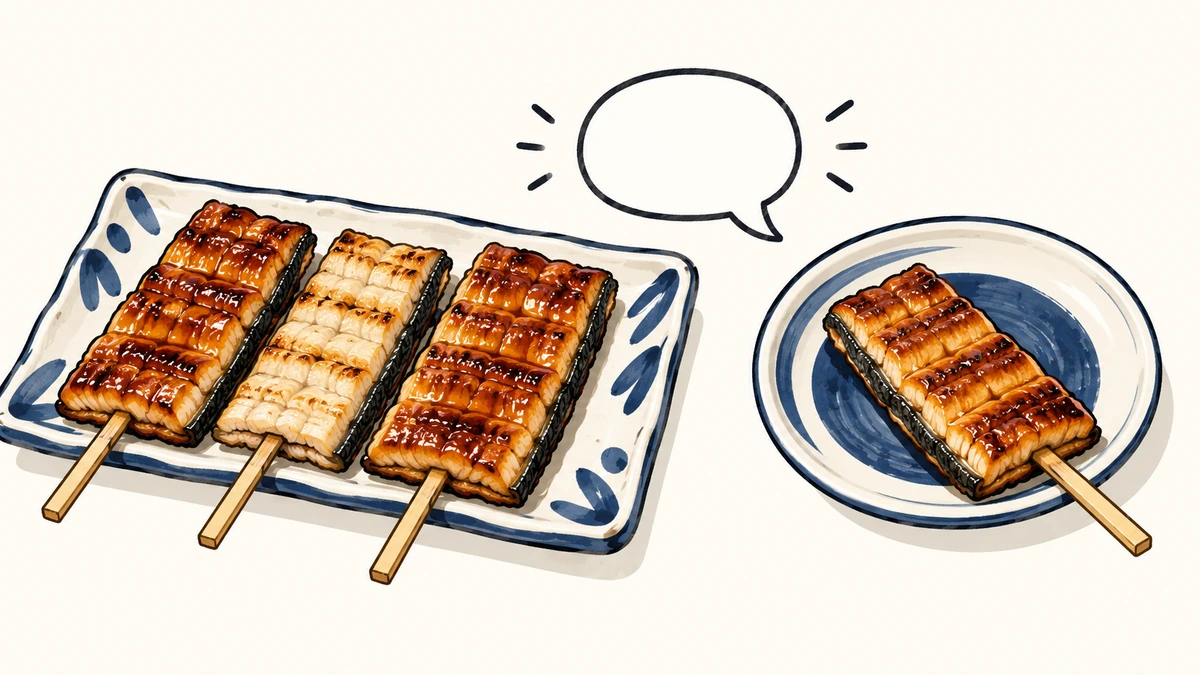
Here is one restaurant’s example, not a nationwide glossary. Asakusa Unatetsu’s five-skewer eel set identifies Kabuto/かぶと as head, Kimo/きも as guts, Hire/ひれ as fins, Tanjaku as short cut, and Reba/レバー as liver.
Notice that kimo and reba are separate items. Translating every occurrence of kimo as liver would lose that distinction. If you want to avoid offal, say so explicitly. Asking only for no liver may not communicate that preference. Pointing to a particular menu entry also helps staff understand which skewer you are asking about.
What is kurikara?
Treat kurikara as a name to check against the restaurant’s explanation, not a guaranteed anatomical label. Unamasa’s menu identifies its kurikara as belly flesh and its kushimaki as flesh from the back. The same menu lists 黒短尺, 白短尺 and 塩短尺 as skewers prepared as kabayaki, shirayaki and salt-grilled eel, respectively. These are useful examples of how names can describe either a cut or a preparation.
At another restaurant, ask what its kurikara contains and how it is served. Do not carry over assumptions about portion size, cutting or seasoning from one shop to the next. If you want a flesh skewer rather than offal, ask staff to identify that option before choosing a name you recognize.
Choose an assortment or individual skewers
An assortment can be a useful starting point if its contents appeal to you. Check the list before ordering, especially if you prefer not to eat heads or offal. Also check whether it is an eel-only assortment: Asakusa Unatetsu separately lists mixed sets that include chicken and vegetables.
Individual items give you a way to express preferences, but à la carte does not necessarily mean one skewer at a time. Kurikara’s website specifies a minimum quantity per variety for individual takeaway orders. That condition appears in its takeaway section; it should not be applied to dining in or to other restaurants.
For a first order, one approach is to identify a flesh skewer, then ask about adding another part that interests you. This is an ordering suggestion, not a fixed combination every shop offers. Confirm what is available, the minimum quantity and whether any substitutions are possible before ordering the set.
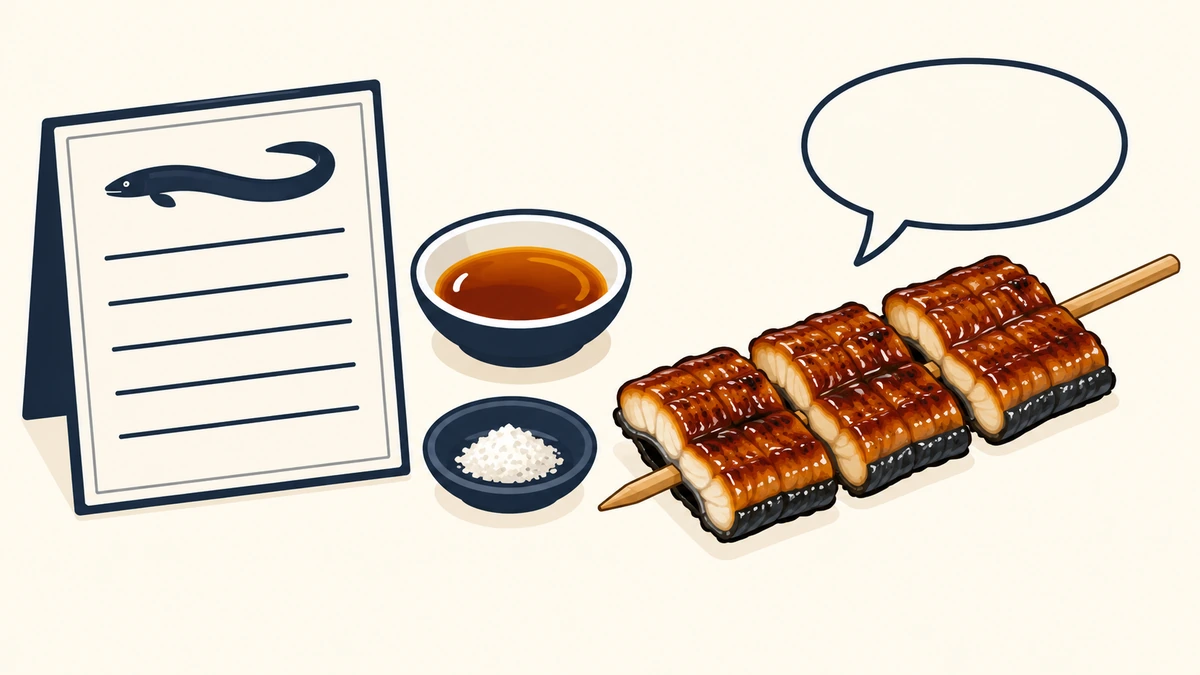
Useful questions to show staff
身の串はどれですか。 — Which skewers are eel flesh?
盛り合わせには何が入りますか。 — What is in the assortment?
内臓の入っていないものはありますか。 — Do you have any without offal?
この串は何本から注文できますか。 — What is the minimum order for this skewer?
味付けは選べますか。 — Can I choose the seasoning?
If you cannot eat a particular ingredient, ask about the sauce and any ingredients wrapped with the eel as well as the cut itself.
Frequently asked questions
- Is kurikara always belly meat?
- The belly description above belongs to Unamasa’s menu. Check the explanation at the restaurant where you are ordering rather than treating that example as a universal definition.
- Are kimo and reba the same?
- Not on the Asakusa Unatetsu menu used here, which distinguishes guts from liver. Keep the two names separate when asking staff about an order.
- Do I need to order an assortment on my first visit?
- No. Choose an assortment if you want its listed parts; otherwise ask about individual options.
Related articles