Eel tempura usually wraps the fish in a light batter made with flour and water. Karaage, including the tatsuta-age style, commonly uses a dry dusting of potato starch or flour, sometimes after seasoning. The most important distinction comes first: is your eel uncooked, or is it already cooked as kabayaki or shirayaki? The answer determines which cooking instructions are appropriate. 1 2
This guide compares the methods rather than presenting an invented universal recipe. The cited eel-frying recipes start with cooked kabayaki. The images are AI-generated explanatory illustrations, not photographs of tested results or real temperature measurements.
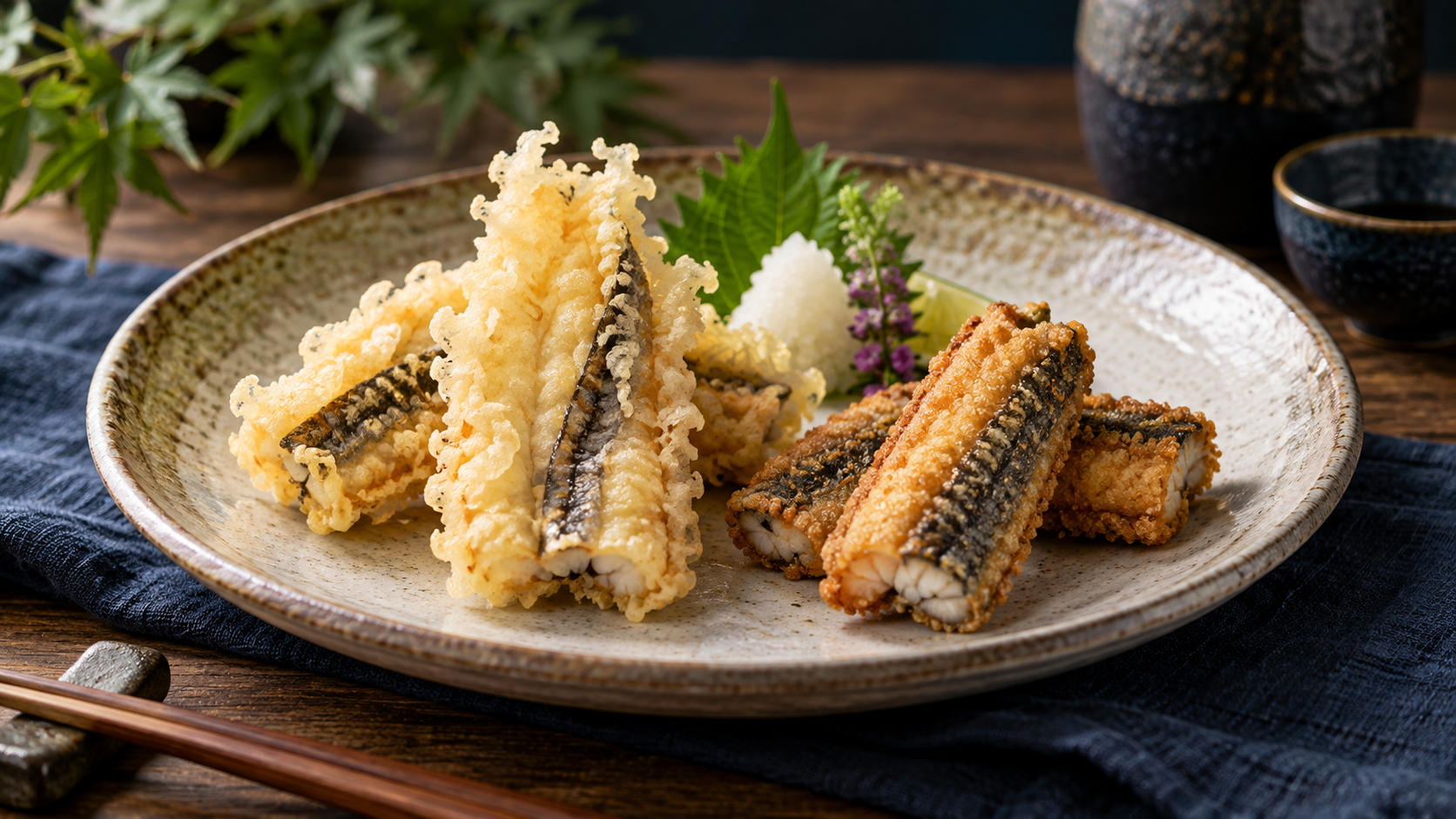
Editorial illustration comparing the two coatings; AI-generated, not a photograph of a prepared recipe.
Diagrams are schematic guides to the relationships, not verified oil temperatures, cooking times or test results.
Two approaches to coating
Wet tempura batter versus dry karaage coating
Tempura uses a wet mixture, often based on wheat flour and cold water, to give a relatively light crust. Kikkoman’s guidance for vegetable tempura recommends keeping the batter cold, mixing it only briefly and frying promptly after coating. This explains a general coating technique, not an eel-specific cooking time. Tatsuta-age is a type of karaage that may use dry potato starch: the Isshiki Eel Fisheries Cooperative specifically dusts cooked kabayaki with starch. These are common approaches, not rigid definitions that forbid seasoning tempura or using other flours for karaage. 3 2
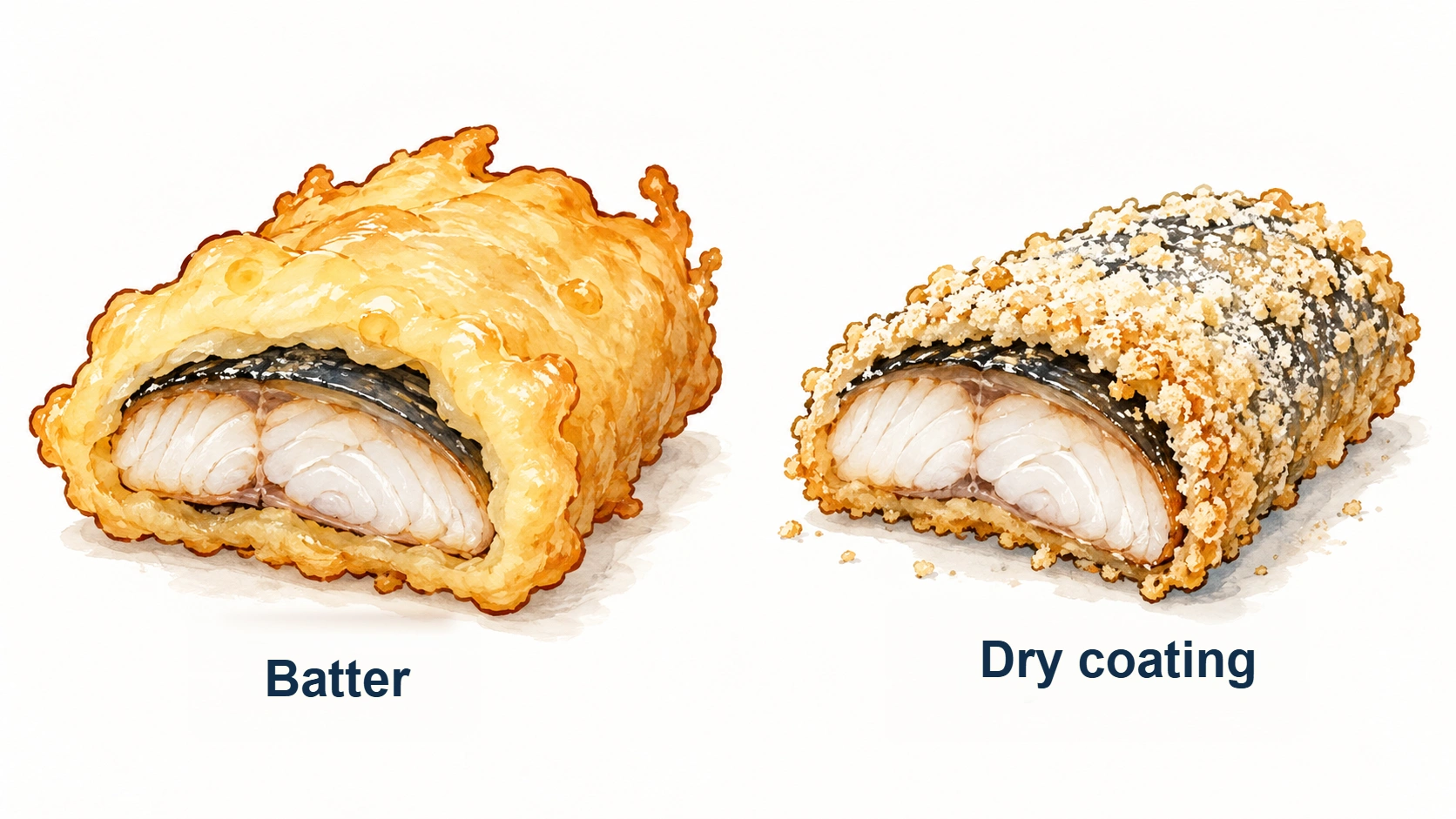
A wet batter and dry flour coat the surface differently.
Identify raw eel versus a cooked product
Read the product label or ask the seller whether the split eel is raw and requires cooking or already cooked. Kikkoman describes shirayaki (plain grilled eel) and kabayaki (eel grilled with sauce) as common retail forms. Kabayaki already carries a sweet-savory glaze, so consider its existing seasoning before adding a strong marinade. Raw fillets must be cooked thoroughly at the center; a short frying instruction written for cooked kabayaki must not be transferred to them. When the product is unclear, do not invent an oil temperature or duration. 5 1 2
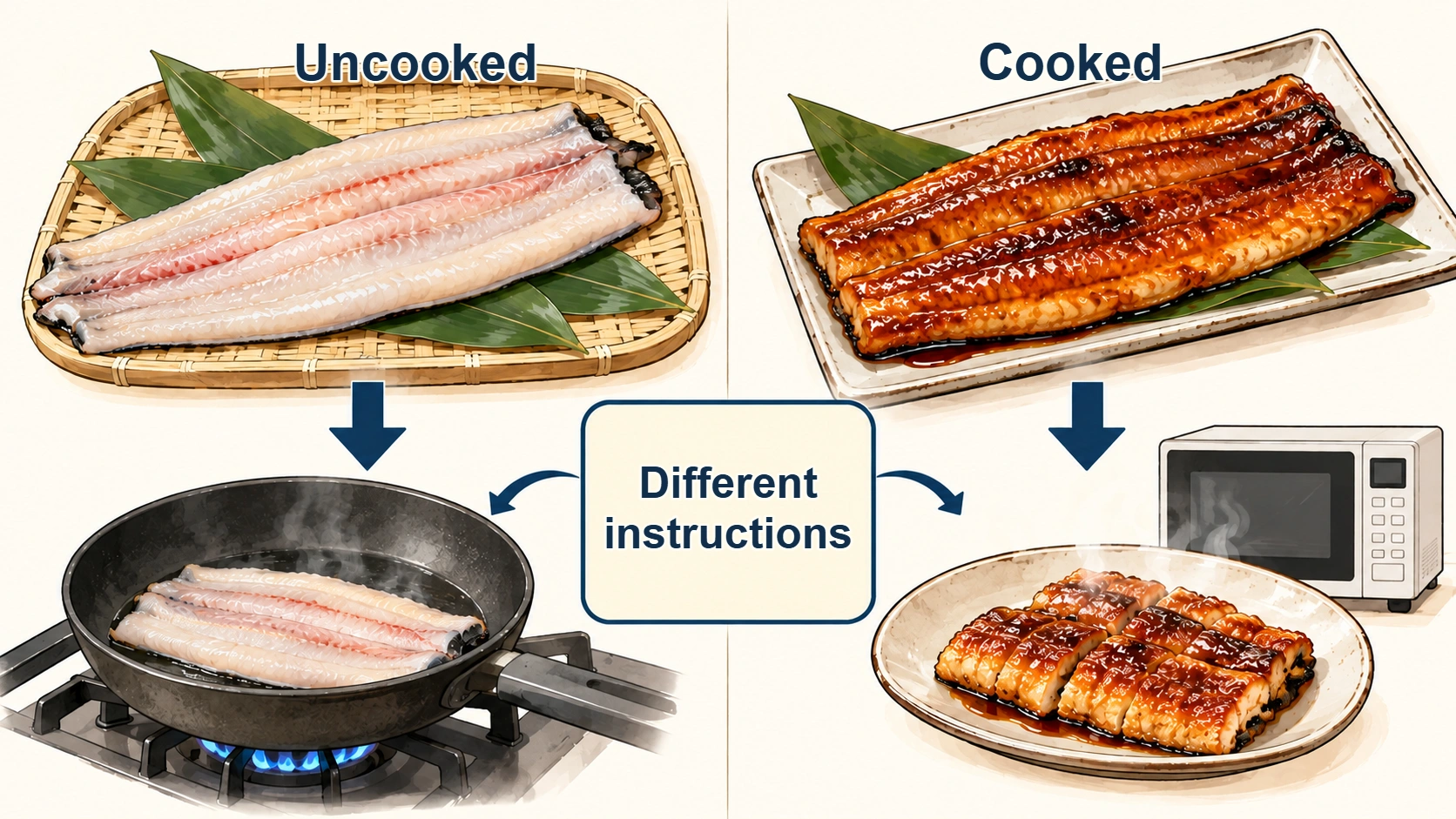
Raw and pre-cooked products need different instructions.
Both examples start with cooked kabayaki, not a raw split fillet. They are published recipes, not controlled trials proving an equivalent result or safe time for other products.
Preparing the eel and coating
Remove surface moisture before coating
Gently blot visible water or excess glaze from the surface with clean kitchen paper. Moisture can produce uneven patches in a dry coating and can splatter when it meets hot oil. Kikkoman explains this principle when discussing chicken karaage; its chicken-specific resting periods and frying procedure are not instructions for eel. Keep raw fish juices away from ready-to-eat food, wash hands and utensils, and thaw frozen products according to their directions, preferably in a refrigerator or microwave rather than on a counter. 4 6 7
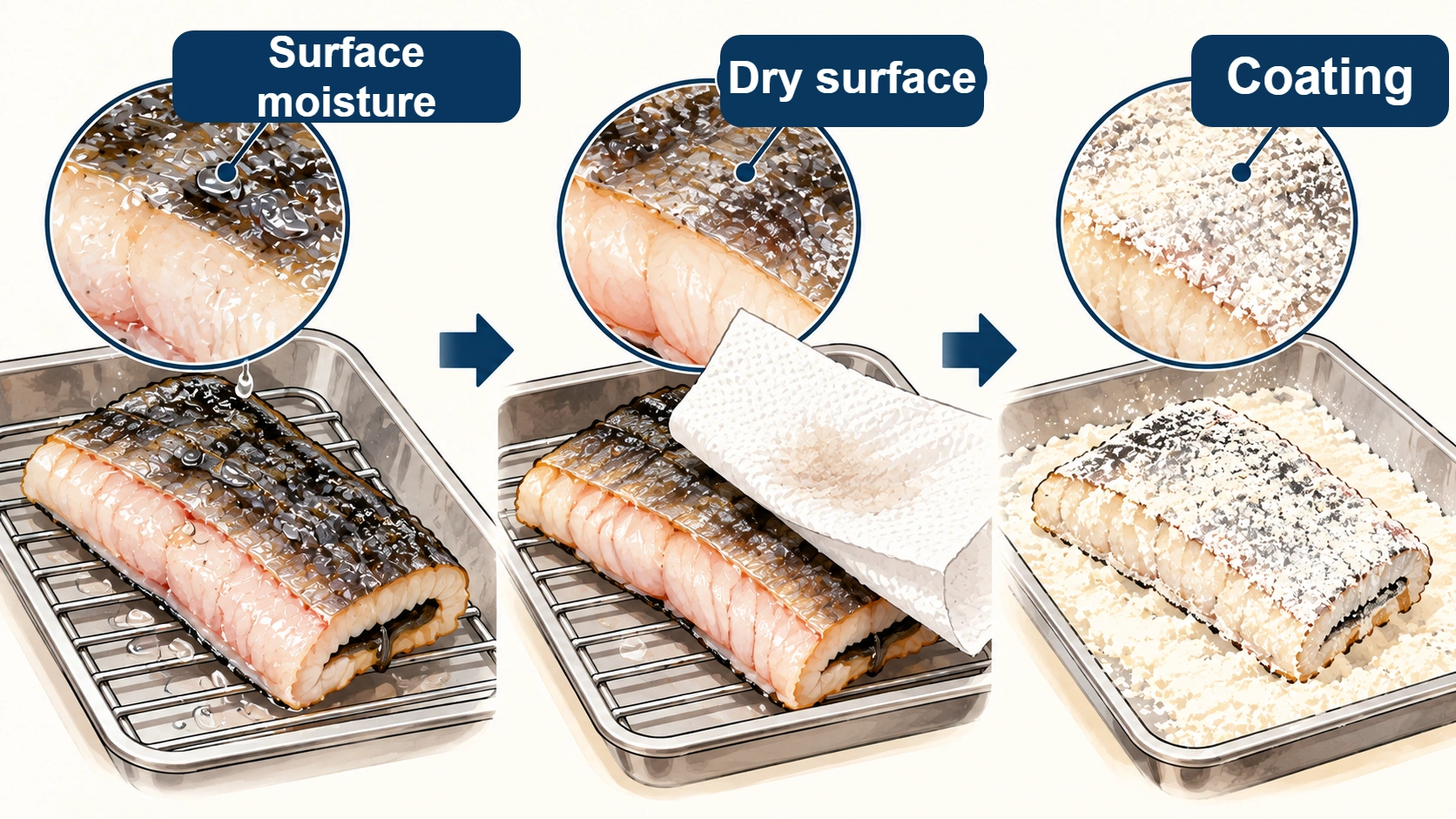
Remove excess surface moisture before coating.
Apply an even layer rather than heavy clumps
For tempura, a very light flour dusting can help the wet batter cling. For a karaage-style coating, distribute potato starch or wheat flour evenly and shake off loose excess. Avoid large wet lumps and handle the skin and flesh gently. The advice to avoid overmixing wet batter and to remove excess marinade comes respectively from Kikkoman’s vegetable tempura and chicken karaage explanations; these are coating principles, not proof of an eel-specific heating schedule. Sweet kabayaki sauce can also darken quickly on the surface. 3 4
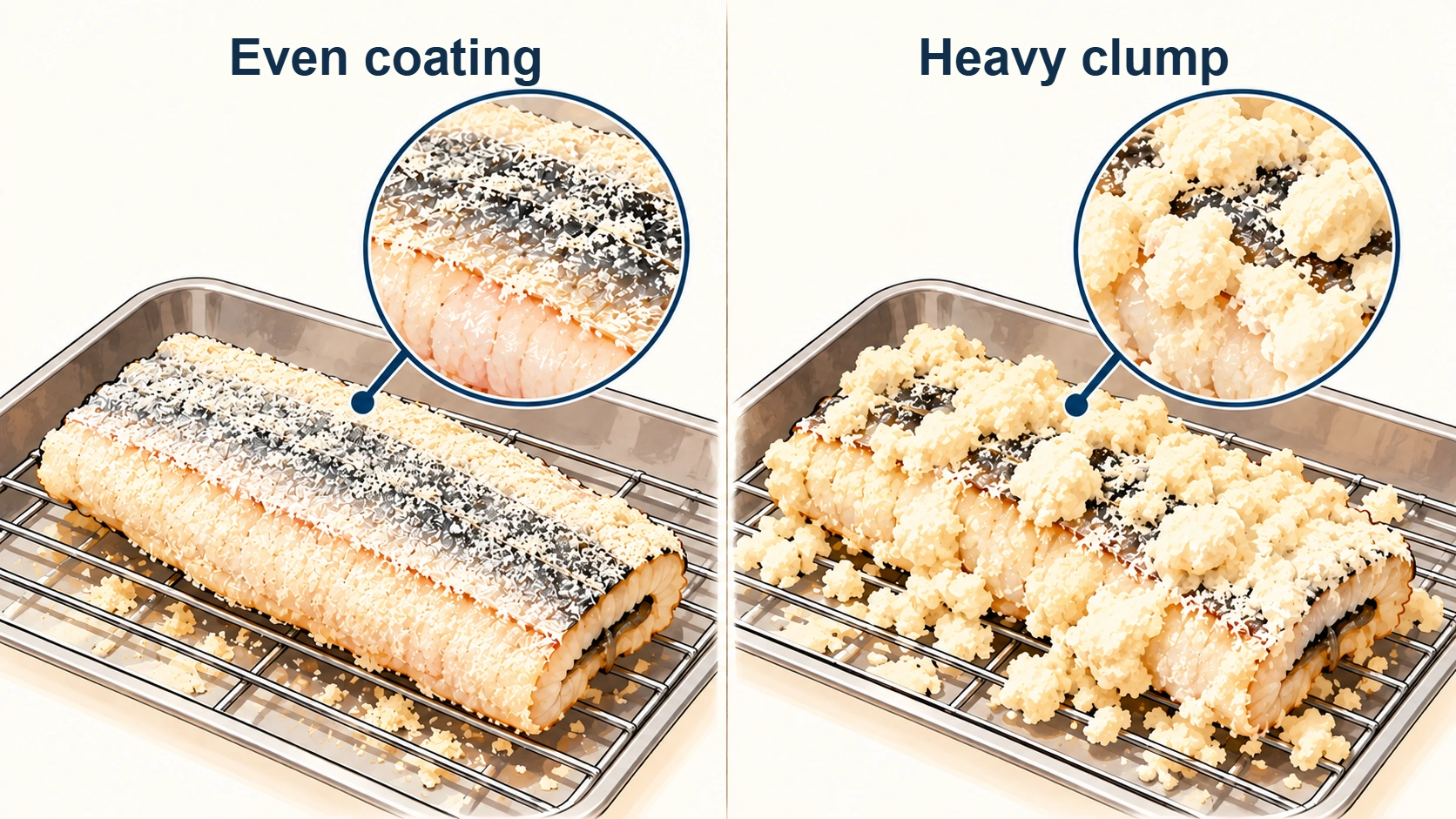
Aim for an even coating rather than large clumps.
The frying stage
Set up a stable pan and dry utensils
Use a level, steady pan and keep the oil within the cookware manufacturer’s safe fill level, well below the rim. Have dry chopsticks or a draining utensil and a rack set over a tray ready before starting. Suitable oil temperatures and cooking durations vary with whether the eel is raw or cooked, the thickness, coating and equipment. Numbers in a published recipe apply to that recipe, not every eel product. Japan’s Fire and Disaster Management Agency warns against leaving heating frying oil unattended. Never pour water onto burning oil. 8 7
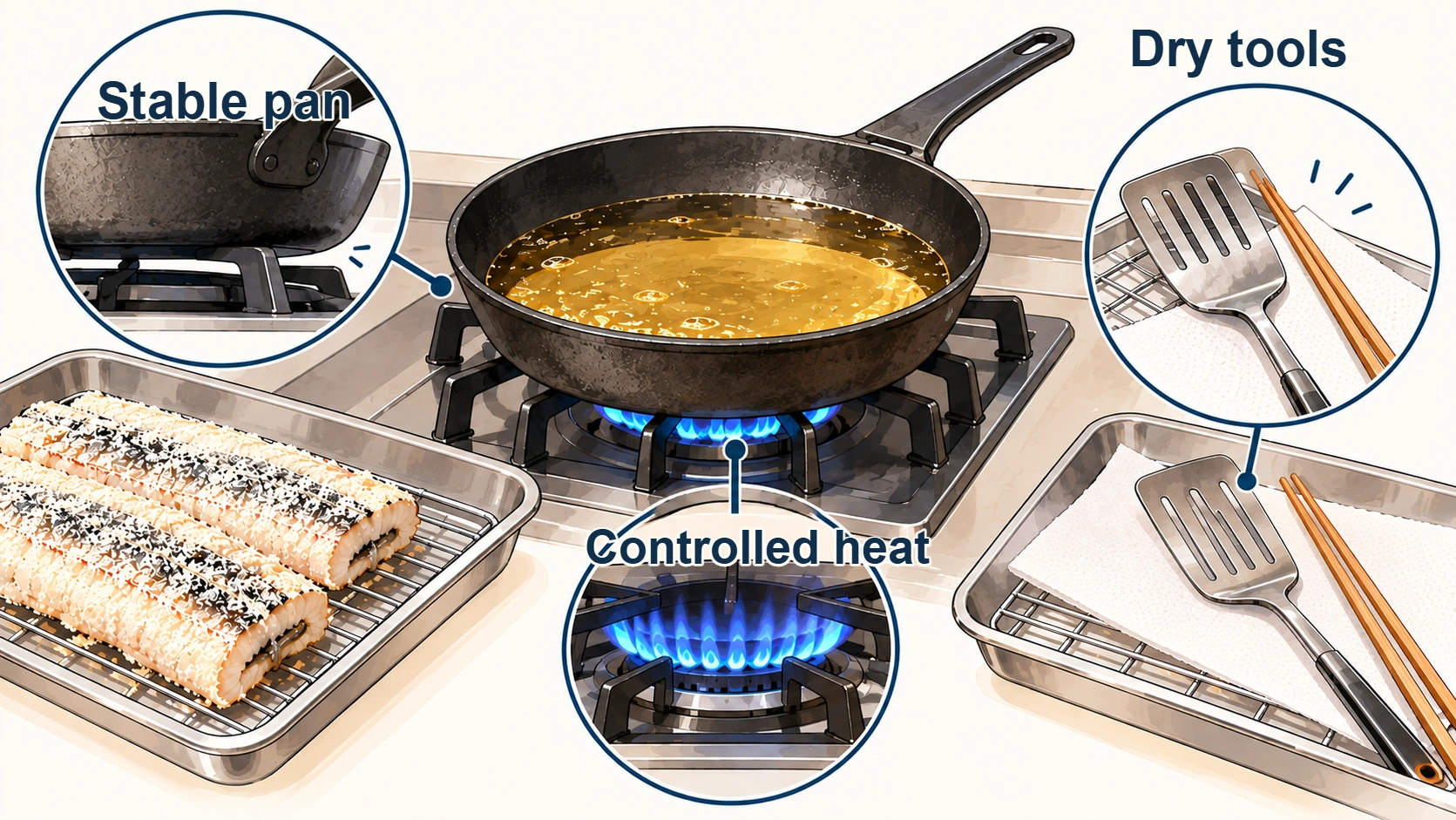
Keep the pan stable and the utensils dry.
Leave space between the pieces
Add only enough pieces to leave visible gaps and fry in batches. Crowding makes turning difficult and can damage the coating; a sudden surge of foam is a reason to reduce the batch, not guess at a higher heat setting. Let the coating set before moving a piece, using dry utensils as necessary. Neither bubbles nor crust color alone can establish that raw fish is cooked through. Check the source recipe and product directions rather than assuming a fixed frying time. 1 6
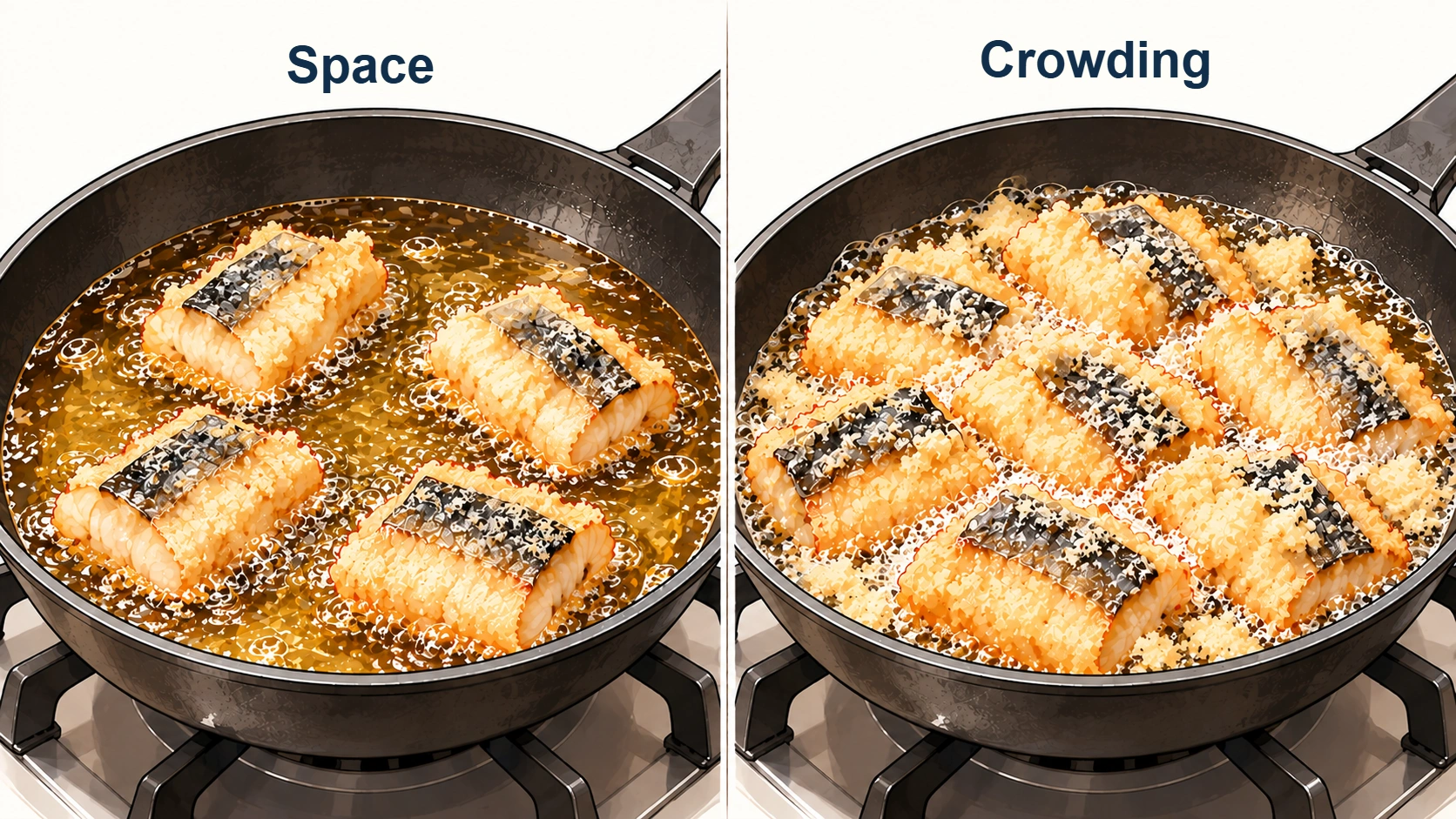
Leave gaps rather than packing pieces together.
Check the center of a thick piece
With uncooked eel, the crucial place to assess doneness is the center of its thickest part. Japan’s Ministry of Health, Labour and Welfare gives a general household cooking guideline of 75°C for at least 1 minute at the center. That is an internal food condition, not an oil temperature or a tested eel-frying duration. If needed, insert a suitable food thermometer into the thick center without touching the pan. For already-cooked products, follow the package’s preparation or reheating instructions. 6
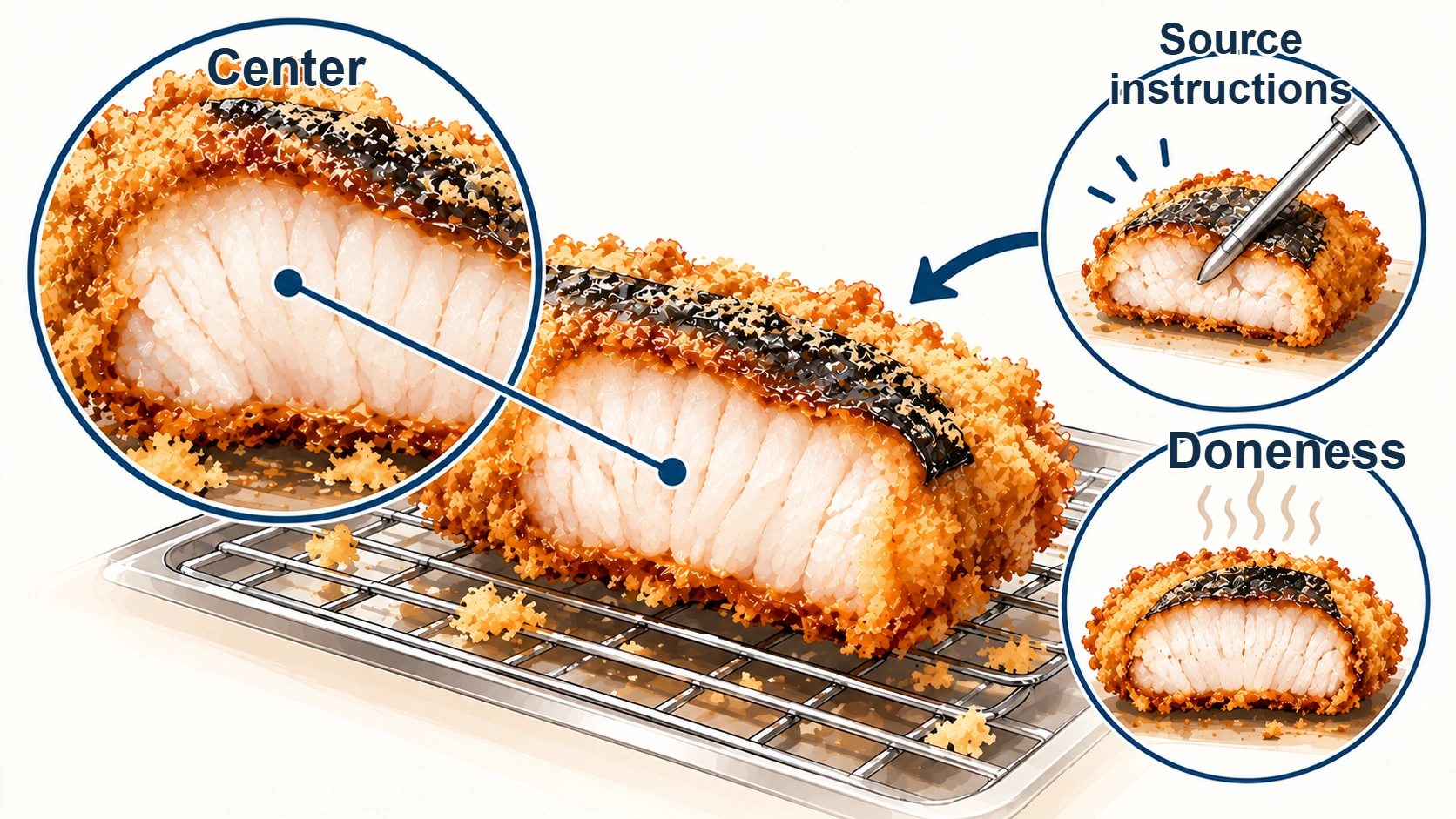
Assess the thick center, not only the crust.
Finishing and serving
Drain fried pieces on a rack
Lift the pieces out with a dry utensil and rest them on a rack above a tray so excess oil can drip away. Air beneath the food helps avoid trapping moisture against the crust; pressing or repeatedly moving it can detach the coating. Draining cannot make up for an undercooked center. Serve promptly on clean plates. If food remains, follow the ministry’s household guidance to divide leftovers into shallow containers and cool them promptly; no universal storage-life promise is made here. 6
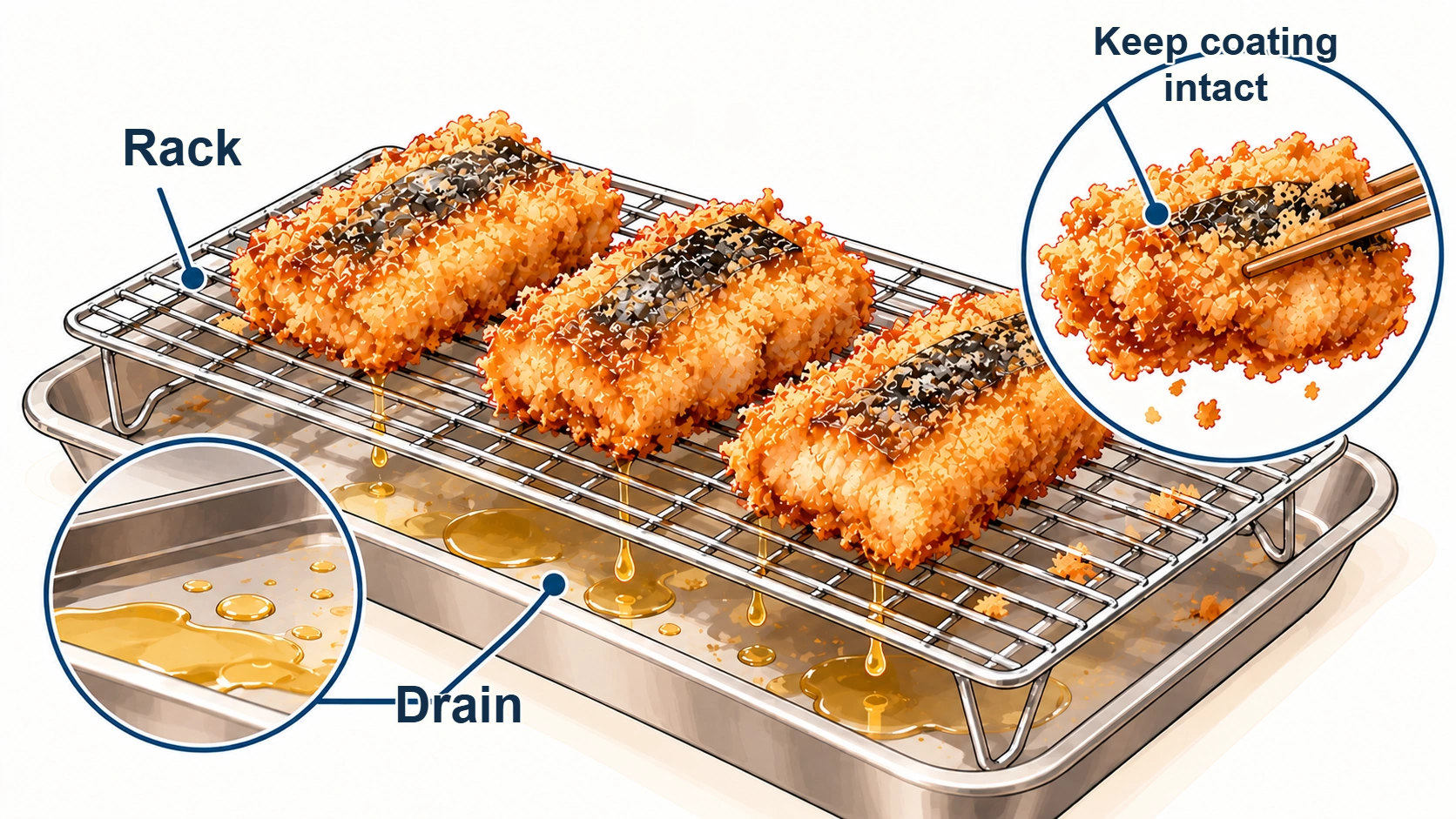
The rack leaves room for excess oil to drip below.
Finish with salt, citrus or dipping sauce
Salt suits a lightly seasoned coating, citrus such as lemon adds brightness, and a separate dipping sauce offers a different finish. Glazed kabayaki may need nothing extra. Maruhon’s eel-tempura recipe serves the dish with cucumber vinegar dressing; the Isshiki cooperative’s tatsuta-age includes lemon. Check the ingredients and package labels for wheat, egg, soy and other relevant allergens. First confirm whether the eel is raw or cooked, then choose the coating, and finally follow cooking directions suited to that exact product. 1 2
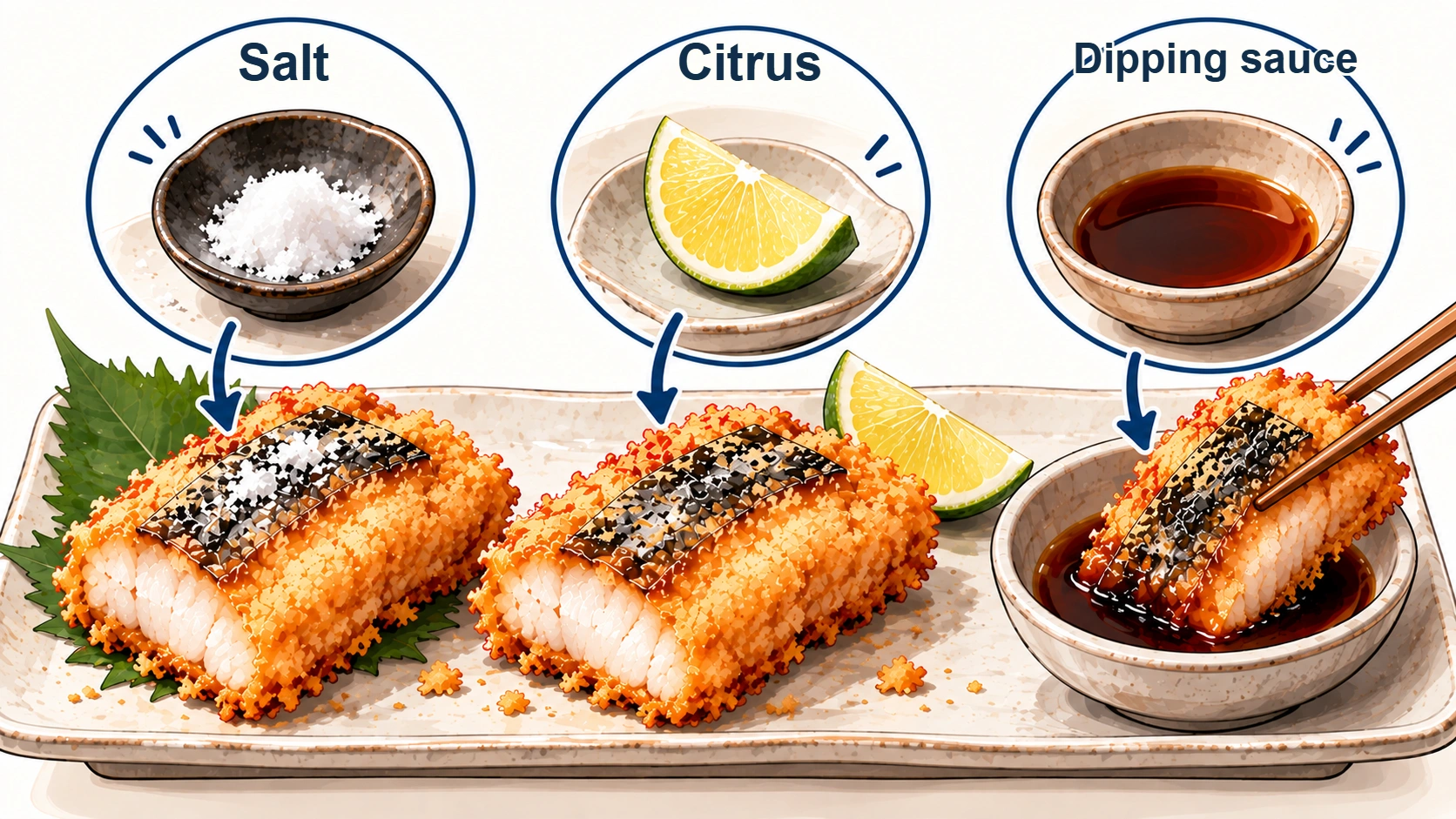
The three finishes are independent options.
Sources and original records
Related articles