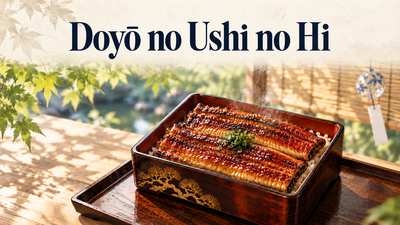
The basic difference between unadon and unaju is the vessel: unadon comes in a bowl, unaju in a jubako box. Both combine rice with eel kabayaki, grilled with sauce. Restaurant menus may also differ in portion, cuts and accompaniments, so it is also inaccurate to assume that only the dish changes and the contents are always identical. Choose by the restaurant's description rather than the name alone.
First distinguish the dish's name from what the menu item includes
Start by separating names based on serving vessels from each restaurant's product choices. Understand the name first, then compare what the place you are ordering from offers.
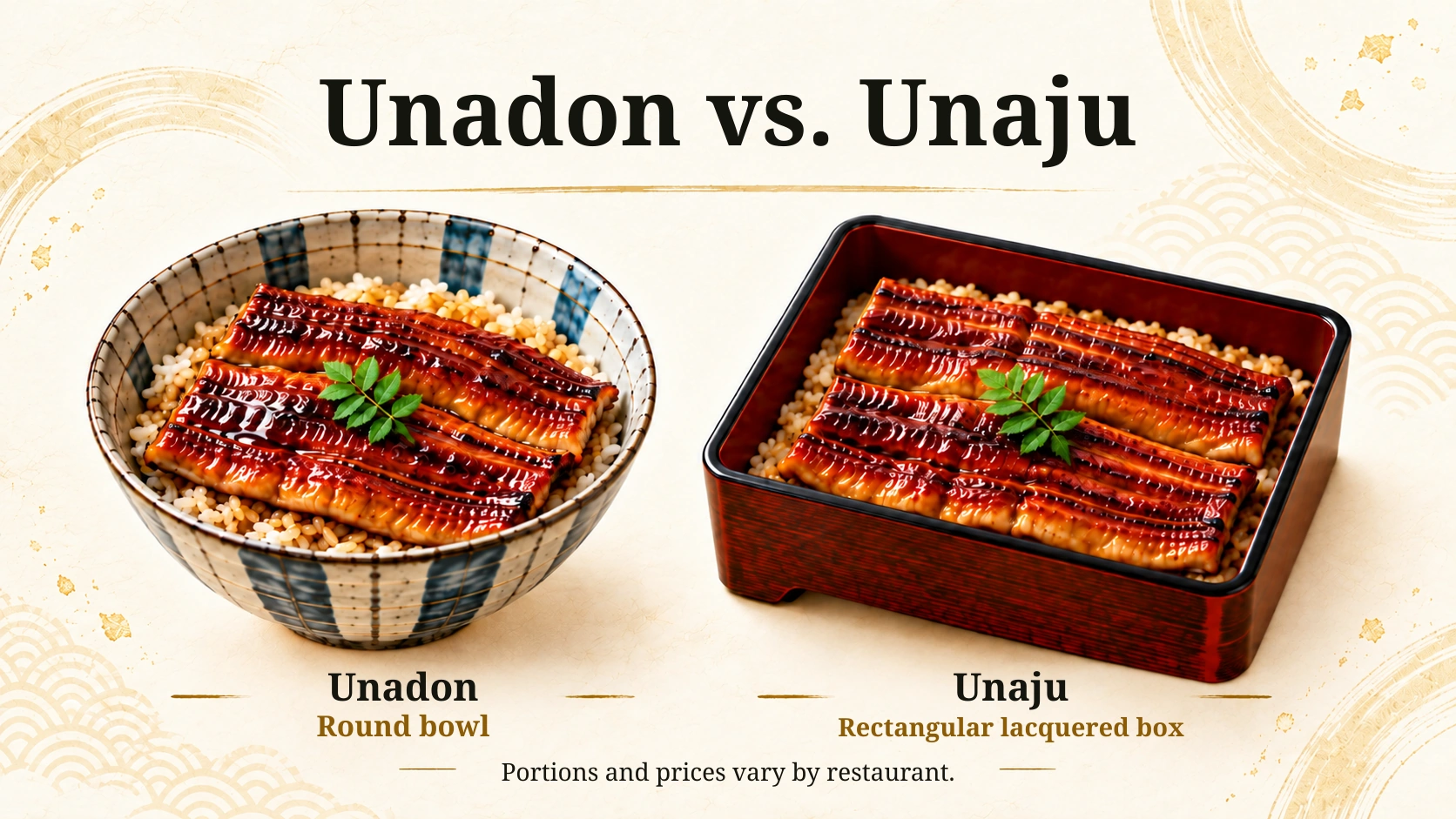
Unadon is served in a bowl; unaju in a jubako box
The Japan Ready-made Meal Association's explanation also distinguishes them by the vessel used for rice topped with kabayaki. Thus, the word unaju itself does not require one large whole eel or exclusively Japanese-grown eel. Separating what the name tells you from what only the menu can tell you makes comparison easier.
At the restaurant, read the description as well as looking at the dish's photograph. Takeaway meals may come in disposable containers, so check the product name and stated quantity rather than inferring the contents from the container's material or shape.
Unaju is not always premium, and unadon is not necessarily lower quality
Some people associate a jubako with a special occasion and a bowl with a casual lunch. But visual impressions are separate from differences in ingredients, cooking and quantity. Compare the contents by the same criteria whether choosing unaju or unadon.
If you want a substantial meal, check the amount of kabayaki rather than the size of the vessel. If you want a smaller meal, whether the rice portion can be adjusted matters. Think about your priorities rather than treating the vessel's name as a quality score.
Three things to compare when prices differ
To understand a price difference, check the kabayaki quantity, the whole meal's components, and the description of ingredients and preparation, in that order. Comparing these three on equal terms makes it easier to choose within your budget.
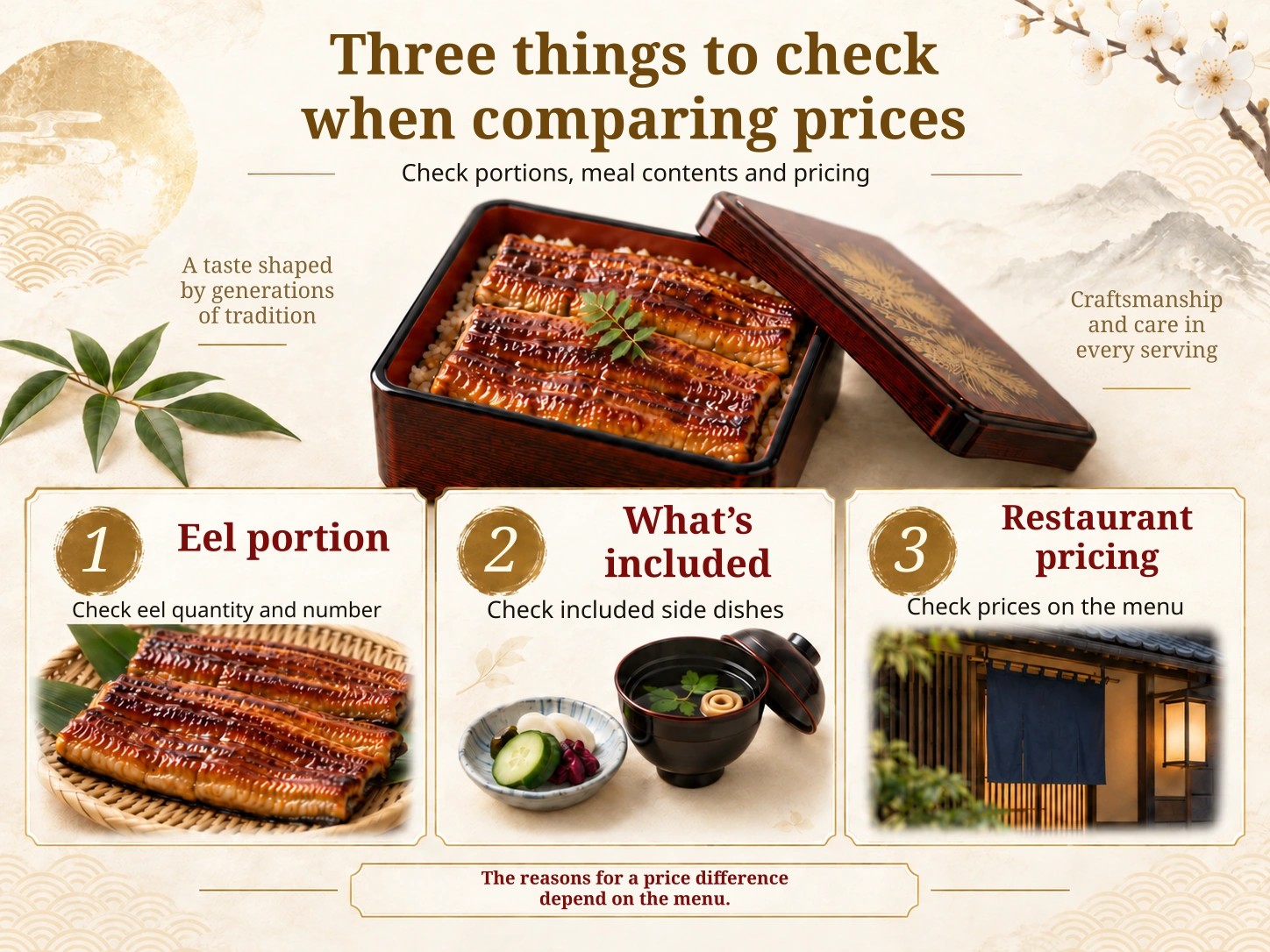
1. Amount and cuts of eel
If the menu says half an eel, one whole eel or two pieces, compare those details first. The same number of pieces does not guarantee the same size per piece. Photos are serving examples, so give priority to any written quantity.
Unatoto's official menu, for example, lists unadon and unaju as separate products and explains the different cuts used for its standalone kabayaki. This is one restaurant's example, but it shows why the dish's name alone cannot establish its contents. It also notes that contents and prices may vary by location.
2. Rice, soup and side dishes
Even at the same price level, a meal with included soup differs from one where soup is ordered separately. Check whether eel-liver soup, clear soup, pickles or small side dishes are included, and whether larger or smaller rice portions are available.
Compare the total for the combination you intend to order, rather than just the displayed price. Also compare like with like: dine-in with dine-in, takeaway with takeaway, and individual items with individual items or sets with sets.
3. Ingredient and cooking differences described by the restaurant
Where a restaurant distinguishes products by origin, eel species or cooking method, its explanation is also useful for comparison. If nothing is stated, avoid assumptions such as only the dearer option uses Japanese-grown eel, or unadon is never steamed.
Ask, for example, “Do these two differ only in quantity, or are the eel and grilling method different too?” This gathers the relevant information at once. The restaurant's own explanation is the most reliable way to judge why its prices differ.
How to choose sho-chiku-bai or regular, superior and special grades
Grade names may suggest that higher menu tiers always have better flesh quality. Some, however, distinguish quantity or cuts instead. Daigo Unagi Kobo describes differences in quantity and cuts in its guide to unaju and unadon. Do not apply that explanation to every restaurant; check the menu where you are ordering.
The word “special” alone cannot tell you whether the portion suits you. First decide whether you want a whole eel or small amounts of kabayaki and side dishes. This narrows your choices. Family members or friends dining together need not all order the same grade.
When descriptions are brief, these questions make the details clearer.
- How much does the eel portion differ between regular and superior?
- Is the rice portion the same? Can I have less?
- Are soup and side dishes included in the displayed price?
- Are the contents the same for takeaway?
Does the vessel change the taste or how you eat it?
A bowl or box alone does not determine the seasoning or grilling of kabayaki. If texture matters to you, ask about cooking rather than the vessel. Questions such as “Is it finished by steaming?” or “Is it grilled to bring out the skin's roasted aroma?” help you judge whether it suits your taste.
Try a bite before adding sauce or sansho pepper. Then add a little at a time as needed, adjusting while checking the restaurant's seasoning. This works for either vessel. There is no special etiquette that must be learned only for unadon or only for unaju.
The balance with rice is a matter of preference too. Eating kabayaki together with the rice, instead of finishing all the eel first, makes it easier to find your preferred ratio. If a piece is too large to eat comfortably, divide off a bite rather than struggling to lift it with chopsticks.
When unsure, choose by portion, budget and the purpose of the meal
For a single dish during a short lunch break, consider unadon in your preferred portion. If you want to enjoy the atmosphere of a meal served in a jubako too, consider unaju. The choice depends on the occasion, rather than one being inherently better.
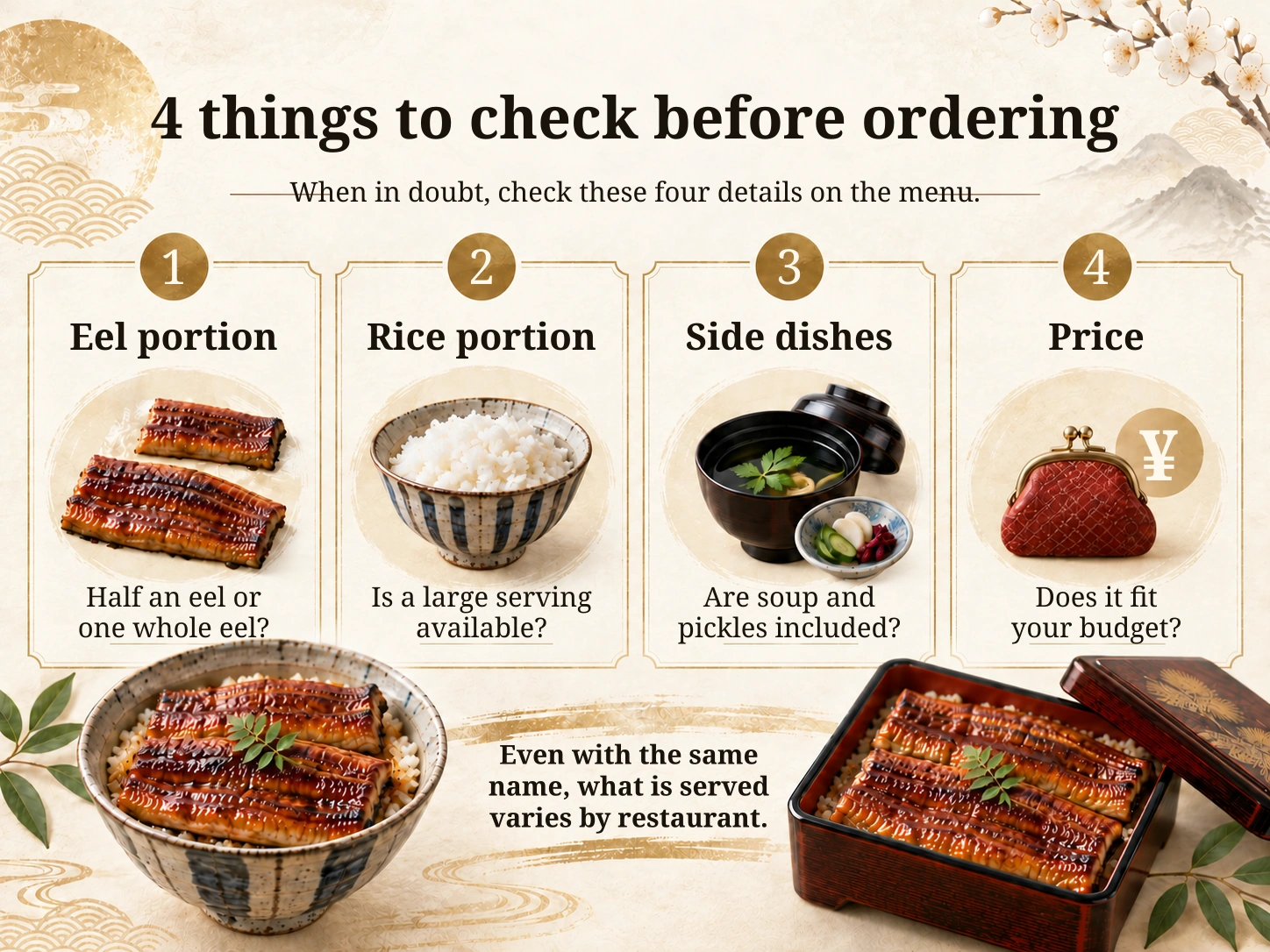
If you are deciding between two items at the same restaurant, compare them in this order.
This order helps avoid disappointments such as choosing the dearer dish and finding the portion too large, or exceeding your budget after adding soup to the cheaper one. Judge whether it makes a suitable meal for you, as well as how lavish the photo looks.
- Decide how much kabayaki you want.
- Check everything included, from rice to accompaniments.
- Check the tax-inclusive price and extra charges.
- Finally choose your preferred vessel and serving style.
Frequently asked questions
- Does unaju contain more eel?
- It depends on the restaurant. The name unaju alone does not set the quantity. Check the number of eels, pieces or the weight, and ask before ordering if it is unclear.
- Do unadon and unaju use the same sauce?
- The name alone cannot tell you, because even the same restaurant may design its products differently. If seasoning matters to you, ask whether the sauces differ and whether adjustments are possible.
- Do I need a jubako to make unaju at home?
- Strictly speaking, serving it in a bowl makes it unadon. But there is no need to buy a special jubako to enjoy it at home. Serve rice and kabayaki in a convenient dish, in the quantity you like.
Related articles