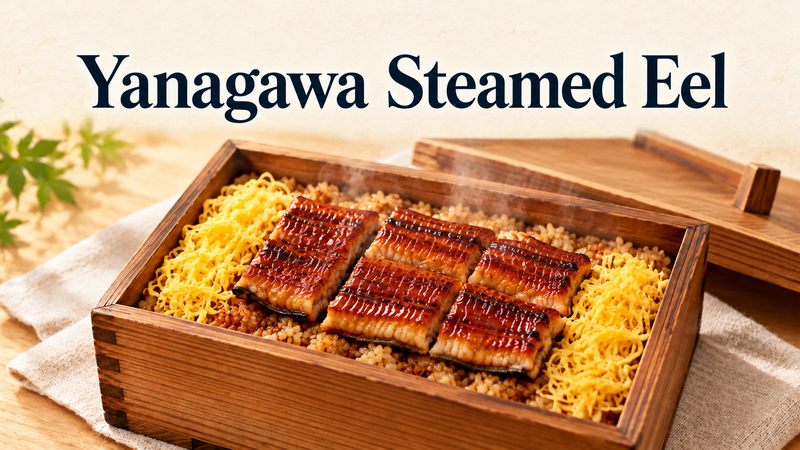
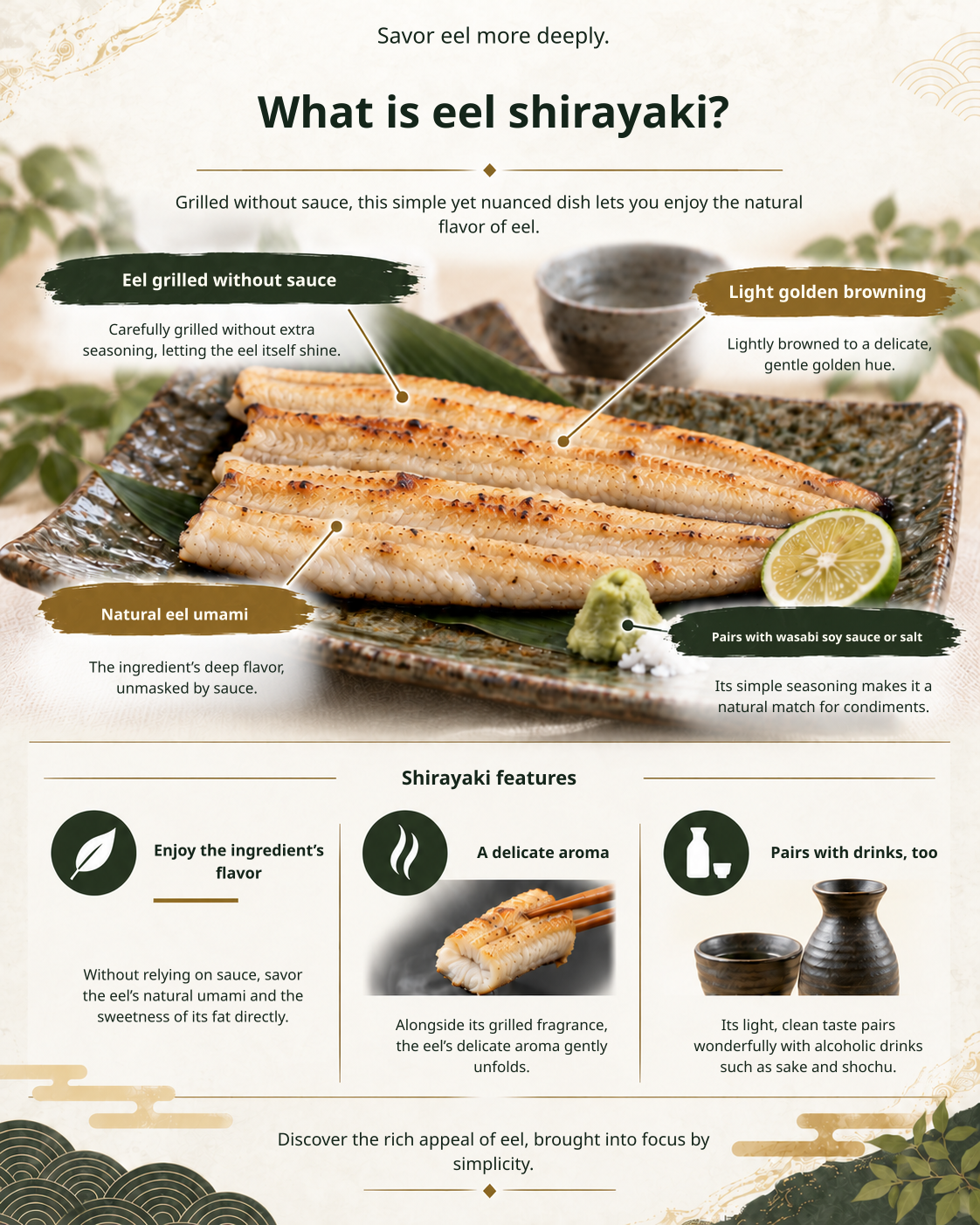
Shirayaki eel is grilled without the sweet-savoury sauce used for kabayaki. It does not mean a white variety of eel or raw eel before grilling. The main difference from kabayaki is whether sauce is used during grilling. At the table, you can add salt, wasabi soy sauce or other seasonings to shirayaki to suit your taste.
“Shirayaki” names a cooking method, not a fish species
On eel menus, shirayaki often appears alongside kabayaki. The words distinguish grilling and seasoning methods, not different fish. Choosing shirayaki does not mean wild eel, and choosing kabayaki does not mean farmed eel. Ask separately about species, origin and whether the eel is wild or farmed.
Shirayaki need not be completely white. Its colour comes from browning rather than sauce, so do not judge photos or the actual dish by the same dark colour expected of kabayaki.
It is not flavourless, either. Its appeal is tasting the eel itself and exploring your preferences by adding seasoning afterwards. If you are used to sweet sauce, it may initially taste lightly seasoned. Neither is a more advanced choice; they offer different flavours to enjoy.
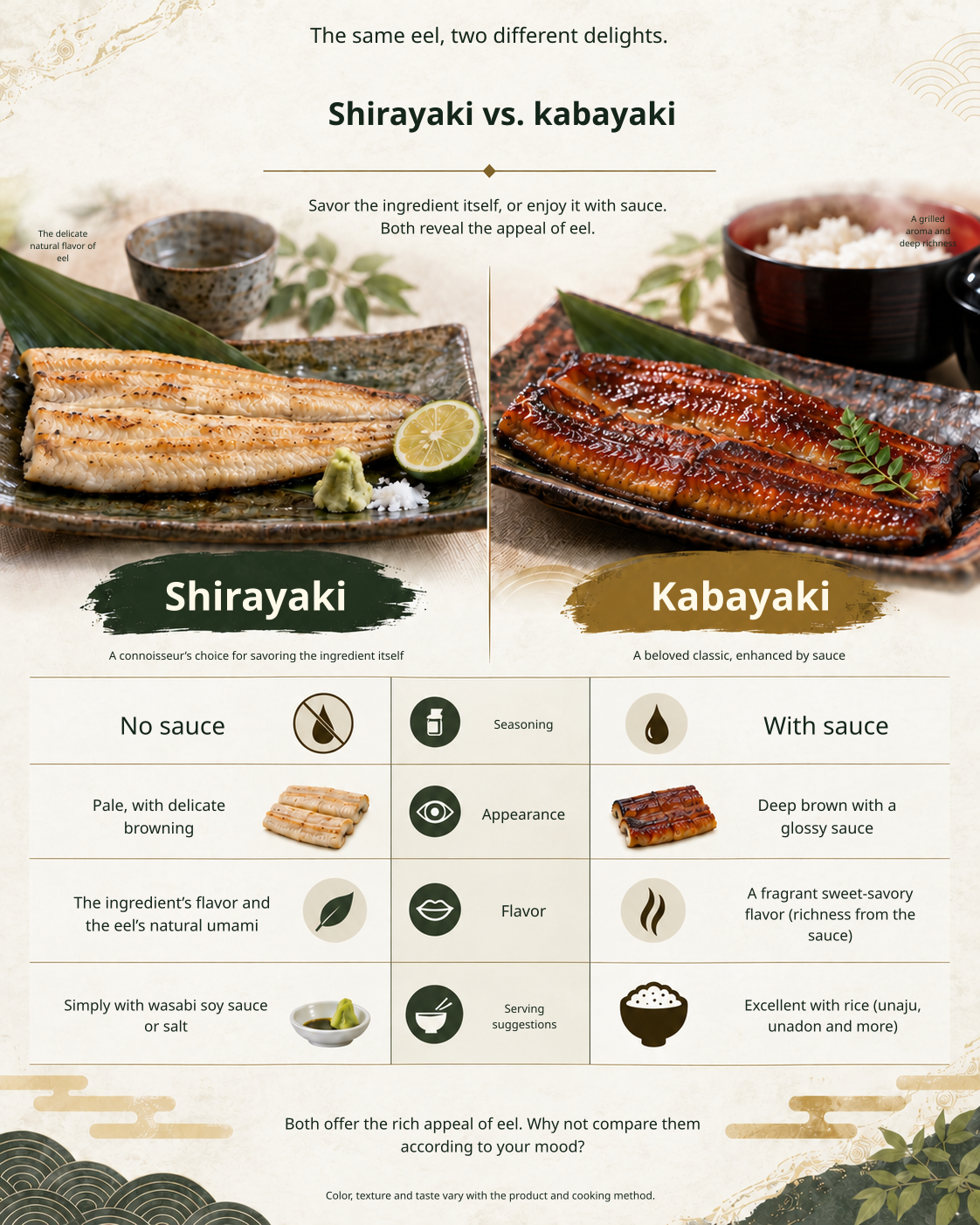
The difference is whether sauce is used during grilling
Comparing the seasoning applied during grilling makes the distinction clear. Then consider the flavours and meal combinations you want.
Shirayaki is finished without layers of sauce flavour
Shirayaki lets you taste eel grilled without kabayaki sauce. Daigo Unagi Kobo also describes grilling without sauce as its defining feature and suggests salt or wasabi soy sauce.
Adding soy sauce at the table does not immediately turn the dish into kabayaki. Distinguish seasoning during grilling from condiments served at the table.
Kabayaki is grilled while being brushed with sauce
The Japan Ready-made Meal Association describes eel kabayaki as eel that is split open, skewered and grilled while being brushed with a sauce of soy sauce, mirin, sugar and sake. This sauce stage is central to the comparison with shirayaki.
Kabayaki may suit a meal centred on sweet-savoury sauce and rice. Shirayaki is an option if you want to vary seasonings little by little or taste the eel before sauce is added. If unsure of your preference, try a small portion of each.
The name alone does not make shirayaki lower in calories
Having no sauce does not necessarily mean the plate you eat contains less energy. Products differ in the amount of eel, rice, accompaniments and added seasonings. If nutritional content matters to you, compare each product’s nutrition label and the amount you eat rather than the impression its cooking name gives.
Likewise, do not assume that shirayaki means salt intake does not matter or that no sauce means unlimited portions. Check what you actually eat, including soy sauce or salt added at the table.
Shirayaki can be a finished dish or a stage in making kabayaki
Hearing that shirayaki is a stage in making kabayaki may suggest it is unfinished. Distinguish the term for a cooking stage from the dish served to customers.
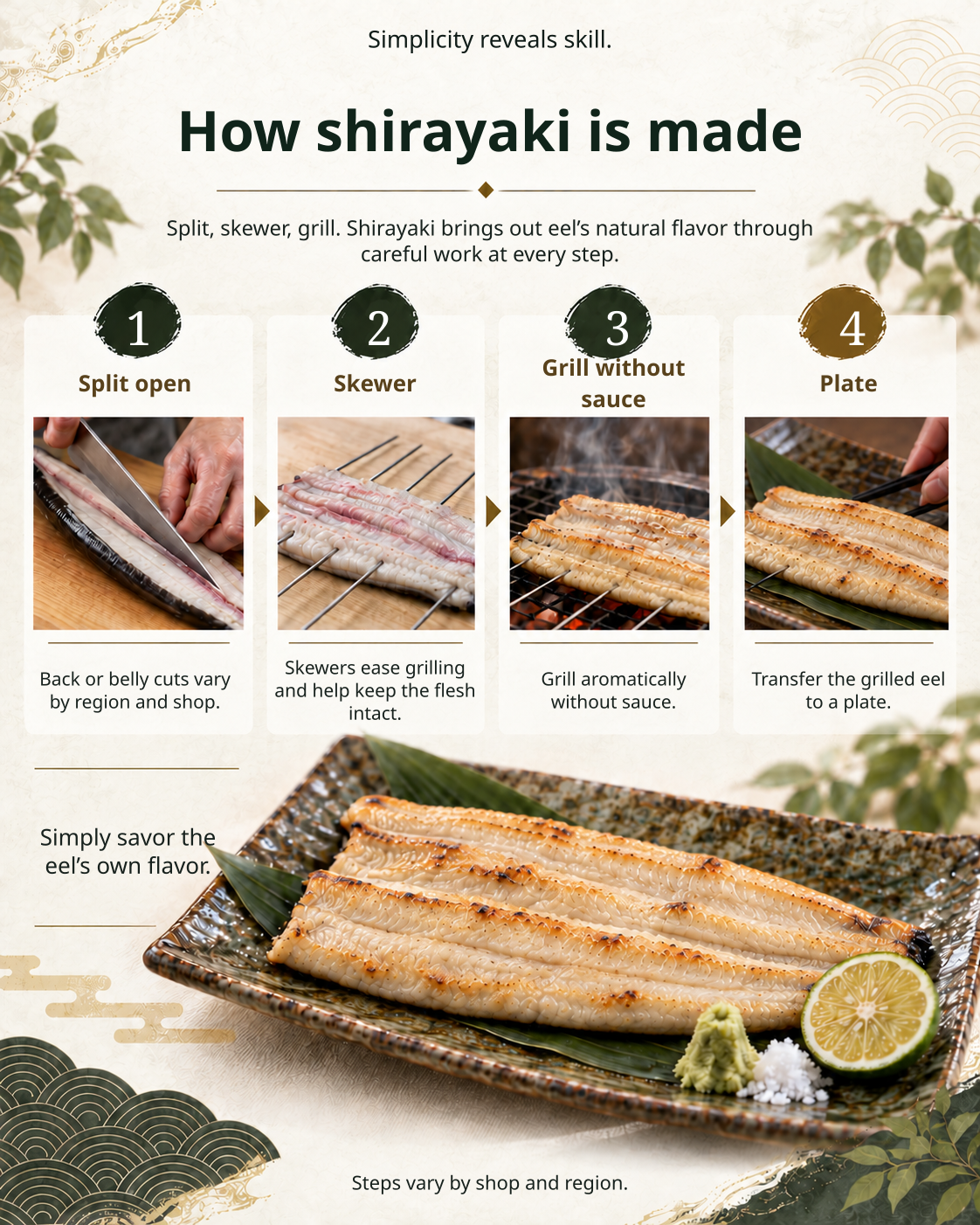
In the Edomae kabayaki described by Japan’s Ministry of Agriculture, Forestry and Fisheries, the eel is cleaned, skewered, grilled without sauce, steamed, then grilled with sauce. Thus “shirayaki” can refer to one stage in preparing kabayaki.
Shirayaki on restaurant menus or online, however, is served or sold as a dish without sauce. It is a complete dish, not an unfinished piece awaiting kabayaki. Whether a purchased product needs additional heating at home is a separate question: follow the label rather than the name.
Steaming is a separate distinction from sauce
Mixing Kanto/Kansai differences into the comparison of shirayaki and kabayaki can be confusing. The distinction is not “shirayaki is never steamed” and “kabayaki is always steamed.”
Ministry of Agriculture, Forestry and Fisheries materials describe a common difference in kabayaki preparation: Kanto methods include steaming, while Kansai methods grill without steaming. Check the exact process and finish with the restaurant or product.
If texture matters, ask not only whether it is shirayaki, but also whether it is finished with steaming and whether tenderness or browned skin is its main feature. State your sauce and texture preferences separately to find a dish that suits you.
Choosing shirayaki for your first order or purchase
What to check differs between eating at a restaurant and reheating at home. Decide who will eat, where and how much, then consider portion size and ease of preparation.
At a restaurant, check the portion and whether rice is included
See whether “shirayaki” is a separate dish or a set meal with rice and soup. The right order depends on whether you want a small accompaniment to drinks or the main part of a meal.
For a first order, explain how many people will share or that you also want rice. If condiments and seasonings come separately, you can control which ones and how much to use. Start with small amounts rather than adding plenty at once.
When buying online, check home preparation as well as quantity
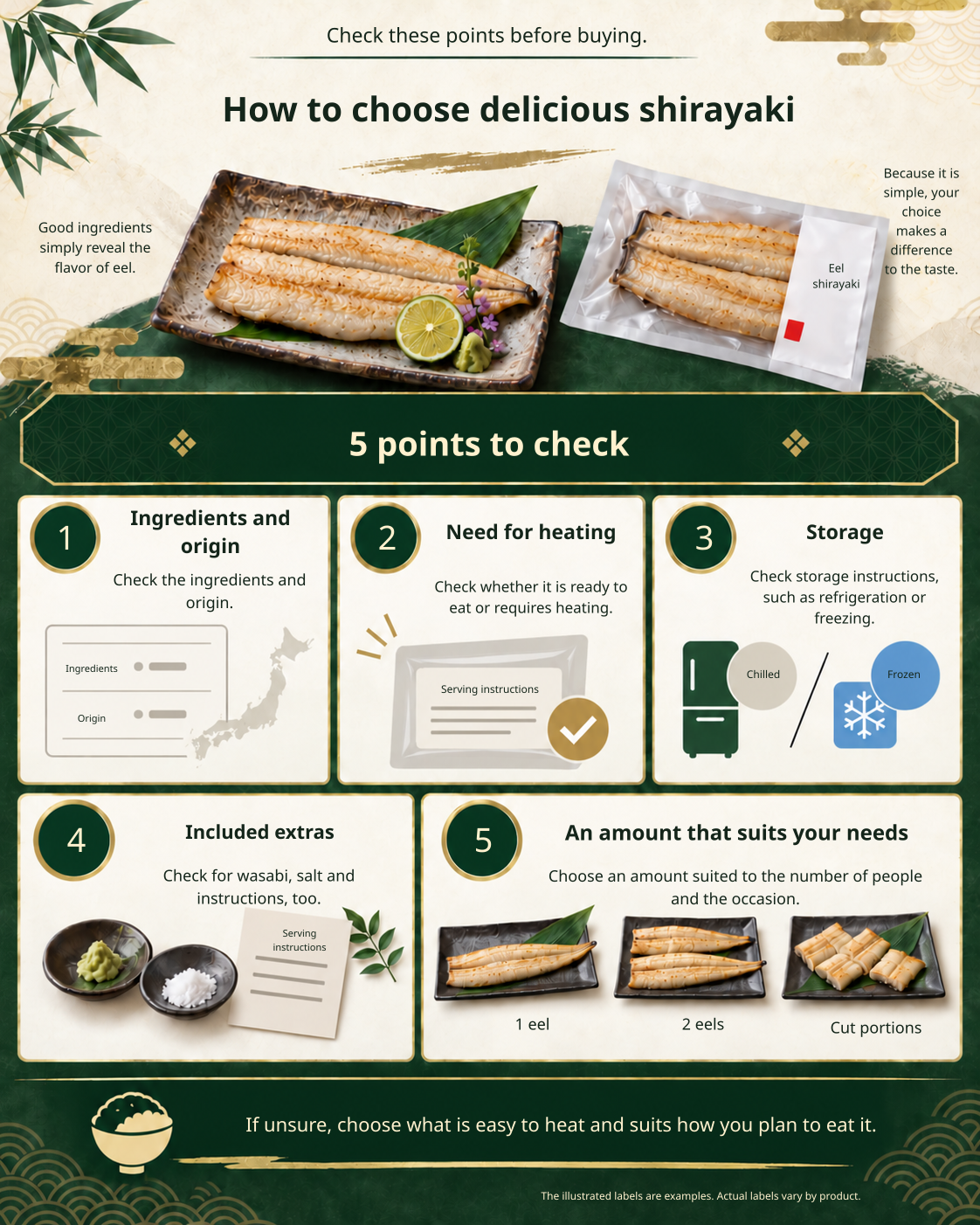
Do not choose from the photo alone; check the following items.
For a planned meal date, for example, prioritise the arrival schedule; for small servings, look for individually divided portions. The biggest or most expensive product is not automatically the right choice. Ease of preparation at home and a quantity you can finish also matter.
- Weight and number of eels per pack, and whether that weight includes sauce or other items.
- Whether it is chilled or frozen and how to store it after delivery.
- Whether heating is required and which reheating methods work with your home appliances.
- Whether the packaging lets you open the amount needed for the people eating.
- Whether condiments or sauce are included or must be provided separately.
For gifts, consider the recipient’s reheating options
For a gift, it helps to check whether the recipient has a grill or would prefer only a hot-water bath or microwave. Also see whether substantial preparation is required after delivery and whether instructions are included.
If the name is unfamiliar, explaining that it is “eel grilled without sauce, enjoyed with seasonings of your choice” is enough. There is no need to present it as a dish requiring special etiquette or expertise.
Frequently asked questions
- Is shirayaki raw eel?
- No. It refers to grilling without sauce. Whether a purchased product can be eaten without further heating is a separate issue, so check its serving instructions.
- Can I make kabayaki from shirayaki?
- Some sellers describe reheating shirayaki and grilling it with sauce. Unagi no Gotoh also gives a method using its own shirayaki. Follow a procedure appropriate to the product you bought.
- Is kabayaki better for beginners?
- You need not choose by experience. Choose kabayaki for sweet-savoury sauce, or shirayaki for the flavour without sauce and variations in condiments.
Related articles