Without mirin, adding sweetness and adding liquid are different tasks. This editorial illustration explains a principle; it is not a tested formula.
You can make kabayaki sauce without mirin. Use soy sauce for the savory, salty base, sugar for sweetness, and water—or another liquid specified in a recipe—to adjust the amount of liquid. Sugar and water will not reproduce all the flavors of hon-mirin, the Japanese sweet rice seasoning. Rather than reducing the mixture aggressively at the outset, assess and adjust small portions.
A published mirin-free recipe can be a starting point if you are willing to use sake. If you also avoid sake, water can provide liquid instead, but no source here verifies that equal volumes of water and sake yield the same result. This article distinguishes published quantities from practical, editorial adjustment guidance.
1. Adjust sweetness and liquid separately
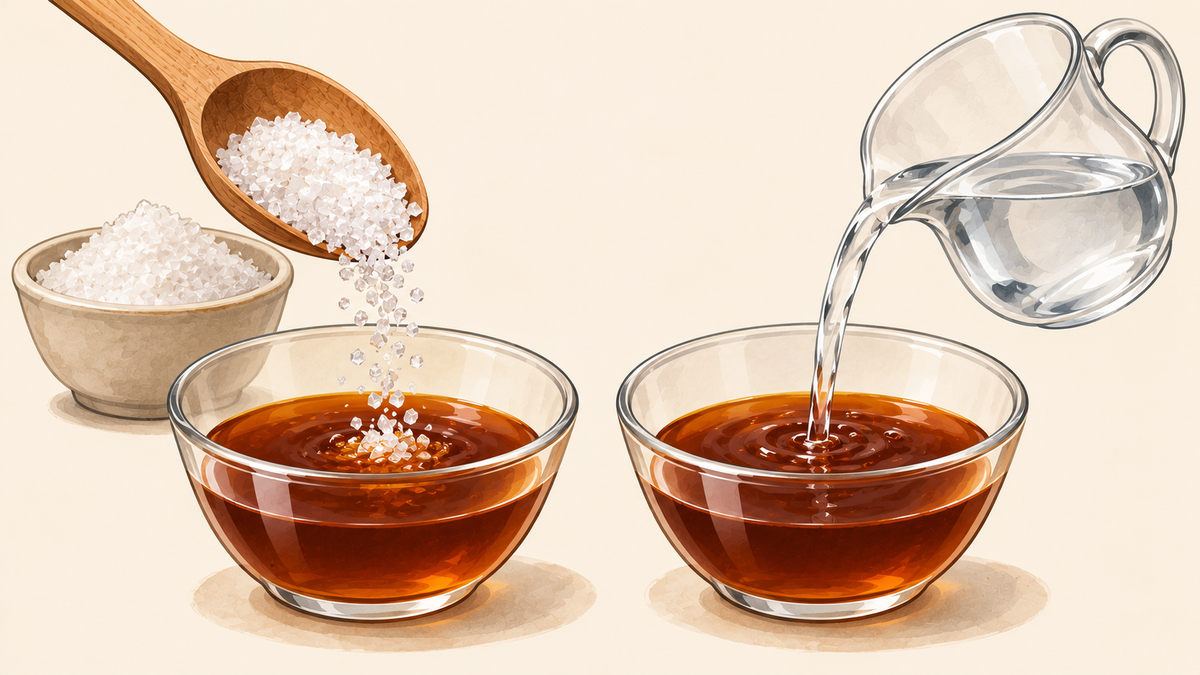
The common mistake is treating “not sweet enough” and “reduced to too little liquid” as the same problem. Sugar changes sweetness primarily; water changes liquid volume and dilution. Water cannot replace lost sweetness, and sugar alone does not adequately restore a saucepan's liquid volume.
Begin with a small amount of soy-sauce-based mixture. Decide whether the problem is insufficient sweetness or excessive concentration. Dissolve sugar thoroughly, and add water incrementally. The two bowls illustrate distinct operations; they do not prescribe equal additions.

Diagram 01 | Sugar adjusts sweetness; water adjusts liquid volume. The depicted crystal count and liquid level are not measurements.
2. Check the ingredients you actually have—and their labels
The basic ingredients are soy sauce, sugar, and water if required. Missing mirin does not mean you must find an invented substitute. Soy sauce varieties and packaged kabayaki sauces differ in sweetness and salinity, so check the actual ingredient label first. Kikkoman's “Basic Eel Sauce” recipe contains both hon-mirin and sake: it is a comparison, not a mirin-free recipe.
For an example that omits mirin but uses sake, the Foods-U recipe published on July 25, 2022 specifies the following for one serving. These are that company's quantities, not results from testing conducted for this article.
The converted volumes are editorial estimates using Kikkoman’s measure of 15 mL per Japanese tablespoon. The Foods-U recipe does not specify millilitres, and tablespoon sizes differ by country.
If you also wish to avoid sake, consider soy sauce and sugar with small, separately adjusted additions of water. However, substituting “1 tablespoon water” for the recipe's “1 tablespoon sake” is not a ratio stated or validated by that source, and flavor equivalence is not assured. The manufacturer's listing for Kikkoman's Itsudemo Shinsen Shiboritate Nama Shoyu identifies wheat and soy as allergens and lists alcohol among the ingredients. “No mirin” does not mean “no alcohol” or “allergen-free”; rely on the label of the specific product in hand.
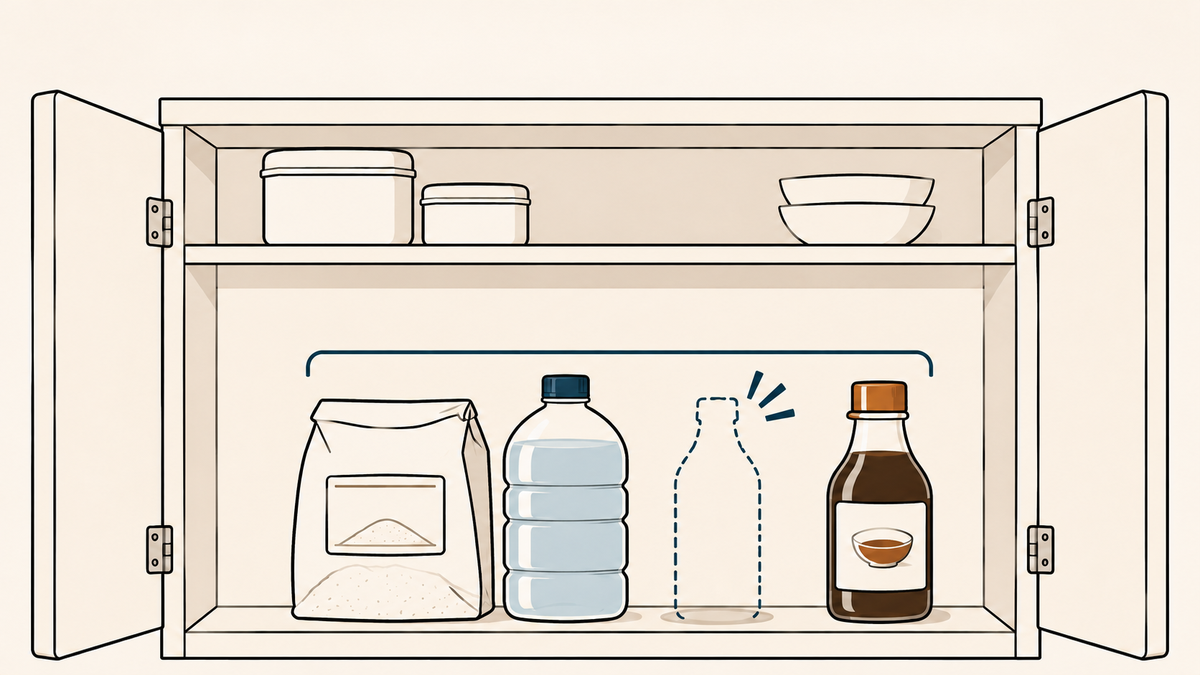
Diagram 02 | Inspect what is available and read the container's ingredient label first. An empty bottle outline represents an absent item, not a prescribed replacement.
3. Establish a base and change one ingredient at a time
Combine the ingredients in a small saucepan and heat gently while stirring until the sugar dissolves. Take a little sauce into a separate dish and compare its sweetness. If testing another sweetener, do not simultaneously change the soy sauce, the volume of water, and the heating state: otherwise, the source of the flavor change becomes hard to identify.
The three bowls are a schematic comparison: the base stays the same and only the sweetener in the last bowl differs. They are not experimental results or recommended sugar doses. With an alternative liquid sweetener, pay attention separately to the extra liquid it introduces.
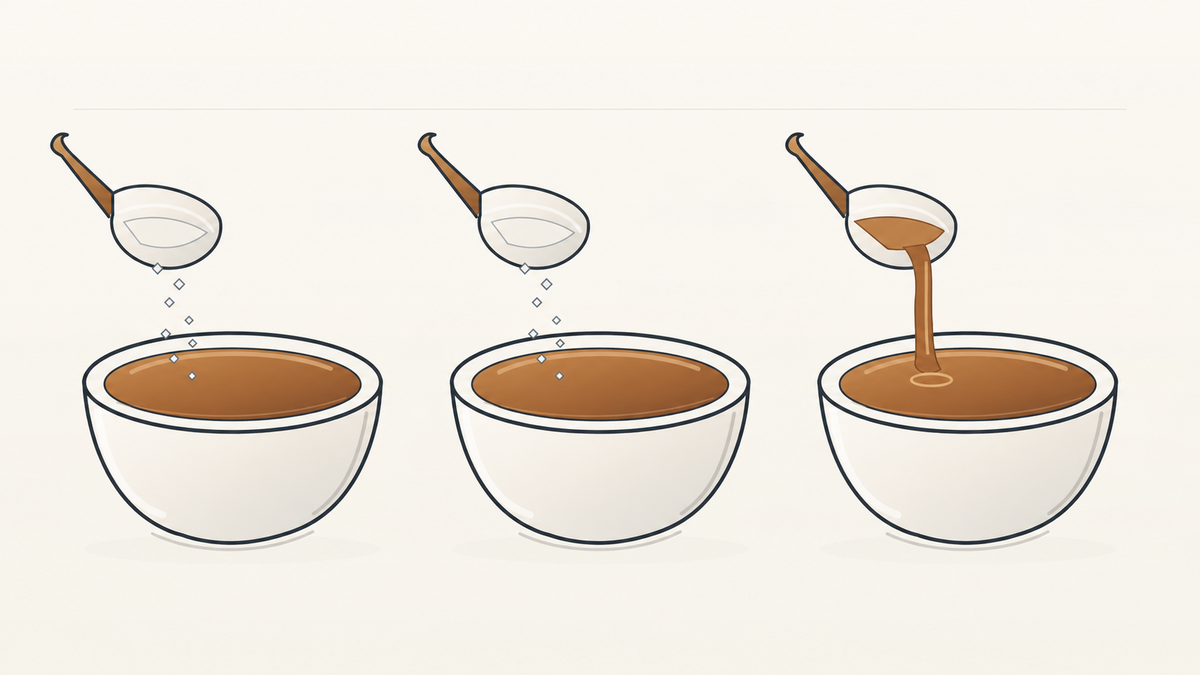
Diagram 03 | Hold the base constant and alter only the sweetener in the final bowl. The illustration is conceptual, not trial data.
4. Evaporation reduces liquid and concentrates flavor
As liquid evaporates during heating, less water remains and the concentrations of sugar and salt rise. Both sweetness and saltiness may become more pronounced; do not try to correct over-reduction simply by adding more sugar. Watch for scorching along the bottom and sides. If the sauce tastes too concentrated, stop heating and try any correction in a separate small sample.
Kikkoman's published basic recipe also includes reduction, but its cooking time and volume-reduction guidance apply to its particular mixture containing mirin and sake. They are not verified timings or ratios for a different, water-based formula.
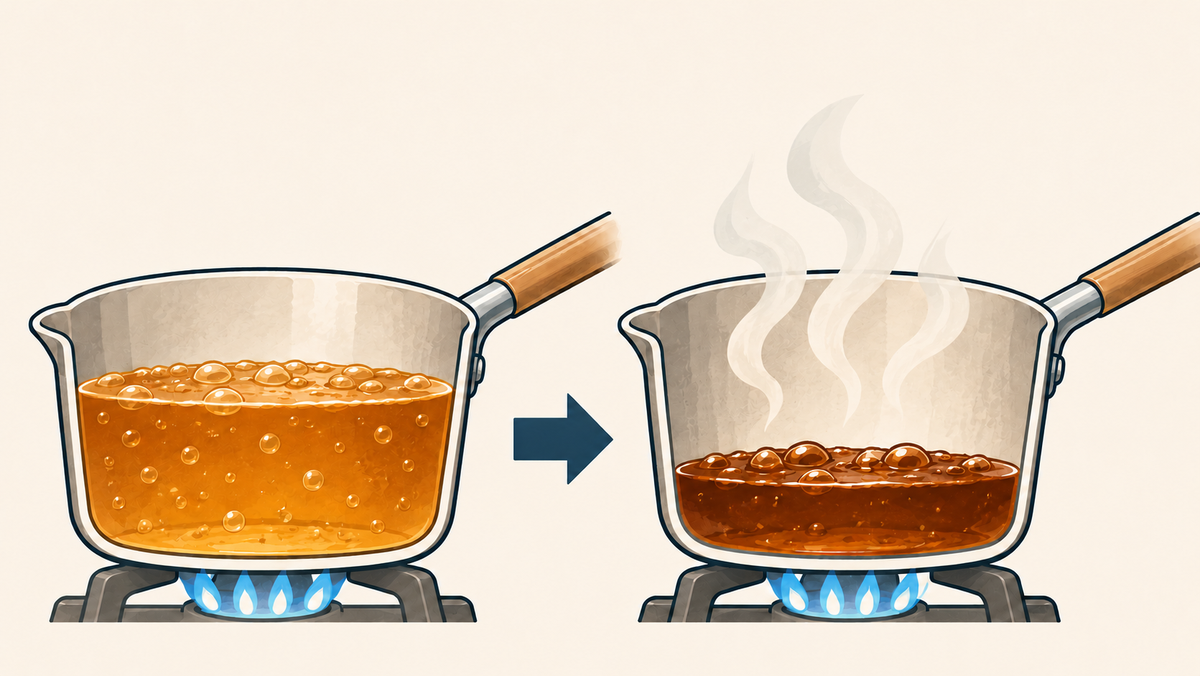
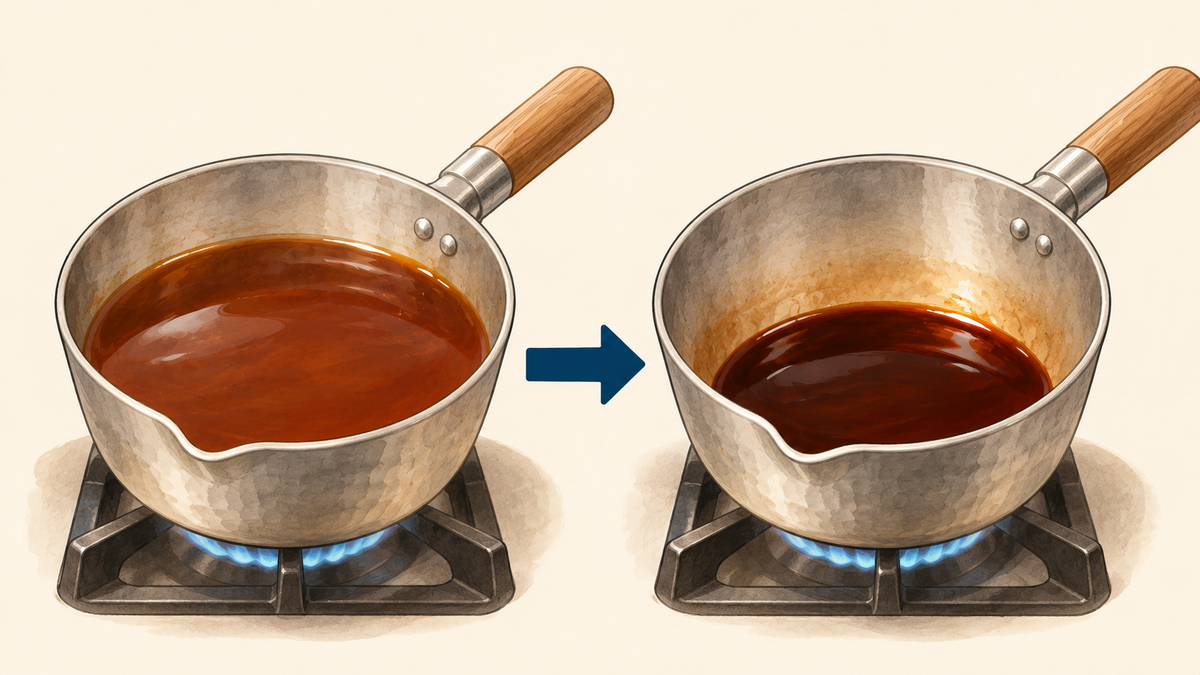
Diagram 04 | A schematic view of the falling liquid level during evaporation. Differences in shade do not represent measured times or concentration factors.
5. Judge thickness after checking a cooled sample
Warm sauce may run freely from a spoon but flow differently once cooler. If you assume it is too thin while hot and keep reducing it, the finished sauce may become difficult to handle. Transfer a small sample into a clean dish and inspect it at a temperature closer to serving conditions.
Thickness is not the same measurement as sweetness or saltiness. A change in flow after cooling does not necessarily mean the flavor needs correction. Assess texture and taste separately.
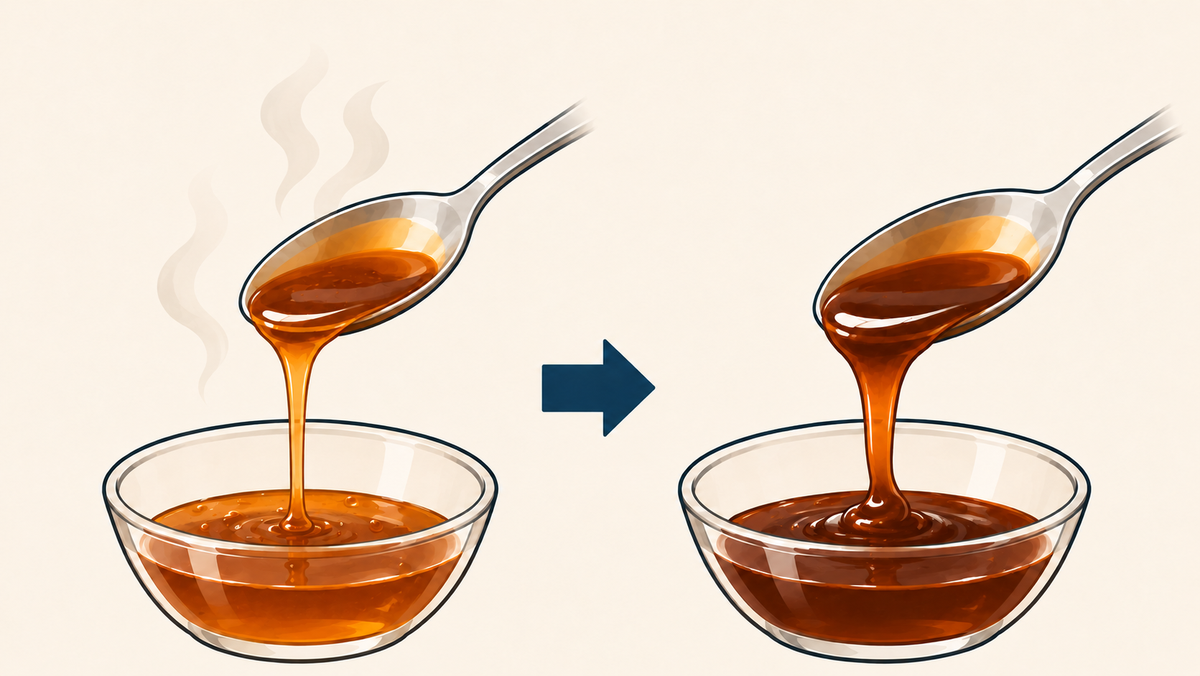
Diagram 05 | An illustrative comparison of sauce flow before and after cooling; it contains no viscosity measurements or guaranteed magnitude of change.
6. Taste first; adjust only a separate small portion
When sweetness or concentration needs correction, first remove a tasting portion. Taste with a clean spoon, then add a little sugar or water to a separate test cup and examine the change. If the adjustment works, apply it to the remaining unused sauce; if not, the main batch remains unaltered.
Never return a spoon that has touched your mouth to sauce intended for storage. Separating the tasting cup from the stored batch supports both controlled adjustments and hygiene. Be careful of burns when tasting hot sauce.
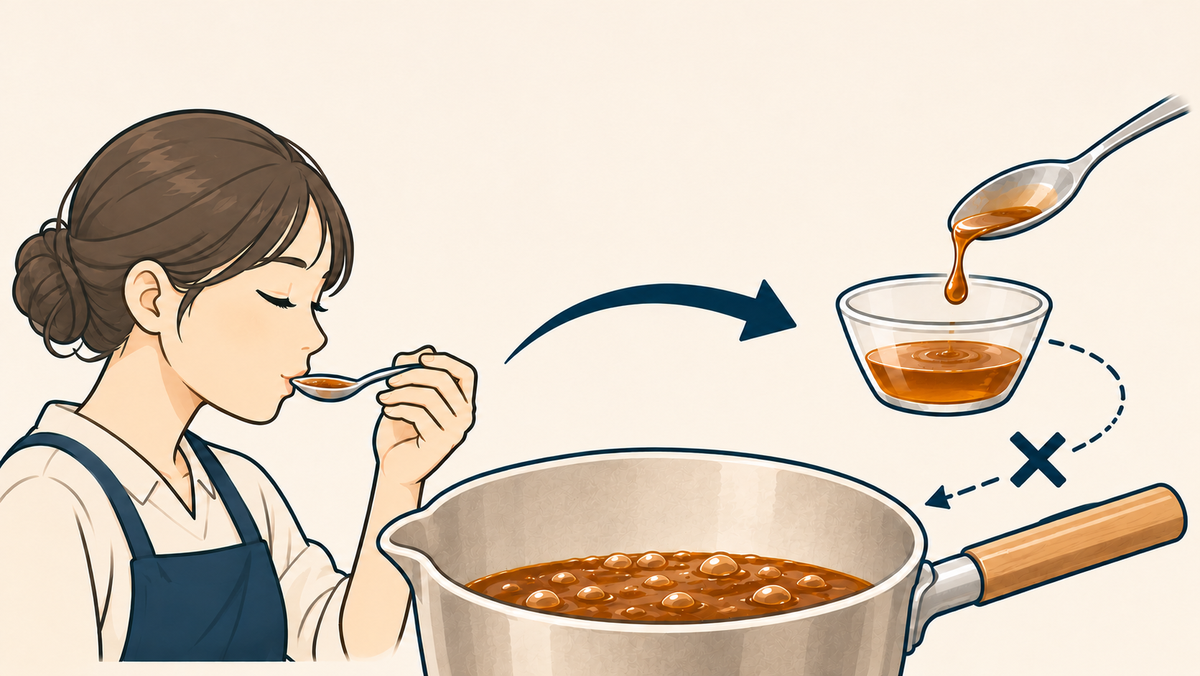
Diagram 06 | Taste, then test a small adjustment away from the main saucepan. The dashed route and cross warn against returning used sauce to the pot.
7. Store the finished batch separately from served sauce
Before serving, transfer the amount intended for storage into a clean container. Do not return sauce from a dish touched by eel, chopsticks, or a tasting spoon to the storage jar. Japan's Ministry of Health, Labour and Welfare home food-poisoning guidance advises clean equipment and containers and prompt cooling in smaller, shallow portions. The Ministry of Agriculture, Forestry and Fisheries also recommends setting food aside before eating and avoiding extended room-temperature holding.
The safe storage duration of homemade sauce depends on its recipe, heating, container and handling, so no universal number of days is given here. Cool it promptly, refrigerate appropriately, and discard suspect sauce rather than tasting it for safety. For commercial products, follow the storage instructions and dates on the actual packaging.
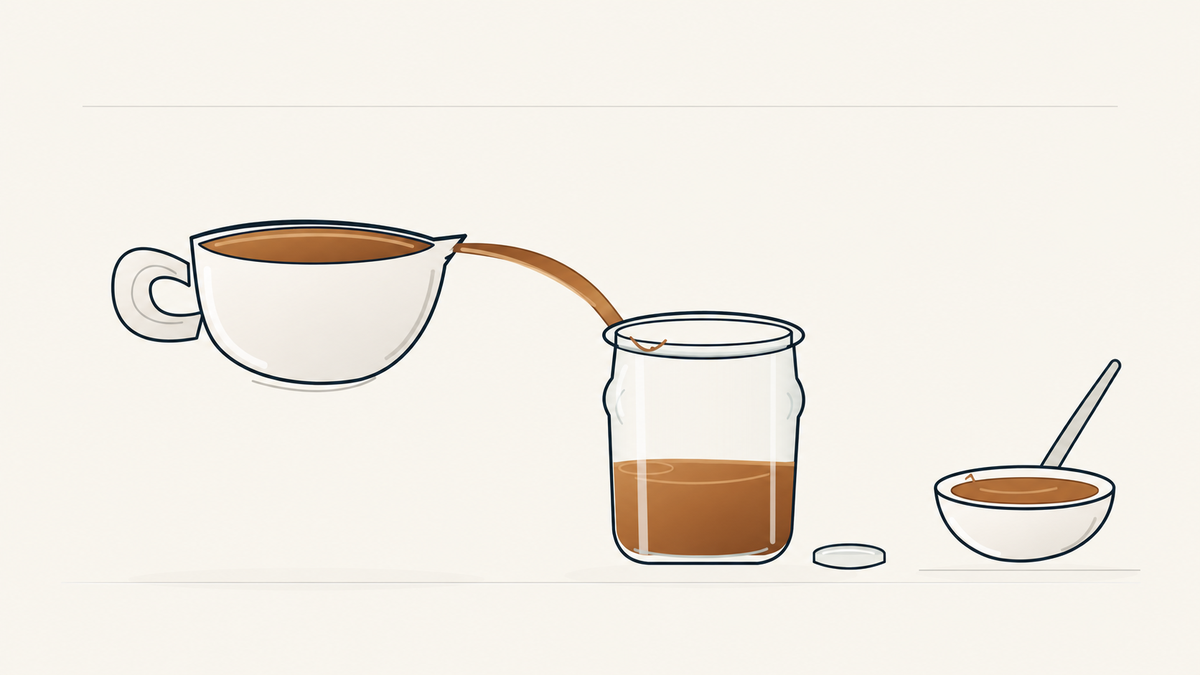
Diagram 07 | Keep the finished storage batch separate from sauce already used at the table. A drawn jar does not certify shelf life or hermetic safety.
Final check
For kabayaki sauce without mirin, assess sweetness through sugar, liquid volume through water or another liquid, and concentration through reduction as distinct variables. Read ingredient labels, keep a record of the starting mixture, and test one adjustment at a time in a small dish. Do not confuse the seasoning of sauce about to be served with the hygienic condition of sauce set aside for storage.
Original sources checked
Kikkoman, “Basic Eel Sauce”: official mirin-and-sake recipe used only for comparison and its reduction method.
Foods-U, article on eel sauce (July 25, 2022): original publication of the mirin-free example containing soy sauce, sake and sugar.
Kikkoman, Itsudemo Shinsen Shiboritate Nama Shoyu product page: product-specific ingredient and allergen example; check your own package.
Japan's Ministry of Health, Labour and Welfare, six home food-safety points: public advice on handling leftovers, clean containers and cooling.
Japan's Ministry of Agriculture, Forestry and Fisheries, food-poisoning prevention: public advice on separating servings, room-temperature storage and utensil hygiene.
Consumer Affairs Agency, choosing foods safely: general guidance on packaged-food labels, not proof of any individual product's composition.
Related articles