When ordering pie and mash in London, the pie does not necessarily contain eel. The traditional core is a beef pie, mashed potato and a parsley-based sauce called liquor. Eel has also been served separately as stewed eels, eaten warm, or jellied eels, eaten cold.
This guide compares the London Museum's food-history accounts, Historic England's listing records, the memories of a shop operator and a restaurant's own published menu. A traditional combination is not a promise that every shop offers every item today.
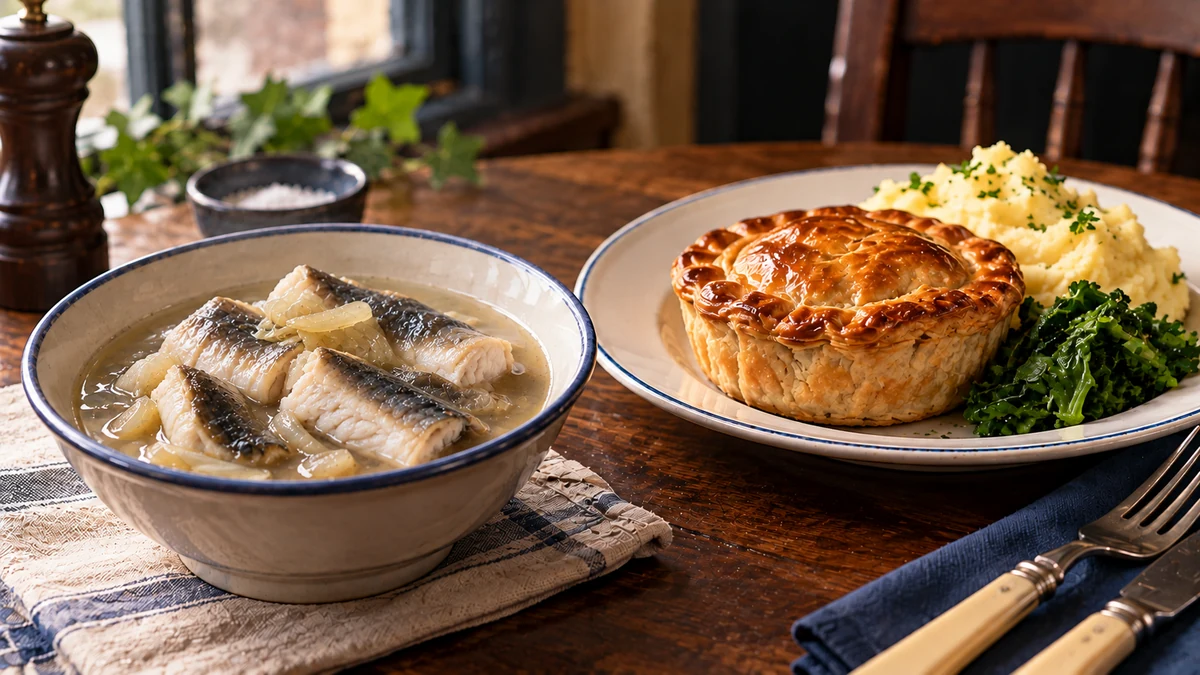
The illustrations do not reproduce actual restaurant dishes, historical photographs or original documents.
Warm stewed eels and cold preparations
Hot stew is different from cold eel jelly
Stewed eels are cooked eels served warm in their liquid. Jellied eels are cooked, then allowed to set in their cooking liquid or added gelatin and served cold, sometimes with vinegar. The London Museum discusses both as part of the tradition surrounding London's pie-and-mash shops. The distinction is therefore more than seasoning: serving temperature and whether the liquid has set also matter. Jellied eels are not raw eel simply chilled before serving; cooking is part of the preparation.
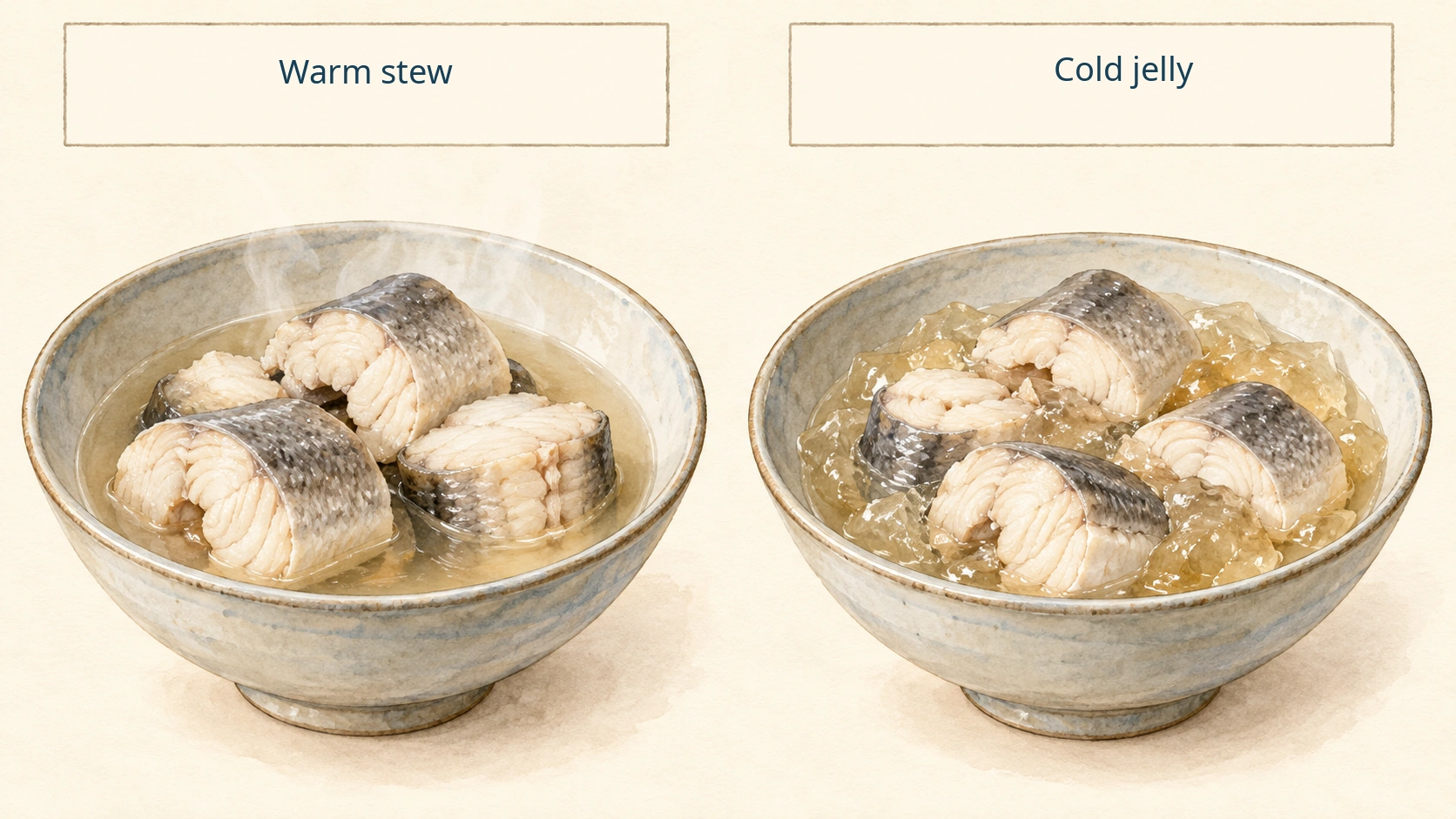
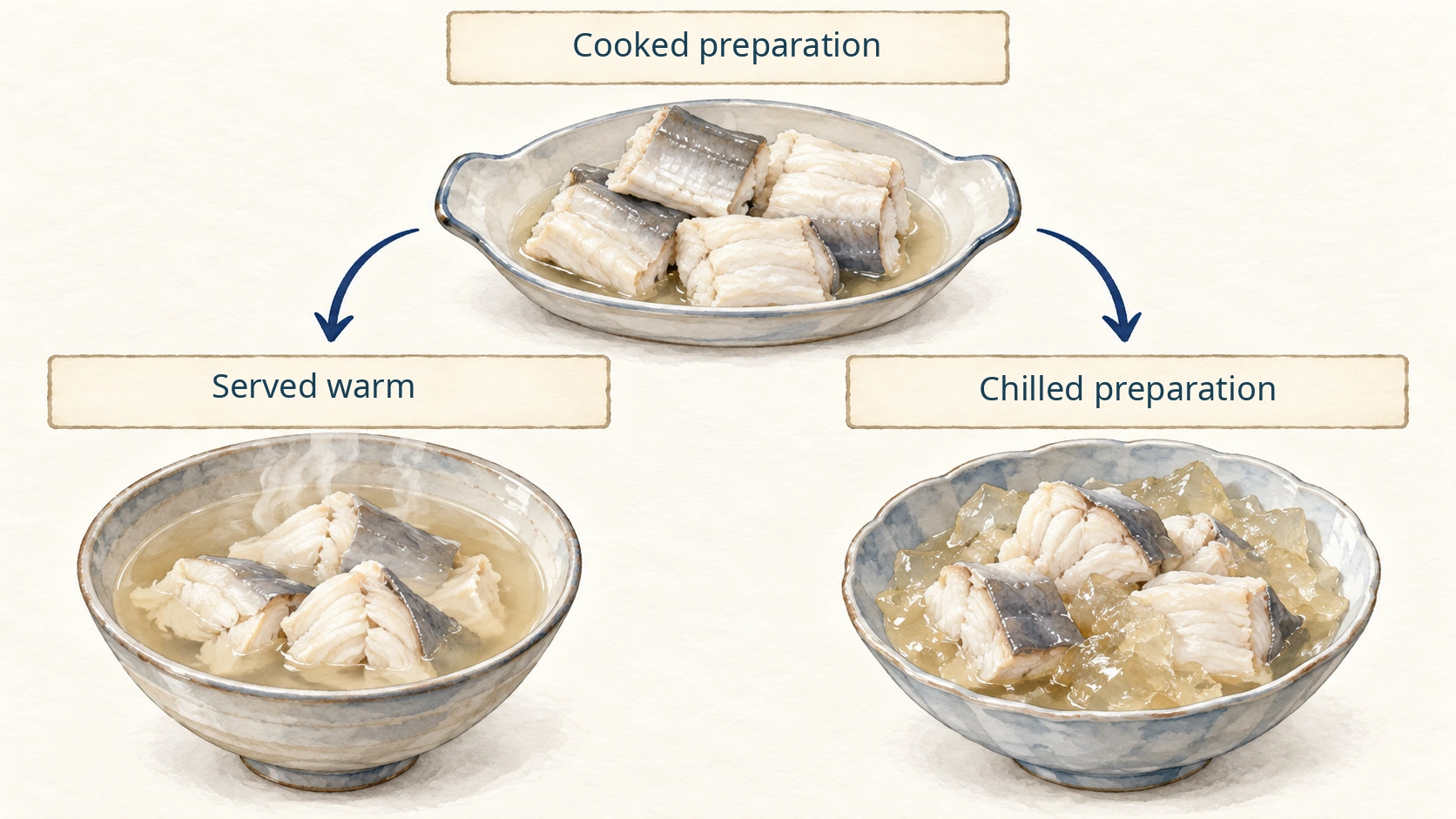
The paths diverge after cooking
Both preparations involve cooking the fish. One is served as a hot stew; the other is cooled until the surrounding liquid forms a jelly. The London Museum explicitly mentions either cooking liquid or gelatin as the setting medium, so there is no justification for treating every establishment's proportions or method as identical. The accompanying diagram shows a conceptual branch, not a timed cooking procedure. Anyone preparing fish at home should consult the UK Food Standards Agency's guidance on thorough cooking and hygiene rather than treating an illustration as cooking or cooling instructions. Follow recipe or product instructions for safe cooling and refrigeration; the formation of a jelly alone does not establish safe storage.
UK FSA household guidance for England, Northern Ireland and Wales says to cool cooked food quickly and refrigerate it within 2 hours in a fridge at 5°C or below. Eat leftovers within 48 hours or freeze them; follow product storage and use-by instructions. Setting into a gel does not prove safety. FSA FSA
The pie-and-mash table
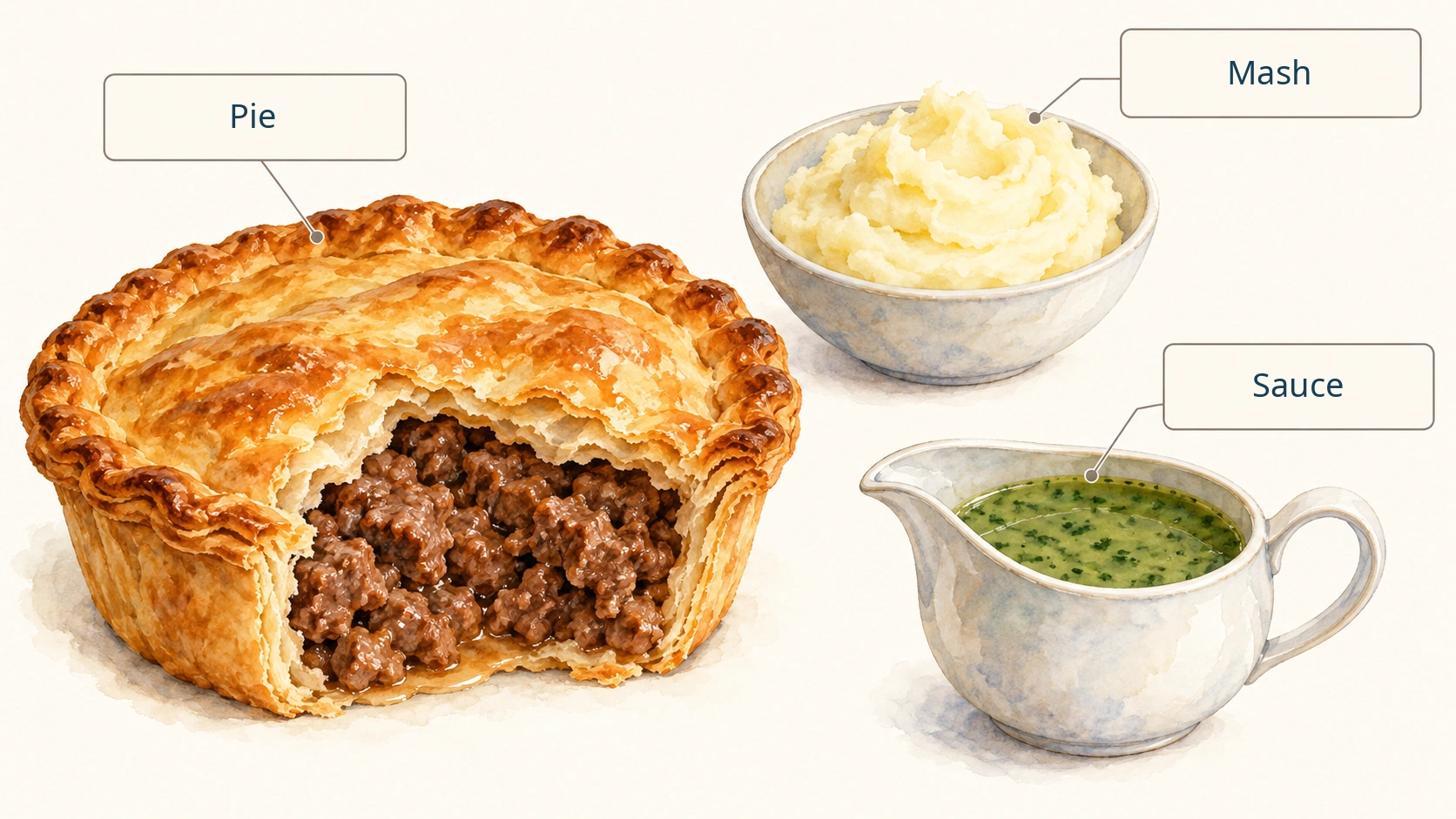
Pie, mash and liquor are distinct components
London-style pie and mash typically puts a beef-filled pastry alongside mashed potatoes and serves it with warm parsley liquor sauce. The London Museum presents those components as the classic combination. Historic England likewise records parsley sauce as a traditional defining element of eel, pie and mash shops. Accordingly, assuming that the words “pie and mash” describe an eel-filled pie is a mistake. Check the pie filling separately from whether stewed or jellied eels can be ordered as another item.
An eel shop is not the same as an eel-filled pie
The London Museum records street sellers offering eel pies in the 16th century. But the representative pie in the pie-and-mash shops that later developed was a beef pie; eel could be offered on a different plate, either warm or cold. That historical eel pie should not be confused with the grouping eel, pie and mash in a business name. A menu simply saying “pie” requires a check of its filling, while “stewed eels” and “jellied eels” name distinct preparations. Actual meal combinations and side dishes depend on the particular shop.
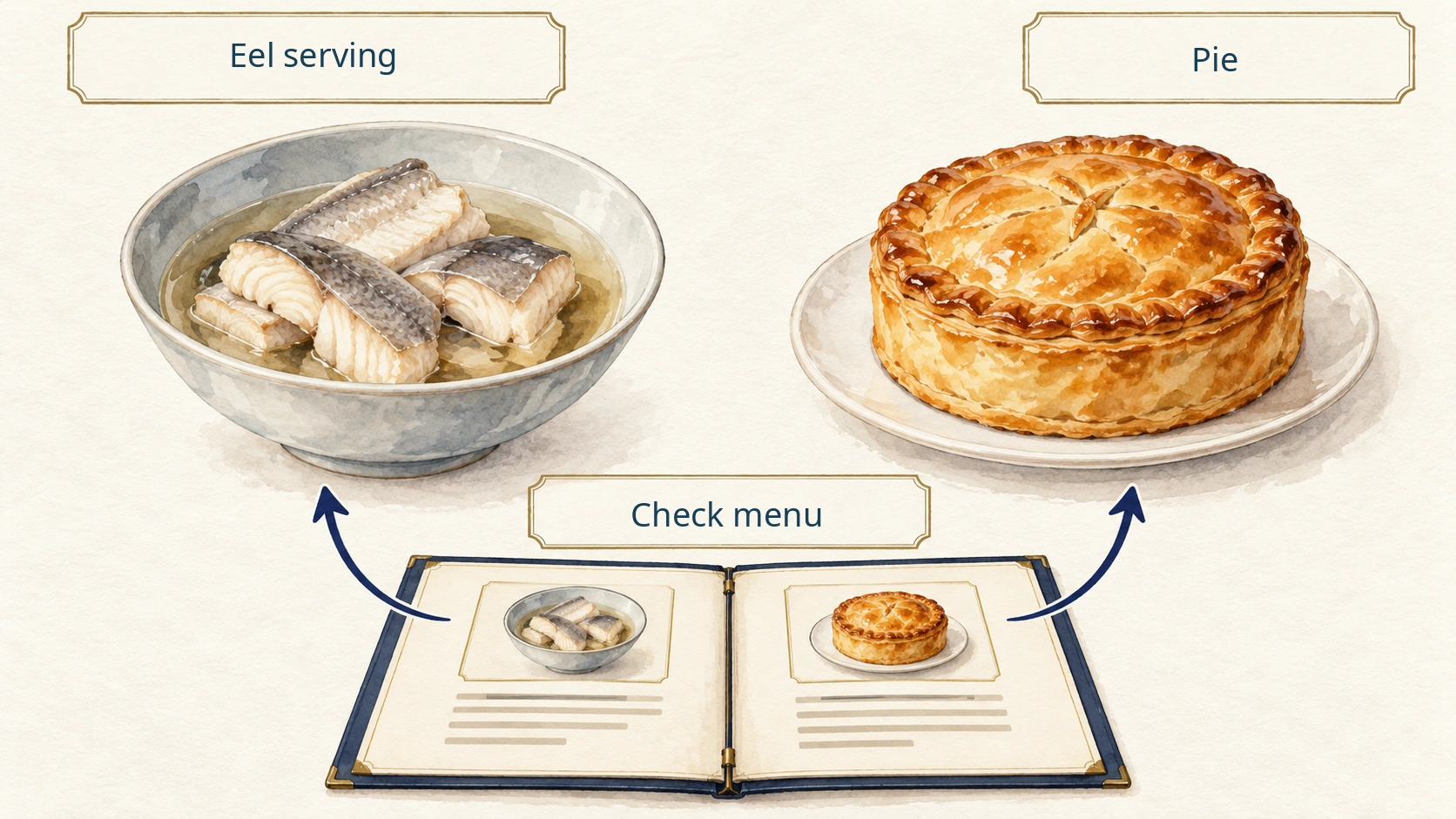
Dish names and their history
Liquor names a sauce, not an alcoholic drink
In this food tradition, liquor generally means a parsley sauce. According to the London Museum, it was originally made with eel stock, but that history does not establish that every contemporary shop uses eel cooking liquid. One restaurant, for example, describes its traditional parsley liquor while specifying a different vegetarian gravy for vegetable pies. Neither the word “liquor” alone nor the historical recipe determines whether a specific sauce contains seafood or alcohol. Ask the establishment directly about ingredients and relevant allergens.
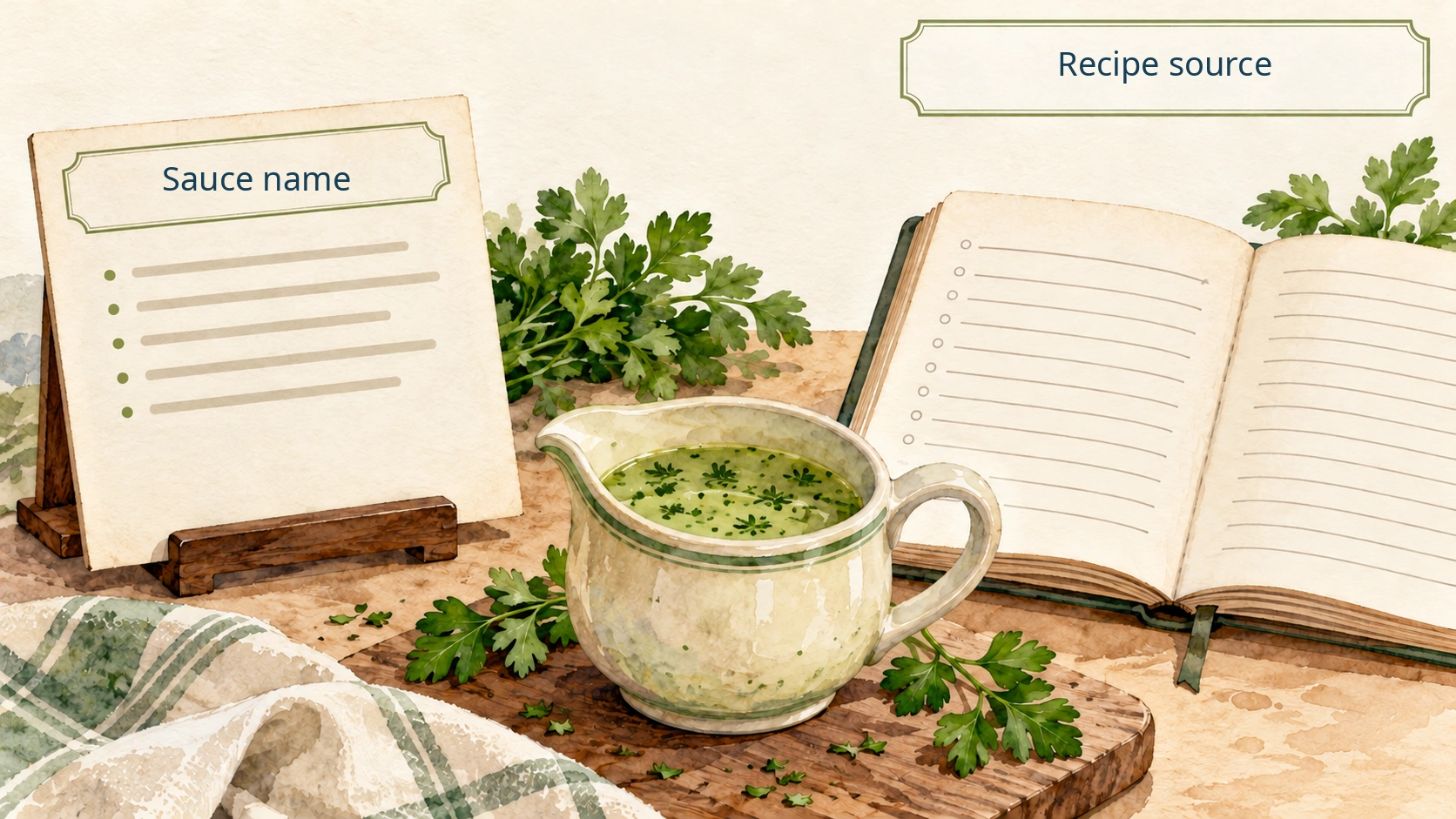
River commerce and the working-class meal
The Thames and Billingsgate fish market help explain London's eel-food history. The London Museum describes both river catches and imports from places including the Netherlands, as well as the fish market's proximity to east London. Historic England's listing account identifies 1844 as the year of the first documented pie shop in Southwark. In a 2001 oral-history interview held by Hackney Museum, a Cooke-family operator suggested that affordable eels and pies may simply have come together: this is a participant's hypothesis, not a proven account of the origin. A Japanese Fisheries Research Agency publication, FRANEWS vol. 45 (December 2015, p. 28), also mentions London's stewed and jellied eel preparations.

Reading a menu today
One shop's menu is not every shop's menu
For a concrete example, the official published menu of Eastenders Pie & Mash lists traditional pie and mash, chicken–ham–leek pie, vegetable pies and Stewed Eels / Jellied Eels as separate entries. The shop describes its parsley liquor and a vegetarian alternative sauce for vegetable pies. These were that shop's online listings checked on 2 November 2026, not confirmation of stock, serving hours or the range offered by other shops. Check the latest menu and ordering conditions at the specific establishment before visiting.
Ask about three things before ordering
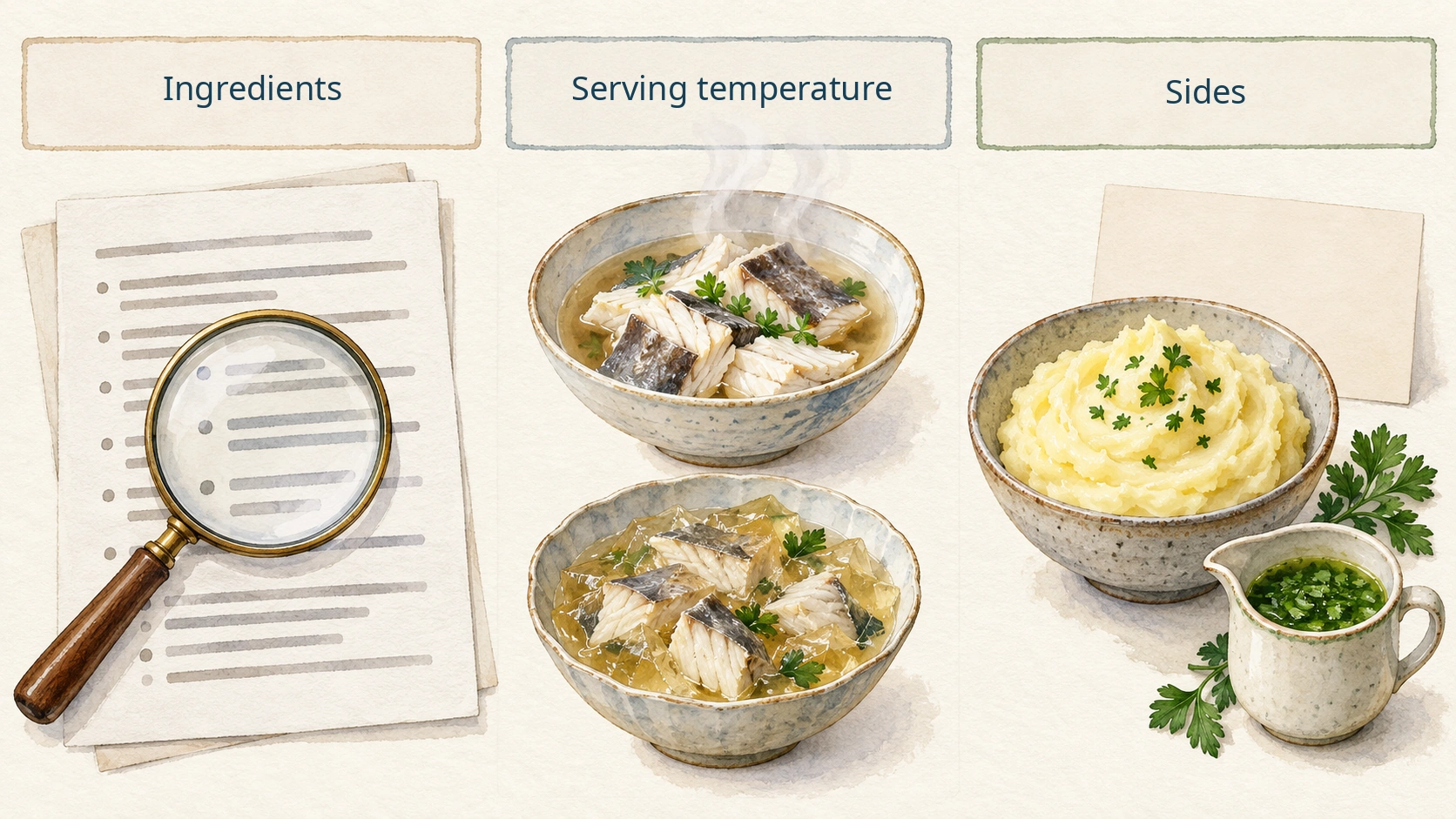
Separate three questions: (1) ingredients—what fills the pie, whether eel is included and what stock goes into the liquor; (2) serving temperature—hot stewed eels or cold jellied eels; and (3) sides—whether mash, sauce and vinegar are included. Do not presume the pie contains eel, and let the current menu and staff's answer take priority over general descriptions of tradition. For seafood, wheat, dairy or other allergies and dietary requirements, ask the shop about today's ingredients and handling instead of assuming the dish name guarantees suitability. Ask about possible allergen cross-contact as well.
Related articles