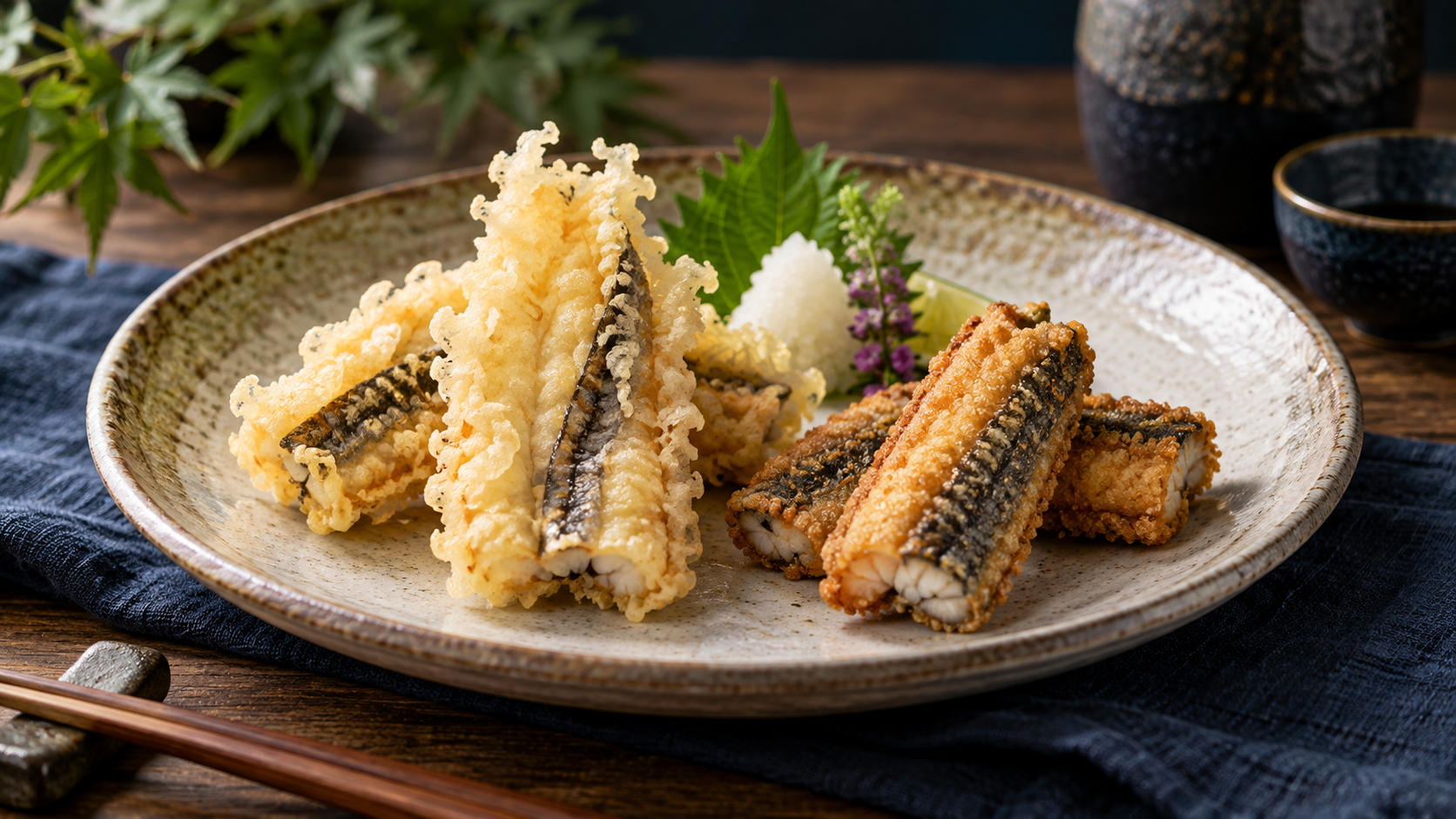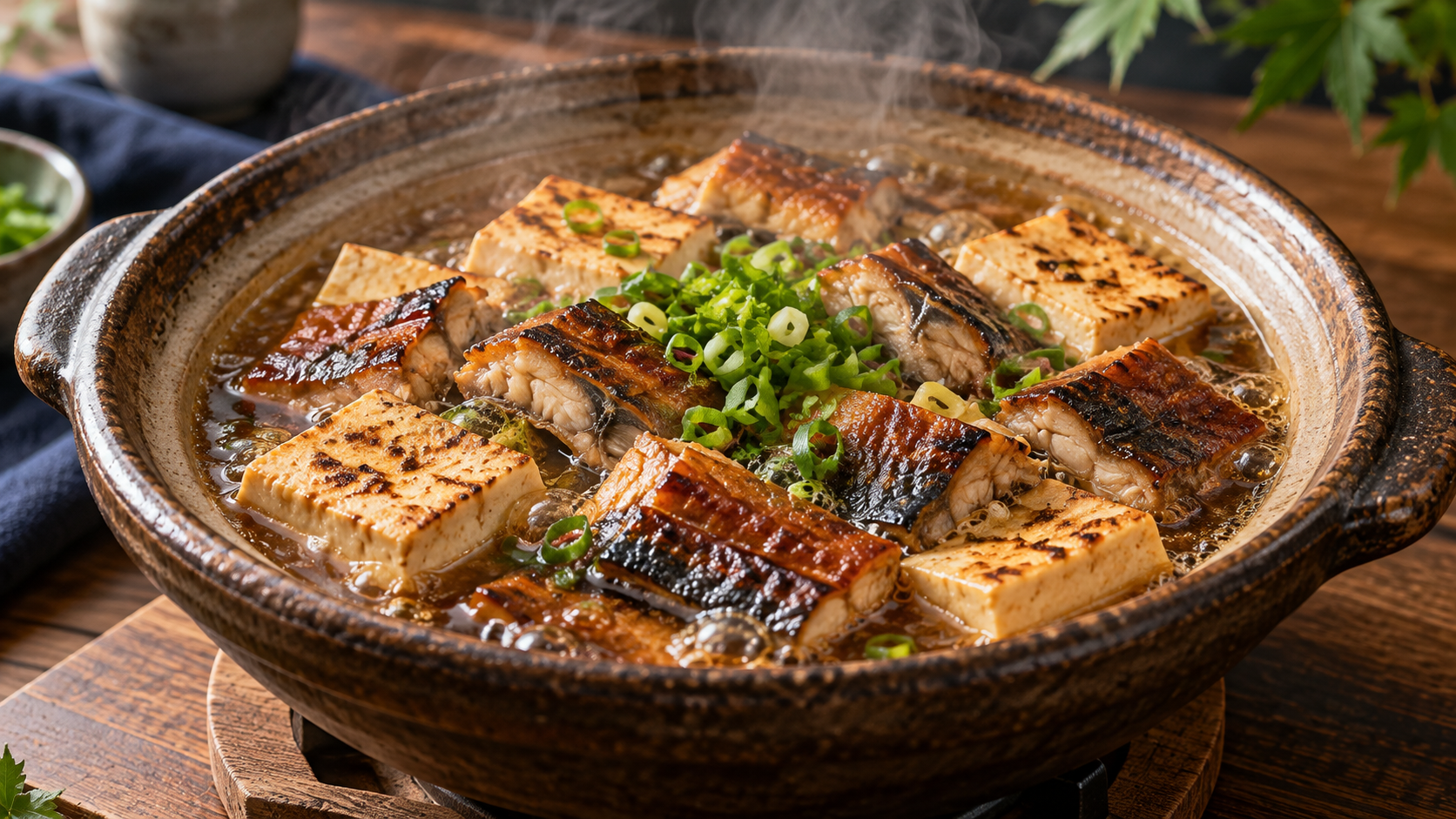
AI-created illustration of Shimane-style unagi tofu, not a photograph taken at a particular restaurant or household.
Unagi tofu is a regional dish of Izumo, Shimane Prefecture, in which grilled eel coated in kabayaki sauce and seared tofu are simmered together in stock. Despite the similar names, it is not identical to hansuke tofu from Osaka. Shimane's published recipe uses the edible body of cooked eel; Osaka's traditional version uses the grilled eel head, called hansuke, to flavor the stock. That distinction determines what to buy. Ministry of Agriculture, Forestry and Fisheries (MAFF): Shimane · MAFF: Osaka
The method below follows the Shimane entry in MAFF's Our Regional Cuisines collection. Where its ingredient quantities are incomplete, we identify the supplementary quantities published by the Umami Information Center, which credits MAFF. This is an explanation of documented recipes, not a kitchen-tested reconstruction; households and communities may prepare the dish differently.
Dish and region
1. Shimane unagi tofu and Osaka hansuke tofu are distinct
Both dishes allow eel flavor to permeate tofu, but they differ in the part of the fish and in their regional associations. The representative versions in MAFF's records compare as follows.
MAFF also notes that Osaka cooks sometimes substitute kabayaki flesh when heads are difficult to obtain. This practical substitution does not establish a common origin for the two dishes. For further background on Osaka, see our separate article on hansuke tofu. Sources: MAFF Shimane and MAFF Osaka.
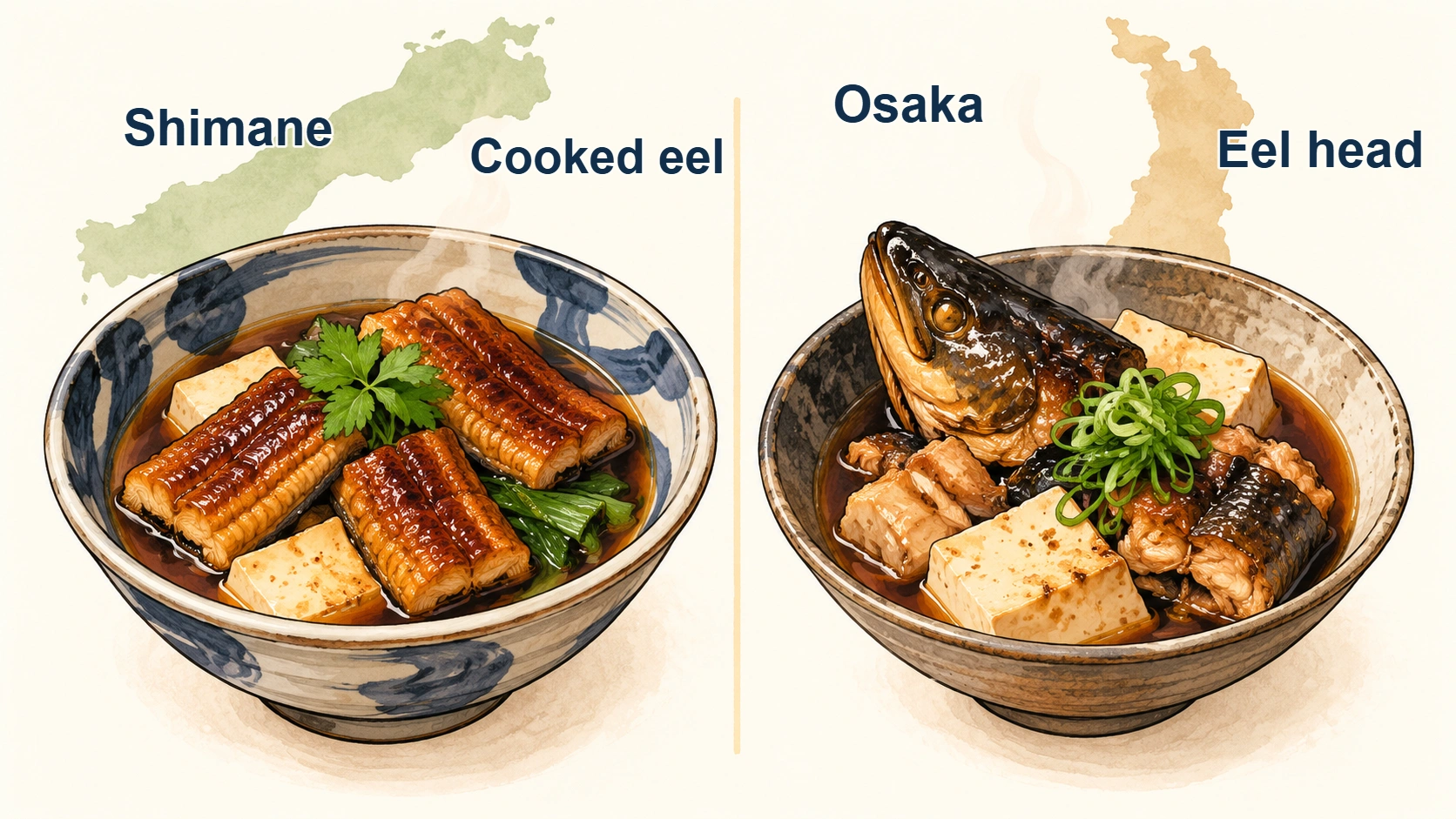
Figure 1. A schematic comparison of characteristic ingredients; serving appearances can vary.
2. Ingredients for two servings
MAFF's Shimane recipe specifies the stock and seasonings but does not give quantities for eel, tofu, onion or shimeji. The quantities for those four ingredients below come from the Umami Information Center's version, based on the MAFF entry.
One Japanese tablespoon is 15 mL; the two-tablespoon measure is 30 mL by volume, not automatically 30 g by weight. This distinction matters where tablespoons have different capacities. See Kikkoman's Japanese measuring guide. Commercial blocks and mushroom packs vary in size, so the supplementary ingredient counts are a practical reference rather than a fixed weight specification.
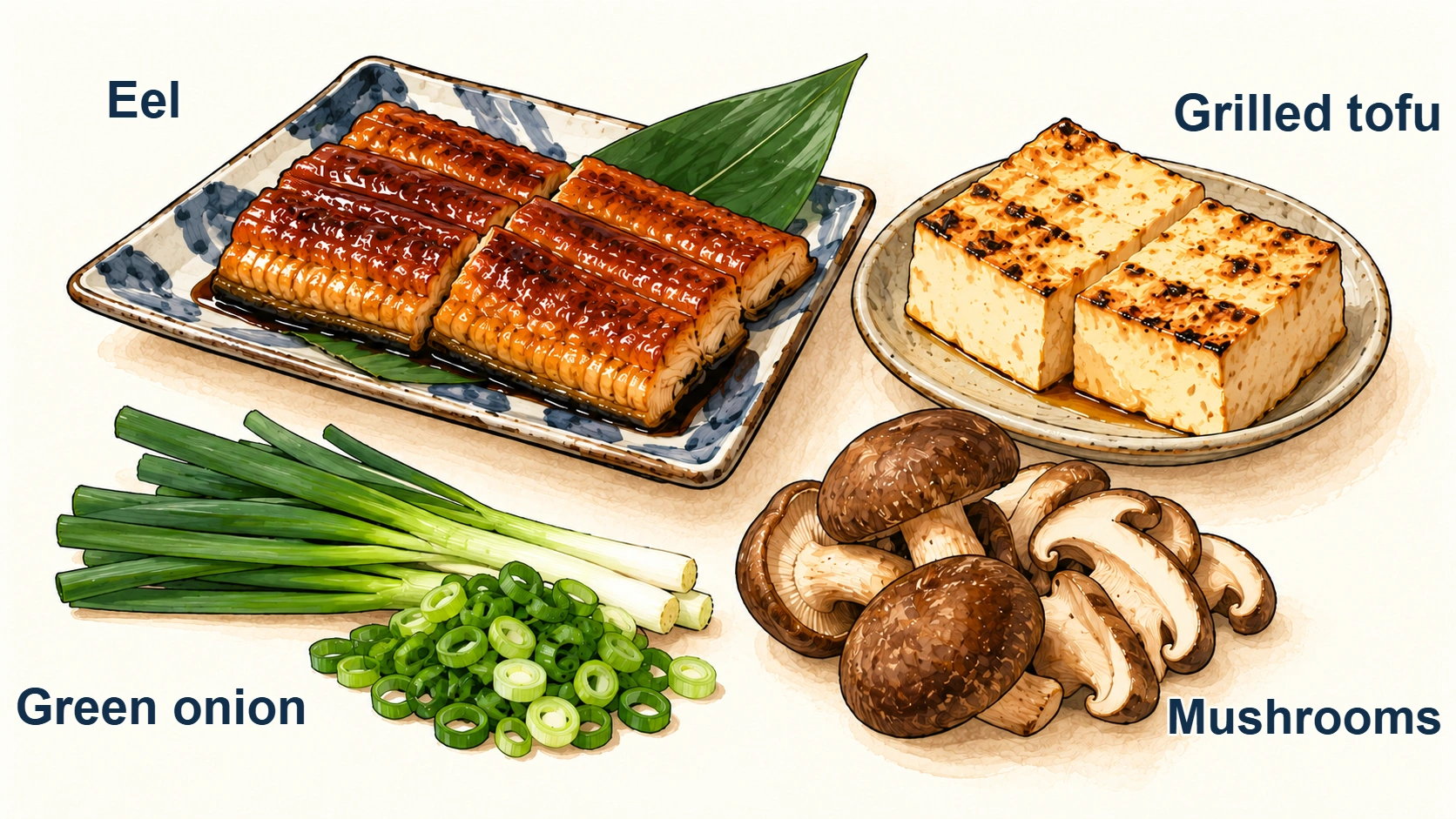
Figure 2. The main solid ingredients. Seasoning measurements are given in the table.
Preparation
3. Cut the seared tofu diagonally
Cut the tofu into manageable serving portions, ideally exposing diagonal cut faces. MAFF recommends this cut because it increases the exposed area and helps the tofu absorb eel-flavored stock. Leave the portions thick enough to transfer without crumbling; the source does not mandate an exact piece count. MAFF Shimane recipe.
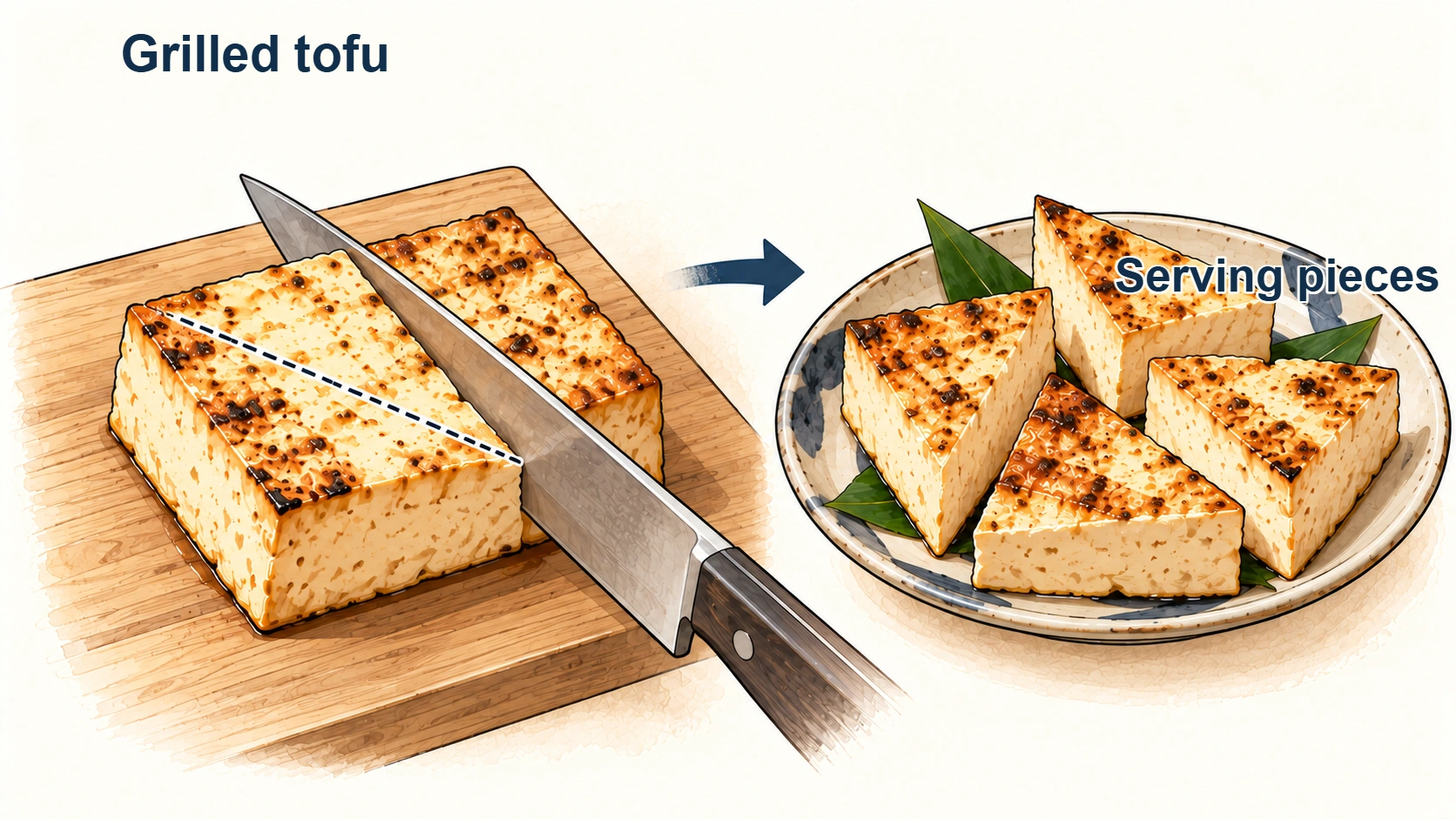
Figure 3. Schematic cutting method, not a prescribed number of pieces.
4. Portion cooked kabayaki eel
Use already cooked kabayaki eel, as available from a food retailer, and cut the flesh into pieces that will sit alongside the tofu. Shimane's recipe simmers the portioned eel itself; it does not instruct the cook to make stock from an eel head. Follow any heating and handling directions printed on the purchased product. MAFF Shimane recipe.
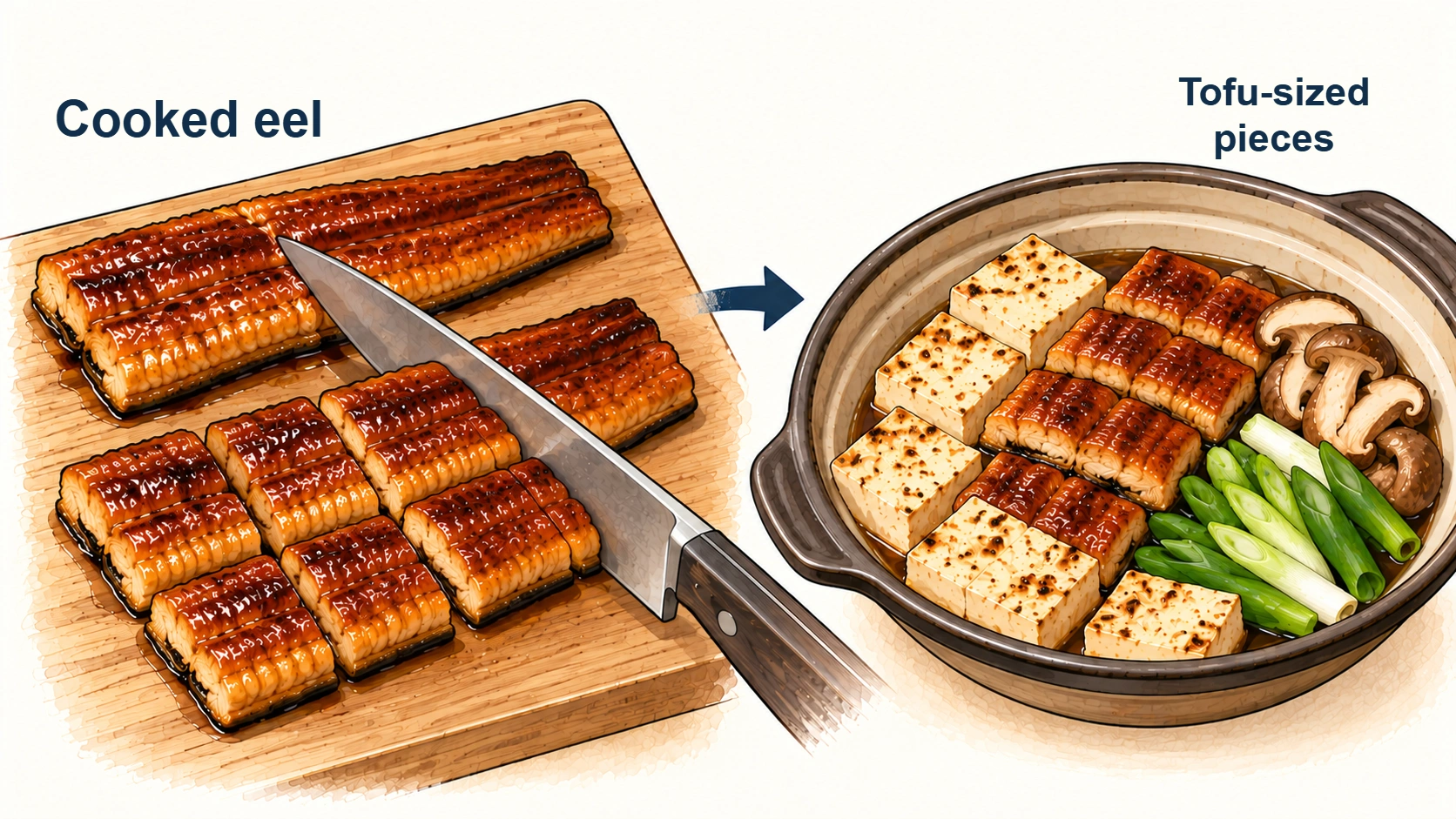
Figure 4. Cutting the cooked eel flesh; no eel head is used.
Simmering together
5. Combine stock and seasonings first
Put 360 mL dashi, 2 Japanese tablespoons (30 mL) usukuchi soy sauce and 2 Japanese tablespoons (30 mL) mirin in a shallow pan or pot. These are the proportions specified for two servings by MAFF, not newly developed proportions. The published instructions do not call for adding a packet of kabayaki glaze; begin with the documented mixture. MAFF recipe.
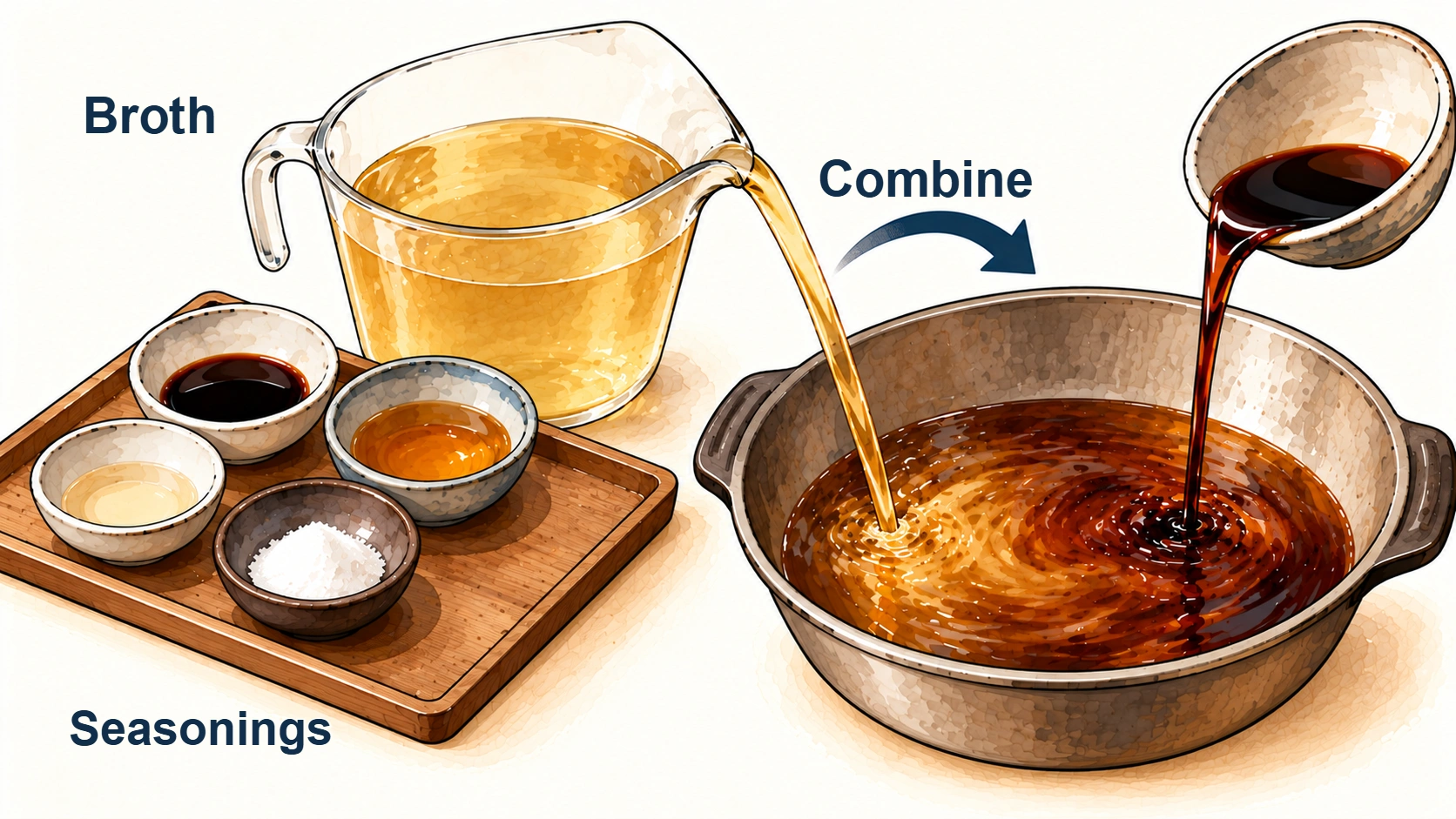
Figure 5. Combining the liquid ingredients. The containers are illustrative.
6. Simmer the eel and tofu for 5–6 minutes
Add eel and tofu to the seasoned stock and simmer for about 5–6 minutes. Arrange them so that the cooking liquid can reach the pieces, without stirring roughly enough to break the tofu. MAFF's descriptive paragraph also mentions approximately 10 minutes as a general account, whereas its numbered recipe instructions explicitly say 5–6 minutes. The steps here follow the numbered recipe for consistency. MAFF Shimane recipe.
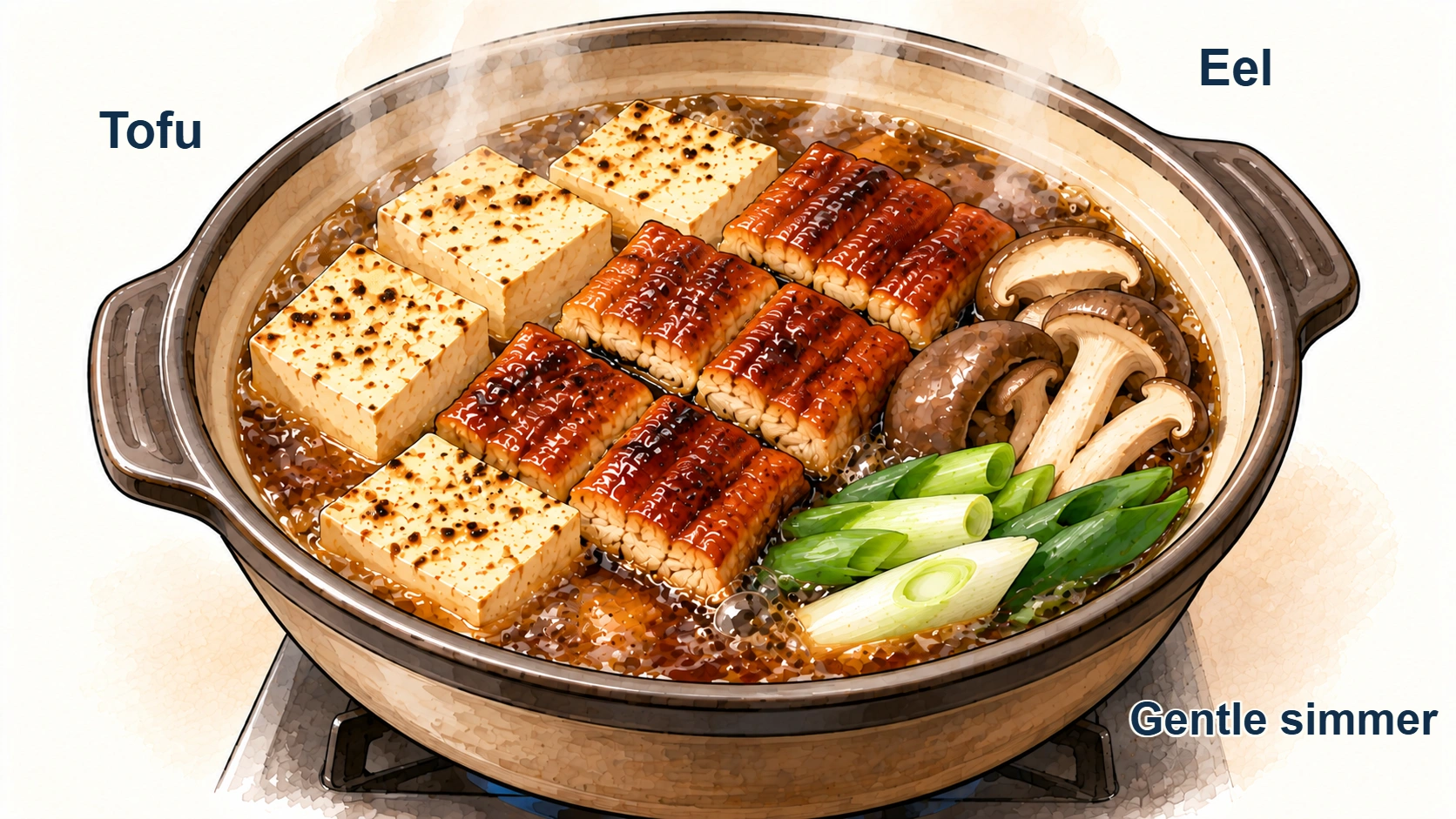
Figure 6. Gentle simmering is illustrated; the bubbles do not represent measured temperatures.
7. Add onions and mushrooms later
After the eel and tofu have simmered, add diagonally sliced Japanese green onion and shimeji mushrooms, then bring the pot briefly back to a boil. In the Umami Information Center's rendering, the mushrooms go in first; the sliced onion follows, and the heat is turned off once the liquid boils again. MAFF also allows a finishing addition of chrysanthemum greens (shungiku) or mizuna. MAFF · Umami Information Center.
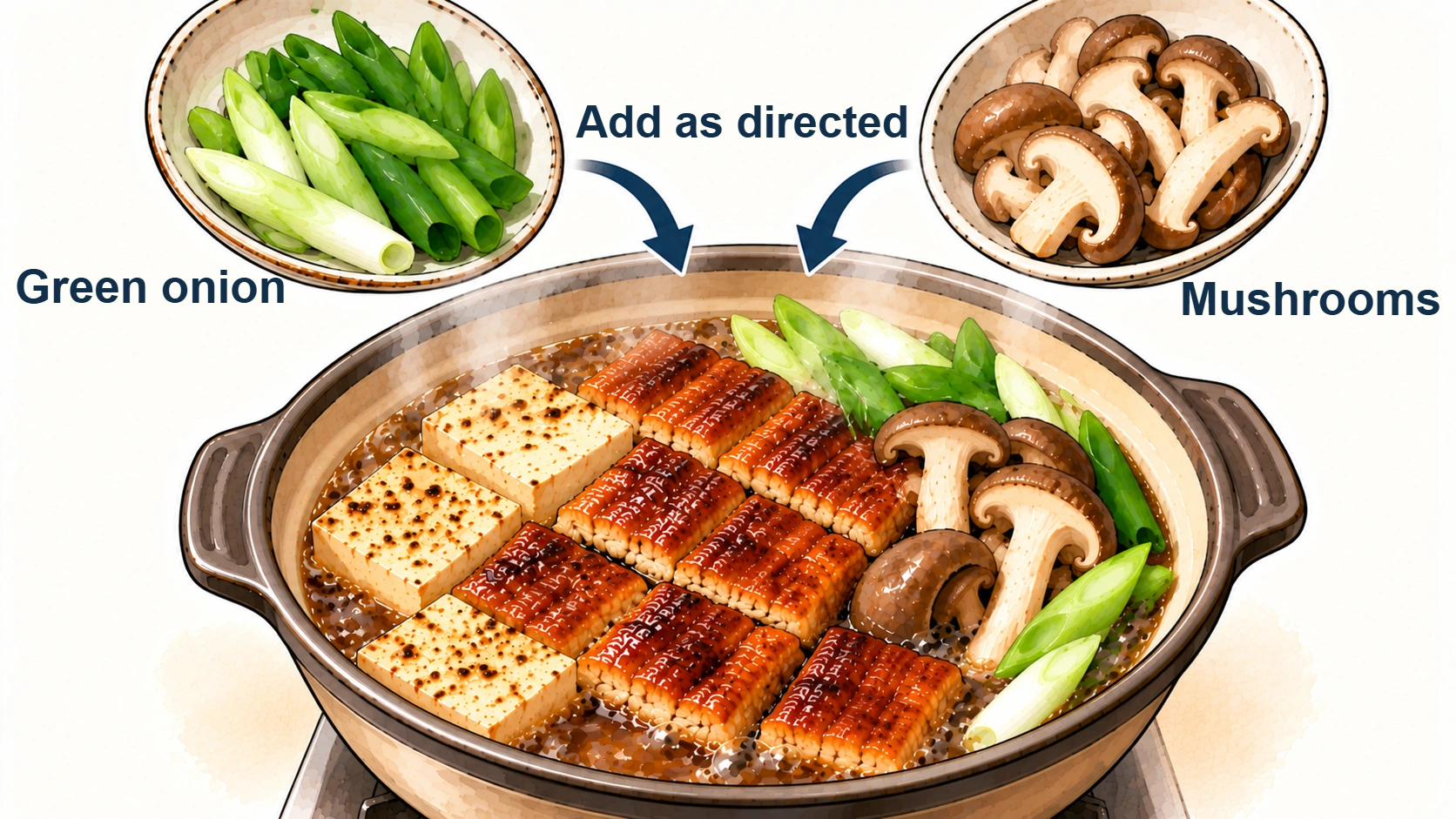
Figure 7. Vegetables join late in the process; their exact arrangement is illustrative.
Transmission and the table
8. Izumo's food history and household variations
MAFF recounts a regional tradition according to which, in 1756 (Hōreki 6), eel catches increased dramatically in Lake Nakaumi and eel from Izumo was carried toward Osaka by land and water routes. This should be read as a reported historical tradition, not proof of current catch levels or that unagi tofu itself was invented in 1756. MAFF's cultural account.
MAFF describes unagi tofu as established home cooking in Izumo while explicitly noting that recipes vary by region and household. Different onions, seasonal mushrooms and optional shungiku or mizuna are consistent with the described range. The accompanying graphic shows possible variations, not recorded lineages or specific restaurants.
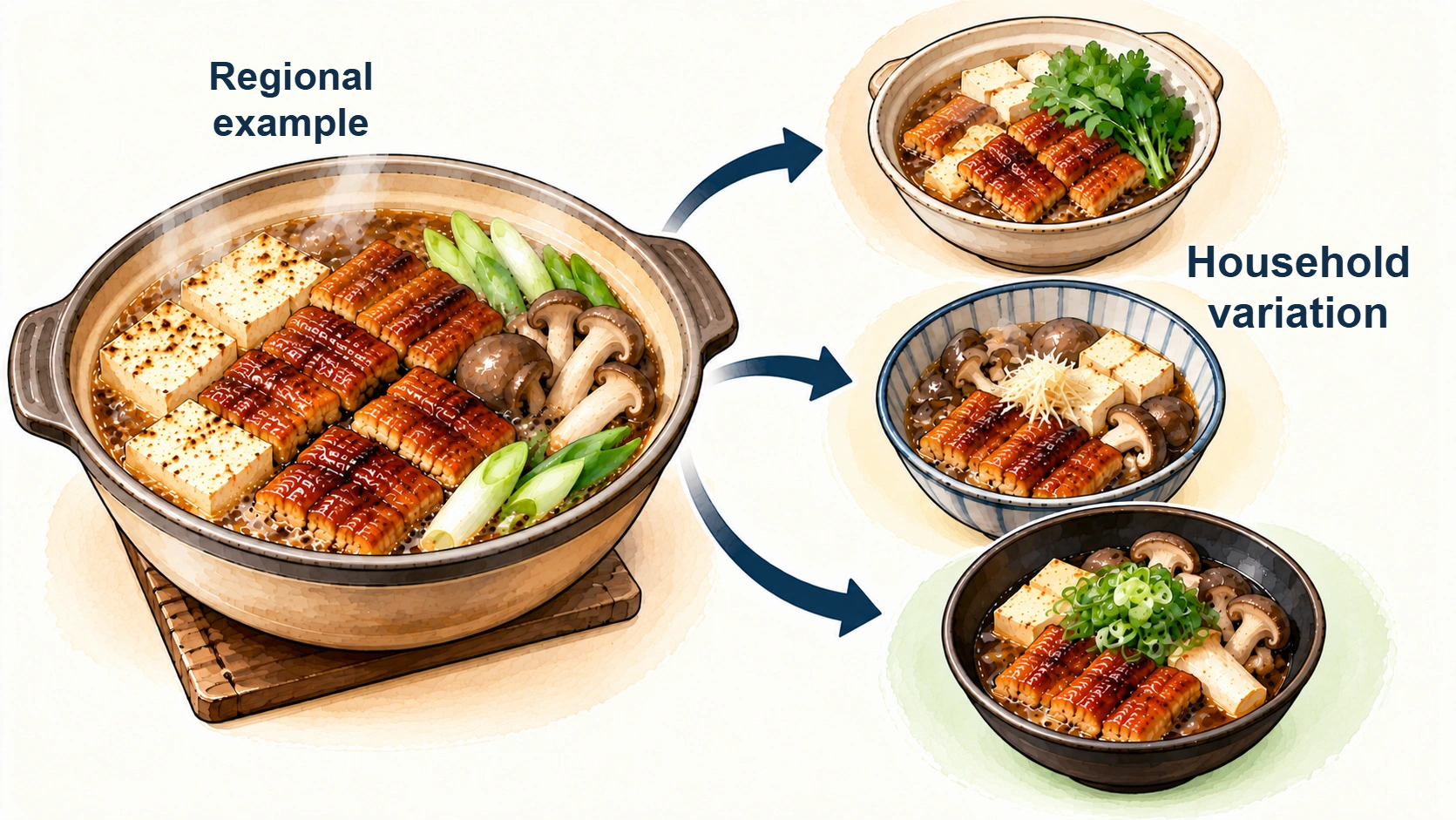
Figure 8. Regional example and household variation, not a documented historical family tree.
9. Serve the tofu, eel and vegetables with the broth
Transfer the eel, tofu, onions and mushrooms to bowls, including some of the broth. Eating the tofu with the liquid flavored by kabayaki is the point of this dish. Serve hot and follow product labeling and sound food-safety guidance for handling leftovers; no universal storage period is asserted here.
The dish may be described as Yanagawa-style, but Kikkoman's separately published eel Yanagawa recipe calls for burdock and egg. Those are not required ingredients in the documented Shimane unagi tofu recipe.
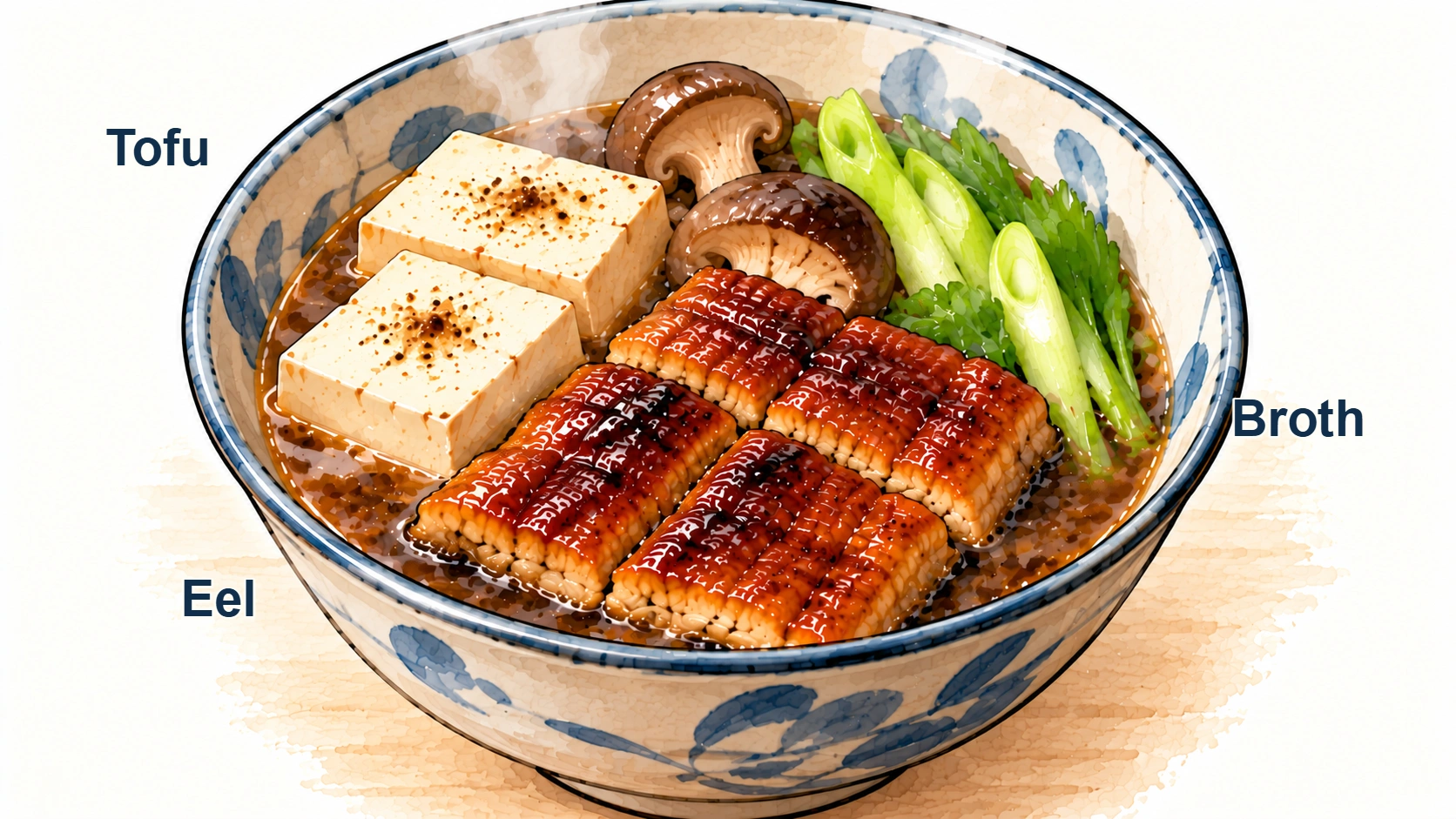
Figure 9. Serving illustration; it does not depict a real restaurant's dish.
Sources and editorial scope
MAFF, Our Regional Cuisines: Unagi tofu, Shimane: traditional region, ingredients, the 5–6 minute instructions, variations and the 1756 account.
MAFF, Our Regional Cuisines: Hansuke tofu, Osaka: separate dish traditionally using the grilled head.
Umami Information Center, Unagi tofu: additional quantities for two servings and procedural details, adapted from MAFF.
Kikkoman, How to measure a tablespoon: one Japanese tablespoon equals 15 mL.
Kikkoman, Yanagawa-style eel: a distinct recipe with burdock and egg.
Editorial note: This article explains publicly documented recipes. All visuals are AI-created explanatory illustrations; they are not evidence of in-house recipe testing or independent archival research.
Related articles